
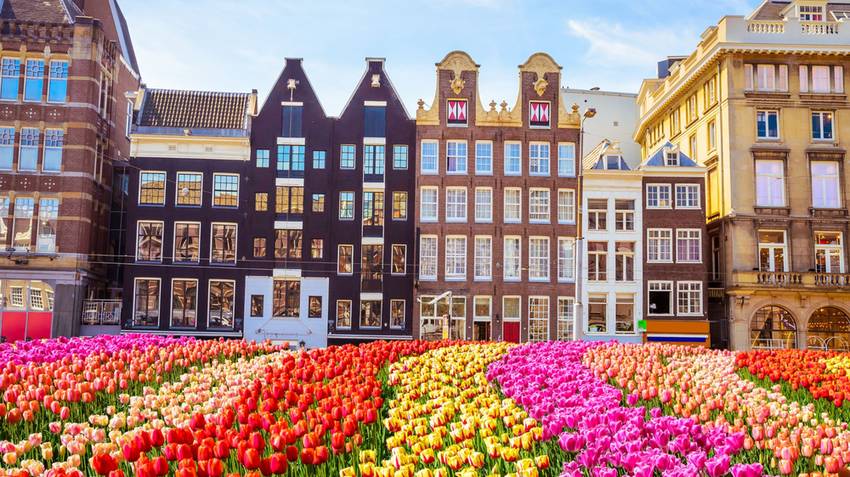
Amsterdam is one of those cities where where you sleep shapes the entire experience more than it does in most European capitals.
The canal ring is compact enough that neighborhood differences feel subtle on a map, then immediately obvious in practice: noise levels, street character, morning coffee options, how many other tourists you pass on the way to buy milk.
The question of the neighborhoods of Amsterdam is genuinely worth thinking through before booking, not because any area is bad, but because the fit is quite specific to how you want to move through a city.
Late spring and early summer shift the stakes considerably. The city gets busier fast after May, and the areas that feel comfortable in April can feel noticeably different by July. That seasonal momentum is worth factoring in from the start.
The canal ring: central but increasingly loud by summer
The historic canal ring – the UNESCO-listed horseshoe of interlocking waterways between Prinsengracht, Keizersgracht, and Herengracht, is where most first-time visitors anchor themselves.
The logic is obvious: nearly everything worth seeing in Amsterdam is within a reasonable walk from here, the streets are handsome, and the city’s density is manageable enough that exploring on foot rarely feels like work.
The canal ring works best for travelers who are in Amsterdam for two or three nights and want immediate access without much navigation overhead. The tradeoff is noise. The main canal streets carry a near-constant flow of cyclists, trams, tourist groups, and delivery vehicles from around 09:00 until well past 22:00.
Canal-side hotels and apartments are often lovely and genuinely noisy. The gap between the two doesn’t always register in online reviews.
By June, the pedestrian bridges across the main canals develop midday bottlenecks, particularly around the Negen Straatjes and the area between Leidseplein and the Rijksmuseum. This is not a reason to avoid the neighborhood, but it is a reason to leave the apartment before 10:00 or after 17:00 if you want to move freely rather than shuffle.
Those who enjoy the social density of a city in full motion will find the canal ring at peak season genuinely energizing. Those who find overstimulation tiring after two days tend to migrate outward.
The Jordaan: quieter by night, still busy by day
Directly west of the canal ring, the Jordaan has a reputation as the neighborhood for people who want “the real Amsterdam.” That framing is a little tired now. The Jordaan is popular, and it shows: the main streets around Elandsgracht and the Noordermarkt fill predictably on weekends, and café terraces along the smaller canals book up fast in spring.
What the Jordaan genuinely offers is a different texture rather than a quieter one. The streets are narrower, with less tram traffic, and the residential side streets still feel removed from the tourist flow even when the main arteries are busy.
Cobblestones are heavier here than on the canal ring’s smoother surfaces, which matters on a long walking day with luggage or after three hours of sightseeing. Knees and ankles notice.
Evenings in the Jordaan are more contained than in the canal ring or around Leidseplein. The bars are mostly small and neighborhood-facing; the sounds from Brouwersgracht or the quieter cross-streets thin out considerably after 22:30.
For travelers who want easy daytime access to the center but a lower acoustic profile at night, the Jordaan is a reasonable middle position.
De Pijp: the neighborhood with the most practical daily rhythm
South of the Rijksmuseum, De Pijp has developed into the area most people end up returning to. It functions well as an urban neighborhood in a way the canal ring no longer quite does: there are supermarkets, local cafés, a functional market (the Albert Cuyp Markt), and a street life that moves at a slightly different pace than the tourist-facing center. It is not remote from the center, and trams connect it quickly.
The walk from De Pijp to the Rijksmuseum takes about 10 minutes on flat ground. To the canal ring, closer to 15-20. These are comfortable distances in good weather; in heavier rain, the open stretch across the Museumplein is exposed. The neighborhood itself has enough indoor options, covered markets, and café density that a wet day is not a problem day.
De Pijp suits a wide range of travelers, remote workers who want a functional base with coffee shop variety and decent internet access in the cafés, couples who want to feel like they are staying in a real neighborhood rather than a hotel zone, first-timers who are happy with a 15-minute tram ride to the center in exchange for lower noise and a better morning croissant situation.
The area around Gerard Doustraat and Saenredamstraat is where the residential-meets-hospitality balance sits most comfortably.
Oud-Zuid: slower, more residential, better for longer stays
Further south, Oud-Zuid is where Amsterdam starts to feel like a city people actually live in rather than visit. The Concertgebouw is here, and the Van Baerlestraat has good restaurants, but the neighborhood’s character is primarily residential and unhurried. Streets are wide, trees are large, and the ambient noise level at 21:00 is noticeably different from anything in the canal ring.
Oud-Zuid works better for longer stays than for short ones. Two nights here with a packed sightseeing agenda means a lot of tram time; a week here with a slower rhythm feels quite natural. The tradeoff is that the neighborhood has less of its own character to reward wandering – it is functional and calm rather than atmospheric in the way the Jordaan or De Pijp can be.
Travelers who have been to Amsterdam before and want a different angle often land here. So do people extending a trip around work, or those who find the center overstimulating after a day or two and want somewhere to genuinely rest rather than absorb. The Vondelpark is nearby and genuinely useful in spring and early summer as a quieter outdoor option when the main squares feel too busy.
Amsterdam-Noord: the outlier worth considering
Amsterdam-Noord sits across the IJ waterway, reachable by free ferry from Central Station in about five minutes or by metro since the Noord-Zuidlijn opened. It has changed significantly over the past decade, developing from an industrial fringe into a neighborhood with a real restaurant and cultural scene around NDSM Wharf and the Overhoeks area.
The ferry crossing itself is a small operational reality to factor in. Missing the last regular ferry means a slightly longer route, and anyone staying in Noord with an early flight from Schiphol needs to account for the connection to Central Station and then the train south. It is workable, not complicated, but it is a layer of transit that the other neighborhoods do not require.
Noord suits travelers who actively enjoy feeling slightly outside the center rather than reluctantly tolerating it. The streets are wider, the architecture more industrial, and the evening atmosphere near NDSM is distinct from anything on the other bank – outdoor bars, large cultural venue spaces, and a crowd that skews younger and more local.
For those weighing this against the canal ring, the Bangkok neighborhood rhythm read covers a similar logic at higher density and may clarify what kind of urban distance actually works for you before you commit.
How the neighborhoods sit next to each other seasonally
The seasonal shift in Amsterdam is significant enough to change the calculus on neighborhood choice. In late spring, the canal ring and Jordaan still have comfortable margins of space – terraces are full but not impossible, canal bridges are busy but passable, and the city’s famous cycling infrastructure remains navigable for visitors renting bikes.
By mid-July, those margins compress. The Jordaan’s narrower streets feel it most. De Pijp and Oud-Zuid absorb summer better because their wider streets and more dispersed visitor flow leave more room.
The trade that summer makes everywhere in the city is noise for energy. Amsterdam in peak season is loud, social, and in constant motion from mid-morning to well past midnight near Leidseplein and Rembrandtplein.
The city’s evening rhythm, dinner around 19:00, bars filling after 21:00, streets still active after 23:00 in the center – suits travelers who want that pace. Staying in Oud-Zuid or Noord lets you access that energy selectively rather than living inside it.
Travelers choosing between European cities at this time of year sometimes wonder how this compares to a southern European rhythm. The Lisbon first-time guide covers a city with a similarly strong neighborhood differentiation but a warmer, slower evening pace – useful context if Amsterdam’s density is making you recalibrate before you book.
Who Amsterdam’s neighborhoods actually suit
The canal ring works for: first-timers on short stays, travelers who want immediate access and don’t mind noise, anyone whose trip is built around specific museums or sights within the historic center.
The Jordaan works for: travelers who want a slightly more residential feel without going far from the center, those who enjoy smaller bars and café culture, anyone who has already seen the main sights and wants to wander rather than tick.
De Pijp works for: remote workers, repeat visitors, couples who want a functioning neighborhood base, anyone doing a week or more who needs daily infrastructure beyond tourist-facing services.
Oud-Zuid works for: longer stays, travelers managing overstimulation after a busy itinerary, those who want parks and open space without leaving the city.
Amsterdam-Noord works for: travelers who actively want a different urban register, younger visitors interested in the cultural and food scene around NDSM, anyone happy to treat the ferry as part of the daily rhythm rather than an inconvenience.
Choosing based on how your days will actually run
The most common mismatch in Amsterdam isn’t choosing a bad neighborhood – it’s choosing the right-sounding one without accounting for the daily shape of the trip. A couple spending three days mainly visiting museums and cycling around the canal ring will find the canal ring works fine.
The same couple spending five days with one focused museum day and four unstructured days of eating and wandering will probably find De Pijp or the quieter edge of the Jordaan fits better after day two.
Transit in Amsterdam is reliable enough that no neighborhood is truly cut off from the center. Trams run at regular frequency until around 00:30; the metro serves De Pijp (Vijzelgracht/De Pijp stations) and Noord efficiently.
Cycling is genuinely useful if you are comfortable on a bike in a city where cycling infrastructure is confident but high-speed – the local cycling behavior takes a day to read correctly for visitors accustomed to slower cycling environments.
Walking times between neighborhoods are short on paper and slightly longer on the ground once canal bridge routes, cobblestones, and the general instinct to pause and look at things are factored in.
The walk from Central Station to the Jordaan takes about 20 minutes at a comfortable pace; from De Pijp to the Rijksmuseum, about 10; from the canal ring to Leidseplein, under 15. These are real, usable distances, not generous estimates.
Where Amsterdam neighborhoods work for you
The neighborhoods of Amsterdam divide along a single axis more than any other: how much urban presence do you want surrounding you when you are not actively exploring? The canal ring and central Jordaan keep you inside the city’s full energy at all times.
De Pijp, Oud-Zuid, and Noord give you a daily rhythm that alternates between that energy and something quieter – which, across more than three nights, often turns out to be the version of the city that actually suits most people.
Amsterdam rewards travelers who are honest with themselves about their stimulation tolerance. The city is genuinely pleasant in every neighborhood covered here; the differences are not about quality but about register. Getting the register right before you arrive tends to make the first morning feel less like an adjustment and more like an arrival.
Frequently asked questions about neighborhoods of Amsterdam
1. Which neighborhood in Amsterdam is best for first-time visitors?
The canal ring and Jordaan area work well for first-timers who want to be close to most sights on foot. De Pijp is a reasonable alternative for those who prefer a slightly less tourist-facing street rhythm while staying within 20 minutes of the center.
2. Where should I stay in Amsterdam if I want a quieter trip?
Oud-Zuid and the outer parts of De Pijp tend to be noticeably quieter in the evenings. Amsterdam-Noord has grown as a lower-noise option since the Noord-Zuidlijn metro opened, though it requires a short transit connection to reach most central attractions.
3. Is Amsterdam walkable between neighborhoods?
The central canal ring, Jordaan, and De Pijp are all connected on foot, though canal bridge crossings and cobblestone surfaces add more physical effort than the map distances suggest. Outer neighborhoods like Oud-Zuid or Amsterdam-Noord are better reached by tram or metro.
4. What is the best area to stay in Amsterdam in summer?
Summer crowds concentrate heavily in the canal ring and near the main museums. Staying in De Pijp or Oud-Zuid in summer means shorter exposure to the busiest corridors while still being well-positioned for daytime exploration. The Jordaan also works but its narrow streets feel more active in peak season.
5. Is Amsterdam-Noord worth staying in?
Amsterdam-Noord suits travelers who prioritize space, lower noise, and a different pace over proximity to the historic center. The metro connection makes it functional for daily trips into the center, but the area has its own growing restaurant and cultural scene that reduces the need to commute every day.