
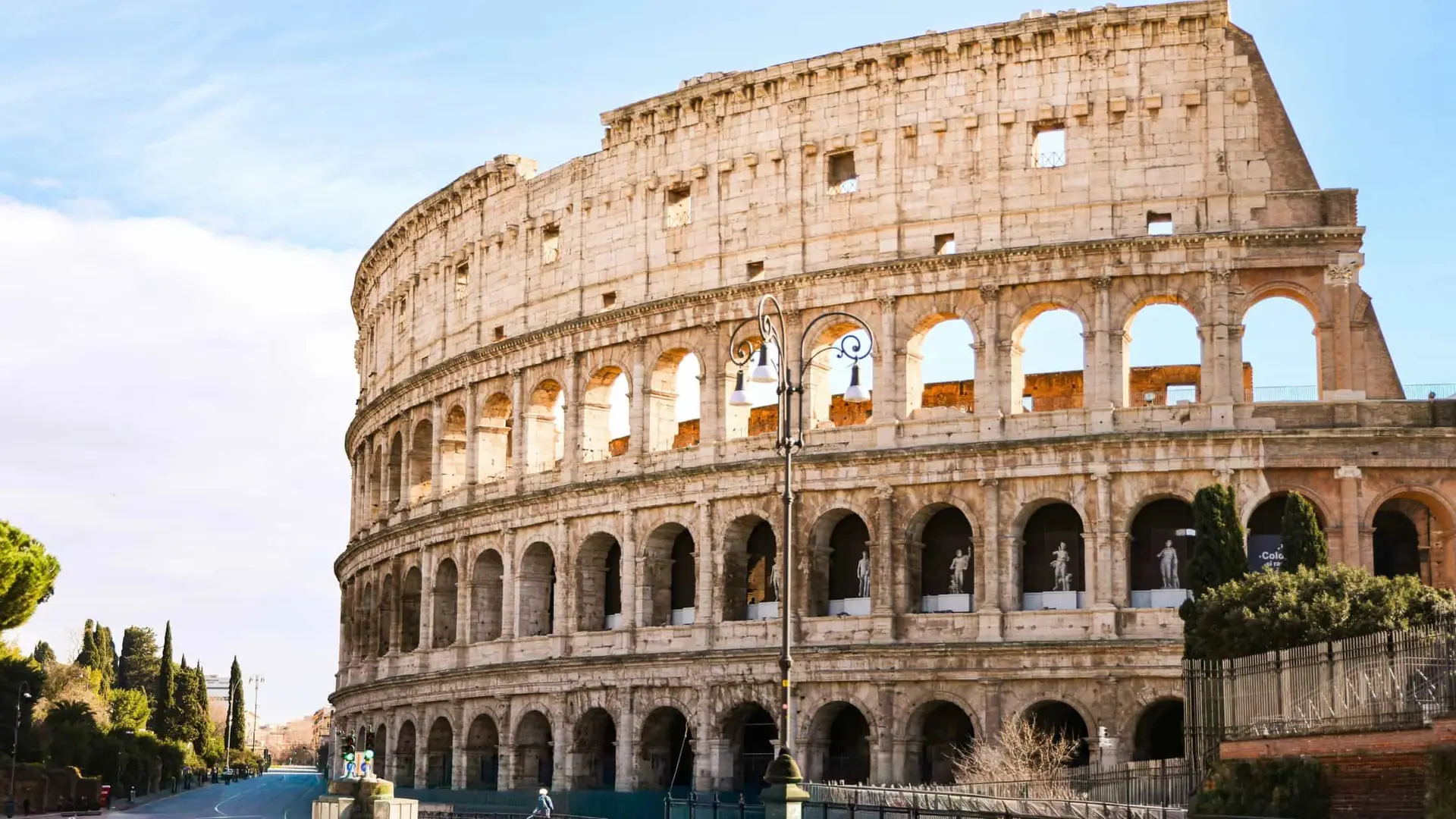
Rome does not make the neighborhood question easy to answer. The city is dense, uneven, and changes character within a few hundred meters.
Understanding the neighborhoods of Rome before you book is the most useful thing you can do, because where you sleep shapes how the city feels day to day more than almost any other decision.
Late spring and early summer are when that choice starts to matter most. By June, the tourist core is operating at full pressure and the difference between staying inside it and staying one neighborhood out becomes very noticeable. In May, there is still room to breathe. By July, less so.
This is not a ranked list of Rome’s best districts. It is a read on what each area actually feels like to wake up in, move around in, and eat in, and which type of traveler each one genuinely suits.
The shape of the city and why it matters for where you stay
Rome is not a compact city with a neat center. The Tiber cuts it in half. The hills add friction to every walk. And the tourist-facing layer is concentrated in a relatively small zone that does not represent how most of the city moves.
That concentrated zone, roughly bounded by Piazza del Popolo to the north, the Colosseum to the east, Campo de’ Fiori to the south, and the Vatican to the west, is where most first-time visitors try to find accommodation. It is also where noise, pricing, and tourist saturation are at their highest. The main monuments are walkable, yes.
But so is almost everywhere else in Rome, or at worst a short bus ride away.
The question is less “which area is closest to the sites” and more “which area lets me feel like I am in an actual city rather than a managed visitor corridor.”
Centro Storico and Monti: the heart of it, at a price
The Centro Storico, the dense medieval core around Piazza Navona, the Pantheon, and Campo de’ Fiori, is Rome at its most visually concentrated. It is also relentlessly touristic in ways that compound over several days. Menus in four languages. Hawkers near every square. Restaurants with staff standing outside trying to pull you in. The streets smell of sunscreen and espresso by 10:00.
That said, some travelers genuinely want this. If your visit is three nights, you are here for the icons, and you want to roll out of bed and be at the Pantheon before the groups arrive, Centro Storico does that efficiently. It is a perfectly rational choice for a short stay.
Monti is different in feel, even though it sits inside the historic center. It clusters around a small piazza, has independent clothing shops, and a restaurant scene that is less aggressively tourist-facing. Locals still use it, though that is shifting with prices.
For first-time visitors who want to be central without feeling entirely surrounded by tour groups, Monti is often the better option than the Navona or Campo de’ Fiori area.
Trastevere: atmosphere over logistics
Trastevere is the neighborhood Rome photographs best and lives in most awkwardly. The streets are genuinely beautiful in a way that photographs do not overstate. The evening scene is lively and the local food tradition is real, at least in the trattorias that have been there long enough to not care about Tripadvisor rankings.
The friction is structural. Trastevere sits across the Tiber, which adds 20 to 40 minutes to every visit to the ancient east side of the city. Evenings on the main pedestrian streets get loud, and in summer, they stay loud.
A room facing onto the main drag on a Friday in July is a different experience from a room on a quiet side street on a Tuesday in May.
It tends to work best for travelers who are more interested in lingering than ticking off monuments. A few hours of slow morning, a long lunch, a walk along the Tiber in the late afternoon. If that is roughly how your days look in Rome, Trastevere fits.
If you are trying to do the Vatican in the morning and the Colosseum in the afternoon, the location adds friction without adding much.
Prati: the underrated practical choice
Prati is probably the least romantic-sounding option and consistently one of the most livable. It was built in the late 19th century on a grid, which already makes it unusual for Rome. Wide pavements. Apartment buildings rather than medieval tenements.
A real neighborhood with butchers, dry cleaners, and cafés that are primarily used by people who live there.
It sits immediately north of the Vatican, which makes it the obvious base if the Vatican Museums are on your list. But it is also well-connected by bus and on foot to both the Trastevere side and the historic center, so it does not trap you. Families with strollers appreciate the flat streets.
Solo travelers appreciate the lower ambient intensity. Remote workers appreciate the cafés that do not seem to expect you to leave after 45 minutes.
The tradeoff is that Prati does not deliver the atmospheric Rome that photographs suggest. It is pleasant and functional rather than cinematic. For some travelers that is exactly what they want after a day in the heat.
Testaccio: the food neighborhood with a real character
Testaccio was Rome’s working-class slaughterhouse district and still carries some of that directness. The market is excellent and used by people who actually cook. The trattorias in the immediate area serve Roman classics without theatrical presentation. The streets are quieter in the morning and gradually more active toward evening.
It also has Rome’s best-known club district, concentrated around the old slaughterhouse complex that was repurposed as a cultural venue. That dual personality, quiet enough to sleep in on a weekday, active enough to go out on a weekend without taking a taxi, suits a particular kind of traveler well.
For solo travelers and slow travelers who want to feel embedded somewhere rather than visiting somewhere, Testaccio is often the most honest answer to where to stay in Rome. It is not the most central option, but the bus connections are reasonable and the neighborhood repays time spent in it.
Near Termini: convenience without charm, which is sometimes exactly right
The area around Termini station is not beautiful and does not pretend to be. But it is connected to everything, it is where the cheapest accommodation concentrates, and if you are arriving late and leaving early, the logic of staying nearby is fairly clear.
The immediate streets east of the station can feel uncomfortable at night, more due to atmosphere than any specific risk. West of the station, toward Esquilino, it is calmer. Travelers who have used Rome as a transit hub between other destinations often find Termini-adjacent neighborhoods useful for exactly that purpose and no more.
The one overlooked aspect of the Termini area is that it sits within walking distance of some genuinely interesting things, including Santa Maria Maggiore, the Baths of Diocletian, and the edge of Monti. It is not as dead as its reputation suggests, just less telegenic than the alternatives.
Pigneto and the neighborhoods east of center
Pigneto is further out and considerably less polished. It has a local creative scene, cheap aperitivo bars, and a rhythm that is almost entirely residential. It shows up in fewer travel articles, partly because it does not photograph particularly well and partly because it requires a longer transit ride to the main monuments.
For travelers on longer stays who are not monument-focused, it can make more sense than any of the options above. The pricing is lower. The feeling of being inside Rome rather than visiting Rome is stronger. The mornings are quiet in a way that the historic center almost never is.
If you are comparing Rome with a slower and more compact version of Italy altogether, the Florence budget travel guide gives useful context around a city that trades Rome’s scale and intensity for a more walkable, contained, and art-centered daily rhythm – often a better fit for travelers prioritizing atmosphere over constant movement.
How the summer season changes the neighborhood calculus
Rome in June is manageable. Rome in July and August is something different. The tourist core gets significantly louder and more compressed. Heat pushes people off the streets between 13:00 and 17:00, and then they all return at once in the evening. In the Centro Storico, that evening concentration is intense.
The neighborhoods that shift least in summer are Prati, Testaccio, and Pigneto. They remain relatively residential in character because they are not primarily built around visitor economy. Trastevere, by contrast, shifts considerably toward a younger tourist crowd in July and August, which is either an appeal or a reason to choose elsewhere depending on what you are after.
A practical note on noise and sleep
Rome is a loud city. This is not a seasonal observation; it is structural. Scooters, cafés that move inside and outside throughout the day, evening foot traffic in the residential lanes. The Centro Storico has noise until late. Trastevere has noise until very late on weekends.
Prati and Aventino are quieter. Aventino, the residential hill south of Testaccio, is almost rural in its stillness by 22:00, which suits some travelers perfectly and makes others feel like they’ve accidentally booked into a suburb.
Room orientation matters as much as neighborhood. A courtyard-facing room in Trastevere can be significantly quieter than a street-facing room in Prati. Worth asking before you confirm.
Common questions about Rome’s neighborhoods
What is the best area to stay in Rome for a first visit?
Most first-time visitors find Centro Storico or the area around Termini most convenient. Centro Storico puts you within walking distance of the main sites, though it comes with noise and tourist pricing. Near Termini is cheaper and better connected by transit, but the immediate surroundings feel more transactional than atmospheric. Monti is often the most balanced option for first-timers who want some neighborhood feel without losing central access.
Is Trastevere a good area to stay in Rome?
Trastevere works well for travelers who want atmosphere over convenience. The neighborhood has a slower daytime rhythm, easy walkability within its own streets, and a lively evening scene. The tradeoff is distance from major monuments on the other side of the Tiber, and some streets get loud at night, particularly on weekends in summer. The experience varies significantly by street and by floor.
Where should solo travelers stay in Rome?
Prati and Testaccio tend to work well for solo travelers. Prati is calm, walkable, and close to the Vatican without the intense tourist density. Testaccio has a neighborhood feel, a strong local food scene, and enough evening activity to feel social without being overwhelming. Both have better food-to-price ratios than the historic center.
What neighborhood in Rome suits slow travelers or remote workers?
Testaccio and Pigneto are both reasonable choices for slower stays or remote work. Testaccio has a residential feel with a real market, quieter mornings, and cafés that do not turn tables quickly. Pigneto is further east, less polished, and cheaper, with a local character that makes longer stays feel less like tourism and more like temporary residency.
How does Rome’s neighborhood choice change in summer?
The tourist core, particularly Centro Storico and Trastevere, gets significantly more compressed and louder from late June through August. Prati, Testaccio, and Pigneto remain more residential in character through the summer because they are not primarily built around visitor economy. Heat also changes how you move, with most locals and visitors retreating indoors between early afternoon and early evening.
Where the neighborhoods of Rome actually land
The decision usually comes down to how much ambient tourist intensity you can absorb before it starts shaping your mood, and how much the classic Roman atmosphere matters relative to actually sleeping and eating well.
For most stays beyond three nights, the areas that feel most livable are not the ones that photograph best. From here, the most useful next step is probably the neighborhood-level question for whichever city you are comparing Rome against, rather than another pass through the same city at the overview level.