
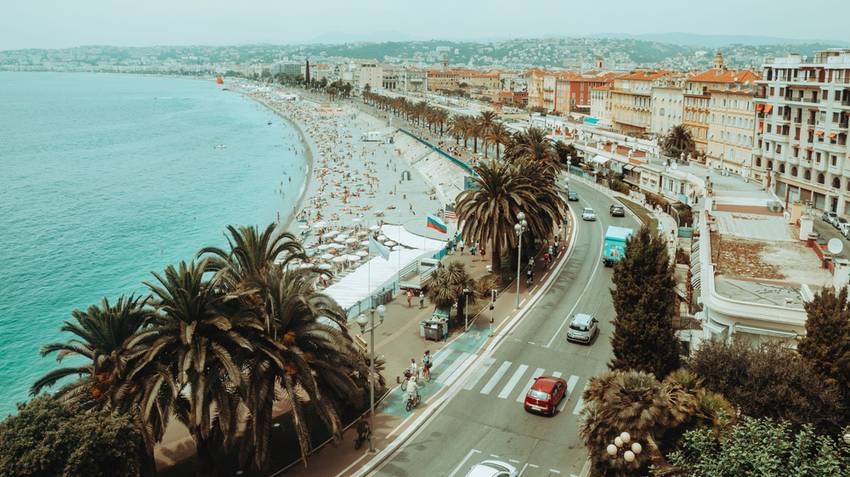
Nice in early summer has a particular quality in the mornings – the light comes in hard off the water, the flower market at Cours Saleya is still navigable before 9:00, and the Promenade des Anglais feels long and open before the day heats up. This first-time traveler guide to Nice exists because the city is easier to enjoy well than most people expect, but it does reward a small amount of orientation before you arrive.
The French Riviera has a reputation for glamour that Nice only partially earns. It is a real city – a regional capital with a university, a functioning port, residential neighbourhoods that operate on their own rhythm, and markets that are not primarily for tourists. That dual nature is what makes it interesting. The version of Nice that most first-time visitors encounter, the promenade and the old town, is genuinely worth experiencing. But the city around it is also there, and easy to access.
The old town, known as Vieux Nice, is compact enough to walk thoroughly in a morning and rewarding enough to return to in the evening, when the light on the ochre facades shifts and the narrow lanes get quieter. The pacing here tends toward slow without any particular effort on the traveler’s part – coffee stretches, the market pulls you sideways, lunch arrives later than planned.
What Nice actually feels like on arrival
The airport is close and the transfer is easy. Tram 2 runs directly to the centre in around 20 minutes, which is a better start than most comparably sized cities manage. The city opens up fairly quickly once you’re out of the station area: the sea is visible from a lot of streets, the old town is immediately legible at pedestrian scale, and the promenade is only a few minutes’ walk from most central accommodation.
The sensory register is Mediterranean without being aggressively so. Heat in summer, but moderated by a reliable sea breeze on the waterfront. The smell of olive oil and jasmine in the market in the morning. Narrow streets that stay in shade until late, then hold the warmth of the afternoon long after the sun has moved. Stone surfaces underfoot throughout the old town, which is worth knowing if you are packing for walking.
What surprises many first-time visitors is how much of the city is simply residential and unhurried a few streets off the main axis. The tourist geography is genuinely contained – roughly the promenade, the old town, and Castle Hill – and the rest of Nice goes about its day with relatively little acknowledgment of the visitor economy.
The old town, the market, and the seafront corridor
Cours Saleya runs the length of the old town’s southern edge and hosts a flower and produce market every morning except Monday, when antiques take over. The market is operational and photogenic in roughly equal measure. By 10:30 on a summer morning it is busy; by 12:00 most of the stalls are packing down. The practical advice most guides skip: arrive before 9:30 if you want space to move, and come with a bag if you plan to buy anything.
The promenade is wider than it looks in photographs and functions simultaneously as a running track, a cycling corridor, and a slow walking strip depending on the hour. Early morning it belongs to locals. By mid-morning in summer it is fully shared. The beach below is pebbled rather than sandy, which changes the experience considerably – easier to keep clean, less comfortable to lie on without a mat, and it gives the water a particular colour and clarity that flat sandy beaches rarely match.
Castle Hill, at the eastern end of the promenade, is a 90-metre climb by stairs or a free lift from the port side. The view over the bay and the old town rooftops is the kind of sight that actually justifies the effort. It also functions as a public park with shade and running water, which makes it a useful midday refuge during peak summer heat.
Who fits Nice well, and who might find it frustrating
Nice works well for travelers who want urban texture alongside beach access – the combination of a functioning city, a walkable historic centre, good food markets, and a seafront is genuinely rare and Nice delivers all of it in a small geographic footprint. It suits people who like to anchor somewhere and make small daily decisions: where to have coffee, which market stall, whether to take the tram or walk.
First-time visitors who arrive expecting a quieter, more exclusive Riviera experience sometimes find the scale of Nice surprising. This is a city of around 340,000 people, with traffic, noise, and the full range of urban density that implies. It is not Èze or Antibes. The promenade at peak summer is a large, busy, slightly chaotic public space – which for many travelers is exactly the appeal, but it is worth knowing in advance.
Solo travelers tend to find Nice comfortable. The city has a legible social rhythm, enough happening at street level to feel engaged without requiring group energy, and it is easy to fill three or four days without consulting a list. Couples on a first European trip often find it a more satisfying base than Monaco or Cannes, simply because there is more variety of experience within walking distance. Families with young children do well here too, provided expectations about the beach surface are set correctly.
If total quiet, very low prices, or a small-town pace is the priority, Nice is probably the wrong choice at this point in the season. Those needs are better served by Antibes or Villefranche-sur-Mer, both of which are 20 minutes by train and very easy day trips from a Nice base.
How days actually unfold in Nice
The natural rhythm here is late and unhurried. Kitchens at most good restaurants open at 19:30 and fill properly by 20:30. Lunch is real and two-course, not rushed. Coffee in Nice is an occasion rather than a transaction, particularly in the old town, where the narrow tables outside the cafés hold you longer than you plan.
A typical first day organises itself around the market in the morning, a walk through the old town and up to Castle Hill by late morning, lunch somewhere near Cours Saleya, and an afternoon that drifts between the seafront and the shade of the old town streets. The second day tends to be slower and more neighbourhood-focused – people find a preferred café, repeat it, discover the covered market on Rue Bonaparte, walk further east toward the port area where the tourist density thins.
The tram network is small and easy to read. Two lines cover the main corridors, and most of what a first-time visitor needs is walkable anyway. The old town has no car access, so movement inside it is entirely on foot – which is part of what keeps the experience manageable. Suitcases on cobbles are the one practical consideration for accommodation choices; staying a street or two north of the old town proper avoids the worst of it.
Nice in early summer: what the season actually changes
June is a good arrival point. The sea has warmed enough for swimming, the days are long, and the city operates at nearly full summer energy without the sheer volume of August. Evenings are warm enough for dinner outside without a layer until well past 22:00. The light in late afternoon, when the sun moves behind the hills to the west and the bay takes on a different quality, is one of the things that stays with most people who visit this time of year.
July and August bring a significant increase in visitor volume, particularly on the beach and along the promenade. The morning market remains worth doing early. The old town lanes narrow in the afternoons as foot traffic builds, and finding a table at the better small restaurants without a booking becomes genuinely difficult. The city is still enjoyable, but it requires slightly more intention – earlier starts, later dinners, midday shelter. For those weighing Nice against a first visit to another Mediterranean city, the Athens neighborhood guide covers a destination with comparable coastal heat and old-town energy but a different urban rhythm and a much lower price floor.
September is arguably the best month for a first visit – the water is at its warmest, the crowds thin noticeably after the first week, and the city returns to something closer to its year-round pace. Restaurant availability opens up, prices at accommodation soften slightly, and the promenade in the evening feels more like a local space again.
Day trips and the wider region
Nice sits at an unusually convenient point on the rail network, which makes day trips straightforward in a way that isn’t always true of Riviera destinations. Villefranche-sur-Mer is 10 minutes by train and has a small harbour, a pedestrian old town, and a beach that is calmer and less pressured than Nice’s. Monaco is 30 minutes and worth one visit for the scale and density of its absurdity. Antibes takes about 25 minutes and has a genuinely good old town with a market and a different energy.
Eze, up in the hills above the coast, requires either a bus or a car and involves a serious climb through the medieval village. It is worth it for the views and the contrast, but the village itself is small and can feel overwhelmed by visitors in July and August. The train to Cannes takes around 40 minutes and is particularly useful for travelers who want the more resort-oriented beach experience that Nice’s pebbled shore doesn’t provide.
Most of these can be done as genuine half-days rather than full days, which is part of what makes Nice work as a base. You are not committing a full day to reach somewhere interesting – the train back takes the same 20-30 minutes, and you can be at dinner in the old town by 19:30.
What a first visit to Nice actually teaches you
Nice is a city that makes sense quickly. The geography is legible, the food culture is real and accessible without requiring insider knowledge, the public transport is minimal but functional, and the combination of old town, market, and seafront gives most first-time visitors enough to sustain four days without resorting to attractions. It is not a city that demands anything in particular – it asks mainly that you show up on foot, slow down slightly, and let the day organise itself around meals and light.
As a first-time traveler guide to Nice, the most useful frame is probably this: the city rewards presence more than planning. People who arrive with a tight itinerary sometimes find it easier to follow than they expected, and people who arrive with almost no plan often find it easier still. The things that make Nice worth visiting – the quality of the light on the bay in the late afternoon, the noise and colour of the market at 9:00 in the morning, the particular pace of an evening in the old town – are all available to anyone who simply shows up and walks slowly.
Where it works less well is for travelers who want a genuinely quiet retreat, a beach without pebbles, or a price point significantly below the French Riviera average. Those are real constraints, not criticisms. Nice is what it is, and what it is happens to suit a wide range of travel styles and energy levels – provided the first-time visitor arrives knowing which version of the city they are actually walking into.
Nice first-time visitors: frequently asked questions
1. What is the best time to visit Nice for the first time?
Late May through early June and September are the most comfortable windows for a first visit. The light is strong, the sea is warm enough to swim, and the promenade and old town are busy without reaching the intensity of July and August. October still works well for those who prefer quieter streets and lower prices.
2. How many days do you need in Nice as a first-time visitor?
Three to four days is enough to understand the city’s rhythm without rushing. The first day or two naturally organise around the old town and the seafront; by day three most travelers start drifting toward Castle Hill, the Cimiez neighbourhood, or a half-day trip to Villefranche-sur-Mer or Monaco.
3. Is Nice walkable for first-time visitors?
The flat corridor between the old town and the Promenade des Anglais is very easy on foot, and most of what a first-time visitor wants is contained within it. Castle Hill adds a real climb – around 90 metres via stairs or a free lift – but the view over the bay justifies the effort for most people.
4. What neighbourhood should first-time visitors to Nice stay in?
The area immediately north of the old town, around Rue Bonaparte and Place Garibaldi, gives easy access to the market, the seafront, and the tram without the noise of the busiest tourist streets. The Carré d’Or, closer to the Promenade, is quieter at night and well-placed for early morning walks along the water before the city fully wakes up.
5. What does Nice actually feel like compared to other French Riviera cities?
Nice is a working city with real neighbourhood life alongside the tourist seafront – Cannes is more concentrated around the beach strip, Monaco is smaller and more theatrical, and Antibes has a slower harbour pace. Nice rewards the traveler who wanders a few streets inland, where bakeries, covered markets, and neighbourhood cafés run largely on their own rhythm, independently of the promenade scene.