
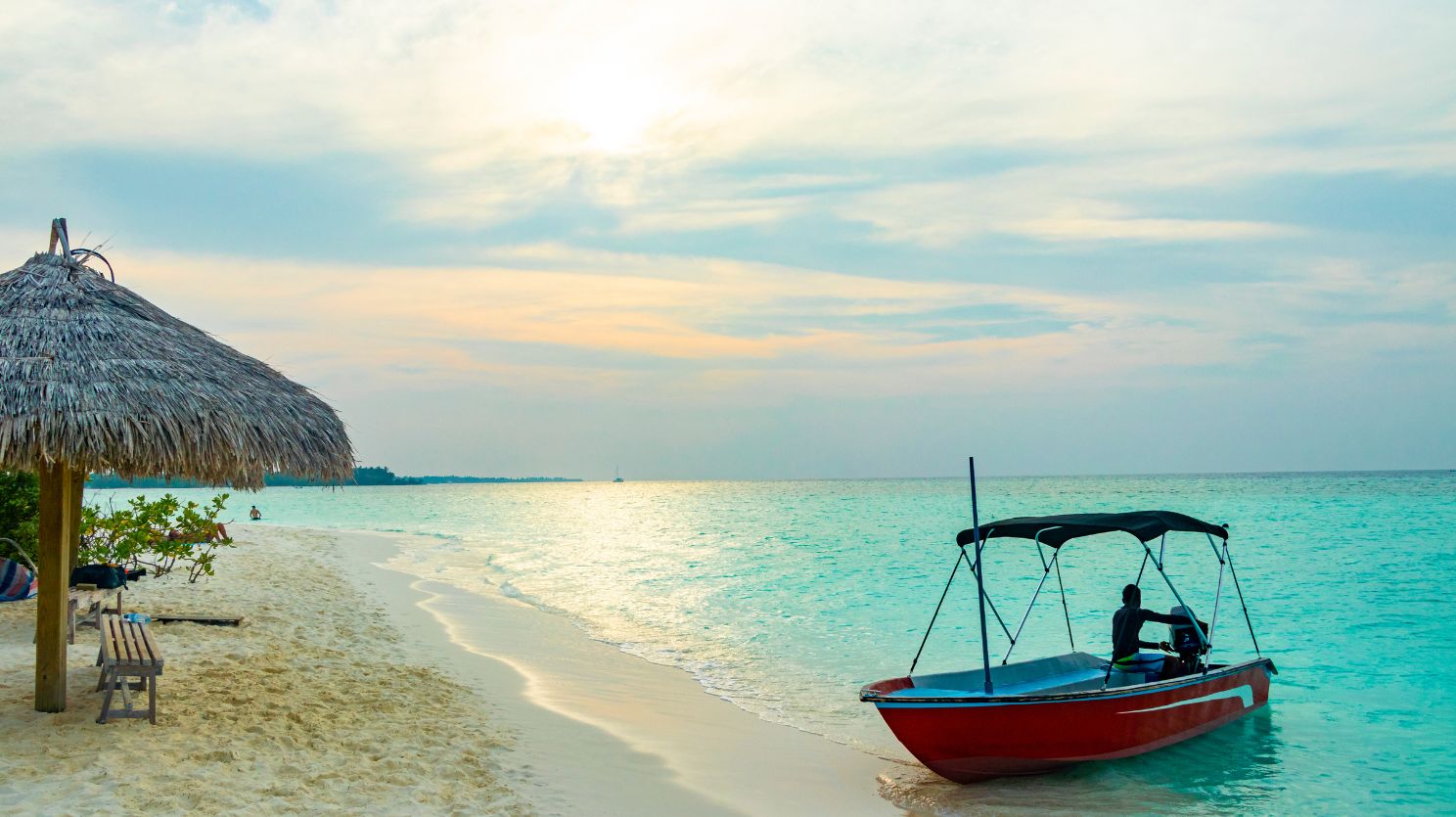
Choosing between Kuramathi and Kuredu is a key part of planning a first Maldives trip. Both offer beautiful beaches, genuine reef access and the feeling of escaping to a world surrounded by water, but their arrival logistics, island scale and daily rhythms create noticeably different stays.
Kuramathi lies in Rasdhoo Atoll and is reached by speedboat from Malé, while Kuredu sits farther north in Lhaviyani Atoll and requires a domestic flight connection. Beyond the journey, the right choice depends on the kind of Maldives week you imagine: easy access and variety, or a more remote island escape.
July brings occasional rain and livelier seas, but also softer light, quieter resorts and lower prices. The reefs remain active, the islands feel unhurried, and there is more space to enjoy the beaches, lagoons and that unmistakable sense of being far from everything.
What Kuramathi and Kuredu actually feel like on arrival
Kuramathi is compact in a way that becomes familiar quickly. The island is navigable on foot, the house reef begins close to the shoreline, and the spatial logic of the resort makes sense within a few hours. The first evening tends to settle easily – dinner feels unhurried, and the sound of the lagoon is present from almost any point on the island.
The house reef at Kuramathi is one of its clearest strengths. It drops into deep water within comfortable swimming distance of the beach, and coral cover is consistently described as healthy across the shallow sections near the entry points. For someone whose main reason for coming to the Maldives is to spend time in the water, that proximity matters – you can snorkel before breakfast without planning anything, and again at dusk when the light turns the lagoon a deeper shade of blue-green.
Kuredu feels more spread out. It is a larger island with more visible resort infrastructure – multiple food and drink zones, a dive center with genuine depth of operation, water sports facilities arranged around different parts of the beach. The atmosphere is active without being loud. There is more visual variety as you move around the island, and the overall tempo feels slightly more social, particularly around the main beach bar and the area near the dive school in the early evening.
Lhaviyani Atoll also has a well-regarded dive environment. The atoll is known for strong currents and healthy pelagic life, which makes it particularly interesting for divers rather than casual snorkelers. If underwater photography or drift diving is part of why you are going, Kuredu’s positioning in that atoll is a real advantage.
Kuramathi and Kuredu in photos
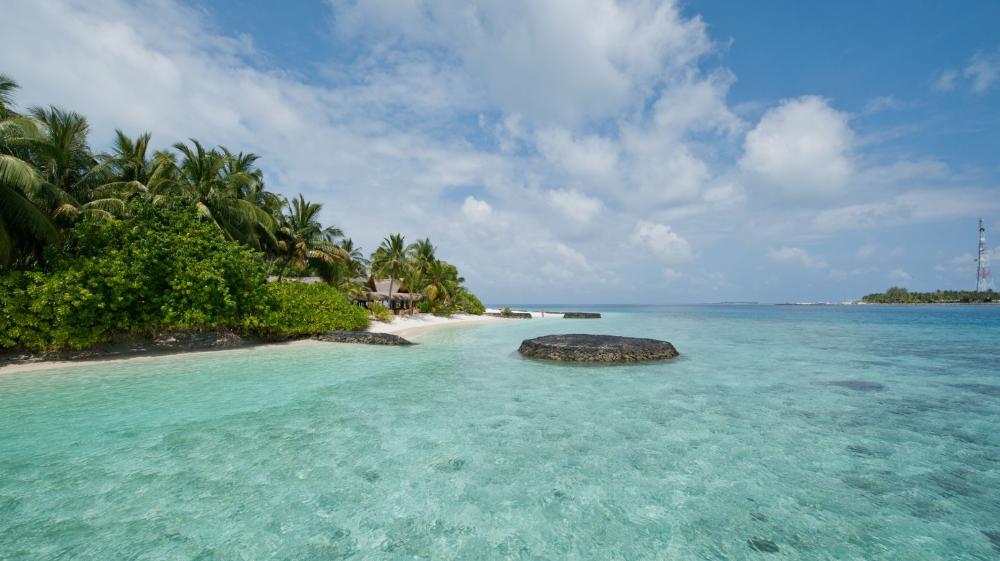
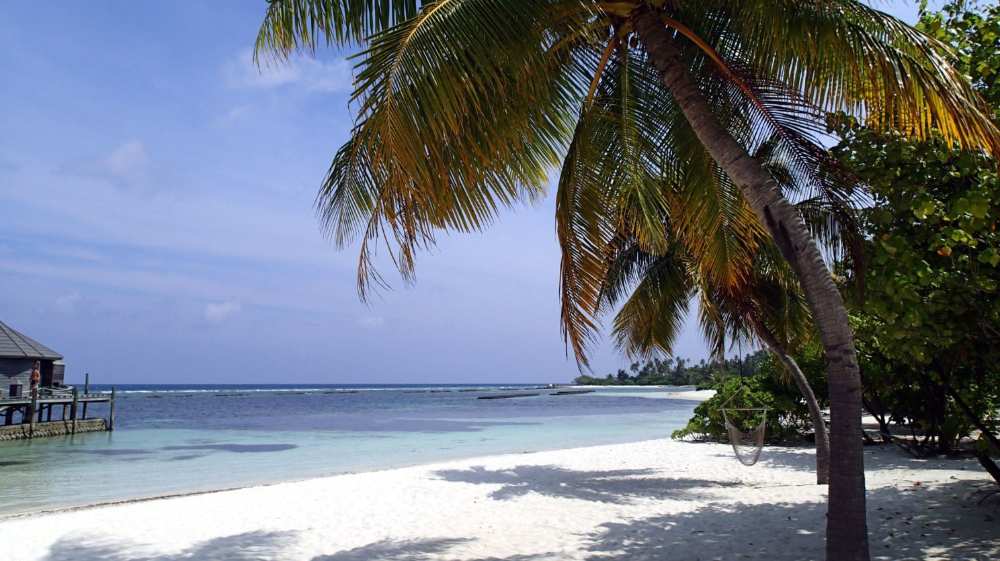
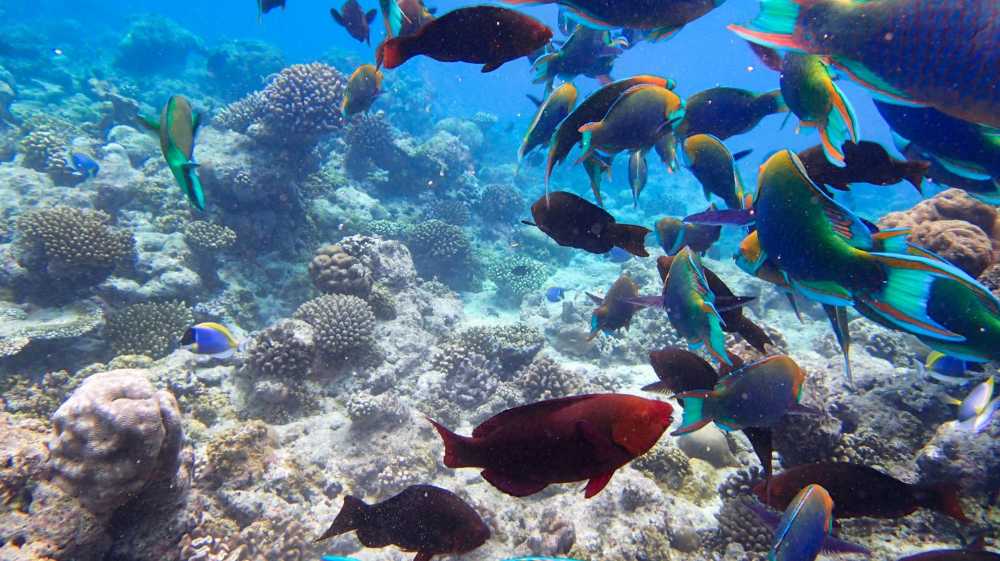
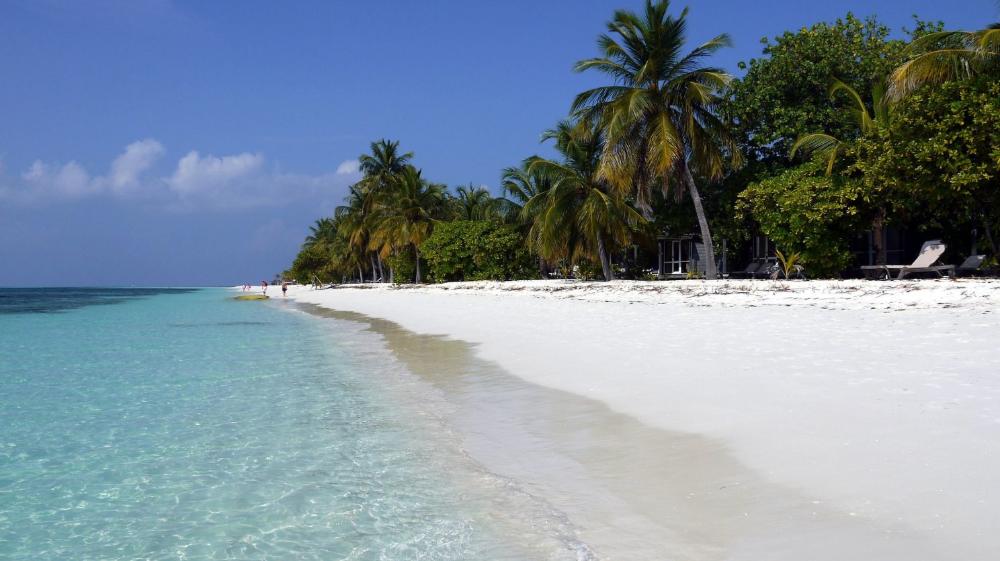
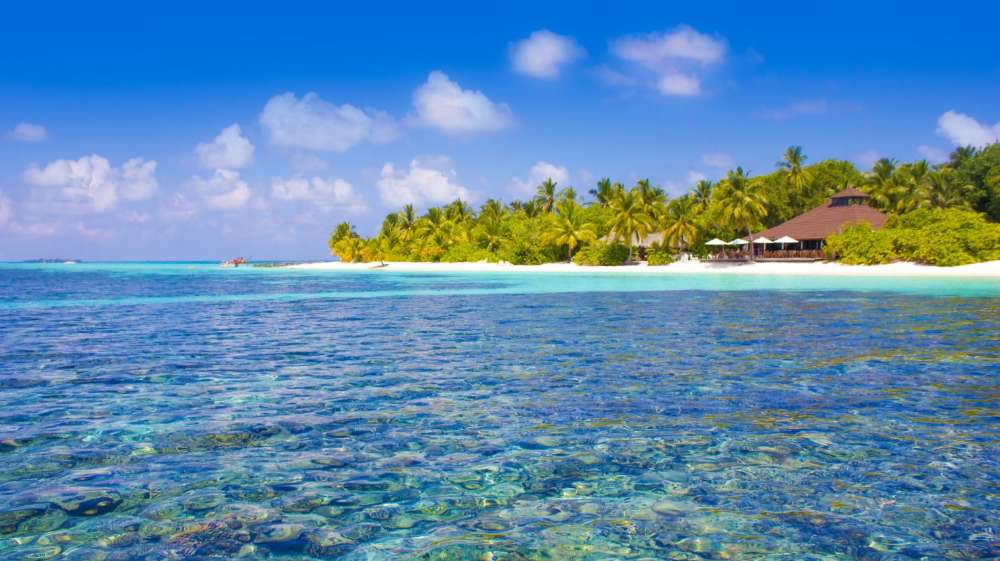
Kuramathi or Kuredu: which island suits your travel style?
Kuramathi suits travelers who want the Maldives experience without a complicated arrival, who prioritize walk-in reef access over a wider activity menu, and who are happy spending several days in a contained, calm environment. It works particularly well for couples on a honeymoon or anniversary trip, for anyone who finds resort complexity adds rather than reduces effort, and for first-time visitors who want to understand what the Maldives actually is before optimizing for specific diving sites or activity programs.
The simpler transfer – a direct speedboat from Velana International Airport in Malé – also reduces the number of things that can go wrong. A missed domestic flight connection at Ibrahim Nasir International affects only Kuredu-bound travelers. For anyone traveling with tight return connections or arriving late into Malé, that matters more than it might initially appear.
Kuredu suits a slightly different traveler. Someone who has some Maldives experience, who wants more than a few reef entries per day, who is specifically interested in dive certification or regular guided dives, or who finds a larger resort with more food and activity options more comfortable than a quieter one. It also works well for small groups where travelers have different preferences – some diving, some snorkeling, some simply resting – because there is enough variety on the island to keep different paces running in parallel.
It is worth being direct about who each island is less suited for. Kuramathi can feel limited for divers who want access to a range of atoll sites rather than a single house reef. Kuredu’s domestic flight requirement makes it a less natural choice for a short trip of four nights or fewer, where arrival-day complexity takes up a disproportionate share of the total time.
How to plan a first trip to Kuramathi and Kuredu, including arrival logistics
Arriving at Kuramathi follows a clean sequence. Velana International Airport handles the international flight, and speedboats to Kuramathi depart from the airport jetty area – the transfer takes roughly 75 minutes depending on sea conditions. Speedboats run on timed schedules, so an international arrival with a long layover or an early afternoon landing tends to align more comfortably with the afternoon transfer windows. The resort handles the booking coordination once accommodation is confirmed.
Kuredu’s arrival adds a step. After landing at Velana, travelers take a domestic flight to Lhaviyani Atoll – operated by Maldivian or FlyMe, the Maldives’ domestic carriers – followed by a short speedboat transfer to the island. Domestic flights are schedule-dependent, and if your international flight arrives late, a same-day connection may not be possible. Most travelers coming to Kuredu plan for an overnight in Malé on the arrival side to remove that dependency, especially in July when weather can occasionally affect small aircraft schedules.
On the island itself, movement is by bicycle or resort buggy. Both Kuramathi and Kuredu provide these as standard. Neither island has any public transport, taxi infrastructure or road connections to anywhere else – the island is the resort, and the resort is the island. That self-contained quality is part of what makes the Maldives feel the way it does, but it also means that if the restaurant, the dive school or the beach does not work for you, there is no fallback down the street.
How many nights to stay at Kuramathi or Kuredu in Maldives
Kuramathi works well from five nights upward. Four nights is possible, but the arrival and departure transitions take enough of the first and last day that the effective stay feels shorter. Seven nights is a comfortable window for reef-focused travelers who want repetition in the water – different entry points at different times of day, a couple of boat snorkeling excursions, evenings at the sandbank.
Kuredu justifies a longer stay more easily because there is more to occupy different kinds of days. Six to eight nights is a sensible target if diving is part of the plan – enough time to do the PADI Open Water course or complete six to eight dives across the atoll without feeling rushed. Shorter stays work, but the domestic flight connection makes anything under five nights feel slightly compressed on the travel-to-rest ratio.
What sits near Kuramathi and Kuredu worth adding to the trip
Rasdhoo Atoll, where Kuramathi sits, has a small local island – Rasdhoo Island itself – reachable by a short boat trip. It is a working fishing community with a tight grid of streets, a couple of guesthouses, and a different register from the resort environment. It is worth an afternoon if local island atmosphere interests you, though it is not a day trip destination so much as a brief change of scale.
Malé is the logical pre- or post-trip stop for either island. It is a dense, visually compressed city that sits surprisingly close to the airport – the ferry crossing takes about 15 minutes – and the old harbor area near the fish market has an energy early in the morning that is entirely its own. Travelers spending a night there on the Kuredu connection often find it more absorbing than they expected. The contrast with the resort island that follows sharpens everything: the silence on the speedboat out to the atoll becomes more noticeable after 24 hours in a city that is never fully quiet.
For travelers considering extending the trip beyond one resort, the established pattern in the Maldives is to combine two atolls with different characters – one quieter, reef-focused island and one with a livelier activity base. Kuramathi and Kuredu could theoretically form that pair, but the domestic flight involved in reaching Kuredu makes the logistics between the two more involved than combining two speedboat-accessible resorts.
Should you choose Kuramathi or Kuredu for your first Maldives trip?
For a first visit to the Maldives where the priority is reef access, ease of arrival and a calm, unhurried pace, Kuramathi is the more natural starting point. The speedboat transfer from Malé is direct, the house reef is immediately walkable from the beach, and the contained scale of the island suits travelers who want to settle in rather than navigate. Kuredu makes more sense when diving depth, activity variety or the specific marine environment of Lhaviyani Atoll is the draw – and when the arrival logistics of a domestic flight connection feel like part of the experience rather than an obstacle to manage. In July, both islands are quieter than their peak-season versions, and the trade-offs that matter most are not seasonal ones but structural ones: how you want to arrive, how you want to spend the water hours, and how much of the Maldives you want to fill versus leave open.
Kuramathi vs Kuredu FAQ: snorkeling, arrival transfers, atmosphere and first-time fit
1. Which is better for snorkeling, Kuramathi or Kuredu?
Kuramathi has a particularly strong house reef that begins close to shore and is accessible directly from the beach without a boat. Kuredu also has a solid house reef and sits near several known dive sites in Lhaviyani Atoll. For casual snorkelers prioritizing walk-in reef access, Kuramathi tends to feel more immediately rewarding.
2. How long does it take to reach Kuramathi and Kuredu from Malé?
Kuramathi is reached by speedboat from Malé, a journey of roughly 75 minutes, making it one of the more accessible resort islands in Rasdhoo Atoll. Kuredu requires a domestic flight to Lhaviyani Atoll followed by a short speedboat transfer, which adds a layer of planning and an early airport window to the arrival day.
3. Is Kuramathi or Kuredu better for a first trip to the Maldives?
Both work well for a first Maldives visit, but they suit different expectations. Kuramathi’s simpler arrival, strong house reef and contained scale make it slightly more straightforward for first-timers who want the essential Maldives rhythm without much planning overhead. Kuredu suits those who want more activity variety and are comfortable with a domestic flight connection.
4. What is the atmosphere like on Kuredu compared to Kuramathi?
Kuredu is a larger island with more visible infrastructure – multiple restaurant areas, a wider range of sport and dive facilities, and a slightly more active social rhythm. Kuramathi is quieter and more self-contained, with an atmosphere that drifts easily toward slow days and unhurried evenings at the water’s edge.
5. Is July a good time to visit Kuramathi or Kuredu?
July falls in the southwest monsoon period, which brings intermittent rain and occasionally rougher sea conditions, but both islands remain fully operational and often less crowded than during peak dry season. The light is softer, prices tend to be lower, and the reefs stay active – many travelers find the quieter pace of low season suits the Maldives rhythm well.