
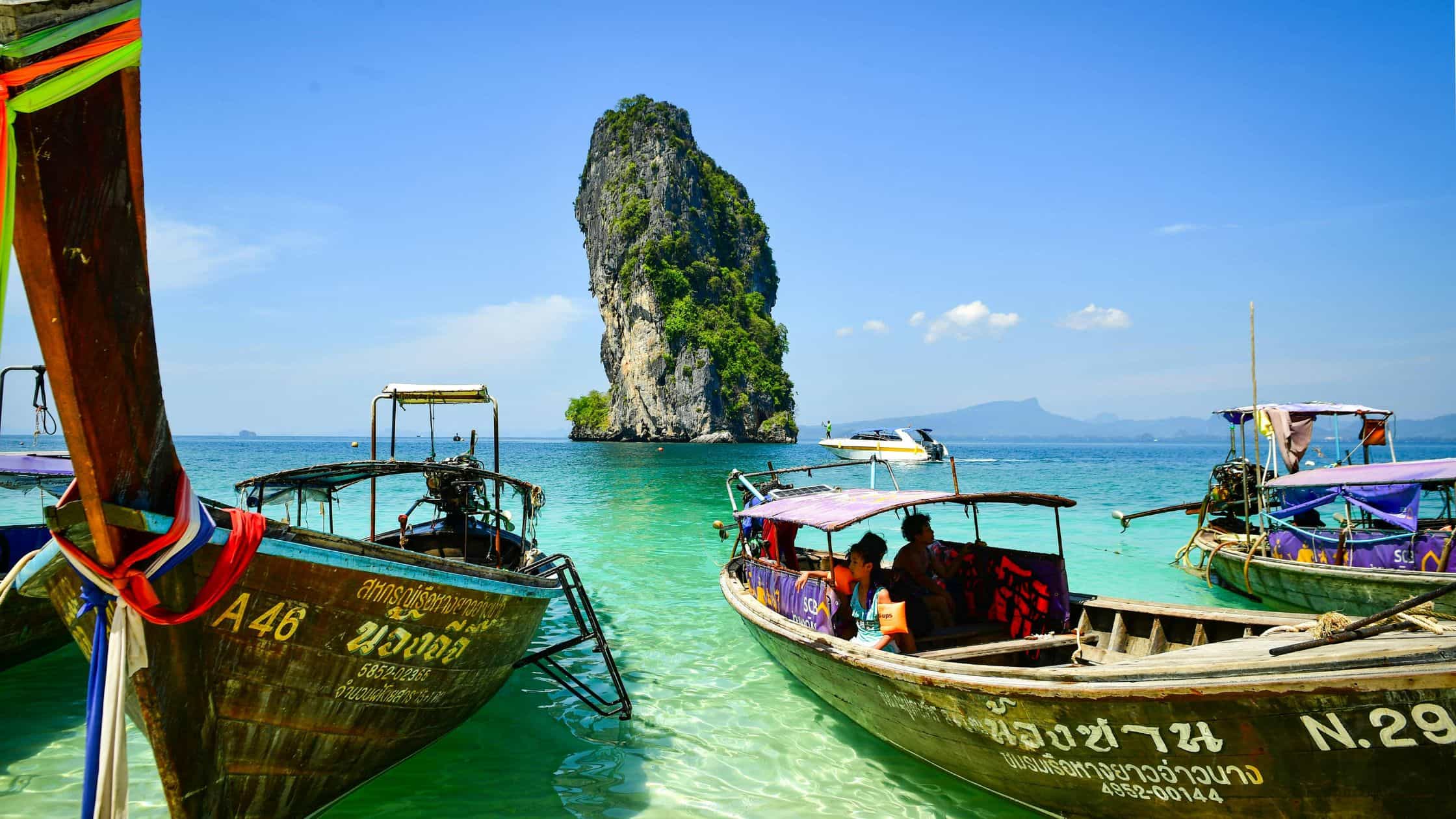
Phuket is large enough to function as several destinations at once, and choosing where to sleep shapes the trip more than almost any other decision.
The neighborhoods of Phuket vary significantly: west-coast beach strips built around resort tourism, a quiet southern stretch with a more local character, and a proper town center that most tourists skip entirely. Each makes sense for a different type of trip.
The island is not compact. From Patong to Rawai is about 20 kilometers, and from the northern tip near Mai Khao to the southern end takes close to an hour by car. That distance matters when you are deciding whether to commute to the beach every day or wake up ten steps from it.
With the high season winding down and summer settling in, the calculus shifts a little. Crowds thin out, prices soften, and the west-facing beaches get rougher swells. Understanding what each area gives you in this kind of season makes the choice considerably easier.
Best areas to stay in Phuket for first-time visitors
The west coast takes most of the tourism. Patong sits at the center of it, larger and louder than anything else on the island. Karon and Kata run south of Patong, progressively quieter as you move down the coast. Kamala sits north of Patong and feels almost like a different place: a small fishing village bay that never quite became a full resort town.
The south of the island is where the tourist density drops sharply. Rawai has a working fishing pier, actual seafood restaurants aimed at residents, and a residential feel that reads as distinctly un-resort. Chalong, just inland from Rawai, is less about beaches and more about daily life: boat charter offices, dive shops, a big Buddhist temple, and the kind of traffic circle that suggests people are actually going about their day rather than heading to a pool bar.
Phuket Town sits on the east side, away from the beaches entirely. The old Sino-Portuguese quarter along Thalang Road has been quietly developing into something interesting for years: independent coffee shops in restored shophouses, small art spaces, local restaurants that don’t have picture menus. It’s the part of Phuket that tourists usually discover by accident and then wish they’d booked into from the start.
Is Patong a good area to stay in Phuket?
Patong is the obvious default for first-time visitors, and there are legitimate reasons for that. It has the widest beach on the island’s west coast, every category of accommodation from budget guesthouses to large international hotels, and a density of restaurants and transport options that makes it the easiest place to land without a plan.
The tradeoff is the energy. Bangla Road, the entertainment strip, runs from the beach inland and stays loud until well past midnight. Even if you are staying three or four streets away from it, the ambient noise level at Patong is simply higher than anywhere else on the island.
The beach itself fills up quickly each morning in peak season, and the street touts near the beachfront operate with real persistence. None of that is a problem for one or two nights if you are passing through. It becomes wearing over a week, especially for travelers who came to Phuket to decompress rather than to go out. The question to ask before booking Patong is whether you actually want what it’s selling, rather than whether it’s the most convenient option.
Kata vs Karon: which Phuket beach area is better?
If the goal is genuinely a beach-focused week with a manageable pace, Kata reads more comfortably than Patong for most travelers. The bay is slightly more sheltered, the strip along the beach road has good food options without the nightlife pressure, and the walk from one end of the beach to the other takes about 15 minutes.
Kata Noi, just around the headland, is smaller and calmer still. Karon sits between Patong and Kata geographically and temperamentally. The beach is actually longer than Patong’s, and the town behind it is quieter, though it can feel a bit thin: fewer restaurants of real quality, less street life. It works well as a base if you are renting a scooter and planning to move around, less so if you want variety within walking distance.
One practical detail: during the summer months, the waves on Kata’s west-facing beach pick up considerably. Red flags appear more often, and some days the sea is not swimmable. This is worth knowing before committing to a two-week stay in July.
Is Rawai or Chalong better for a longer stay in Phuket?
Rawai doesn’t have a great swimming beach. The shore is rocky and shallow, and the water near the pier smells appropriately of a working fishing village. That is not a flaw if you came to Phuket for something other than resort life.
What Rawai offers instead is a density of long-term expats, a seafood market where you can pick your fish and have it cooked next door, and proximity to the small offshore islands that make for good day trips when the weather allows. It tends to attract people staying for a month or more: remote workers, divers, people who’ve been to Phuket before and already did the resort version.
Chalong is the practical hub of the south: boat trips, dive operators, bike rentals, and a temple complex that sees more Thai visitors than foreign ones. Staying in Chalong makes less sense than using it as an anchor point from Rawai, but the area overall suits travelers who prefer a local rhythm over a beach-resort rhythm.
Is Phuket Town a good place to stay without beach access?
The old town is genuinely underused. Most people day-trip here from their beach hotel, spend two hours on Thalang Road, buy something at the weekend market, and leave. That’s a reasonable use of an afternoon, but it misses what the town is actually good for as a base.
The Sino-Portuguese shophouses along the old streets have a particular quality in the early morning: quiet, light-filtered, with the smell of coffee from places that don’t have tourist menus. The local restaurants around the market area cook for residents and price accordingly. There are independent accommodation options with real character, particularly in restored shophouse buildings.
The main friction is beach access. Getting to Kata or Patong from town takes 20 to 30 minutes by scooter or taxi, and there’s no meaningful public beach nearby. That makes Phuket Town a strong base for people who are not actually coming for beach time, and a poor one for people who are. For travelers drawn to urban texture and local rhythm, it punches above its reputation.
Best Phuket area for your travel style
Patong makes most sense for travelers who want maximum convenience and don’t mind trading quiet for it, or for a single-night base before moving elsewhere on the island. Kata and Kamala work well for families, couples on a beach-focused trip, and travelers who want to switch off without feeling isolated. The rhythm is gentler without being dull.
Rawai and Chalong fit people who have been to Phuket before, who are staying for longer than a week, or who specifically want a working, residential feel rather than a resort one. Solo travelers and remote workers tend to settle here comfortably. Phuket Town suits urban-leaning travelers, culture-interested visitors, budget-conscious longer stays, and anyone who already knows they don’t need to be near the beach every day.
If you’re comparing Thailand’s cities generally and still deciding whether Phuket fits your profile, the Chiang Mai vs Phuket comparison is a useful frame for that decision.
How to get around Phuket from each neighborhood
Phuket has almost no functional public transport. The songthaews (shared trucks) run fixed routes between the main areas but on irregular schedules and limited coverage. In practice, getting around independently means either renting a scooter or using taxis and ride apps.
Grab operates on the island and is more reliable than negotiating with tuk-tuk drivers near the tourist strips, where fare inflation is common. A scooter changes the trip considerably: suddenly the distance between Patong and Rawai is a 25-minute ride through hills rather than a logistical obstacle.
If you are staying in one area and planning to move around, plan for 300 to 600 baht per Grab trip between the major beach zones, depending on distance and surge pricing. Budget this into your daily thinking if you’re basing yourself somewhere like Phuket Town and intending to reach the beaches regularly.
The west-coast beaches are roughly a 20 to 25 minute drive from town. Kata to Patong by scooter takes about 12 minutes along the coast road. These feel like small distances until you’re doing them twice a day in afternoon heat.
For travelers planning a broader Thailand circuit and weighing Phuket as part of it, the first-time Bangkok guide gives a useful sense of how the country’s urban and coastal registers compare in pacing and energy.
Best Phuket neighborhoods during the wet season
From roughly May through October, Phuket enters its wet season. The west-coast beaches are the most affected: the swell builds, red flags are common, and some beaches close to swimming on rough days. The visual impression of the sea shifts too, from the flat blue of high season to something greener and more churned.
This is not the disaster that some travel advice suggests. The rain usually falls in the afternoon rather than all day, mornings tend to stay clear, and the island is genuinely less crowded. Hotels in Patong and Kata drop their rates significantly. If your priority is the sea and the beach, this matters.
If your priority is the island’s rhythm, the town, or diving on the calmer east-coast sites, the wet season is less of a constraint.
Rawai and the southern bays handle the wet season more comfortably than the exposed west coast. Some travelers specifically prefer Phuket in May or June: the light has a different quality, the tourist pressure eases, and the island feels a little closer to what it actually is rather than what high season turns it into.
If you’re weighing Phuket as a longer stay rather than a short trip, the experiential read on where travelers tend to base themselves in Pattaya covers a comparable coastal destination with a different energy profile – useful context if you’re still deciding which Thai coastal city fits the kind of trip you’re planning.
Phuket neighborhoods FAQ
1. What is the best area to stay in Phuket for first-time visitors?
Patong is the easiest base for first-timers who want everything within walking distance and don’t mind noise and activity late into the evening. Kata and Karon are better if you want a beach-centered trip with a quieter rhythm. Rawai and Chalong suit travelers who already know they prefer local life over resort convenience.
2. Which Phuket neighborhood is best for families?
Kata is generally the strongest fit for families: the beach is calm, the strip is compact, and there are enough restaurants and activities without the late-night energy of Patong. Kamala is a lower-key alternative with a similarly sheltered bay and fewer crowds.
3. Is Patong worth staying in or should I avoid it?
Patong makes sense if you want the widest range of restaurants, bars, and access to transport connections. It becomes harder to enjoy after a couple of nights if you are sensitive to noise, traffic, or high-pressure street touts. The beach itself is wide but busy during peak season.
4. Where do remote workers and long-stay travelers tend to base themselves in Phuket?
Rawai, Chalong, and the areas around Phuket Town are the most practical for longer stays. Phuket Town in particular has stable internet, local coffee shops, a lower cost of living than the beach areas, and enough daily rhythm to make a working month feel sustainable.
5. How different are the Phuket neighborhoods in summer compared to high season?
Between roughly May and October, Phuket’s west-coast beaches face heavier swells and the sea can be rough for swimming, particularly at Patong and Karon. Crowds thin noticeably, prices drop, and the island feels slower. East-coast areas like Rawai remain calmer. The rain usually arrives in concentrated afternoon bursts rather than all-day grey.
6. Is Phuket Town worth staying in instead of the beach areas?
Phuket Town is genuinely different from the resort strip: Sino-Portuguese shophouses, a local restaurant scene, weekend markets, and none of the beach-resort sales pressure. It suits travelers who prefer urban texture over sand access. Getting to the beaches requires a scooter or taxi, so it works best for people who are deliberate about that tradeoff.