
Antalya is large enough to feel like several different trips depending on where you sleep. The neighborhood you choose here does more work than in most coastal cities in Turkey, it shapes not just the commute but the whole atmosphere of an ordinary day.
Most people arrive having heard of Kaleiçi and book there by default. That is often the right call, but not always. The city spreads considerably beyond those old walls, and the tradeoffs between staying inside the historic core versus somewhere quieter along the coast are real enough to think through before committing.
What follows is less a tour of highlights and more an honest read of how each area actually feels to live in for a few days – who tends to settle comfortably, who may discover another district would have suited them better.
Is Kaleiçi the best area to stay in Antalya?
The old city is genuinely compact. Roman walls on one side, an Ottoman-era harbor on the other, and a dense knot of restored stone houses in between. Walking it takes about twenty minutes end to end, though most people take considerably longer because the lanes double back without warning.
In late spring the atmosphere shifts into something approaching lively atmosphere. The restaurant terraces fill up by 19:00, the harbor-facing streets get loud by 21:00, and the alleys near the Hadrian’s Gate entry point collect groups of day visitors from the surrounding resorts until well past dark. For a night or two this energy works. For longer stays it becomes a defining part of the experience.
The cobblestones deserve a mention. They are authentic and very much part of the district’s character – uneven underfoot, difficult with luggage on arrival, and noticeably uneven after a long day. The streets inside the walls were not designed for rolling suitcases and they do not apologize for that. Arriving by taxi means the driver drops you at one of the gates and you carry the rest yourself.
That said, the position is hard to argue with. If your goal is to walk to the harbor before breakfast and eat dinner within a few hundred meters of where you sleep, Kaleiçi does that with exceptional proximity. It is also where most of the boutique accommodation sits, converted mansions with courtyard breakfasts, which give the area a texture that the newer districts simply do not have.
Is Konyaaltı a good area to stay in Antalya?
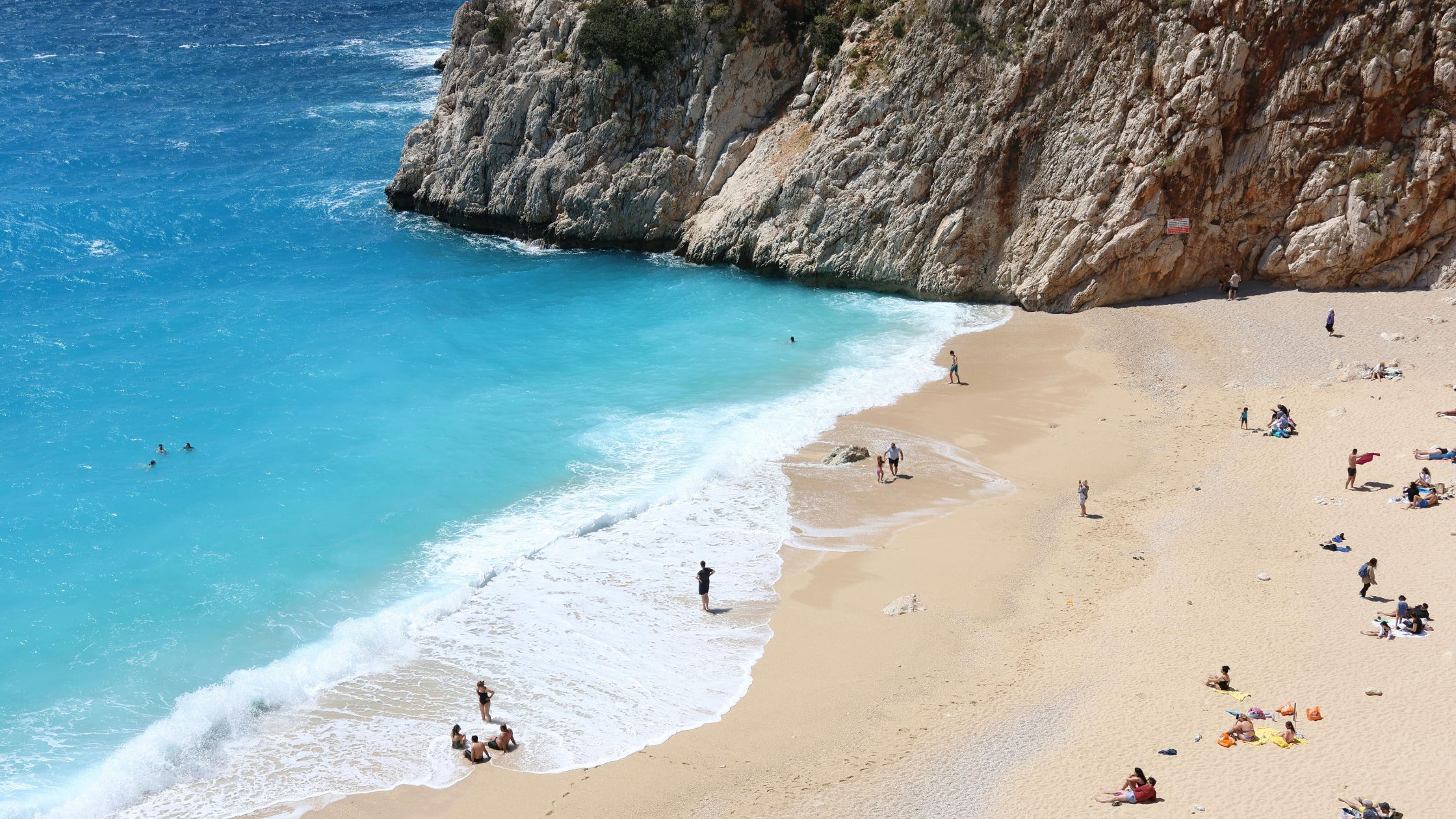
About three kilometers west of the old city, Konyaaltı organizes itself around a long pebble beach backed by a pedestrian promenade. The residential streets behind it are wider, flatter, and considerably quieter in tone. The beach itself is public and free to access, which is not always the default on this part of the Turkish coast. In late spring the water is already warm enough to swim comfortably, and the morning hours before 10:00 are calm in a way that the Kaleiçi harbor rarely manages even in low season.
For remote workers or travelers planning a stay of more than five days, Konyaaltı tends to work better as a base than the old city. The separation between morning work and afternoon beach is almost automatic, the neighborhood sets its own rhythm in a way that denser districts resist.
There are cafes with reliable wi-fi a few streets back from the promenade, and the supermarket situation is considerably more practical than anywhere inside the old walls. The difference is atmosphere. Konyaaltı is a pleasant modern district, it is more understated in character. If the reason you came to Antalya was the Ottoman architecture and the Roman harbor, staying this far west means treating those as excursions rather than your immediate surroundings.
Is Lara the best area to stay for an Antalya beach holiday?
East of the city center, the coast shifts into a long stretch of large all-inclusive hotels. Lara is the name most commonly attached to this area, though it bleeds into Kundu and other resort developments further along.
This part of Antalya is built around a specific travel mode: fly in, check in, stay put. The beach is a wide sandy stretch, the hotels run to massive scale, and the surrounding streets exist primarily to service those hotels rather than to be lived in independently. Travelers who arrive expecting to walk to a local restaurant or take a ten-minute tram ride into the old city will find the distances greater than many visitors initially expect. Lara is more self-contained from the city fabric in a way that only becomes apparent once you are there.
For families on a week-long beach holiday with children who need pools and organized activity, the infrastructure is well-suited. For anyone else, the location creates a different relationship with the city than many visitors initially expect.
Is Muratpaşa a good area to stay in Antalya?
The modern central district directly above Kaleiçi is where most of the city’s daily life actually runs. Muratpaşa has supermarkets that open before 08:00, pharmacies, local restaurants that fill with office workers at lunch, and a general a more everyday local rhythm that colors the harbor area.
Its appeal comes from daily life rather than historic atmosphere in the way that travel photography suggests a neighborhood should be. The streets are functional and the buildings are ordinary. But for longer stays, a week or more, the combination of a short walk down to Kaleiçi and a separate, quieter base to return to has a logic that many travelers only discover after one night in the old city and a more energetic second.
The tram line that runs along the coast connects Muratpaşa to both Konyaaltı in the west and the old town area to the south, which makes the absence of a car easy to manage. Accommodation here is almost entirely local hotels and apartments rather than boutique conversions, which means lower prices and a different kind of character.
How to get around Antalya neighborhoods
Antalya has a tram line that handles the main coastal corridor reasonably well. It connects the city center to Konyaaltı in one direction and to the museum area in the other, running frequently enough during the day that it is worth using rather than defaulting to taxis for every movement.
Inside Kaleiçi, everything is on foot – there is no alternative. The streets are too narrow for vehicles and the tram stops short of the old walls, leaving a short but hilly approach depending on which gate you enter through. From Kaleiçi to Konyaaltı beach is about 25 minutes on foot along the cliff path or a short tram ride if you prefer.
For day trips along the coast – Perge, Side, Alanya – the main bus terminal (otogar) handles most routes. Dolmuş minibuses cover shorter connections. The gaps in public transport start to show clearly for anyone trying to reach ruins or waterfalls outside the main corridors, and renting a car for one or two days of regional exploration simplifies regional exploration considerably. The Turkey loop covering Istanbul, Antalya, Cappadocia and Izmir covers how this city sits within a larger itinerary if you are building a multi-stop route.
Best time to stay in Antalya by neighborhood
Late spring is probably the most comfortable window in which to calibrate expectations. The heat is present but not yet the dominant feature of every afternoon. The evening air is warm without being heavy, and the Kaleiçi terraces are busy while still feeling balanced.
By July that balance shifts. The harbor-facing streets in Kaleiçi peak in density between 19:00 and 23:00, when they concentrate a significant mix of local visitors, resort day-trippers, and international tourists in a space that does not expand to accommodate them. Konyaaltı beach fills earlier in the day and empties later.
For travelers interested in what happens once the beach day ends, the Antalya local life after the beach read explores how the city shifts into a more residential rhythm after sunset, from neighborhood cafés and waterfront walks to the everyday patterns that sit beyond the resort-facing coastline.
The cliff path between the two areas stays pleasant in the early morning even in high summer, one of those routes that works precisely because most people do not take it until the afternoon. Travelers who prefer warmer water and quieter streets should aim for late May or early October. Those who want the maximum social energy and enjoy the city at its most active should plan for August without regret – that is what the city is built for in those weeks.
If you are weighing Antalya against a quieter destination on a first visit to the region, the Cappadocia first-visit read describes a very different pace and spatial logic – useful context for the decision before booking.
Best Antalya neighborhood for your travel style
Kaleiçi works best for short stays (two to four nights), travelers who prioritize atmosphere and proximity over quiet, couples who want a boutique hotel experience, and anyone arriving specifically to see the old city on foot.
Konyaaltı suits remote workers planning a longer stay, travelers who want the beach as a daily anchor, and anyone who finds the old-city density less aligned with their preferred pace rather than appeal after day two. Muratpaşa suits practical travelers: those who want to keep costs down, use the tram regularly, and treat Kaleiçi as a destination rather than a home base. It is also the most sensible option if you are arriving with a rented car, since parking inside the old walls is very limited.
Lara suits families committed to the all-inclusive resort model and travelers who have no plans to engage with the city itself. For everyone else, the distance from the city fabric is a meaningful consideration rather than a minor inconvenience.
Antalya neighborhoods FAQ
1. Which neighborhood in Antalya is best for first-time visitors?
Kaleiçi is the most common base for first-timers. It puts you close to the Roman harbor, the old walls, and most of the walkable evening energy. The district comes with a more active evening rhythm and uneven cobblestone streets. If you prefer quieter mornings and more space, Konyaaltı’s western edge works better, especially for stays longer than three or four nights.
3. Is Antalya a good base for day trips along the Turkish coast?
Yes, practically speaking. Antalya sits within an hour or two of several significant sites including the ruins at Perge, the waterfall at Düden, and the beach towns of Side and Alanya to the east. The bus terminal handles most regional routes, though renting a car offers the greatest flexibility for anyone visiting more than two sites.
4. When does Antalya get crowded and which neighborhoods feel it most?
July and August bring the heaviest volume, concentrated around the harbor waterfront and the main Kaleiçi entry gates. The beach promenade at Lara fills with package resort guests. Konyaaltı feels the crowds later in the day rather than all at once. If you are arriving in late May or early June, the energy is noticeably more relaxed across all areas.
5. Is Antalya walkable enough to stay without a car?
Within Kaleiçi itself, yes. The old city is compact and most of what a short-stay visitor needs is reachable on foot. Getting to Konyaaltı beach from Kaleiçi takes about 25 minutes walking or a short tram ride. For anywhere outside the city center, taxis or the dolmuş minibus network are the practical options. A car becomes useful only if you are planning regular day trips.
6. Which part of Antalya suits remote workers best?
The streets around Muratpaşa and the upper Kaleiçi fringe have a slower rhythm than the harbor-facing lanes and a growing number of cafes with reliable wi-fi. Konyaaltı also works well for remote workers who want a clear visual separation between work hours and the afternoon. Lara is more convenient if you need large supermarkets and quieter residential streets, though it feels less atmospheric for a working stay.