
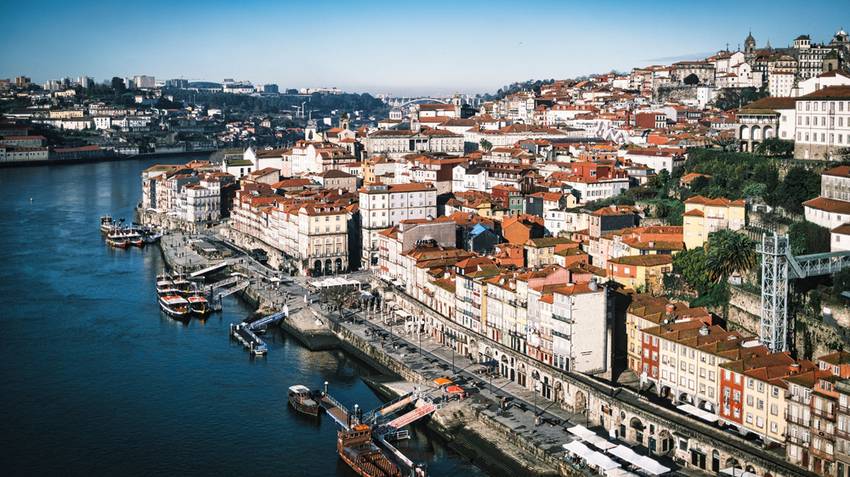
Porto’s neighborhoods don’t flatten into a single atmosphere. The city is built on granite hillsides above the Douro, and the result is a place that feels different depending on which street you’re on – quieter two turns from the main corridor, louder on the river side, more residential the further east you move from the waterfront. Summer brings long evenings, a warm Atlantic light over the water, and a social tempo that accelerates steadily from around 19:00 until well past midnight in certain districts.
For travelers deciding where to base themselves in Portugal’s second city, the neighborhood question matters more than it might appear on a map. Porto is not large, but its terrain profile and the significant variation in atmosphere between districts mean that the less suitable base can shift the whole experience – more walking than expected, more noise at night, less connection to the kind of daily rhythm you were looking for.
What follows is a read through the districts that actually differ from each other in character, pacing, and traveler fit – not an exhaustive list, but a practical one.
Ribeira and the waterfront: the center of gravity for visitors
Ribeira is where Porto makes its strongest first impression. The tiled facades, the narrow lanes dropping toward the Douro, the wine barges moored below the Dom Luís bridge – this is the visual signature of the city, and it lands quickly on arrival. In summer, the light on the water in the late afternoon is particularly clear, and the riverside terraces fill early.
The trade-off is density. Ribeira runs at a tourist-heavy rhythm most of the day, and evenings bring noise that continues well past midnight – this is not a residential neighborhood in any meaningful sense during the summer window. Most of the restaurants here price toward visitors. The walking surface is steep and uneven in places, with narrow stairways connecting levels that look closer on a map than they feel on foot.
Ribeira works well as a place to spend time, less well as a place to sleep for more than two nights if you’re sensitive to after-dark acoustic activity. For a first night in Porto, it remains the most immediate entry point into the city’s character.
Bonfim: the neighborhood that fits most travelers
Bonfim sits just east of the historic center and has shifted significantly in recent years toward independent accommodation, natural wine bars, and a quieter residential evening. It’s close enough to walk to Ribeira in around fifteen minutes – downhill on the way there, uphill on the way back – and far enough to function as a genuine neighborhood rather than a tourist corridor.
Mornings in Bonfim have a neighborhood quality that Ribeira doesn’t: bakeries with actual locals in them, fewer tour groups, a slower opening rhythm. The streets are still cobbled and sloped, but the gradient is more manageable than parts of the old town, and the overall walking profile is consistent with a comfortable stay of several days.
Slow travelers and remote workers tend to settle here naturally. The café infrastructure is good, evenings are active without being loud, and the connection to the rest of the city by foot or by bus is straightforward. For travelers weighing the Lisbon vs. Porto question – and the very different neighborhood dynamics that come with each city – the Lisbon vs Porto first-timer comparison covers how those differences play out at a neighborhood level.
Cedofeita and the arts district: a different social register
Cedofeita is the neighborhood most often described by locals as where Porto lives when it’s not performing for visitors. The street grid is slightly less steep, the building stock is a mix of early twentieth-century townhouses and smaller residential blocks, and the concentration of independent shops and concept stores along Rua de Cedofeita gives the district a daytime rhythm that doesn’t depend on the Douro waterfront.
Evenings here follow a later, slower arc than Ribeira – wine bars and small restaurants fill from around 20:30, conversation carries from the open doorways, and the district doesn’t reach its social peak until closer to 22:00. It’s a neighborhood that works well for travelers who want proximity to Porto’s food and wine scene without the soundtrack of the tourist corridor after midnight.
The Galerias de Paris area, which overlaps with the edge of Cedofeita and Bairro das Flores, runs louder – it’s Porto’s most concentrated late-night zone, and the acoustic register shifts considerably after 23:00. If you’re staying here in summer, the side streets off the main bar axis hold their quiet significantly better than the central stretch.
Foz do Douro: the coastal edge of the city
Foz is where the river meets the Atlantic, and the neighborhood feels like a different register of the city entirely. The residential scale is larger, the streets wider, the promenade along the ocean long and relatively uncrowded even in peak summer compared to what you’d expect from a beach area this close to a major city.
The sea breeze arrives in Foz noticeably earlier in the afternoon than in central Porto – usually by 15:00 or 16:00 in summer – which changes the outdoor experience of the second half of the day. The Atlantic-facing promenade is at its quietest in the early morning, and the local rhythm here is more about long walks and evening seafood than cultural sightseeing.
Foz is not the right base if you want to be walking distance from the historic center. It’s a 25- to 30-minute metro or tram ride into Aliados. But for a longer stay in Porto, particularly for travelers who want a coastal daily rhythm alongside city access, Foz is a genuine alternative base – not a compromise.
Pacing and movement across the city
Porto’s terrain means that the distance between two points on a map is rarely the distance you actually walk. The city sits on a series of granite hillsides, and most routes between neighborhoods involve some ascent, descent, or both. The Ribeira-to-Bonfim walk is a good example: fifteen minutes downhill in one direction, closer to twenty-five minutes back up, with cobbled surfaces throughout. By day two or three, most travelers naturally adjust their route choices.
The metro covers the airport and the main central corridor efficiently, and the Aliados station functions as the practical hub for most connections. Bus routes fill the gaps – particularly useful for neighborhoods on the hillsides above the metro line. The network is legible once you’ve used it once, though the first transfer can take longer than the route planner suggests.
Evening movement in Porto follows a clear rhythm. The city accelerates socially after 19:00, with restaurants filling from 20:00 and bars from around 21:30. The later end of the evening – particularly around Galerias de Paris and the Ribeira waterfront – runs active until 01:00 or later in summer. The neighborhoods further from these axes return to residential quiet considerably earlier.
For travelers who want to go deeper into how Porto’s atmosphere and seasonal pacing sit relative to a first visit, the Porto first-time guide covers the arrival sequence and initial orientation in more detail.
Who Porto’s neighborhoods suit, and where the fit shifts
Ribeira is the right choice if you want total immersion in Porto’s visual identity for a short stay – two or three nights, comfortable with tourist-density atmosphere, not sensitive to late-night noise. It’s not a comfortable longer-stay base for most travelers, and it’s not where Porto’s residential daily life actually happens.
Bonfim suits the widest range of travelers: first-timers who want proximity without noise, remote workers who need a functioning café rhythm, couples who want a slower evening pace. It’s the neighborhood with the most forgiving terrain profile relative to its central position.
Cedofeita fits travelers who are specifically interested in Porto’s independent food and wine scene – people who plan their days around small producers, natural wine, and neighborhood-scale restaurants rather than sightseeing itineraries. The social tempo here suits later risers.
Foz suits longer stays, coastal rhythm preferences, and travelers who don’t mind a metro connection to the historic center. It works well as a second chapter in a Porto visit – Bonfim or Ribeira first, then Foz for a slower remainder.
Settling into Porto’s rhythm: what actually works
Porto is a city that rewards a certain kind of unhurried approach. Not because it’s slow in the usual sense – summer evenings run active and social until late – but because the terrain, the cobbled surfaces, and the way each neighborhood has a distinct tempo means that the city gradually adjusts how you move through it.
The travelers who fit Porto best are those who are comfortable with some gradient, who value atmosphere over convenience, and who are willing to let the day’s structure form around a long lunch or an unplanned walk toward the water rather than around a list of sites. Porto in Portugal occupies a particular position: more intimate in scale than Lisbon, less obviously touristic than the Algarve, with a neighborhood character that rewards staying in one place long enough to notice the small things.
Fit shifts noticeably for travelers who need flat walking surfaces, a quiet sleeping environment in the city center, or a beach as a daily anchor rather than an occasional excursion. None of those requirements are impossible in Porto, but each one requires a different base – and the right choice between Bonfim, Cedofeita, and Foz is essentially a question of which of those trade-offs you’re willing to make.
Summer is a generous season here. The long light, the Atlantic keeping temperatures moderate relative to the south, and the evening social rhythm that runs unhurried from dinner to late night – Porto in June through August has a particular ease that the city doesn’t always get credit for.
Continue exploring long-stay friendly destinations across southern Europe, where the neighborhood question and the pacing logic follow similar patterns.
Contextual navigation
Travelers who arrive in Porto uncertain whether they’ve picked the right Portuguese city often find the Lisbon first-time guide clarifies the comparison quickly – not as a correction, but as a way of understanding what each city actually offers at the neighborhood level.
Porto neighborhood guide: common questions
1. Which Porto neighborhood is best for first-time visitors?
Ribeira gives first-timers the most immediate sense of Porto’s visual identity, with the waterfront and Douro views within walking distance. The trade-off is visitor activity and noise after dark. Bonfim suits travelers who want the same central position with a quieter, more residential evening.
2. Is Porto easy to navigate between neighborhoods?
The metro network covers the airport, Aliados, and the main eastward corridor efficiently. Between neighborhoods, most movement is on foot or by bus, and Porto’s terrain means nearly every walk involves some gradient. The city rewards a relaxed pace rather than aggressive sightseeing.
3. Where should slow travelers or remote workers stay in Porto?
Bonfim and Cedofeita are consistently strong choices for slow travelers and remote workers. Both have independent cafés and wine bars, a residential rhythm that doesn’t revolve around tourism, and enough distance from the Ribeira corridor to keep evenings genuinely quiet.
4. How does Porto feel in summer compared to other seasons?
In summer Porto stays warm without reaching the extreme heat of Lisbon or the Alentejo, and the Atlantic breeze reaches much of the city by late afternoon. The city’s evenings extend naturally – terraces fill slowly, the light stays long over the Douro, and the streets around Cedofeita and Bonfim hold a quiet rhythm well into the night.
5. What is the atmosphere like in Foz do Douro?
Foz is Porto at its most residential and coastal, sitting where the Douro meets the Atlantic. The promenade along the ocean is long and relatively uncrowded compared to the city center, the sea breeze arrives earlier in the afternoon, and the neighborhood has a settled, unhurried atmosphere that works well as a longer-stay base.