
Thessaloniki has a particular pull in summer – long evenings that start at the waterfront and drift somewhere inland without much intention, the smell of sea air mixing with grilled meat from a side street, cafes that are still filling at 22:00 while the sky holds the last of its color. Choosing between the neighborhoods of Thessaloniki changes the texture of this experience significantly, and the city is compact enough that the differences are felt rather than calculated.
This is not a city where location is purely logistical. The waterfront neighborhood and Ano Poli both sit within walking distance of the same set of monuments, but they offer a completely different daily rhythm – one loud and social from early evening, the other quiet enough that you hear footsteps on cobblestones two streets away. Getting the neighborhood right means understanding which version of the city you actually want to wake up in.
What follows is a direct comparison of Thessaloniki’s main areas by atmosphere, tempo, terrain, and traveler fit – not a ranked list, but a read of how each zone actually works and for whom. Travelers still deciding whether Thessaloniki itself fits their trip can start with the Thessaloniki first-time guide before comparing individual neighborhoods.
The waterfront and city center: where Thessaloniki performs
The strip between the White Tower and the port is where Thessaloniki is most itself. The promenade stays animated from mid-morning through late night, and by early evening it becomes one of the better places in Greece to simply sit and watch a city in motion – locals walking in the unhurried way that Greeks walk, couples, families, groups occupying every available bench and railing.
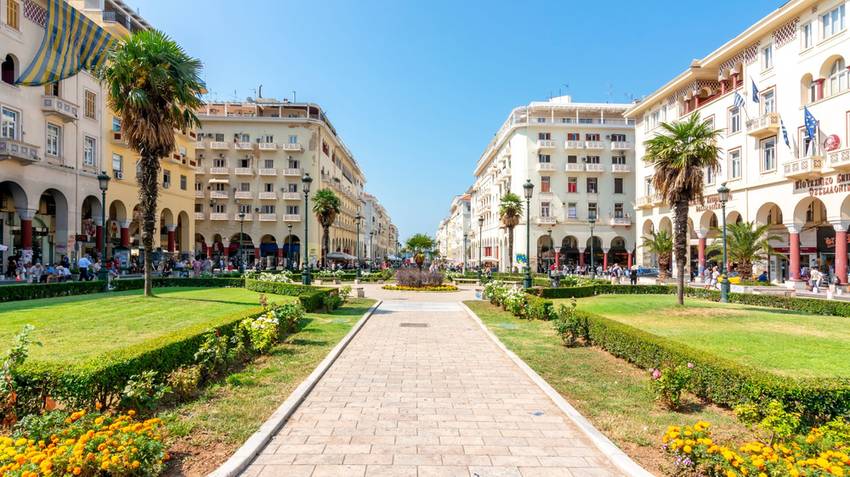
Staying here means you are inside that performance from the moment you step outside. Aristotelous Square functions as a kind of social gravity point: coffee in the morning, people-watching through the afternoon, aperitivo-adjacent energy by 20:00. The restaurants and cafes radiating off it are tourist-facing but not exclusively so – locals use the same squares, just at different hours and different tables.
The acoustic register at night is high. Streets near the port and around Nikis Avenue stay active past midnight, particularly in June and July when the season is in full swing. For anyone who finds the sound of a city at night energizing rather than disruptive, this is the right base. For everyone else, it is worth sleeping a few streets back or considering one of the areas further inland.
Ladadika: social density and a short radius
Ladadika is a small, partly pedestrianized district just west of the port, historically a warehouse quarter and now the densest concentration of bars and tavernas in central Thessaloniki. It occupies perhaps six or seven blocks and is remarkably self-contained – the kind of area where you arrive for dinner and find yourself still there at 01:00 without having made any particular decision to stay.
As a base, it is useful for travelers who want proximity to nightlife and don’t mind that the neighborhood’s primary identity is social. In high summer the streets between the low stone buildings fill early and stay full. The area itself is flat, well-connected to the waterfront on one side and the market district on the other, and the walking radius from here covers most of what first-time visitors want to see.
It suits travelers who orient their days around late meals and evenings out, and who are comfortable with a neighborhood that quiets down sometime after midnight rather than before it. The fit shifts for anyone who needs early quiet or who is using Thessaloniki as a working base with structured mornings.
Valaoritou: creative tempo, local rhythm
A short walk inland from the waterfront, Valaoritou has evolved over the past decade into Thessaloniki’s most genuinely interesting neighborhood by daytime. Former industrial buildings now hold independent coffee roasters, architecture studios, vintage shops, and the kind of bar that opens in the afternoon and closes when it feels like it. The visitor presence is lighter here than along the tourist axis, and the clientele is predominantly local.
The streets are wide by Thessaloniki standards, flat, and easy to move through. Morning coffee here has a particular quality – not the tourist-facing cafe experience of Aristotelous, but the slower, more considered version that comes with a neighborhood that takes its coffee seriously. Afternoons work well for anyone who needs a few hours of productive time before the city’s social register lifts toward evening.
Travelers spending more than two or three nights in Thessaloniki often find that Valaoritou works better as a base than the waterfront – close enough to everything, but with a rhythm that doesn’t constantly compete for your attention. Remote workers and slow travelers in particular tend to settle here without much deliberation once they’ve walked through it once.
For travelers weighing Thessaloniki against Athens as a slower-tempo alternative, the Athens vs Thessaloniki first-timer comparison covers how the two cities feel at the neighborhood level across a longer stay.
Ano Poli: the upper city and a different pace entirely
Ano Poli is the old city above the Byzantine walls, and it sits at a remove from everything described above – not in distance, which is 20 to 30 minutes on foot from the center, but in register. The streets narrow to lanes, the surface changes to cobblestone and sometimes to steps, and the architecture shifts to wooden-balconied houses and quiet courtyards that have been here in various forms for centuries.
The climb is real. Coming up from the central market area or from Valaoritou involves sustained elevation on uneven surfaces, and in the June heat that effort is more noticeable by midday than it is at dusk. The reward – the view across the Thermaic Gulf from the upper walls in the late afternoon, the quiet of a neighborhood that has not been oriented toward visitors – is the kind of thing that stays with people longer than a waterfront promenade does.
Ano Poli suits travelers with a particular appetite for historical texture and physical quiet. It does not suit anyone relying on easy access to nightlife, anyone who finds sustained walking on uneven surfaces difficult, or anyone who wants to roll a suitcase from a taxi to a hotel room without thinking about it. The fit here is specific and worth being honest about before booking – but for the right traveler, waking up in the upper city and walking down through its lanes toward the first coffee of the day is one of the better morning sequences Thessaloniki offers.
The market district and Modiano: daily life in transit
The area around the Modiano and Kapani markets – centrally located between the waterfront and the upper city – is less a neighborhood to base yourself in and more a zone you pass through repeatedly. The covered markets run at a completely different tempo from the cafe culture of Valaoritou or the evening rhythm of Ladadika. By 08:00 they are already active; by 14:00 much of the action has wound down.
Staying here means proximity to one of Thessaloniki’s most functional and unreconstructed corners – fishmongers, spice traders, informal tavernas where the menu is whatever arrived that morning. The surrounding streets are noisier and more chaotic than the waterfront promenade, but in a way that feels like the city going about its business rather than performing for tourists.
For travelers whose interest in a city is anchored to food markets and daily-life rhythms rather than to nightlife or scenic atmosphere, this central zone is worth considering. It is also the most useful area for understanding the wider Athens neighborhood logic – both cities have a similar tension between tourist-oriented waterfront zones and the older, more functional districts just inland.
Travelers considering Athens alongside Thessaloniki may also find the Athens first-time guide useful for understanding how the two cities differ in rhythm, scale, and neighborhood structure.
Who fits which neighborhood
First-time visitors with three to four nights usually anchor best in the city center or on the waterfront edge – everything is within walking distance, the evening rhythm is immediately accessible, and there is no learning curve. The trade-off is noise level at night, which is high in summer.
Travelers coming for five or more nights, or those working remotely and structuring their own days, tend to drift toward Valaoritou for the balance of access and calm. The neighborhood rewards a slower pace and improves noticeably over consecutive days as the local geography becomes familiar.
Ano Poli is for travelers who want to feel like they are somewhere genuinely different from the rest of modern Thessaloniki – not a curated old town, but an actual neighborhood that happens to be very old and very quiet. The walk down to the center is part of the experience, not an inconvenience.
Ladadika is for those whose Thessaloniki trip is primarily social and evening-oriented. It is a poor choice for early risers, working travelers, or anyone prioritizing historical texture. It is an excellent choice for everyone else who wants the city’s most concentrated social energy within a very short walk of their door.
Travelers planning a broader Greece itinerary may also find the Greece circuit guide useful for understanding how Thessaloniki fits alongside Athens and the country’s major island destinations.
Where the neighborhoods of Thessaloniki actually suit you
Thessaloniki is small enough that no neighborhood leaves you stranded, and compact enough that the choice is almost entirely about atmosphere rather than logistics. The waterfront gives you the city at its most social and most photogenic; Valaoritou gives you the city at its most livable; Ano Poli gives you the city at its most historically layered and quiet; Ladadika gives you the city at its most concentrated and evening-oriented.
The neighborhoods of Thessaloniki reward travelers who know what kind of day they want to build around a base – not those who need a single “best” answer, but those willing to choose by temperament. In June and July, the evenings across all of them are long and warm enough that the city’s social life is available to anyone regardless of where they are sleeping. The question is what you want the morning to feel like, and how much you want the night to follow you home.
For travelers with a slower, quieter inclination who are still deciding between a Greek city and a Greek island stay, the Greek island beaches and digital detox read sits at exactly that fork in the planning. If you are still weighing which Thessaloniki neighborhood fits your pacing, the traveler-fit breakdowns above hold across seasons – but the waterfront’s evening energy in particular is worth experiencing at least once before committing to a quieter base for the rest of the stay.
Neighborhoods of Thessaloniki: frequently asked questions
1. Which neighborhood in Thessaloniki is best for first-time visitors?
The city center around Aristotelous Square and the waterfront gives first-timers the most immediate access to Thessaloniki’s social rhythm – cafes, the White Tower, the promenade, and easy connections to everywhere else. It runs at a high tempo in the evenings, which is exactly what most people come for on a first visit.
2. Is Ladadika a good area to stay in Thessaloniki?
Ladadika works well for travelers who want to be inside the city’s nightlife from the first evening. It is compact, mostly pedestrianized, and the bar-and-restaurant density is high. The acoustic register after 22:00 is substantial, so it fits best for those who sleep late rather than early.
3. What is Ano Poli like as a base in Thessaloniki?
Ano Poli is the quieter, older upper city – cobbled lanes, Ottoman-era houses, and a noticeably slower pace. The climb from the center is real and sustained, so it rewards those on foot and in no rush. The views across the bay and down into the city are among the most quietly compelling in Thessaloniki.
4. Where should slow travelers or remote workers stay in Thessaloniki?
Valaoritou, just inland from the waterfront, has developed a calm creative rhythm with independent cafes, design studios, and a more local-facing energy than the tourist corridor. It is walkable to everything but removed from the loudest parts of the city – a useful combination for anyone planning longer stays or working days with flexible endings.
5. How walkable are Thessaloniki’s neighborhoods between each other?
The central neighborhoods – waterfront, Ladadika, Valaoritou, and the market area – connect comfortably on foot within 15 to 20 minutes. Ano Poli sits above them and the ascent takes around 20 to 30 minutes depending on your starting point. Thessaloniki has no metro yet, but the city’s compact layout means most visitors rely almost entirely on walking.