
A Cappadocia balloon flight: what to actually expect is one of those questions that search results handle badly. You get the postcard version, or the logistics version, but rarely both at once. The landscape is real, the scale is real, and the pre-dawn alarm is very real. Worth setting those expectations clearly before you commit to either the booking or the 4am wake-up.
What to expect on the morning of a Cappadocia balloon flight
The region’s volcanic geology, eroded over millions of years into chimneys and ridges and soft-edged cliffs, reads differently from above than it does from any valley trail. That is genuinely true.
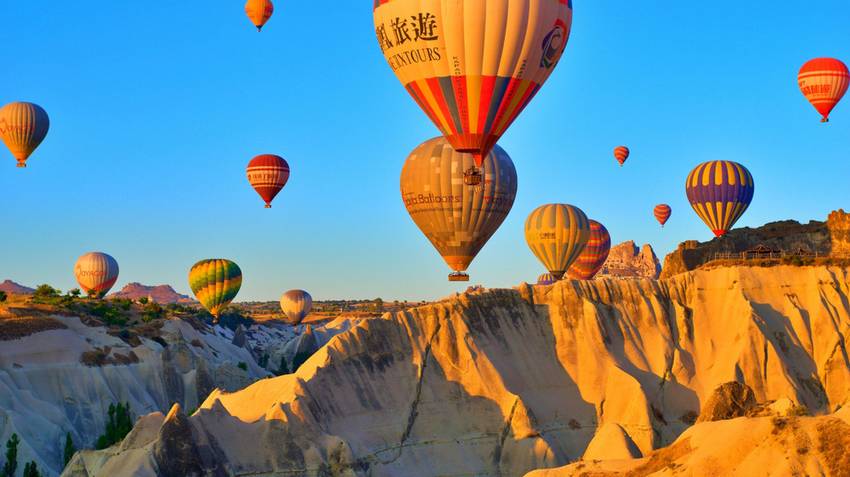
What surprises some travelers is that most travelers arrive imagining a solitary balloon drifting over empty terrain, and the actual experience is closer to a coordinated aerial operation with anywhere from 50 to 150 balloons launching at the same time on a clear morning. Both things can be true simultaneously: it is visually impressive, and it is also a tightly managed commercial activity.
Pickup happens between 4:00 and 5:00am depending on the season and how far your accommodation sits from the launch area. In late spring and early summer, sunrise comes earlier, which brings an earlier schedule; you may find yourself standing at a launch field in near-darkness while crew members inflate the envelope with industrial fans, which creates a sound somewhere between a jet engine test and a very large hairdryer.
The field itself is natural and uneven in places, so the transfer from the van to the basket involves more picking your way across loose volcanic ground than most booking pages mention. The flight window typically runs 45 to 60 minutes once airborne. You spend most of it standing, slightly sharing the basket with other travelers sharing your basket compartment, watching the landscape shift from blue pre-dawn to the warmer tones of the early sun.
The pilot controls altitude and general direction; they do not control which other balloons are close to you or whether the perfect framing you saw on someone else’s photo is achievable from your specific basket position. Wind direction determines trajectory entirely, and no two flights take exactly the same path.
Landing involves a controlled descent onto a trailer that the ground crew repositions by vehicle to intercept the balloon. It is more dynamic than many travelers expect, and passengers are asked to hold a specific position and brace. After that, a champagne toast is standard across most operators. The entire morning from pickup to return to your hotel runs three to four hours.
Cappadocia balloon flight cancellations and weather conditions
Wind is the variable that governs everything. Operators make the go/no-go decision on the morning of the flight, often as late as 4:30am, by which point you are already awake and dressed. Cancellation rates vary significantly by season.
Spring and autumn generally produce the most stable launch conditions in Cappadocia, while midsummer introduces stronger thermal instability that can ground balloons even on mornings that appear visually clear from the ground. Reputable operators will offer a rebooking or refund when they cancel, but the fine print matters. If your Cappadocia stay is only two or three nights and you book for the first morning, a cancellation means either hoping the second morning works or departing without the flight.
Travelers with tight itineraries sometimes book for their first full day to leave room for a retry. It is worth factoring into your planning, not an edge case. Rain is less common in May and June than in autumn or winter, but a single overnight squall can leave standing water on the launch fields and change the forecast enough to ground operations for the morning.
Cold temperatures at altitude are consistent regardless of season: even on warm spring mornings, 1,000 meters above the valley floor with no wind protection runs cold enough that a light jacket matters, not as a precaution but as a genuinely useful addition.
What a shared Cappadocia balloon flight is really like
On a clear morning in peak season, the sky over Göreme and Uçhisar fills with between 80 and 150 balloons. The photos that circulate online are usually taken from the ground or from a vantage point that makes the density look intentional and beautiful, and from certain angles it genuinely is.
From inside a basket, the awareness of proximity to other balloons is more operational: pilots are watching each other constantly, and brief altitude adjustments to avoid overlap are routine. The basket itself carries 16 to 24 people in most standard commercial flights, divided into compartments. For an hour of standing in close contact with strangers, this is fine for travelers who do not mind shared group setting.
For anyone who finds crowd proximity prefer more personal space, there are private or small-group charter options that cost considerably more but substantially change the character of the experience. Worth knowing before you default to whichever operator your hotel recommends.
If the Turkey loop through Istanbul, the coast, and Cappadocia is already taking shape in your planning, the Turkey multi-city loop read covers how the Cappadocia stop fits within that wider rhythm, including which directions travelers tend to continue from here.
Is a Cappadocia balloon flight worth it?
The view over the valleys is genuinely distinctive. There is no hiking trail or viewpoint that replicates the aerial perspective over the fairy chimney formations, and the quality of light at dawn across that terrain has a particular flatness that photographs well and reads clearly in person. That part of the experience lives up to the reputation, which is not something you can say about every high-profile travel activity.
The distinction usually comes from expecting a private or contemplative experience and receiving a coordinated group activity instead. It is not a wilderness flight or a slow drift in silence.
There is conversation around you, a pilot doing a professional job of managing altitude and direction, other balloons visible in most directions, and a landing choreography that involves a truck. Travelers who arrive knowing this find the experience rewarding. Travelers who arrive expecting something closer to solitude find it busy in a way that is important to understand in advance at 5:30am when you are already committed.
For travelers still deciding whether Cappadocia actually fits their Turkey trip rhythm beyond the balloon flight itself, the Cappadocia first-time traveler guide breaks down how the region feels operationally once you factor in valley pacing, cave hotels, transport logistics, social density, and how many days the landscape realistically sustains attention for different traveler types.
Booking through a well-reviewed operator makes a meaningful difference to the experience, specifically in how the pilot manages altitude during the key visual windows, how clearly the safety briefing is communicated, and whether the basket is loaded to capacity or slightly below. Price differences between operators in the same category are usually small relative to the total cost of the flight; the gap between a more streamlined operation and a careful one shows most in those small-craft decisions.
Travelers weighing a few days in Cappadocia against continuing to the coast often find the comparison sits mostly around pacing: the Antalya local life read covers what the shift from inland volcanic terrain to a coastal city actually feels like on the ground.
Best time of year for a Cappadocia balloon flight
May and June consistently produce good launch conditions, earlier sunrises than summer, and lower booking pressure than July and August. The mornings are cool enough at altitude to appreciate having a layer, and the valley light in late spring is generally softer than high summer. This is the window most travelers with some flexibility in scheduling would choose for the balloon specifically.
July and August bring the highest demand and the most competition for available places. Booking two to four weeks ahead for a specific date is reasonable in summer; leaving it to the day before in peak season, especially around Turkish public holidays, is a a realistic possibility.
Some operators fill their summer weeks entirely through package tour allocations, reducing the independent traveler inventory further than the overall booking numbers suggest. Autumn holds its own logic: September and October bring stable winds again, cooler mornings, and a visible change in the valley colors, particularly around the harvest period. For travelers on a Turkey loop who are not locked into a specific season, autumn in Cappadocia has a quieter quality than spring, with fewer total visitors despite comparable flight conditions.
Who should book a Cappadocia balloon flight?
The balloon flight tends to work best for travelers who are comfortable with managed group experiences, not particularly anxious about heights, and willing to treat the early wake-up as part of the atmosphere rather than a cost. The experience is genuinely passive once airborne, which suits travelers who are not looking for an active or physically demanding morning but want a different perspective on the landscape they are spending time in.
It is better suited to different travel preferences to anyone who primarily values solitude, quiet, or control over their immediate environment to feel comfortable. A full basket creates a distinctly shared experience, and on mornings when the sky is crowded, the operational nature of the activity is more visible than the promotional material suggests. That is not a reason to skip it; it is a reason to know what you are choosing.
Solo travelers often find the experience more social than expected, which for some is a pleasant surprise and for others is the part they needed to know in advance. The landing champagne and the general atmosphere of a shared early-morning adventure creates a brief social moment that does not extend beyond the morning, which suits most people fine.
What makes Cappadocia balloon flights worth the experience
The Cappadocia balloon flight experience rewards travelers who treat it as one component of a longer engagement with the region rather than the destination in itself. A day in the valleys after the flight, on foot or by bicycle, gives the aerial perspective a reference point: you find the ridgeline you floated over, the cluster of chimneys that appeared below you at a specific moment, the road that connects the launch field to the village you can now see on foot. The landscape gains a second layer when you have seen it from both elevations.
For travelers who are genuinely uncertain whether the balloon is worth the cost and the early morning, the answer usually comes down to one question: is the aerial view of this specific landscape the kind of thing that, in ten years, you would regret not having seen? If the answer is yes, the operational realities are manageable and the experience delivers on the core promise. If the answer is uncertain, two or three hours in the valleys at dawn, when the light is the same and the silence is genuine, is also a legitimate choice.
The primary traveler intent of understanding a Cappadocia balloon flight, what to actually expect, tends to resolve once you accept that the experience is both commercially scaled and visually genuine at the same time. Those two things coexist here more comfortably than the gap between the photos and the reality might initially suggest.
Frequently asked questions about Cappadocia balloon flights
1. How early do you need to wake up for a Cappadocia balloon flight?
Most operators pick up passengers between 4:00 and 5:00am, depending on the season and sunrise time. The actual flight typically begins around dawn, so the total morning commitment from wake-up to return to your hotel runs roughly three to four hours.
2. Can a Cappadocia balloon flight be cancelled?
Yes, cancellations happen regularly due to wind, rain, or poor visibility. Operators make the call on the morning of the flight, sometimes as late as 4:30am. Reputable companies will offer a rebooking or full refund; it is worth confirming the cancellation policy before paying.
3. How long does the actual balloon flight last?
Most standard flights last between 45 minutes and one hour in the air. Premium packages extend this to around 90 minutes. The full morning experience including transfer, pre-flight setup, landing, and the champagne toast adds up to three to four hours total.
4. Is a Cappadocia balloon flight worth the cost?
For most travelers, yes, though the experience is more communal and operationally dense than the photos suggest. Baskets typically carry 16 to 24 people, and dozens of balloons launch at the same time. The landscape view itself is genuinely striking; the value depends on how much the scale of the operation matters to you.
5. What is the best time of year for a balloon flight in Cappadocia?
April through early June and September through October offer the most consistent launch conditions, with cooler mornings and more stable winds than peak summer. July and August have the highest booking demand and the most frequent heat-related flight adjustments, though flights do operate regularly through summer.
6. How many people are in a balloon basket in Cappadocia?
Standard commercial baskets hold 16 to 24 passengers, divided into compartments of four to six people. Private and small-group charters exist but cost significantly more. If proximity to other passengers for an hour concerns you, it is worth asking the operator for their exact basket capacity before booking.