
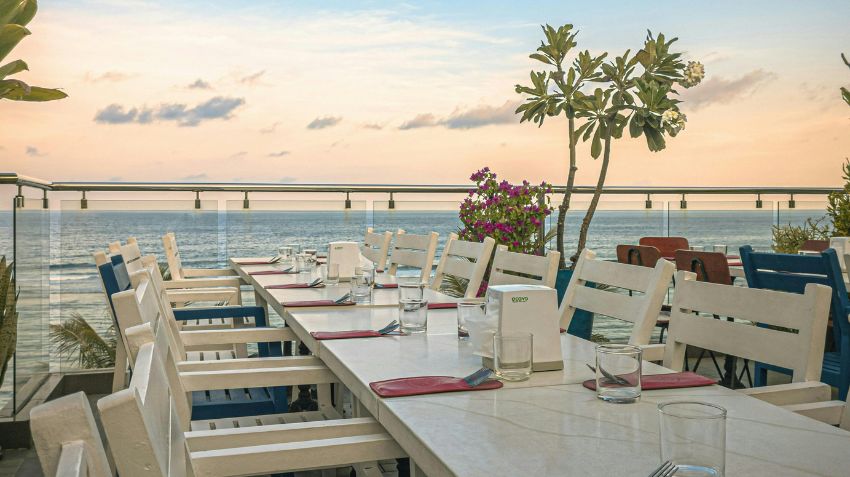
The Maldives reveals two completely different worlds in Malé and Meeru: a vibrant island capital shaped by harbors, markets and local life, and a private resort surrounded by reef, sand and open water.
They are close enough to combine in one itinerary, yet different enough to transform the rhythm of your trip. The real question is not simply which one to choose, but how Malé’s energy and Meeru’s calm can shape the Maldives experience you want.
What Malé and Meeru actually feel like for visitors
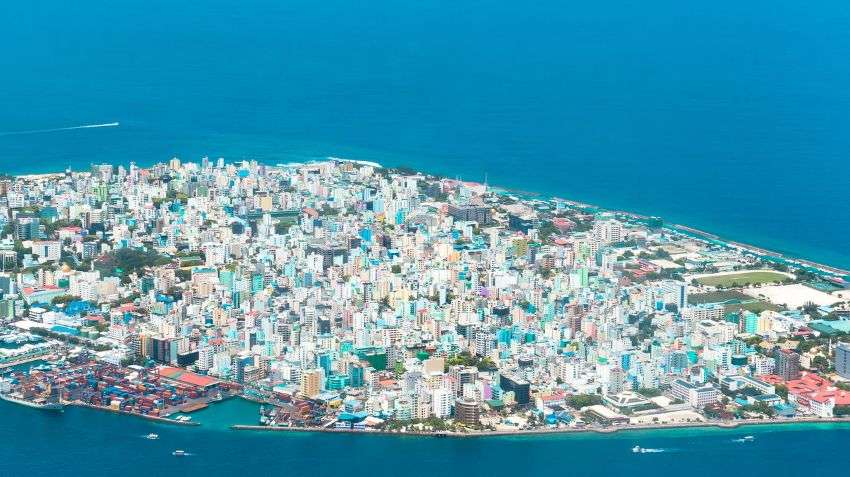
Malé is one of the most densely populated islands on earth, and you feel that immediately. The streets near the fish market run busy from dawn, motorcycles move through gaps that seem too narrow, and the call to prayer carries from the Friday Mosque across a waterfront where cargo and ferry boats load and unload continuously. There is real city life here, compressed into a few square kilometres, and it has a kind of kinetic energy that resort Maldives travel almost never acknowledges.
The old harbour in the early morning is worth an hour on its own: dhoni boats, the smell of ice and fish, men sorting the overnight catch. Coffee at a local café costs almost nothing and comes sweet and strong. By midday the main streets grow warm and the pace slows; the hours between noon and late afternoon belong to shade and interiors, and the city comes back to itself around 17:00 as the air cools and the harbour fills again.
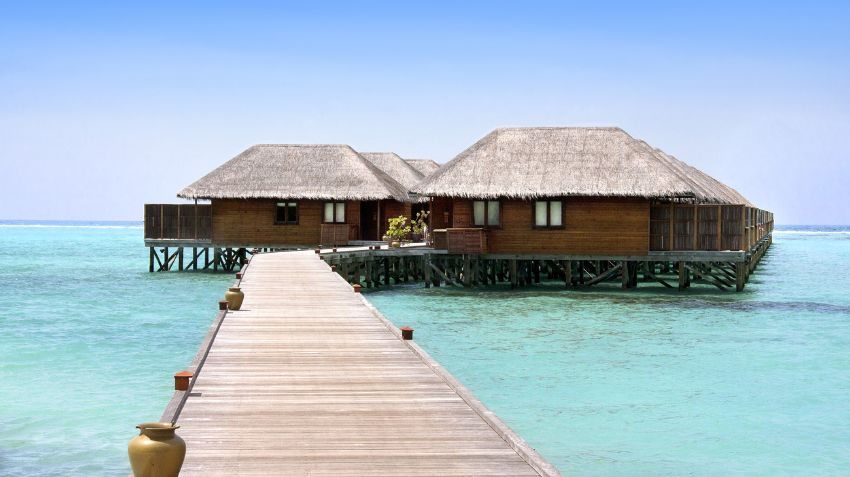
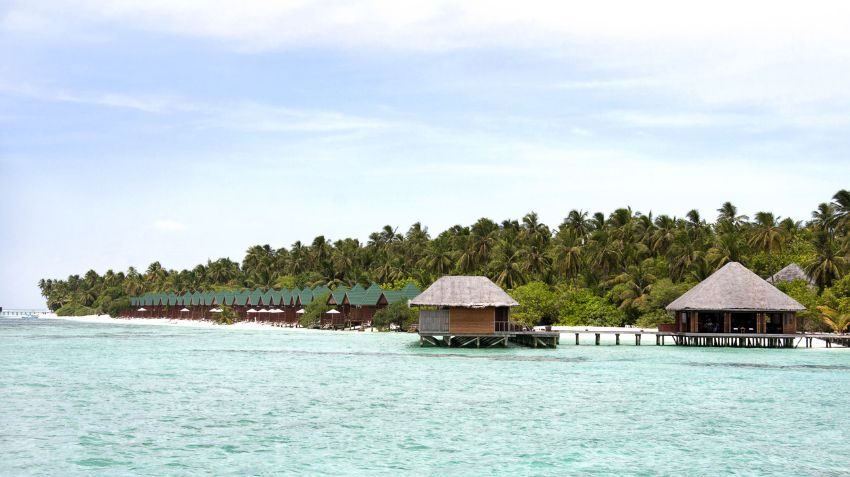
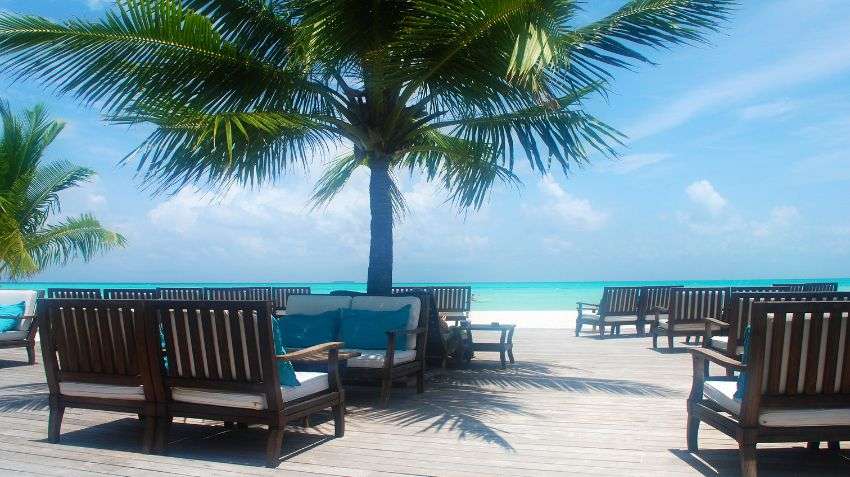
Meeru runs at a completely different tempo. The island sits in North Malé Atoll, about 40 kilometres northeast of the capital, and the speedboat crossing takes the better part of an hour. Once you land, the pace changes before you have finished unpacking. Paths are sandy, wide and largely car-free. The reef wraps the whole island, and the house reef begins just a few metres from the beach. Mornings on Meeru belong to the water; the lagoon is glassiest before 10:00, and the coral visibility in July, while occasionally reduced by swell, can be genuinely clear in the early hours when the surface is calm.
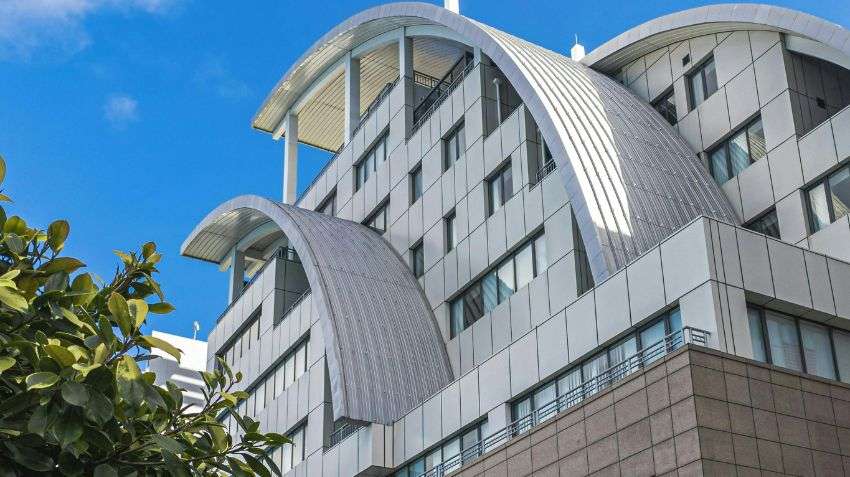
Malé and Meeru in photos
Malé or Meeru: which experience suits your travel style?
Malé works for travelers who want to see the country beyond its postcard version. It is the right stop for anyone curious about how Maldivians actually live, what the economy runs on, and what urban island life looks like when it is not organised around a foreign guest. A night or two is usually enough to feel the city without running out of things to do; much longer than three days and the island’s size becomes noticeable.
Meeru suits travelers whose primary interest is the underwater world, the silence of a private island, or the specific pleasure of a day with no structure beyond when to swim and when to eat. It also works well for couples or pairs who want to genuinely decompress, without the ambient stimulation of a city pulling them in six directions. Solo travelers who find resort isolation a little static may find Malé a more engaging base, though Meeru’s snorkelling and dive programme give solo guests a clear framework for the day.
The combination that tends to work best: a night in Malé at arrival (the international transit through Velana International Airport practically demands it), the morning at the harbour, and then the speedboat to Meeru for the remainder of the stay. The contrast lands well in that order. Arriving at the resort first and adding Malé at the end produces a slightly deflating experience for some travelers, moving from stillness back into city density just before the return flight.
How to visit Malé and Meeru on the same Maldives trip
The logistics are straightforward. Velana International Airport sits on an adjacent island, Hulhulé, connected to Malé by the Sinamalé Bridge and a short ferry. Most long-haul flights arrive at Malé in the early morning or late at night, which makes a one-night city stay the natural buffer before the resort transfer.
Meeru’s speedboat transfer runs on the resort’s schedule and takes around 40 to 50 minutes depending on sea state. July’s swell is generally manageable, but morning crossings tend to run calmer than afternoon ones; if you have flexibility on departure timing, the earlier transfer is the smoother ride. The resort coordinates all of this directly, and the Malé guesthouse scene near the harbour has improved considerably, with several well-run options at prices that reflect local rather than resort economics.
One practical note: Malé’s accommodation is concentrated in a small area near the harbour and the main ferry terminal. The streets are easy to navigate on foot, and almost everything worth seeing is within a 20-minute walk. There is no need to organise transport within the city; the island is small enough that orientation happens naturally within the first hour of walking.
What sits near Malé and Meeru worth adding to the trip
Hulhumale, the reclaimed island connected to the airport, has been growing steadily and now has a beach, a local café scene, and a noticeably less dense atmosphere than Malé proper. It is not a destination in itself, but travelers with a long airport layover find it a reasonable alternative to waiting in the terminal. The beach on the northeastern side stays reasonably quiet on weekday mornings.
For travelers considering a wider Maldives itinerary, the question of island type becomes the central one, and the range is broad. Some atolls require a seaplane transfer and involve a genuinely different kind of isolation; others are accessible by domestic flight and sit closer to inhabited islands with local life still present.
If the Meeru experience opens curiosity about other resort island types across the atolls, the Kuramathi vs Kuredu comparison covers a different atoll pairing with its own pacing logic and a useful read on what distinguishes reef-focused islands from lagoon-focused ones.
The southern atolls, notably Ari Atoll, sit further from Malé but offer a different reef character and larger whale shark and manta ray sightings through certain months. July sits inside the manta season in parts of Ari Atoll, which makes it a genuine draw for underwater-focused travelers willing to add a domestic flight to the itinerary.
Continue exploring Maldives island comparisons and traveler-fit reads across the Nodaliso ecosystem.
Is Malé or Meeru worth it for your Maldives trip?
The answer depends almost entirely on what you are optimising for. Malé is worth it as a transit anchor and a day of context; it is not a slow-travel destination in the traditional sense, but it is a real and interesting city that most visitors to the Maldives never actually see. Meeru is worth it for anyone whose trip centres on the reef, the quiet, and the particular pleasure of a small island where the day has no fixed obligations.
In July, both options carry an extra layer of value that peak season removes. The resort feels genuinely spacious, the reef is less trafficked, and Malé’s city life runs at its own pace without the additional layer of transit-season passenger volume. The Malé vs Meeru comparison ultimately resolves into a rhythm question: do you want a day of city energy followed by extended stillness, or do you want the whole trip to be water, sand and a slower kind of time? Both are worth having. The order you put them in matters more than which one you choose.
Malé vs Meeru FAQ: island differences, transfers, July conditions and traveler fit
1. What is the main difference between Malé and Meeru?
Malé is the Maldivian capital: a dense, fast-moving urban island where locals live, work and trade, with mosques, markets and a genuine city rhythm that has nothing to do with resort life. Meeru is a private resort island where the day organises itself around the reef, the lagoon and long meals, with no traffic, no streets and no agenda beyond your own.
2. Can you visit both Malé and Meeru on the same trip?
Yes, and the combination works well for travelers who want a day of context before settling into resort life. Most visitors spend a night in Malé to break the international transit, then take the speedboat to Meeru the following morning, arriving when the lagoon is at its calmest and the reef still quiet.
3. How do you get from Malé to Meeru Island Resort?
Meeru connects to Malé by speedboat, with the crossing taking roughly 45 minutes depending on sea conditions. The resort coordinates transfers directly; July’s swells are generally mild enough that the crossing is comfortable, though morning departures tend to run smoother than afternoon ones.
4. Is Meeru Island worth visiting in July?
July sits in the Maldives’ wetter shoulder season, which means lower rates, fewer guests and a noticeably quieter reef. The rain tends to arrive in short afternoon bursts rather than full-day weather, leaving mornings clear for snorkelling and evenings calm and open over the water.
5. Who is Malé better for compared to Meeru?
Malé suits travelers who want to understand the Maldives beyond the resort version: the harbour traffic, the Friday Mosque at golden hour, the local coffee shops where a short eat costs almost nothing. Meeru suits anyone whose priority is the reef, the silence and the particular pleasure of waking up already on the ocean.