
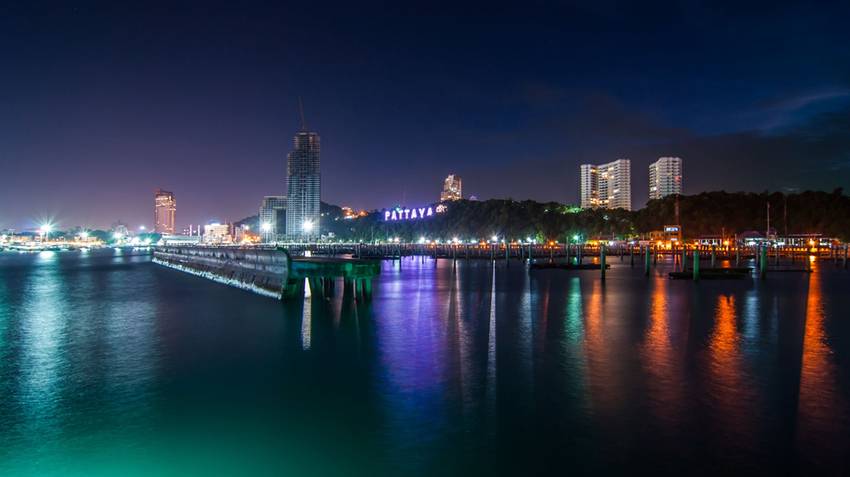
Pattaya arrives differently than most Thai destinations because the drive in from the highway opens onto a wide coastal strip, brightly lit even in the early evening, with the smell of salt air mixing with grilled seafood from the beachfront stalls. It is unmistakably a city built for visitors – and it makes little effort to hide that.
For a first-time traveler guide to Pattaya, the most useful starting point is understanding what kind of place this actually is. Not a beach escape in the quiet island sense. Not a culturally layered city in the Chiang Mai sense. Something else: a coastal resort town that runs at a high tempo, peaks late, and rewards travelers who engage with it on its own terms rather than comparing it to the quieter corners of the Thai coast.
Days here tend to start slowly and end late. Mornings have a genuine calm to them. By early evening, the city shifts registers entirely, and that shift is part of what defines the experience.
What Pattaya actually feels like on arrival
The arrival from Suvarnabhumi Airport takes roughly 45 to 90 minutes depending on traffic and the time of day. There is no rail link – the practical options are a shared minibus (around 300-400 THB) or a private taxi with a fixed rate negotiated at the airport. The road into Pattaya narrows as it approaches the city center, and the transition from highway to coastal strip is abrupt. You are in it before you feel ready.
Beach Road runs the full length of the main bay, and most first-time visitors base themselves somewhere along or near it. The geography is straightforward: Beach Road faces the water, Second Road (Pattaya 2) runs parallel one block in, and a network of side streets called “sois” connects the two. Baht buses – red songthaews – circulate the main routes continuously, and Grab operates reliably across most of the city. Getting around is not complicated once you understand that distances between zones are longer than they read on a map.
Where you stay changes the experience more than many first-time visitors expect. The Pattaya neighborhood guide explains how Beach Road, Central Pattaya, Jomtien, and the surrounding districts differ in pace and atmosphere.
The city has a long promenade, wide footpaths along the beach, and enough food options at every price point that logistics rarely become the main concern on day one. What takes adjustment is the density – not stressful, but continuous. There is always something happening along the strip, and the stimulation level runs high from midday onward.
Who Pattaya fits and who it does not
Pattaya is well-suited to travelers who enjoy a social, high-tempo coastal environment. It works well for groups, for solo travelers comfortable in busy urban spaces, and for anyone whose idea of a good Thai trip includes lively street food scenes, an active bar culture, and the kind of evening that starts at 21:00 and extends well past midnight. It also suits short-stay visitors using the city as a one or two-night stop between Bangkok and a quieter destination further along the coast.
It is less suited to slow travelers looking for cultural depth, couples who want a genuinely peaceful beach, or first-timers who came to Thailand for its temple architecture and quieter rhythms. Those travelers tend to find the city’s energy relentless by day two, and the beach itself – functional, busy, but not particularly clear – is not the draw that the Andaman islands offer. If that profile fits you more closely, the Phuket first visit read covers a different coastal register – more beach variety, different crowd dynamic, and a landscape that runs quieter outside the nightlife zones.
How days actually unfold in Pattaya
The city runs on a late schedule. Most activity before 10:00 belongs to early risers on the beach, coffee shops opening gradually, and the promenade still relatively empty. This is genuinely the best time for a walk along the seafront – the light is softer, the beach chairs are still folded, and the vendors have not set up yet.
By late morning the beach fills steadily. The stretch between the pier and the northern end of the bay is busiest by around 11:30, while the southern half tends to stay a bit more open. Midday heat concentrates on the sand and concrete surfaces quickly – the promenade has limited shade, so most people shift toward covered restaurants or hotel pools between 13:00 and 16:00.
Late afternoon is when the city starts its second engine. The beach cools slightly, the light shifts, and the waterfront comes alive with a different kind of movement – people walking the promenade, street food vendors setting up, the first tables filling at the open-air restaurants along Beach Road. By 19:00 the energy has fully turned over, and the city from that point until well past midnight is a different place from the quiet morning it had been six hours earlier.
Walking Street, in the southern end of the city near Bali Hai Pier, is the concentrated nightlife zone. It is loud, bright, and operates at full tempo from around 21:00 onward. Worth seeing once for the sheer scale of it. As a place to spend every evening, it depends entirely on what you came for.
Jomtien and the alternatives to the main strip
Jomtien Beach sits a few kilometers south of central Pattaya, and the difference in register is noticeable. The beach is slightly longer and less crowded, the commercial strip thinner, and the overall pace slower. Long-stay visitors and families tend to gravitate here over the main beach. The early morning at Jomtien – sea air, almost empty sand, a few fishing boats in the distance – is the version of Pattaya that rarely makes it into the photographs.
Koh Larn, the island visible from the southern end of the bay, deserves a half-day or full day. The ferry from Bali Hai Pier takes about 30 minutes and runs several times daily. The water around Koh Larn is noticeably clearer than the mainland, and the beaches on the island’s western side fill with day-trippers by midday, but thin out pleasantly by late afternoon. Arriving early and leaving around 15:00 gives you the best of both.
Travelers who find themselves wondering whether a quieter version of a Thai coastal base would suit them better often rethink the sequencing after a day or two in Pattaya. The Bangkok or Chiang Mai comparison is useful if the underlying question is about what kind of Thailand trip actually fits – the coastal energy of Pattaya pulls in a specific direction, and not every itinerary needs to go there first.
What first-timers tend to misread about Pattaya
The most common misread is arriving with an expectation built entirely on reputation. Pattaya’s nightlife identity is real and dominant, but the city has enough daytime structure – the Sanctuary of Truth, Nong Nooch Tropical Garden, the day-trip infrastructure to Koh Larn – that two or three days can be genuinely well-paced for a traveler who is not primarily chasing the bar scene.
The second misread is assuming the beach is the main attraction. It is not, in the way that beaches on Koh Samui or the Andaman coast are. Pattaya Beach is a promenade beach – it functions as the spine of the city’s public life, a place to walk, eat, watch the water, and feel the shift from day to evening. The swimming is fine, but the experience is more urban than it is coastal.
The third, and perhaps most useful thing to know: the city is more competent than its reputation suggests on practical things. Transport options are plentiful and easy to navigate. Food at every price point is genuinely good. Hotels across the full range are abundant and competitive in price. The logistics of a Pattaya trip are among the simpler ones in Thailand, which is part of why it works so well as a short-stay addition to a broader itinerary rather than a standalone destination for a week.
Travelers who find themselves comparing Pattaya with Thailand’s largest city may find the Bangkok first-time guide useful for understanding how the country’s main urban destination operates at a completely different scale.
Pattaya for the first time: who it suits and when
A first-time traveler guide to Pattaya that is genuinely useful has to say clearly: this city is not for everyone, and that is not a flaw. It is a specific kind of place – social, dense, built for pleasure, and running at a tempo that some travelers find energizing and others find relentless after 48 hours.
The November to March window is the most comfortable on weather grounds – lower humidity, cooler evenings, the sea slightly calmer. The city does not close in the wetter months, and the rain pattern along this stretch of the Gulf coast tends toward afternoon showers rather than sustained closures, but the dry season version of Pattaya has a more pleasant physical texture underfoot and in the air.
Two to three nights is the natural stay duration for most first-time visitors. Long enough to see the city at its various registers – morning calm, midday beach, evening promenade, late-night Walking Street – without the destination running out of new material before you leave. Pattaya rewards the traveler who knows what it is and stays accordingly, and it tends to frustrate the one who expected something different.
If the active beach energy here opens a curiosity about where that kind of coastline runs more intensely, the Phuket active beach read covers the overlap and the differences in a way that clarifies whether the next stop should push south or shift register entirely.
Explore Pattaya’s surrounding region by season and traveler type with the destination intelligence nodes for Chiang Mai budget living, which covers the cost structure and pacing of the country’s northern anchor city as a useful contrast to the coastal south.
Frequently asked questions: first-time guide to Pattaya
1. Is Pattaya suitable for first-time visitors to Thailand?
Yes, though it suits specific expectations better than others. First-time visitors who want a high-energy coastal city with easy logistics, good food at most price points, and a very active nightlife scene will find Pattaya straightforward. Those expecting a quiet beach escape or a culturally immersive Thai experience will likely find it less aligned with what they are looking for.
2. How do I get from Bangkok to Pattaya?
The most practical options are a shared minibus from Suvarnabhumi Airport (roughly 300-400 THB, around 90 minutes) or a private taxi with a fixed rate. There is also a bus service from Bangkok’s Eastern Bus Terminal (Ekkamai) into Pattaya’s city center. No rail connection exists as of 2026.
3. What is the best time of year to visit Pattaya?
November through February is the most comfortable window, with lower humidity, cooler evenings, and calmer sea conditions. The Gulf coast location means Pattaya avoids the worst of the Andaman monsoon, and even during the wetter months rain tends to arrive in short afternoon bursts rather than multi-day closures. High season runs roughly December to March, when the city is at its liveliest.
4. Is Pattaya good for travelers who are not interested in nightlife?
More than its reputation suggests. Day trips to Koh Larn offer genuinely clear water and a quieter beach rhythm. The Sanctuary of Truth is a remarkable piece of craftsmanship worth a half-day visit. Jomtien Beach, a few kilometers south, runs at a slower pace than the main strip and suits visitors who want to settle into beach life without the concentrated evening activity of central Pattaya.
5. How many days should I plan for Pattaya?
Two to three days covers the city comfortably, with a fourth day added if you want a full excursion to Koh Larn. Longer stays work well for travelers actively using Pattaya as a regional base, but the city itself does not have the depth to sustain a slow-travel rhythm across a full week – and part of its appeal is that it gives you what it has to give quickly, cleanly, and with very little effort on your part.