
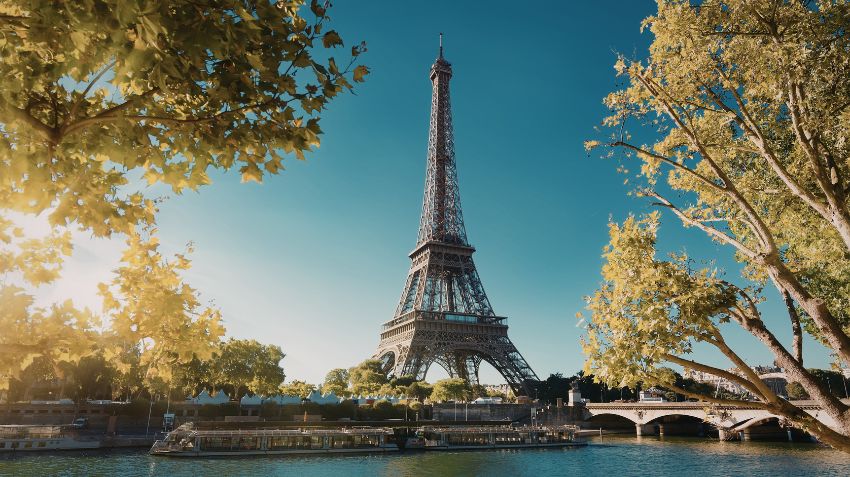
Paris does not ease you in gradually. The city arrives fully formed at the airport exit: the scale of the boulevards, the particular grey-gold of the stone buildings catching afternoon light, the smell of the brasseries opening for the evening service. For anyone using this as a first-time traveler guide to Paris, the most useful thing to understand upfront is that the city has a strong internal rhythm, and the easier you find that rhythm, the better it works.
It is not a destination you process quickly. Days here have a shape – a slow morning, a long afternoon of walking and looking, a late dinner that slides toward midnight without feeling wrong. That shape is not incidental. It is the organizing principle of the city, and resisting it (back-to-back museum queues from 09:00, three major neighborhoods in a single afternoon) is the thing that makes Paris feel like work rather than the thing people come back for repeatedly.
In July and August, the city runs at its highest visitor activity and its highest temperatures simultaneously. The stone streets of the central arrondissements hold heat well past sunset, so the hour you choose to walk matters more than which street you choose. That said, Paris in summer has its own rewards: longer evenings on the terraces, the canal Saint-Martin filling with people after work, the quiet of the Palais Royal garden at 08:30 before the day compresses.
What Paris feels like for first-time visitors
Paris is large in a way that surprises most first-time visitors. The core tourist geography – Eiffel Tower, Louvre, Notre-Dame, Marais – is spread across a walking radius that feels manageable on a map and genuinely demanding on foot by day two. Most people cover somewhere between 12 and 18 kilometers in a day without intending to.
The Metro absorbs a lot of that distance. Sixteen lines, frequent service, and once you understand that each direction is named after its terminal station rather than a compass point, navigation becomes straightforward. The central lines (1, 4, 6, 7, 14) handle the majority of first-visit movements. Connections inside major stations like Chatelet-Les Halles take longer than they look on the map – the transfer walks are real, and in peak summer they run warm.
Walking is genuinely the better mode for short distances, and also the one that produces most of the incidental discoveries that people remember. The covered passages between the 2nd and 9th arrondissements, the courtyard behind an unremarkable door in the Marais, the way the light changes when you cross from a wide Haussmann boulevard into a narrower side street – these are walking experiences, not Metro ones.
Cobbles and occasional uneven paving are consistent across the older arrondissements. Comfortable footwear is not optional advice.
Is Paris right for your travel style?
Paris suits first-time visitors who are comfortable with density and curious enough to follow unplanned directions. It works particularly well for travelers who want cultural saturation – museums, architecture, food, fashion – without having to travel far between them. The city is self-contained in a way that few capitals manage: you can spend a week without leaving the central arrondissements and feel like you have barely started.
Solo travelers and couples both tend to find their register here relatively quickly. The cafe culture provides natural anchor points throughout the day, the Metro is safe and frequent late into the night, and the social energy of the city – animated without being aggressive – feels low-stakes to navigate.
Where the fit shifts is for travelers who find high visitor activity genuinely tiring rather than stimulating. The main corridors – Rue de Rivoli, the area immediately around the Louvre and the Eiffel Tower, Montmartre above the funicular – run at a sustained high tempo from around 10:00 to 18:00 throughout the summer. This is not a reason to avoid them, but it is a reason to sequence them before the day heats up or after it cools down. The streets around them are often a different experience entirely: two blocks off the tourist axis near Montmartre, the hill becomes residential, the cafes face locals rather than visitors, and the afternoon quiet is real.
For travelers coming from a slower-tempo destination who want to weigh the energy contrast before committing, the Nice first-time visitor read covers the Riviera rhythm, which runs at a noticeably different pace and suits a different energy state.
Best Paris neighborhoods for first-time visitors
The arrondissement structure (Paris is divided into 20, arranged in a clockwise spiral from the center) is one of the more useful mental frameworks for first-time visitors. It gives you a sense of where things are relative to each other and what kind of street-level atmosphere to expect.
The Marais (3rd and 4th arrondissements) remains the most consistently useful base for a first visit. It is walkable to a high concentration of sites, the streets are varied enough to feel interesting rather than purely commercial, and the food options cover enough range that you are not defaulting to tourist pricing every meal. It also stays active into the evening without becoming the kind of loud that makes sleep difficult.
The 6th and 7th suit travelers who want a quieter nightly atmosphere, proximity to Saint-Germain-des-Pres, and the particular character of the Left Bank – slightly more residential in feel after 21:00, good morning market access, slightly longer walking distances to sites east of the Seine. The 1st and 2nd are central but feel more transactional in summer, particularly around the Les Halles area.
Montmartre is worth a full half-day but works better as a destination than a base for most first visits. The hill is appealing in the early morning, when the tourist activity has not yet reached full tempo and the view south over the city is clear and calm.
How to plan your first days in Paris
The mistake most first-time visitors make is treating Paris like a checklist destination. The itinerary that tries to do the Louvre in the morning, the Eiffel Tower by afternoon, and a Montmartre sunset in the evening is technically possible and experientially thin.
A more useful structure: one major site or museum per day, approached early (most Paris museums open at 09:00, and the difference between arriving at 09:15 and 11:00 is significant in peak summer), followed by an unstructured afternoon built around neighborhood walking, a long lunch, and wherever the day goes from there. Late afternoon around 17:30-18:30, when the light sits at a low angle across the Seine and the stone facades take on that amber quality, tends to be when the city looks most like what people imagined before arriving.
Dinner before 20:00 tends to seat tourists; Parisians eat closer to 20:30 or 21:00, and the brasseries visibly shift register once the evening service fills properly. Kitchens in smaller bistros often close by 22:30, though the room may stay open considerably later.
A four-night stay gives you enough time to find a café you return to, walk a neighborhood twice, and have one evening that goes longer than planned without feeling like you’ve missed something. That last part is important: Paris rewards repetition more than coverage.
Where to go after Paris in France
Paris is a strong opening move for a first European trip but it is a high-density urban environment, and many visitors find that following it with a slower or smaller-scale destination changes the quality of both experiences.
What to know before visiting Paris for the first time
A first-time traveler guide to Paris is ultimately an exercise in expectation calibration. The city will not disappoint, but it rewards visitors who are willing to follow its pace rather than impose their own. The most common source of mild dissatisfaction in Paris – “it was busy”, “it was expensive”, “it felt touristy” – comes from concentrating entirely on the same ten sites that every visitor concentrates on, at the same hours, without stepping two streets sideways into the city that exists alongside the tourist geography.
Paris suits travelers who are genuinely curious, comfortable walking a lot, and willing to spend real time in a café or over a meal rather than moving continuously. It is one of the few cities where sitting still for an hour is not wasted time but part of how the place works. First-time visitors who arrive with that understanding tend to leave already planning a return.
The city is dense, continuous, and operates at a high sensory register throughout the summer. It also has the infrastructure, the cultural depth, and the sheer number of good things to eat and look at to sustain that attention without thinning out. That combination is rarer than it sounds.
Paris first-time visitor FAQ: best time, days, areas and transport
1. When is the best time to visit Paris for a first trip?
Late April through early June and September through October tend to offer the most comfortable conditions – mild temperatures, longer daylight, and slightly thinner crowds at major sites. July and August remain busy but workable if you shift most outdoor sightseeing to before 10:00 or after 19:00, when the light on the Seine and the quieter courtyards of the Marais take on a different quality entirely.
2. How many days do you need in Paris for a first visit?
Four to five full days covers the core rhythm of the city without feeling rushed. Three days is enough to see the major landmarks but leaves almost no time for the slower, more revealing Paris – the neighborhood cafes, the covered passages, the late afternoon walk along a canal. A first visit of fewer than three nights rarely gives the city a fair reading.
3. Which Paris neighborhoods are best for first-time visitors to stay in?
The 3rd and 4th arrondissements (Marais) place you within walking distance of a dense concentration of sites while keeping you in streets that feel residential and varied rather than purely tourist-facing. The 6th and 7th suit travelers who want quieter evenings near Saint-Germain-des-Pres. The 1st and 2nd are central but can feel more transactional, especially in peak summer.
4. Is Paris easy to navigate on a first visit?
The Metro is legible within a day for most visitors – lines are numbered, direction is named after the terminal station, and connections in central Paris are short. The city itself is divided into a spiral of arrondissements that becomes intuitive after a morning of walking. The main variable is distance: what looks short on a map sometimes involves a longer walking sequence than expected, particularly between the Left and Right Bank.
5. What does a typical first day in Paris actually feel like?
Slower than most people expect, in a good way. The first morning often becomes a long coffee, then a walk that drifts further than planned, and a late lunch somewhere that turns into two hours at a pavement table. By evening, when the light sits low over the rooftops and the brasseries fill around 20:00, the city starts to reveal the rhythm it actually runs on – and most first-time visitors realize they need more time.