

On your first evening in Stone Town, salt, cloves and woodsmoke drift through the air as amber light settles over the rooftops and the waterfront comes alive. This is the Zanzibar travelers remember, and this first-time guide will help you experience the island beyond its famous beaches.
Zanzibar is a small archipelago shaped by Swahili, Arab and East African influences. From Stone Town on Unguja’s western coast to the coral-sand beaches of the north and east, each part of the island reveals a different atmosphere, rhythm and side of its identity.
From June to October, clearer skies and calmer seas make the island especially inviting. It is also the most popular season, so knowing where to stay, when to move and what to expect can transform your first Zanzibar trip.
What Zanzibar feels like for first-time visitors
Stone Town is genuinely small, which surprises most people. The historic center takes twenty minutes to cross on foot, but those twenty minutes involve a particular kind of navigation – lanes that narrow without warning, doorways that open onto courtyards you were not expecting, a spice stall appearing beside a mosque beside a coffee cart. The walking pace the town imposes is slower than you would choose yourself, which turns out to be the point.
The Forodhani Gardens waterfront comes alive after dark. Food stalls appear as the sun drops, and the social energy of the evening concentrates there – local families, travelers, vendors, a smell of grilled seafood that carries across the open square. It is one of the more genuinely pleasant evening scenes on the East African coast, and it costs very little to be part of it.
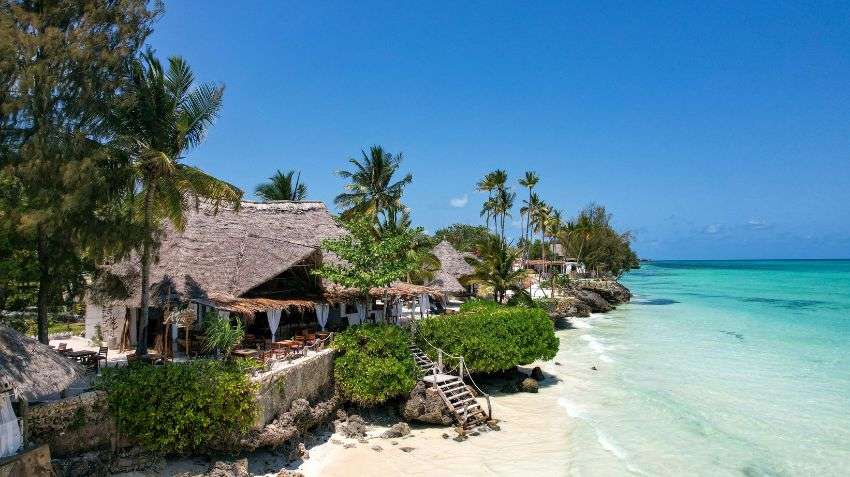
The beach areas are a different proposition. Nungwi, at the island’s northern tip, has the most infrastructure – beach bars, dive operators, boat trips running throughout the day, a social scene that extends well into the evening. Paje, on the east coast, is quieter and better known for kitesurfing, with a calmer pace and a more settled crowd. The travel time between Stone Town and the northern beaches runs roughly an hour by road; the east coast is a similar distance but in the opposite direction. Most first-time visitors pick one beach area as a base rather than moving between several.
Zanzibar in photos




Is Zanzibar right for your travel style?
The island fits slow travelers well – people who are happy to let a day become a long breakfast, a walk, a swim, and a dinner that starts late. It also fits travelers who want a genuine cultural layer alongside the beach, because Stone Town delivers that without requiring any particular effort. The history is in the architecture, the food, the social rhythm of the old town at dusk.
It is a less obvious fit for travelers who want efficient sightseeing with a clear sequence of attractions, or for people who measure a trip by how much ground they cover. The island is small enough that you will run out of new places quickly if you move at speed, and the heat in the middle of the day between June and September actively encourages doing less rather than more. That rhythm suits some travelers and quietly frustrates others – knowing which category you fall into is useful before you commit to ten days.
Solo travelers generally find the island easy to navigate. Budget travelers will find more flexibility in Stone Town’s guesthouses than in the beach resorts, where prices rise considerably in peak season. Couples and small groups tend to anchor the northern beach area and day-trip into Stone Town rather than the other way around.
How to move around Zanzibar as a first-time visitor
Arriving at Abeid Amani Karume International Airport, the transfer to most Stone Town accommodations takes under thirty minutes by taxi. Fares are negotiated at the exit rather than metered; having a rough sense of the going rate before you land removes the uncertainty from that first conversation.
Between areas, the local option is the dala-dala – shared minibuses that run fixed routes between the main towns and beaches. They are slow, frequently full, and will give you a more accurate picture of how the island actually moves than a private transfer will. Most travelers use a mix: dala-dalas for short town-to-town hops, negotiated taxis or tuk-tuks when traveling with luggage or in the heat of the afternoon.
If you are considering a Stone Town versus beach area stay decision the key variable is what kind of morning you want. Stone Town mornings are atmospheric and dense – coffee in a rooftop cafe, the old harbor, the market waking up. Beach mornings are quieter in a different way: the light on the water before the boats start running, breakfast that takes as long as it takes. Neither is the wrong answer, and a split stay of three or four nights in each direction works well for most first-time visitors who have a week or more.
The Spice Tour is the one half-day excursion that almost everyone does and almost everyone is glad they did. It runs from Stone Town into the island’s interior, and the combination of plantation landscape and local knowledge makes it feel less like a tourist activity and more like the island explaining itself.
What sits near Zanzibar and where to continue
Prison Island, a short boat ride from Stone Town, is a popular half-day trip – giant tortoises, clear water, a small beach. Mnemba Atoll, to the northeast, is one of the better snorkeling and diving spots on the whole Swahili coast and runs as a day trip from the northern beach areas. The reef around Paje on the east coast works well for snorkeling at high tide, with the exposed sandbanks at low tide offering their own kind of quiet spectacle.
Travelers who arrive from or continue to mainland Tanzania often route through Dar es Salaam, which connects by short flight and by ferry. The ferry crossing takes roughly two hours and is a reasonable alternative to flying if you have the time and the sea is calm. Some travelers use Zanzibar as the end point of a Tanzania mainland trip – safari, then the coast – and find that the island’s pace works well as a decompression after the intensity of the game parks.
Travelers who find Zanzibar’s beach rhythm exactly right and want to understand the island’s area and stay logic in more depth will find the Zanzibar area stays read covers that decision in full – which part of the island suits which kind of trip, and where the trade-offs between access and atmosphere actually sit.
Is Zanzibar worth it for a first East Africa trip?
For the right kind of traveler, Zanzibar is one of those rare places where the reality is more interesting than the expectation. The beach is genuinely good, but the island delivers something beyond a beach holiday – a cultural register that takes a couple of days to tune into and then becomes hard to leave. The first-time traveler guide to Zanzibar is really an argument for giving the island enough time to show you both registers: Stone Town first, then the coast, at the pace the place suggests rather than the pace you arrive with.
Where it fits less well is for short trips or travelers who need a clear daily agenda to feel like they are making the most of a destination. The island rewards patience. It does not reward speed. In peak summer, with the ocean calm and the light long in the evenings, the conditions are close to ideal – provided you are the kind of traveler who can let a good afternoon stretch into a better evening without feeling like you are wasting the trip.
Zanzibar first-time visitor FAQ: best time, days needed, Stone Town vs beaches, solo travel and visa
1. When is the best time to visit Zanzibar for a first trip?
June through October is the most settled window for a first visit – dry, with steady sea breezes and calm conditions for snorkeling and diving. January and February also work well. The long rains in April and May tend to close some beach operations and make road travel slower, so most first-timers plan around those months.
2. How many days do you need in Zanzibar as a first-time visitor?
Seven to ten days gives you enough time to settle into Stone Town, reach the north and east coasts, and slow down enough to feel the island’s rhythm rather than just move through it. Shorter visits of four or five days are possible but tend to feel rushed once you factor in half-day transfers between areas.
3. Is Zanzibar suitable for solo travelers visiting for the first time?
Solo travel on the island is common and generally easy to navigate. Stone Town has a compact, walkable center with plenty of guesthouses at different price points, and the beach areas north of the island attract a mix of independent and group travelers. Female solo travelers tend to find the beach towns more relaxed than the old town, where conservative dress is worth keeping in mind.
4. Do you need a visa to visit Zanzibar as a first-time traveler?
Zanzibar is part of Tanzania, so entry requirements follow Tanzanian visa rules. Many nationalities can obtain a visa on arrival at the airport, though checking current requirements with your country’s travel authority before departure is always the right move – the process at Abeid Amani Karume International is generally smooth and well-organized.
5. What is the difference between Stone Town and the beach areas for a first-time visitor?
Stone Town is where the island’s history, food and social life concentrate – narrow lanes, spice aromas drifting from the market, rooftop dinners as the call to prayer carries across the water. The beach areas, particularly Nungwi and Kendwa in the north and Paje in the east, trade that density for open sand, reef access and a slower tempo where the main decision each day is morning swim or afternoon boat trip.