
Tulum changes with where you wake up. At 7:00 a.m., that might mean the Caribbean outside your door, jungle pressing against the road, or a quiet street in town before the heat arrives. Choosing the best area to stay in Tulum matters because its main zones create genuinely different trips.
The choice is really about pace. Stay by the beach and your days lean toward sea views, cycling and late dinners; stay in Pueblo and they shift toward tacos, local streets and easier access inland. The best base for a quiet couple is not necessarily the best one for a first visit built around ruins, cenotes and beach time.
By late morning, especially in summer, heat, traffic and busier beach clubs start shaping the day. A good location does more than change where you sleep. It determines how easily Tulum unfolds around you.
What Tulum’s different zones actually feel like for visitors
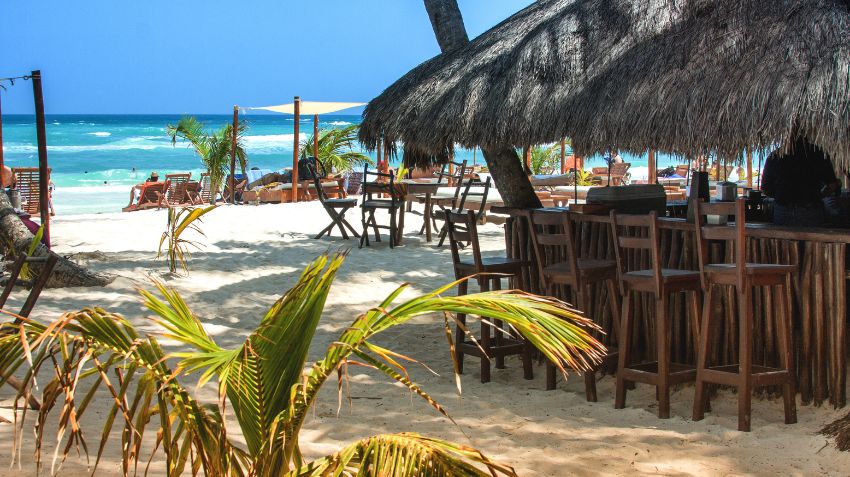
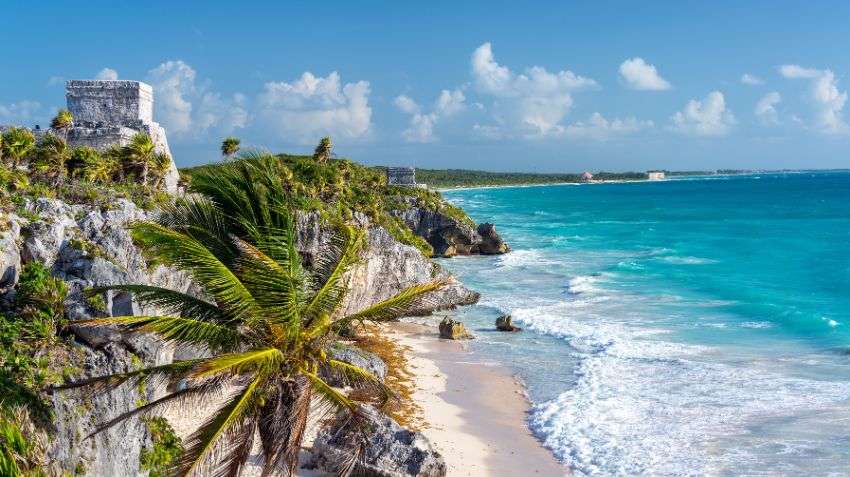
Tulum is not a single place. The official town – the Pueblo – sits a few kilometers inland from the coast, with its own rhythm of taquerias, juice bars, cenote tours leaving at dawn and dinner stretching past 22:00. The Hotel Zone, called the Zona Hotelera or the beach strip, runs south from the ruins along the coast, mostly dense jungle on one side and soft white sand and turquoise water on the other.
Between those two, Aldea Zamá has grown into a third distinct register – low-rise, tree-lined, residential in feeling, a neighborhood rather than a resort zone. Further south, toward the Sian Ka’an biosphere reserve, the road thins and the properties space out dramatically.
In summer the beach strip operates at a different temperature than the Pueblo. By 11:00 the sand is at full warmth, and the palapa restaurants become the obvious destination for those wanting shade and a cold drink.
The Pueblo, a few kilometers back from the coast, sits in a breeze that arrives irregularly but reliably by mid-afternoon, and the covered restaurants there stay comfortable through the hottest part of the day. Aldea Zamá, built through low jungle, holds shade in a way the beach strip does not.
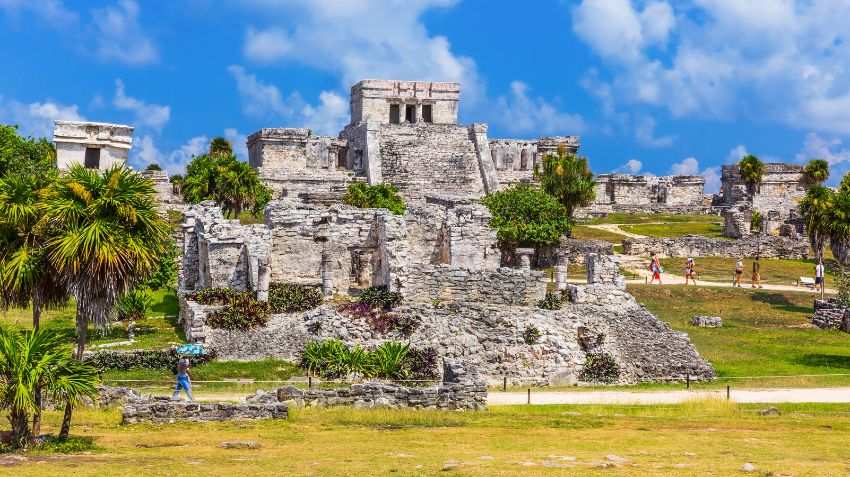
The ruins sit at the northern edge of the Hotel Zone, and from the right terrace in the late afternoon, the Mayan structures catch a warm amber light against the Caribbean behind them – one of the more quietly spectacular views in the Yucatan. Most visitors see it once and wish they had a second evening for it.
Tulum in photos
Is Tulum’s Hotel Zone right for your travel style?
The beach strip suits travelers who want the Caribbean immediately accessible and are willing to pay a meaningful premium for that access. Properties here are mostly boutique and adults-oriented, built through the jungle, with the beach a short walk from most rooms. The atmosphere ranges from low-key eco-chic to fully curated beach-club culture, and both exist within the same kilometer of road.
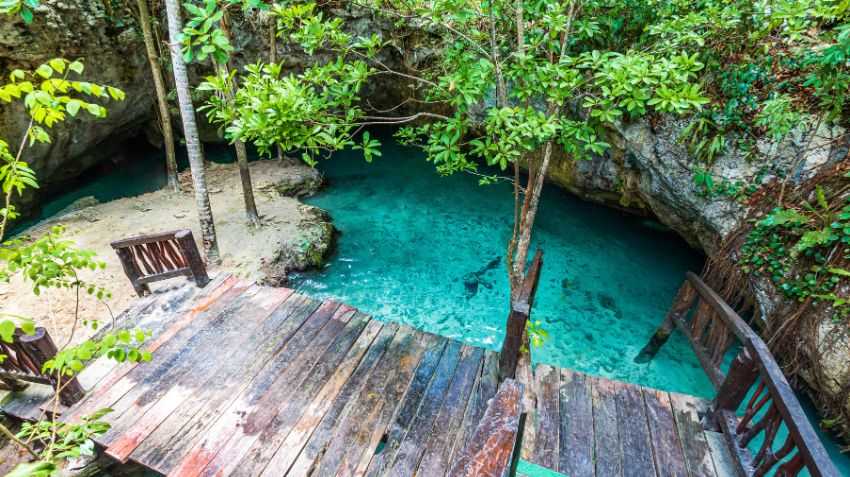
The trade-off is logistics. Getting anywhere that isn’t the beach or the ruins requires a taxi or bike ride, and the road through the Hotel Zone becomes genuinely busy by late morning in peak season. Grocery shopping and pharmacy runs mean a trip into the Pueblo. The cenotes that most visitors treat as a highlight are all accessed from the main road inland – easy enough, but requiring a moped or organized pickup rather than a spontaneous walk.
Travelers who are specifically coming for a few slow beach days, who are not trying to cover much ground, and who are happy to let dinner come to them rather than going to find it, tend to find the Hotel Zone works exactly as it should.
Those arriving with a list – ruins, several cenotes, Cobá, a day in Bacalar – often find the Pueblo a more functional base once they realize how much time moving between zones actually takes.
Where to stay in Tulum Pueblo and Aldea Zamá as a first-time visitor
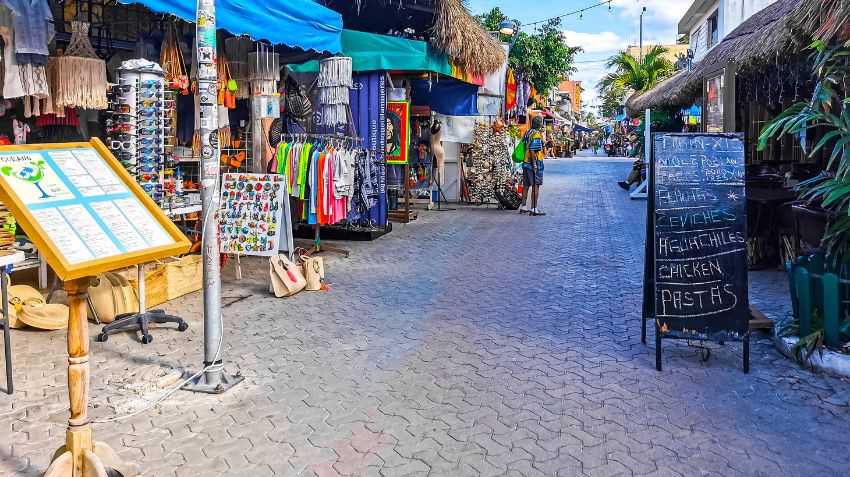
The Pueblo is the part of Tulum that a traveler from Mexico City would recognize. The main avenue, Avenida Tulum, runs north to south with restaurants and bars that stay open until well past midnight, and the side streets hold a combination of budget guesthouses, small hotels and the occasional surprisingly good café that has nothing to do with the beach scene. Tacos are available late. The morning vegetable market on a Tuesday is genuinely a local event.
Staying in the Pueblo means your day starts with options that don’t require a bike or a taxi. Cenote Cristal and Cenote Escondido are a short ride south on the main road; the ruins are under twenty minutes by collectivo or bike. The beach is not far but is also not immediate – for some travelers, that slight remove makes the beach feel like a destination rather than a backdrop, which suits a certain kind of trip.
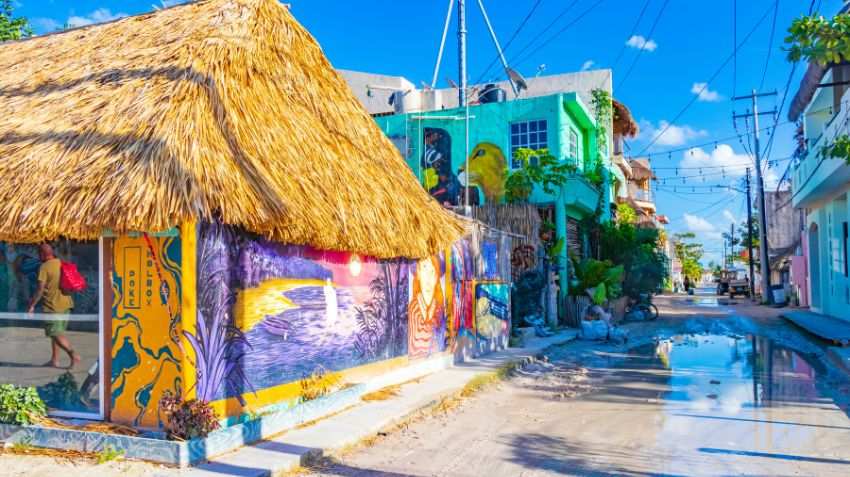
Aldea Zamá sits between these two worlds in a literal sense, and in an atmospheric one. The neighborhood is quiet in a way the Hotel Zone is not, with streets lined by low jungle vegetation and small hotels built with something closer to residential scale than resort logic. Walking there in the morning, before the day heats up, the sounds are mostly birds and the occasional scooter.
Restaurants in Aldea Zamá tend to close earlier than those in the Pueblo, which fits travelers who prefer a slower close to the evening rather than a late one. If the Tulum travel guide covering beaches and cenotes is the mental frame you’re working from, Aldea Zamá tends to be the area that surprises people most positively when they stay there rather than just pass through.
How to move between Tulum’s zones and structure your days
The practicalities of moving through Tulum are simple once understood. The Pueblo and the beach strip are connected by the main road, with collectivos – shared minibus vans – running regularly and cheaply between the two. A taxi covers the same route in around ten minutes and costs a fixed amount that drivers state upfront. Bikes and mopeds are widely available for rental in all zones, and for many stays they become the primary mode of movement.
The Hotel Zone road runs parallel to the beach for roughly ten kilometers before reaching the Sian Ka’an reserve boundary, where the road ends and the landscape changes completely. Properties south of around kilometer 10 on the beach road sit in genuine seclusion – spectacular if that is what you want, logistically complicated if you are trying to reach the ruins or the Pueblo without a moped or a taxi.
For trips organized around mornings at cenotes and afternoons at the beach, a bike from a Pueblo or Aldea Zamá base tends to work better than it sounds. The cenotes on Route 307 south of town are accessible by bike on flat road; the beach strip is a straightforward cycle from Aldea Zamá. In summer, the most useful thing to know is that the cenotes are at their best before 10:00, when the air is still cool and the water has an extraordinary clarity before the groups arrive.
Travelers weighing Tulum against Cancún as a base for the same set of activities – ruins, water, a few days of beach – often find that the question resolves naturally around pace. Cancún’s Hotel Zone delivers a different kind of beach experience and airport convenience; the Cancún travel guide covers that rhythm in detail for those still deciding.
What sits near Tulum worth building into the trip
Cobá is the most obviously underused day trip from Tulum. The ruins there are larger and less visited than Tulum’s own site, set into dense jungle rather than on a cliff above the sea, and the drive from town takes under an hour. It fits a morning departure – leaving by 8:00, arriving before the main tour groups from Cancún, finishing before midday when the heat becomes significant.
Bacalar, four hours south by bus, offers a different register entirely – a lake rather than an open sea, with a notable stillness and a town that moves at a noticeably slower tempo than Tulum. It works as an extension for longer stays rather than a day trip. For travelers who find the seasonal timing of the Yucatan coast important to their decision, Bacalar and Tulum share broadly similar climate windows.
The Sian Ka’an biosphere reserve, accessible from the southern end of the beach strip, rewards an early morning entry – the lagoons and mangroves there are an entirely different Tulum from the beach clubs a few kilometers north, and quiet in a way that is genuinely striking by contrast.
If a quieter rhythm along the Yucatan coast fits better than Tulum’s current high-season pace, the cenotes and reef towns between Tulum and Cancún offer a lower-key version of the same landscape – worth considering for travelers who want the Caribbean without the beach-club density.
Is Tulum worth it for your trip, and which zone actually suits you?
The best areas to stay in Tulum depend less on a preference for luxury or budget than on a preference for immersion or access. The Hotel Zone delivers the Caribbean at your door, a specific atmosphere – quiet jungle, open beach, curated food – and a degree of remove from everything else that some travelers find restorative and others find isolating by day three. The Pueblo delivers connection: to the town itself, to the early cenote runs, to the kind of dinner that costs a fraction of what the same plate costs on the beach strip.
In summer the Pueblo and Aldea Zamá handle the heat with more flexibility – shade, covered restaurants, the option to stay indoors through the hottest hours without feeling like you’re missing the point of the destination. The Hotel Zone’s reward in summer is the beach with fewer people on it, and the water, which does not change regardless of what the calendar says.
Tulum works for travelers who are willing to let the place set the pace. It does not particularly reward those who want to cover maximum ground in minimum time – the distances are short but the tempo is slow by design, and the best experiences tend to arrive when the plan loosens a little.
Tulum areas FAQ: where to stay, beach vs Pueblo, Aldea Zamá, summer pacing and cenote access
1. What is the best area to stay in Tulum for the beach?
Tulum Beach, the Hotel Zone that runs along the coast south of the ruins, is where the sand and sea are immediately accessible. The atmosphere there is quieter in the mornings, with the palapa-roofed restaurants and beach clubs filling from mid-afternoon. Most properties are boutique and adults-oriented, and the light on the Caribbean in the early evening is worth the premium over staying in town.
2. Is Tulum Pueblo a good place to stay?
The Pueblo works well for travelers who want access to restaurants, cenotes and the ruins without paying Hotel Zone rates. It is more casual and considerably more local in feeling, with the main avenue busy at dinner and street tacos available well past midnight. The beach is a short taxi or bike ride away rather than a walk, which is the main trade-off worth knowing upfront.
3. What is Aldea Zamá like to stay in?
Aldea Zamá sits between the Pueblo and the beach strip and has grown into a residential-feeling neighborhood with mid-range hotels, yoga studios and low-key restaurants. It suits travelers who want a quieter atmosphere without the deep-jungle retreat feel of the southern Hotel Zone properties. Morning walks there are genuinely calm, and it connects easily to both zones by bike.
4. How far is Tulum Pueblo from the beach?
The Pueblo sits roughly four kilometers from the main beach strip, which most travelers cover by rented bike, moped or taxi. Collectivos also run regularly between the two. It is close enough for a daily beach visit, though spontaneous late-afternoon swims require a bit more planning than if you were staying on the strip itself.
5. Is Tulum worth visiting in summer?
Summer in Tulum is humid, with afternoon rain typical through July and August, but the crowds thin noticeably and the atmosphere across all zones becomes calmer and more local. Cenotes are at their clearest and coolest in the morning, the beach clubs carry a quieter energy by midday, and the Pueblo restaurants feel genuinely lived-in rather than tourist-facing – a different version of the destination, and one that has its own pull.