
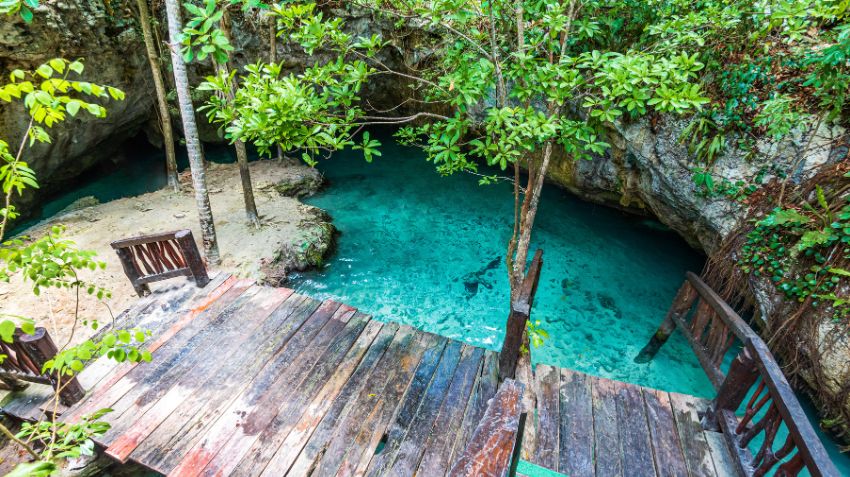
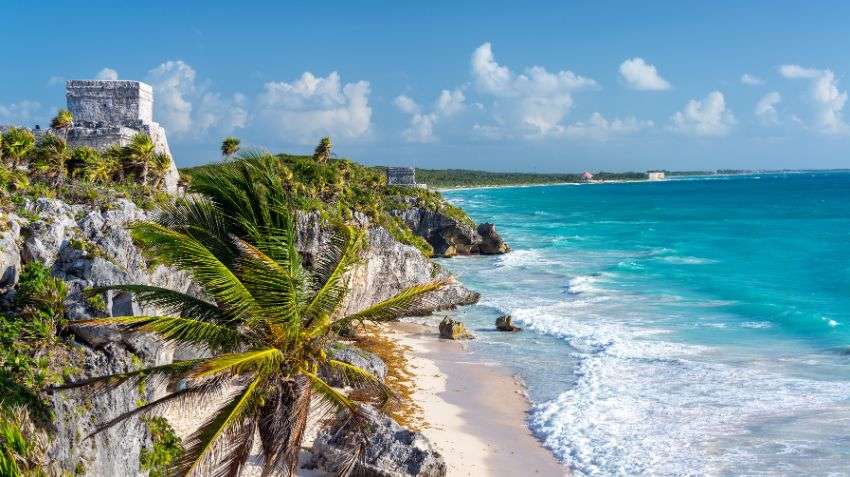
Tulum arrives with a reputation already attached to it: jungle-framed ruins above the Caribbean, cenotes lit by filtered morning sun, and a beach road that seems to exist somewhere between wilderness and design fantasy.
Those images are real, and a useful first-time guide should begin with what makes Tulum magnetic before explaining how to experience it well. The town has genuine atmosphere that most of the Yucatán coast doesn’t quite replicate, and August shows you a version of it that is lush, green, and quieter in the places that matter.
What the destination doesn’t have is simplicity. Tulum is not one place but two, and how you navigate the split between the pueblo and the Hotel Zone shapes almost everything else about your trip. Understanding that division early saves a lot of taxi fare and a fair amount of confusion.
What Tulum feels like for first-time visitors
The Hotel Zone is Tulum’s most photographed version: a long coastal strip of boutique properties tucked behind palm lines, beach clubs with deep sand and afternoon DJs, open-air restaurants where the menu is longer than the wine list and the prices reflect both. The aesthetic is consistent enough that it starts to feel curated almost immediately, which for some travelers is exactly the appeal and for others is exactly what makes the pueblo feel like relief.
The pueblo sits a few kilometres inland on the main highway. Taco stands open at 08:00, colectivos leave for Playa del Carmen with the kind of frequency that makes you stop checking a schedule, and the streets are considerably louder and more ordinary than anything along the beach road. Neither zone is a simulation of the other, and first-time visitors who expect them to blend are usually the ones who feel most disoriented early on.
In August the jungle between the two zones is fully saturated, a deep green that softens the heat somewhat and gives the whole corridor a particular visual density. Afternoon rains arrive most days, usually between 14:00 and 17:00, and they clear fast enough that evening plans rarely need adjusting. The light after a rain, particularly on the Hotel Zone beach road, has a quality that the dry-season photographs don’t quite capture.
Tulum in photos

Is Tulum right for your travel style?
Tulum works well for travelers who are comfortable building unstructured days and don’t need a lot of urban infrastructure to feel oriented. The town is not walkable between zones without a bike or a taxi, there is no central square in the European sense, and the Hotel Zone in particular rewards people who are happy to anchor at a property and move outward from there rather than cover ground constantly.
Solo travelers and couples with a tolerance for boutique prices and a genuine interest in cenote culture, coastal rhythms, and the low-key bohemian social register that the Hotel Zone cultivates tend to find it fits well. Families with young children can make it work but will find the lack of easy, shaded walking in the Hotel Zone a real constraint on midday hours, and the road between zones is not pedestrian-friendly.
Travelers looking for a classic beach package — poolside service, all-inclusive, everything in one place — will find Cancún structured better for that kind of stay, as the Cancún first-time guide covers in some detail.
August specifically suits travelers who are happy to let the rain shape their afternoons. It is not the month to push a rigid activity list, but for those who enjoy cenote mornings, long lunches, and evenings when the heat has dropped and the beach clubs have a more local, less tourist-dense feel, it can actually be one of the better windows.
How to get around Tulum and arrive from Cancún airport
Almost everyone arrives through Cancún International Airport, which sits about 130 kilometres north of Tulum. ADO buses run directly from the airport terminal and deposit passengers at Tulum’s main bus station on the edge of the pueblo — the journey takes roughly two hours and costs a fraction of a private transfer.
Shared shuttles are also common and drop at your accommodation, which is worth the modest price premium if you are heading directly to the Hotel Zone and have luggage that doesn’t enjoy gravel paths.
Once in Tulum, the architecture of movement is simple but takes a day to internalise. Fixed-rate taxis run between the pueblo and the Hotel Zone, with fares that are roughly consistent and worth confirming before you get in. Colectivos run north along the main highway toward Playa del Carmen and south toward Felipe Carrillo Puerto, making day trips to Cobá or the cenote routes genuinely easy to manage without renting a car.
Within the Hotel Zone itself, bicycles are the most sensible way to move. Most hotels rent them, and the beach road, while not perfectly surfaced in places, is flat enough that the riding is easy.
Walking between properties in August midday is technically possible and practically inadvisable — the heat off the road accumulates quickly and there is almost no shade. Morning and evening rides are a different matter, particularly the stretch north of the ruins where the road quiets significantly and the sea is visible through the trees.
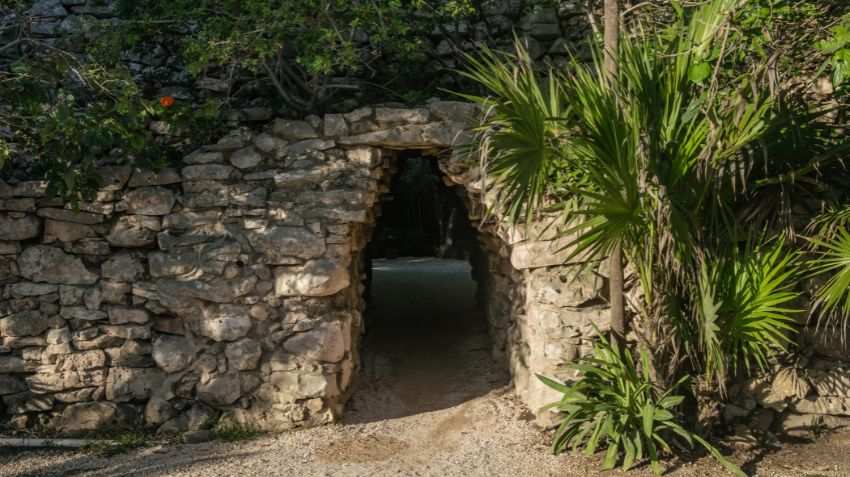
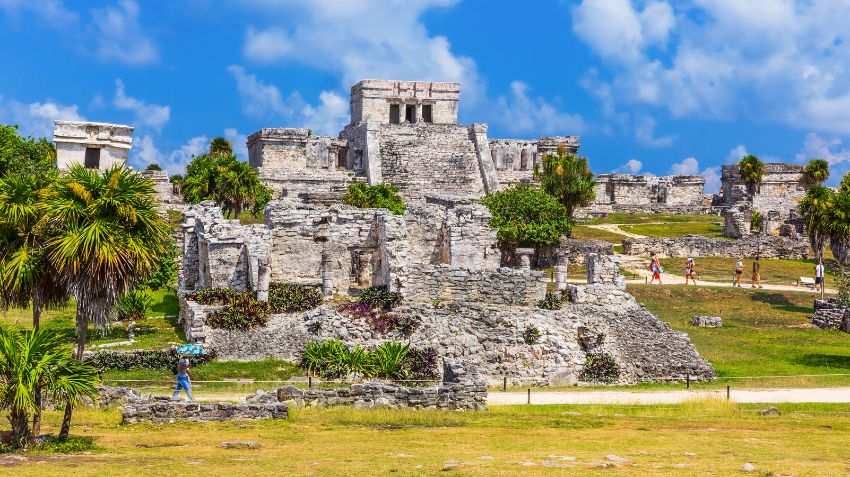
The Tulum ruins sit at the northern end of the Hotel Zone on a cliff above the water. They open early and the light before 09:00 is worth the early start — the site itself is compact and readable in under an hour, and it is one of the few places where the Caribbean view comes without a beach club soundtrack.
Cenotes, ruins and day trips worth building around Tulum
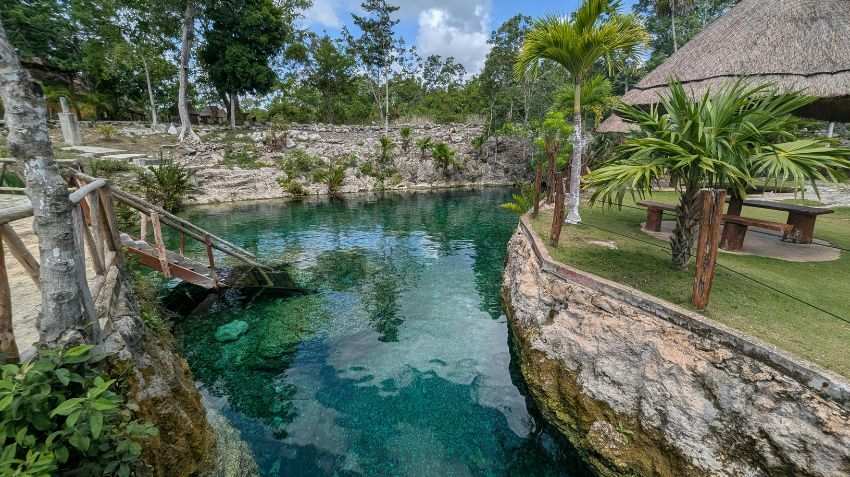
The cenotes are not a secondary feature here. Gran Cenote, a few kilometres from the pueblo along the road toward Cobá, is the most accessible for visitors without a car — it is an open-sky swimming hole with a partially enclosed cave section, and the underwater light in the mid-morning has a quality that stays with you. Going before 10:00 makes the experience significantly more spacious; group tours arrive later and the atmosphere shifts noticeably when they do.
Cobá is worth a half-day if you are remotely interested in Mayan archaeology. The pyramid there is one of the few in the region you can still climb, and the jungle setting is considerably more immersive than Tulum’s coastal site. Colectivos from the pueblo get you to the Cobá junction and from there shared taxis cover the last stretch. The whole circuit works easily as a morning trip with a return by early afternoon.
Travelers who have a few extra days and want to experience a different energy register entirely often drift south toward Bacalar, where a lagoon of several distinct colour bands gives the swimming a character that the Caribbean coast around Tulum doesn’t replicate.
If you find yourself weighing the broader Mexico trip structure and wondering how Tulum fits against a city-based itinerary, the Mexico City and Guadalajara comparison is a useful reference for understanding how the urban and coastal registers sit alongside each other.
For travelers building a longer Yucatán loop, the Cancún seasonal guide covers how the timing of the northern end of the peninsula affects the whole corridor, which matters if you are sequencing Tulum with a few days at the resort end first or last.
Continue exploring: Tulum’s atmosphere sits on one end of the Yucatán spectrum. If you are still deciding how to structure the larger trip, the comparison between Tulum’s slower jungle-and-coast rhythm and Cancún’s more structured beach and nightlife energy is worth sitting with before booking accommodation in either direction.
Is Tulum worth visiting for first-timers?
For a first-time visit to the Yucatán, Tulum offers something the rest of the peninsula’s coast doesn’t quite replicate: a cenote-to-beach rhythm set inside a stretch of jungle that still feels genuinely present rather than landscaped away. It suits travelers who prefer to build their own daily structure over those who want services laid on, and it rewards people who are willing to engage with the two-zone geography rather than fight it.
August is not the easiest month on the infrastructure side — prices are lower than peak season but the humidity is real and a few of the smaller beach club operations run reduced hours around public holiday weeks.
The cenotes absorb that trade-offs well: they are cooler, photogenic in a way that depends on cloud cover rather than full sun, and less saturated with visitors than the January window. First-time travelers who time their cenote mornings well and let their afternoons follow the rain tend to find August works significantly better than its reputation suggests.
The question for a first-time traveler guide to Tulum is not really whether the destination delivers — it does, for the right kind of trip. The question is whether your version of a good week looks more like unstructured coastal days anchored around swimming holes and slow dinners, or like something more easily structured and serviced. For the former, Tulum is a strong fit. For the latter, the answer sits a couple of hours north on the highway.
Tulum first-time visitor FAQ: arrival, cenotes, timing, zones and days needed
1. How do I get to Tulum from Cancún airport?
Most travelers take an ADO bus or a shared shuttle from Cancún International Airport, a journey of roughly two hours depending on the route and stops. ADO buses depart from the airport terminal directly and drop at Tulum’s main bus station near the pueblo, which is a useful starting point if you are staying in town. From there, taxis and colectivos reach the Hotel Zone in under twenty minutes.
2. How many days do you need in Tulum for a first visit?
Four to five days gives you enough time to settle into both the Hotel Zone and the pueblo without rushing, with a day or two left for cenotes and the Tulum ruins. Travelers who want to add Cobá or Bacalar to the loop usually build in a sixth or seventh day, since those are genuinely worth the time and pace well against the coastal rhythm of Tulum itself.
3. Is Tulum worth it in August?
August is Tulum at its most tropical, warm and humid with afternoon rains that tend to pass quickly and leave the air noticeably fresher. The cenotes, particularly the inland ones, feel cooler and far less crowded in the mornings before group tours arrive. Travelers who time their days around early cenote swims and late afternoon beach time find August works well and comes with lower accommodation rates than the December-to-March peak window.
4. What is the difference between Tulum pueblo and the Hotel Zone?
The pueblo is the town proper, with taco stands, the main bus station, local markets, and a significantly different price register than the coast. The Hotel Zone, several kilometres east along the beach road, is where the boutique hotels, beach clubs, and most of the social energy associated with Tulum’s reputation concentrate. Many first-time visitors base themselves in one zone and visit the other daily, though the split is real enough that it shapes the whole rhythm of your stay.
5. Are cenotes near Tulum worth visiting as a first-timer?
The cenotes around Tulum are genuinely one of the strongest reasons to visit the region, ranging from open-sky swimming holes to partially submerged cave systems with a particular quality of filtered light in the late morning. Gran Cenote, a few kilometres from town, is the easiest to reach without a car, though arriving before 10:00 makes a noticeable difference in how the space feels. The cenote circuit around Cobá adds depth for travelers who want a full day away from the coast.