
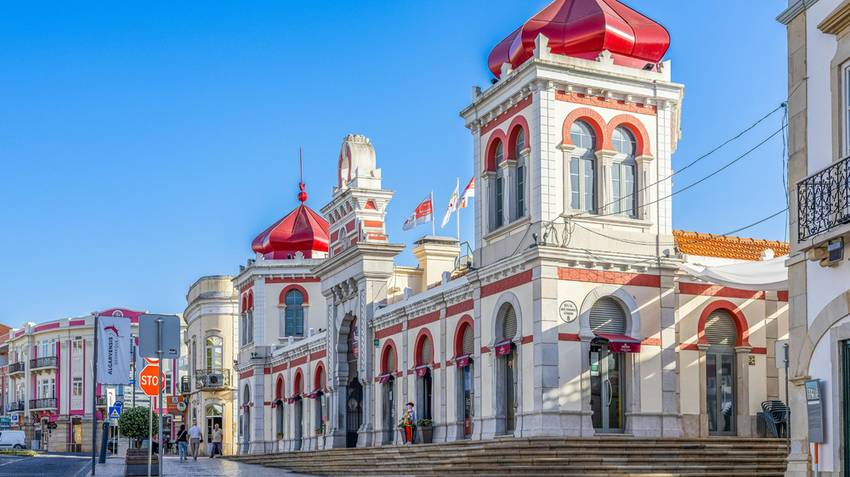
The Faro airport is minutes from the center, the train station is a short walk from the marina, and the old town sits behind a stone arch that most passengers see from a taxi window before they have even decided whether to stop. For a traveler guide to Faro, that low-key arrival is actually the right frame: this is a city that rewards the pause, not the itinerary.
The Algarve coast stretches west and east from here, pulling most visitors toward beach towns before Faro has had a chance to make its case. What it quietly offers is different – a walled old town with a working cathedral, a lagoon natural park at its feet, an evening restaurant scene that fills long after the day-trippers have cleared, and a pace that belongs to a regional capital rather than a resort. It is not trying to compete with the beaches. It just happens to be a better base than most travelers realize.
Travelers planning their first Portugal trip may also find the Lisbon first-time guide useful for understanding how the country’s largest city differs from Faro in pace and atmosphere.
Long evenings are the city’s strongest register right now. By early summer, the light holds past 21:00, the cathedral square stays warm well after sunset, and the marina takes on a quieter social rhythm once the afternoon ferry crowd has dispersed. That is the Faro most first-time visitors miss if they only give it a transit night.
Faro atmosphere, character, and first impressions
The old town is small enough to cross in fifteen minutes but layered enough to slow a walk to forty. Roman walls, a Moorish gate, baroque facades, and a cathedral that looks larger from inside than its exterior suggests – the scale is human without being precious. Stone underfoot, low buildings, a square that functions as a genuine gathering point rather than a tourist set piece.
Outside the walls, the city has the texture of a working Portuguese regional center: a covered market, a pedestrian shopping street, an older residential quarter that has not been aestheticized for visitors. The marina boardwalk runs along the lagoon edge, flat and wide, with fishing boats and ferries rather than superyachts. The smell shifts between salt water and grilled fish depending on where the wind comes from.
The Ria Formosa natural park begins where the city ends, or rather, where the land becomes uncertain – a system of islands, channels, and tidal flats that is visible from the marina but genuinely different once you take a ferry into it. This is the detail that changes Faro from a transit stop to a destination: on one side, the city; on the other, one of the more unusual coastal ecosystems in southern Europe, accessible in thirty minutes by boat.
Which travelers Faro fits best
Faro fits travelers who want southern Portugal without resort energy. Slow travelers, couples looking for an unhurried base, solo visitors who prefer a city with its own rhythm to a beach package destination – the city handles all of these well. Remote workers tend to find it more comfortable than the coastal towns: there are cafés that function beyond tourist hours, a library, neighborhoods where you can disappear into a morning routine without feeling like a visitor.
Travelers who eventually continue north may also want to explore the Porto first-time guide, particularly if they are balancing coastal Portugal with larger city experiences.
It is less suited to travelers whose primary goal is nightlife, beach access, or a dense cultural program. The beach is a ferry or bus ride away, not within walking distance. The cultural offer is real but compact – the Museu Municipal, the old town, the cathedral, the occasional concert in the square. Travelers arriving from Lisbon or Porto with high expectations of variety will find Faro quieter than expected. That is not a flaw in the city; it is just an honest read on the fit.
First-time visitors to Portugal who want to understand the Algarve beyond its coastline, or who are building a broader southern loop, will find Faro works particularly well as an entry point and a rest stop in the same trip. The airport proximity removes the arrival complexity that other regional capitals carry.
Faro’s daily rhythm from morning to evening
Mornings in Faro run gently. The covered market, the Mercado Municipal, opens early and draws a local crowd before the tourists arrive – fish counters, bread, regional pastries, coffee taken standing at the bar. The old town is largely quiet before 10:00, which is when it looks best: the light comes in low across the Roman walls, the cathedral square holds a few pigeons and almost nobody else.
Day-trippers from the beach resorts begin arriving mid-morning and peak around midday. The old town absorbs them reasonably well, given how compact it is, but the main alleys – particularly around the arco da Vila and the cathedral – feel busiest between 11:00 and 15:00. The afternoon heat in July and August settles into the stone streets and stays there; the shaded side of the cathedral square fills with people who have found the same instinct.
By early evening the tempo shifts. The day-trip buses have left, the restaurants begin setting out tables, and the marina takes on a different quality – slower, more local, the light changing the water color from grey to a warm bronze that holds for about an hour. Dinner in Faro runs late by northern European standards, with kitchens typically at full pace between 20:00 and 22:30. The cathedral square after dinner, especially on a warm June or September night, is one of the quieter pleasures the city offers without advertising it.
Travelers who have been weighing Faro against Porto as a base will find the rhythms read very differently – the Porto vs Faro comparison covers that decision in more detail, particularly for travelers building a longer Portugal itinerary.
Faro transport connections and day trips
The city center is walkable in a way that eliminates most transport decisions during a typical day. From the train station to the old town gate is about eight minutes on foot; from the old town to the marina, five. The flat terrain makes this feel even shorter than it is.
Faro’s train station connects directly to Lisbon (under three hours on the Alfa Pendular), to Lagos in the west (about an hour forty), and to Tavira in the east (thirty minutes). This makes the city a genuinely useful anchor for a broader Algarve exploration without requiring a rental car for every excursion. Tavira in particular is worth a half-day: a smaller, quieter city with a riverfront and a different architectural character from Faro.
Ferry services from the marina run to the Ria Formosa islands – Ilha Deserta and Ilha da Culatra are the main options – on a schedule that runs frequently through summer and thins in autumn. Ilha Deserta is the more stripped-back option: no permanent residents, a single restaurant, a long sand spit. Ilha da Culatra has a fishing village, a quieter beach, and a rhythm that feels more lived-in. Both crossings take between fifteen and thirty minutes depending on the route.
For travelers who find themselves curious about a different kind of Portugal after settling into Faro’s pace, the Faro or Coimbra comparison maps the contrast between the Algarve south and the university city of the center, which runs at an entirely different register.
Best time to visit Faro
Right now, in early summer, Faro is operating at a comfortable intensity. The days are long, the Ria Formosa ferries are running on full schedules, and the evening restaurant scene is reliable six nights out of seven. The beach islands are warm enough for swimming from May onward, and the crowds have not yet reached their July-August peak.
July and August bring the warmest water and the most visitor activity. The old town handles this with reasonable ease – it is compact enough that even a busy day does not feel as compressed as the beach resort towns nearby. Evenings in high summer carry a social energy that the city does not have in other months: terraces full, the marina lit, the cathedral square occasionally hosting outdoor events.
September and October are many repeat visitors’ preferred window. The sea temperature holds from summer, the light softens, and the crowds thin noticeably. Restaurant kitchens keep their summer hours through September but begin to pull back in October. The Ria Formosa in autumn has a different character – fewer swimmers, more bird activity, quieter crossings.
Winter in Faro is mild by northern European standards (rarely below 10°C) but noticeably quieter. Some restaurants close or reduce hours. The old town in January or February has an unhurried quality that suits slow travelers, but the island ferry schedules are reduced and some venues shut entirely. It is a workable off-season destination for the right traveler – someone who wants the city’s bones without its seasonal activity.
How Faro fits into a Portugal itinerary
Faro earns its place at the start or end of a Portugal loop more than it earns a standalone week. The airport makes it a logical entry point; the train connections make it easy to move north toward Lagos, Tavira, or Lisbon without doubling back. Most first-time visitors to the Algarve pass through Faro on their way somewhere else and then find, on a return trip, that they want to stay longer.
For travelers building a route through multiple Portuguese cities, the Portugal itinerary guide explores how Faro fits alongside Lisbon, Porto, and Coimbra.
The city sits most naturally before or after a slower coastal stay. A few nights in Faro, then the Ria Formosa islands, then east to Tavira, then back to Faro for the train to Lisbon – this is a sequencing that uses the city’s transport position without treating it as purely functional. It also lets the city’s evening character accumulate, which is where the real character of the place tends to surface.
Travelers building that wider Portugal shape from the north will find the Lisbon neighborhood read useful before they commit to a base in the capital – particularly if the plan is to move between the two cities more than once.
Is Faro worth more than a stopover?
A first-time traveler guide to Faro ultimately comes down to one question: are you passing through, or are you staying? The city rewards the second choice disproportionately. Two nights gives you the old town, the marina, and one Ria Formosa crossing. Three nights gives you Tavira, a slower morning routine, and the evening rhythm that makes Faro feel like a place rather than a stopover.
Travelers comparing Portugal’s major destinations before committing to a route may also find the Lisbon versus Porto comparison useful for understanding the country’s two largest urban experiences.
It suits travelers whose energy is oriented toward observation rather than activity, toward a good dinner rather than a packed day. The Algarve’s beaches are close enough to visit without basing yourself in a resort. The train connections mean that a broader Portugal loop is fully accessible without a car. And the city’s relatively low international profile – compared to Lisbon or Porto – means that the experience of walking the old town at 08:30, with local café noise carrying out from open doorways and almost nobody else on the cobbles, is still there to be had.
For travelers who want the Portuguese south without the resort register, Faro is simply a better base than most itineraries suggest.
Faro travel FAQ
1. What is Faro like for a first-time visitor?
Faro is a compact, calm city with a walled old town, a quiet marina, and a slower tempo than the Algarve beach resorts nearby. Day-trippers cycle through during the day, but evenings in the old town feel genuinely unhurried, with outdoor dining and a local restaurant scene that runs late into the night.
2. How many days do you need in Faro?
Most travelers find two full days enough to read the city well. One day covers the old town, cathedral, and marina; the second works well for a ferry trip to the Ria Formosa islands or a half-day excursion toward Tavira. Staying three nights lets you slow down noticeably without running out of things to do.
3. Is Faro worth visiting or just a transit hub?
It is both, and that is not a contradiction. Faro works perfectly as an entry point to the Algarve, but the city itself has a rhythm and an old town that reward a proper stay. Travelers who linger past the day-trip window – particularly in the evening and early morning – tend to find it more interesting than they expected.
4. What is the best time to visit Faro for the first time?
Late May through June and September through October offer the most comfortable conditions: warm enough for the coast, calm enough for the city. July and August bring consistent heat and more visitors, which shifts the city’s tempo but does not diminish the old town’s character – especially after 20:00 when the streets cool and the restaurants fill with a slower, more local crowd.
5. How does Faro compare to other Algarve cities for a first visit?
Faro has more urban depth and quieter energy than Lagos or Albufeira, which run at a higher tourist tempo. It suits travelers who want the Algarve coast without the resort atmosphere – a proper city with a working port, a cathedral square, and evenings that feel like southern Portugal rather than a beach package holiday.