
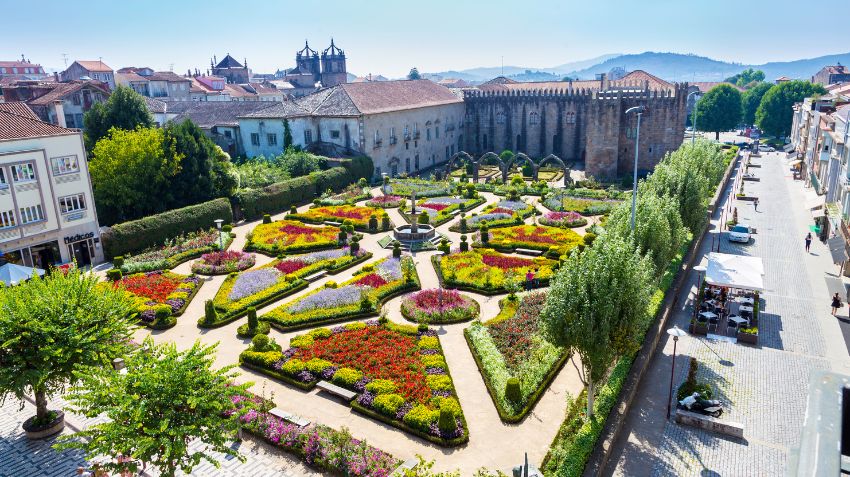
You arrive into a compact city with a medieval core, wide granite streets, and a social atmosphere that belongs more to its university population than to any tourism infrastructure.
For a first-time traveler guide to Braga, the most useful frame is this: it is a city you understand better by the second morning than by the first afternoon, and almost everyone who spends two full days here leaves wishing they had planned for three.
The historic centre is dense with baroque architecture, but it wears it without ceremony. The cathedral has been standing here since the eleventh century, and the streets around it feel used rather than preserved. Coffee shops stay full until late. Students walk slowly. The pace is genuine, not performed for visitors.
In summer, Braga benefits from sitting in the Minho region, which runs cooler and greener than central or southern Portugal. This matters more than it sounds when you are weighing where to spend a week in July.
What Braga feels like for first-time visitors
The city’s core is small enough to cross on foot in under twenty minutes, but dense enough that you will not feel rushed into covering it in one pass. The cathedral square – the Sé – anchors the centre, and the streets radiating from it carry most of the daytime activity: bookshops, pastry counters, the odd tourist shop that feels slightly out of place, and a lot of cafes where the local espresso comes in small glasses and nobody seems in any particular hurry to finish.
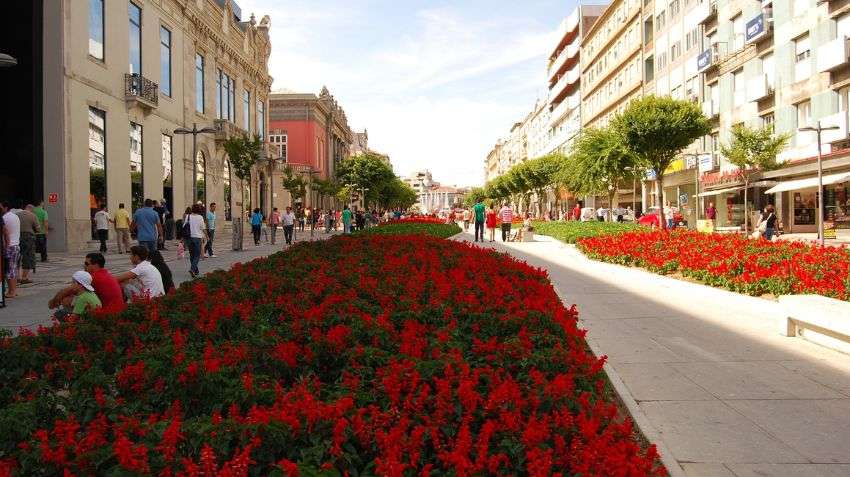
Evenings develop differently from southern Portugal. The terraces fill around 19:30, dinner happens close to 21:00, and the streets keep a low-level social hum well past midnight without ever tipping into the kind of noise that makes sleep difficult in the city centre. Two streets back from the main pedestrian axis, it is almost entirely quiet by 23:00.
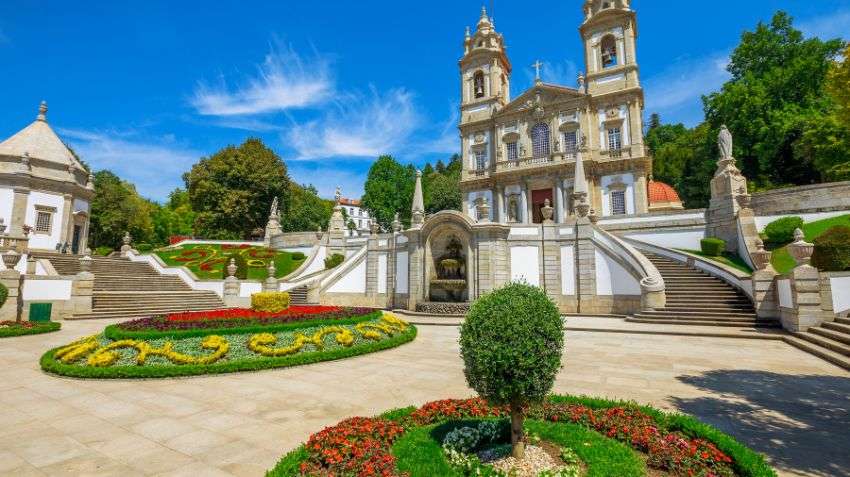
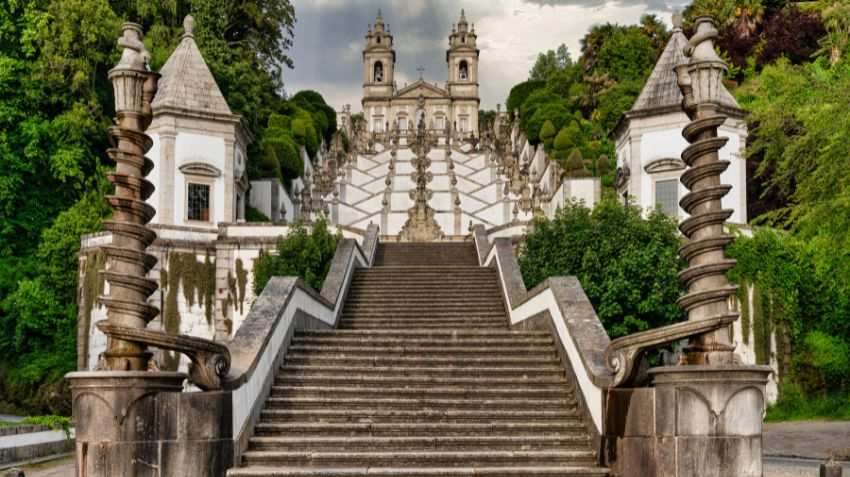
The one landmark that earns its own trip is Bom Jesus do Monte, a pilgrimage staircase climbing a forested hillside about four kilometres east of the centre. The baroque stairway is genuinely beautiful in the late afternoon light, and the view from the top is one of those moments where the city suddenly makes spatial sense. You can walk up the zigzag stairway – about fifteen minutes of steady climbing – or take the hydraulic funicular from the base, which has been running since 1882 and is the oldest funicular in the Iberian Peninsula. The funicular stops operating in the early evening, so factor that in if you are arriving late.
Braga in photos
Is Braga the right destination for your travel style?
Braga suits travelers who want a Portuguese city that has not been fully absorbed into the tourist circuit. If you are coming from Porto and want somewhere that feels like a different register entirely – less concentrated, more residential, with a social life that runs on its own calendar rather than the visitor one – Braga is a natural next stop.
It also works well for anyone interested in Romanesque and baroque religious architecture without the guided-tour atmosphere. You can walk into the cathedral, sit in the side chapels, and spend an hour reading the stonework in something close to quiet.
Where the fit shifts is for travelers who want strong nightlife, a wide food scene, or a coastal option. Braga’s restaurant range is solid rather than exceptional, and there is no beach within easy reach. It is not a base for beach days. Travelers building a Portugal trip that includes Porto, Guimarães, and the Minho coast can sequence Braga as the anchor, but anyone wanting Douro wine country or Vinho Verde villages will find Braga slightly off-axis for those routes.
How to get to Braga and move around as a first-time visitor
The most practical arrival from Porto is the direct Intercidades train from Porto Campanhã, which takes around 50 minutes. Urban trains via Trofa are slower (around 70 to 80 minutes) but cheaper, and for budget-conscious travelers doing a longer Portugal loop they are worth knowing about. Porto’s Francisco Sá Carneiro Airport also has direct bus connections to Braga via FlixBus, useful if you are landing in Porto and heading straight north without staying in the city.
Once you are in Braga, the historic centre needs nothing beyond walking. The main sights, the best streets for evening wandering, and the cathedral area are all within the same compact zone. Bom Jesus is the only exception: it is a short taxi or Uber ride from the centre (Uber and Bolt both work reliably here), or you can combine a local bus with the funicular. The walk up from the funicular base to the church takes about fifteen minutes on a wide shaded path; the return downhill is easy.
There is no metro, and you will not need one. The city’s layout is straightforward enough that even first-day orientation happens quickly. Luggage on cobblestones is the one practical note: if you are arriving at the main train station, the old town is about 1.5 kilometres from there, and rolling a bag over the oldest streets takes some patience.
Day trips from Braga worth building into your itinerary
Guimarães is the most obvious continuation and one of the most satisfying day trips in northern Portugal. The train takes around 20 minutes and drops you into a UNESCO-listed medieval centre that is quieter and more intact than most cities its size. The castle is modest but atmospheric, and the long main square has a very different character from Braga’s baroque energy. Most people spend four to five hours there and return comfortably for a late Braga dinner.
The Gerês national park is about an hour north by car. Without a car it requires more planning (local buses exist but run infrequently), so this one suits travelers who are renting or have flexibility on timing. The park’s reservoir, pine forests, and small mountain villages feel significantly removed from urban Portugal, and on a summer morning the water is cold and very clear.
Viana do Castelo, on the Atlantic coast, is about 45 minutes by regional train. It is a small city with a notable hilltop sanctuary, a riverfront that catches late-afternoon light well, and a beach just outside town that runs far quieter than anything in the Algarve in summer. Travelers who find themselves wanting a coastal day without the resort scale tend to respond well to it.
For travelers already thinking about how Braga fits into a wider Portuguese itinerary – whether to sequence Porto before or after, how much time the Minho deserves, or how a northern loop compares to a Lisbon-centred one – the Portugal itinerary covering Lisbon, Porto, Faro and Coimbra gives the full routing logic and pacing structure for a longer trip.
Is Braga worth visiting as a first stop in northern Portugal?
For a first-time guide to Braga, the honest answer is that it depends on what you are optimising for. If you want a compact, walkable city with genuine local atmosphere, a manageable architectural density, and a day-trip network that extends naturally into some of the best countryside in northern Portugal, Braga delivers all of that without requiring much planning. Two days is the right duration for a first visit; three days if you are adding Guimarães and Gerês or treating it as a slow base.
What it does not offer is the concentrated food and wine scene of Porto or the cultural scale of Lisbon. It is not a city that rewards you for rushing. It rewards you for slowing down and letting the rhythm of the place organise your days, which for the right traveler is exactly the point.
Travelers considering Porto as the main northern base often find that a two-night extension to Braga changes the emotional register of the whole trip. Porto is dense and compelling; Braga is quieter and more liveable. Together they give northern Portugal a range that neither city offers on its own. If you are weighing the Porto budget and neighbourhood read as part of the same trip, that node covers the cost structure and staying zones for the southern anchor of that pairing.
For a different coastal rhythm after the Minho, the Faro travel guide covers how the southern Algarve edge compares in atmosphere, scale and traveler fit – a useful read if your Portugal trip is extending south.
Braga first-time visitor FAQ: days needed, summer heat, getting there, best area to stay and comparison with Porto
1. How many days do you need in Braga as a first-time visitor?
Two full days covers Braga’s historic centre comfortably, with time for Bom Jesus, the cathedral area, and an unhurried evening in the old town. A third day pairs well with a morning trip to Guimarães, which is 20 minutes away by train.
2. Is Braga worth visiting in summer?
Braga in summer runs noticeably cooler than Lisbon or the Algarve, which makes it a more comfortable base for exploring on foot. The city is busy through July and August but never reaches the density of Porto’s centre, so the historic streets stay navigable even at peak hours.
3. How do you get from Porto to Braga?
Direct Intercidades trains run from Porto Campanhã to Braga in around 50 minutes, with frequent departures throughout the day. Urban trains from Porto São Bento via Trofa also connect the two cities, taking closer to 70 to 80 minutes but costing less.
4. What is the best area to stay in Braga for a first visit?
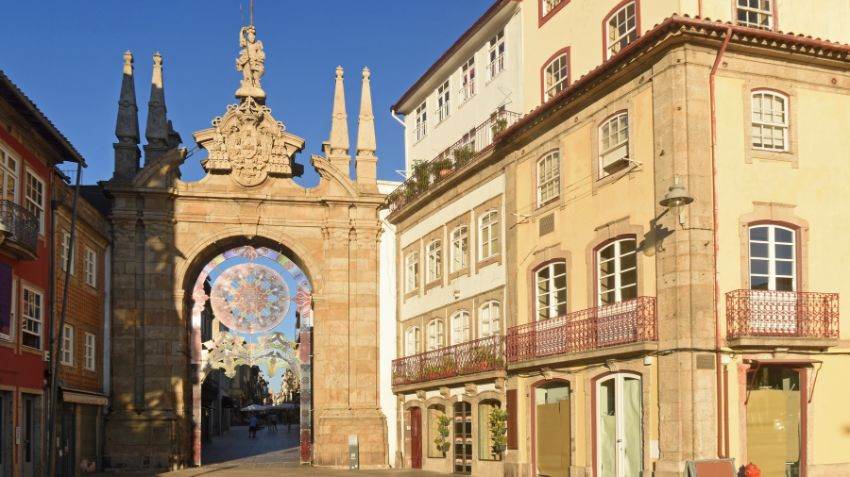
The area inside or just outside the old city walls puts you within walking distance of the cathedral, the Arco da Porta Nova, and the main evening streets. Staying centrally means Bom Jesus and day trips to Guimarães both depart from a natural base without needing a car.
5. Is Braga better than Porto for a slower trip?
Braga runs at a quieter tempo than Porto, with a more student-and-local social register and fewer concentrated tourist zones. Travelers who want to settle into a city rather than rush through its highlights often find Braga gives them more room to do that, particularly in the evenings when the squares take on a genuinely unhurried quality.