
Porto doesn’t reward travelers who come with inflated expectations of cheap everything – but it does reward those who know where the value actually lives. The wine costs almost nothing at the right bar. Lunch at a counter in Bonfim runs under ten euros with bread, soup, and a glass of house red included. And the city has enough walking radius and visual weight to fill three or four days without spending much at all.
This budget travel guide to Porto is written for travelers who want to spend less without landing in the wrong part of the city, eating at the wrong places, or missing the particular rhythm that makes Porto worth the trip in the first place. The city is affordable, but that affordability is unevenly distributed – concentrated in specific neighbourhoods, specific hours, and specific habits that are worth understanding before you arrive.
Travelers comparing Portugal’s two largest cities before choosing a base may find the Lisbon versus Porto comparison useful for understanding how costs, pace, and daily experience differ.
In early summer the city shifts into a higher gear. Accommodation prices climb, the Ribeira fills with walking tours by 10:30, and the viewpoints get busy before most people have finished their coffee. None of that negates the trip. It just changes the logic of how you move through it.
What Porto actually costs day to day
The honest daily floor for a budget traveler in Porto is somewhere around 40-55 euros per person. That covers a hostel dorm or a modest guesthouse, two proper meals, coffee, a glass of wine or a Super Bock in the late afternoon, and public transport on the Andante card. You can go lower with careful accommodation hunting and market lunches, but below 35 euros per day the experience starts to narrow.
Where Porto genuinely delivers value is food and drink. A full lunch at a neighbourhood tasca – soup, a meat or fish main, bread, dessert, and a drink – runs between 8 and 12 euros in Bonfim or Cedofeita. The same logic applies at the Mercado do Bolhão, where lunch counters inside the market serve honest food at prices that don’t adjust for tourism. A glass of Vinho Verde at a corner bar costs under two euros at places that aren’t on the main tourist axis.
Wine lodge visits in Vila Nova de Gaia are good value relative to what they include. Most tastings run between 12 and 20 euros for two or three ports with some historical context, and the cellars are cool and unhurried in a way that feels welcome by midday in summer. The experience holds up even when you’re watching costs.
Where Porto delivers value and where it charges a premium
The waterfront around Ribeira is Porto’s most compressed tourist zone, and pricing there reflects it. Sit-down meals along the quay can run 25-40 euros per person with wine. Coffee at a riverside café sometimes costs three times what you’d pay two streets uphill. The tiles are beautiful and the view across to Gaia is worth a slow hour, but eating there is a scenic choice, not an economic one.
The same dynamic applies to accommodation near the Clérigos tower and down toward the Dom Luís bridge. This is where the short-stay market concentrates, and where budget rooms under 60 euros per night are genuinely rare in June and July. Shifting east into Bonfim or north into Cedofeita drops rates noticeably and gives a clearer sense of how the city actually lives.
Museum entry fees are modest by Western European standards. The Soares dos Reis national museum runs under five euros. The Serralves contemporary art foundation costs more but includes the park, which alone justifies an afternoon. The São Bento station interior is free and still genuinely worth stopping for – the azulejo panels there are one of the more quietly impressive things in the city, and most people only glance at them briefly before catching a train.
Movement, walking, and getting around on a budget
The Andante card is the correct tool for getting around Porto without spending much. Reloadable, usable on metro, bus, and suburban rail, and cheap per journey – a single Z2 zone ticket covers most of the central city for under two euros. The card itself costs 60 cents. Top up at any metro station.
The famous trams are worth knowing about, but not for practical transit. Tram 22 runs a limited loop and operates on its own separate fare structure. It’s a pleasant way to spend 30 minutes, but it won’t take you anywhere the metro doesn’t reach more directly. Budget travelers who rely on it for actual movement will find it slow and inconsistent.
Walking is how most of Porto is experienced, and the city rewards it – but the terrain profile is worth understanding before you plan a route. The old city sits across a series of ridges descending to the Douro, which means most routes between the waterfront and the upper districts involve real elevation change on stone surfaces. Ribeira to the Clérigos tower feels short on a map; it involves a sustained uphill on narrow cobbled lanes that takes longer than expected with a bag. The miradouros – Jardim do Infante Dom Henrique, Passeio das Virtudes – are worth the climb for the early evening light on the river, when the temperature has dropped and the city below starts to settle.
Who is the city of Porto suitable for?
Porto works well for slow travelers, solo travelers, and anyone who structures their days around walking, eating, and sitting in places long enough to notice what’s happening around them. The city is compact enough that a week here doesn’t feel like running through a checklist – it feels like getting a feel for a place. Budget travelers who know how to find neighbourhood restaurants and are willing to stay outside the immediate centre will find Porto genuinely easy to spend time in without spending much.
Travelers who want convenience above everything else – central location, easy transit to major sights, no elevation to negotiate – may find the budget version of Porto slightly less comfortable. The most affordable accommodation sits a 20-25 minute walk or a short metro ride from the old town. That’s not a significant issue, but it’s part of the equation.
Travelers still deciding whether Porto suits their style of trip can continue with the Porto first-time guide for a broader look at the city’s rhythm, neighborhoods, and seasonal character.
In peak summer, the dynamic in the tourist core shifts noticeably. The viewpoints are full by mid-morning, the queues at the Livraria Lello stretch down the block by 11:00, and the Ribeira restaurants fill early. Travelers visiting in June or July who want a quieter register from the city usually do better starting mornings before 9:00 – the light is good, the streets near São Bento are nearly empty, and the coffee at the mercado is unhurried.
Travelers weighing Porto against a smaller, slower Portuguese city will find the Porto vs Faro trade-offs read useful – it covers the difference in pace, price, and daily rhythm across both.
Neighborhoods in Porto that really work on a limited budget
Bonfim is the neighbourhood that keeps coming up among travelers who stayed there by accident and ended up preferring it. It sits east of the centre, slightly removed from the main visitor corridor, with a walkable mix of local cafés, small restaurants, and morning bakeries that run early and close when the bread runs out. Accommodation prices here can run 20-30% lower than equivalent rooms near Ribeira.
For a deeper look at where to stay across the city, the Porto neighborhood guide explores how Bonfim, Cedofeita, Ribeira, and other districts shape very different versions of the trip.
Cedofeita, northwest of the centre near the Fine Arts Faculty, has a different energy – art school adjacent, full of independent shops and small galleries, with a street market on Saturdays that runs along Rua da Cedofeita in a low-key way that feels more neighbourhood than tourist attraction. Several of the better-value guesthouses in Porto are tucked into this district without much online visibility, which means booking a little in advance matters more here.
Matosinhos is worth knowing about for longer stays. It’s a coastal neighbourhood reachable by metro (A line, about 25 minutes from the centre), with a fish market, a beach, and a seafood restaurant strip that feeds the local fishing trade rather than tour groups. A grilled fish lunch here at a table with locals costs significantly less than the same quality meal in Ribeira, and the neighbourhood has a pace that Porto’s centre rarely offers in summer.
For travelers thinking about how Porto sits within a wider Portugal trip, the Lisbon-Porto-Faro-Coimbra itinerary read maps out how the cities connect and where the pacing logic sits across a longer route.
The Porto budget traveler’s rhythm in practice
A practical day in Porto on a tight budget tends to structure itself naturally. Coffee and a pastel de nata at a local padaria before 9:00 – the kind of place with a formica counter and a TV showing the news. A morning spent walking the old town before the walking tours get going. Lunch at a tasca counter around 12:30, before the seats fill. A slow afternoon somewhere elevated – the Jardim da Cordoaria has benches, shade, and a view of the Torre dos Clérigos that doesn’t require buying anything.
Evenings in Porto tend to run late by Western European standards, though not as late as Spain. The social hour starts around 19:00 with a drink at a bar near Cedofeita or along Rua das Flores. Dinner at 20:30 or 21:00 is normal. The Ribeira quay fills again after 22:00 with people walking rather than eating – a different atmosphere from the midday visitor activity, quieter and more local in register.
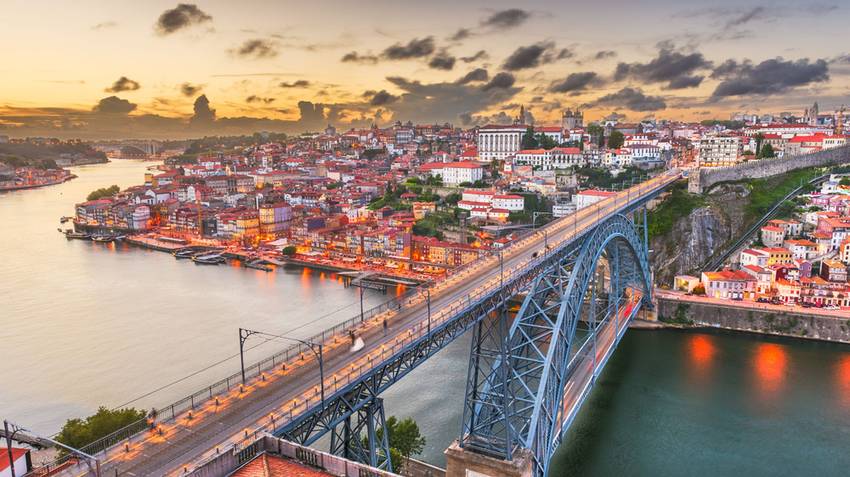
The wine is cheap enough that it changes the economics of the evening. A bottle of decent house Douro red at a neighbourhood restaurant rarely exceeds eight euros. At a bottle shop to take to a miradouro at dusk, it’s less. The river below goes amber around 20:30 in June, and the Dom Luís bridge holds its own against any viewpoint in the city.
Travelers who find themselves wanting a different scale after Porto – something smaller, less touristic, with more room to slow down – often gravitate toward the Faro or Coimbra comparison read as a natural next step in thinking through Portugal beyond the two main cities.
Porto on a budget: what the city actually asks of you
Porto on a lower budget is a completely workable trip, but it asks for a particular approach. The value is concentrated in specific neighbourhoods, specific hours, and a willingness to eat where locals eat rather than where the restaurant has an English menu displayed outside. The city doesn’t punish budget travelers – it just distributes its affordability unevenly, and the traveler who knows where to find it has a genuinely good time.
Travelers building a wider route through the country often combine Porto with Lisbon, Coimbra, and Faro using the Portugal itinerary guide as a starting framework.
This budget travel guide to Porto is most useful for travelers who want three to five days here, are willing to stay 20 minutes from the centre in exchange for better pricing, and will structure their days around walking and eating rather than rushing through a sights checklist. That’s the version of Porto that still delivers the city’s actual character without requiring a large daily spend.
The city is at its most rewarding in the early morning and the late evening, in the quieter districts, and at a table with a glass of wine that cost less than it should have. That version of Porto is still easy to find, even in summer.
Frequently asked questions: budget travel in Porto
1. How much does a day in Porto cost on a budget?
A careful day in Porto – hostel or budget guesthouse, meals at tascas and market lunch counters, public transport, a pastel de nata and a glass of wine at a corner bar – runs between 40 and 60 euros per person. The city is one of the more affordable Atlantic-facing capitals in Western Europe, and eating and drinking well without spending much is genuinely easy here.
2. Is Porto cheaper than Lisbon?
Generally yes. Accommodation in Porto tends to run slightly lower than equivalent Lisbon options, and the neighbourhood restaurant scene outside the tourist corridor is noticeably more affordable. The gap narrows in peak summer and near the waterfront, but across a full stay Porto usually comes out a little cheaper for daily costs.
3. What is the cheapest way to get around Porto?
The Andante card covers metro, bus, and urban rail on a single reloadable system. A single zone ticket costs under two euros. The famous tram lines are scenic but limited in route coverage and run on a separate fare structure; for practical movement around the city, the metro does most of the work efficiently.
4. When is Porto least expensive to visit?
Late autumn through early spring sees the lowest accommodation rates and thinner crowds. November and March in particular offer real pricing drops, cooler but manageable weather, and a city running at its own pace rather than on a summer visitor schedule. The Atlantic light in those months has a particular quality in the late afternoon.
5. Which Porto neighbourhood works best for budget travelers?
Bonfim and Campanhã sit east of the centre and hold some of the city’s better-value accommodation alongside a quietly evolving neighbourhood energy – local cafés, small restaurants, and a slower pace than Ribeira. Cedofeita to the northwest is another option, with independent shops, an art school crowd, and prices that still reflect a neighbourhood used mostly by residents rather than visitors.