
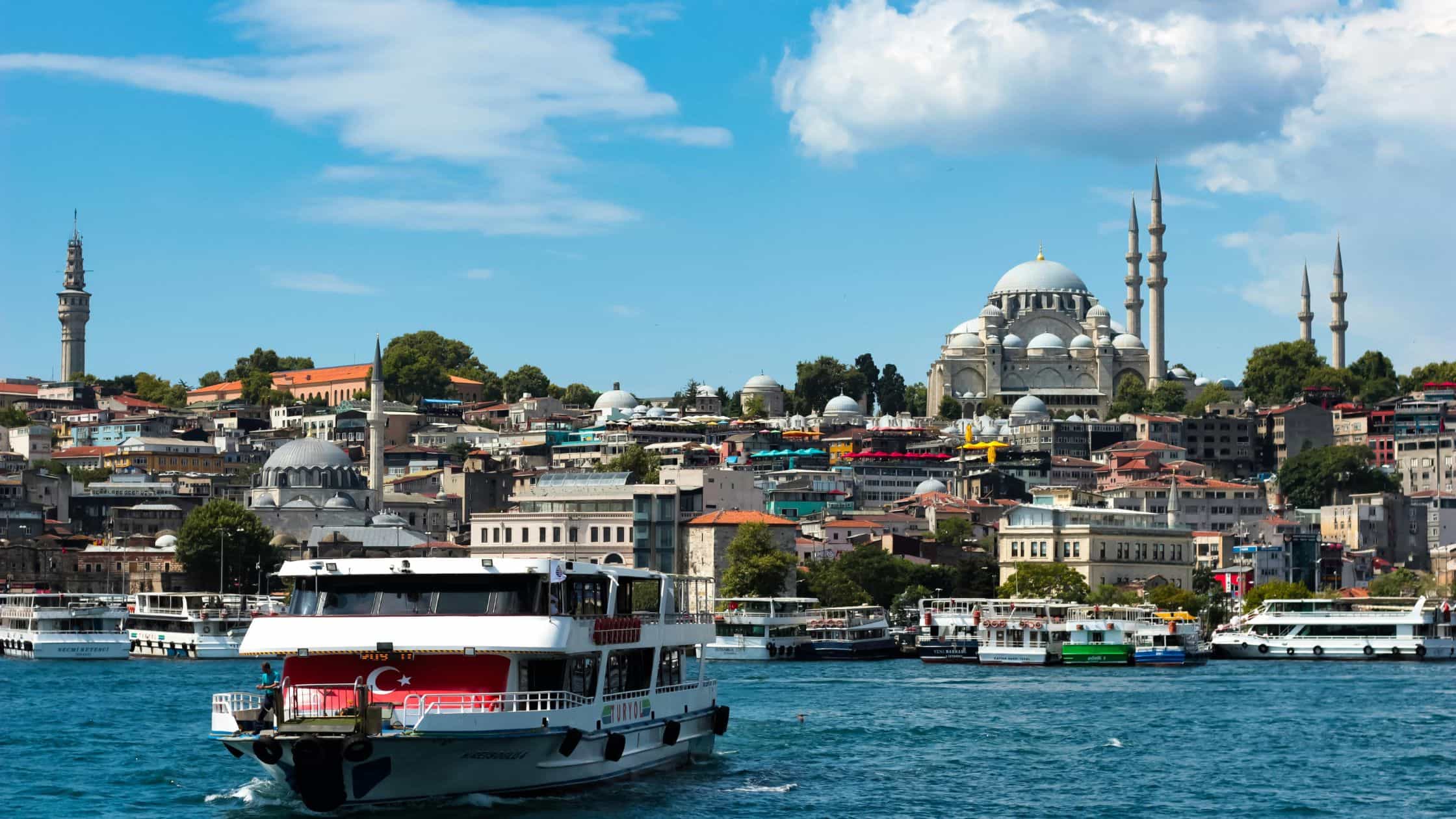
Istanbul is not a city that reveals itself slowly. The ferry traffic across the Bosphorus, the layered call to prayer drifting across different parts of the city, the movement around the waterfronts and terminals, the scale of it becomes apparent almost immediately.
It is a dense, energetic place, and that intensity is part of what many travelers remember most. For a first visit, the question is not whether Istanbul is worth it. It almost always is. The real question is whether you are arriving in the right frame of mind, at the right time of year, with a realistic sense of what the city actually costs you in energy and logistics. This is not a checklist of things to do. It is a portrait of what Istanbul feels like to move through, and who tends to leave satisfied.
What Istanbul is like for first-time visitors
Istanbul divides itself naturally, and the division matters. The European side holds most of what first-timers come to see: Sultanahmet with its mosques and palace complex, Beyoglu with its long pedestrian strip and side streets full of small restaurants and bars, Galata sloping down toward the water.
The Asian side, Kadikoy most of all, feels like a different city: markets, coffee shops, a generally younger and more local crowd, very few tour groups. The two halves are connected by ferries and by the metro tunnel under the Bosphorus. The ferry is slow and worth it at least once for the view. The metro is fast and anonymous. Which one you use tells you something about how you want to spend the next twenty minutes.
Sultanahmet is both unavoidable and slightly difficult to stay in for more than a few hours. It is where the density of tourism sits heaviest, where touts are most persistent, where every restaurant near the Hagia Sophia has a staff member standing in the doorway offering you a menu.
Two or three focused hours there is enough to see what needs to be seen. Then most travelers instinctively drift toward Beyoglu or down to the Karakoy waterfront, where the atmosphere shifts considerably.
The city does not close early. Dinner rarely starts before 20:00 for locals, and the neighbourhood streets around Cihangir or Asmalimescit stay animated until well past midnight on weekends. If you are not used to eating late, the kitchen rhythms here require a small adjustment.
Is Istanbul right for your travel style?
Travelers who do well in Istanbul generally share one characteristic: they are comfortable with sensory density. The city is loud in a specific way – not aggressive, but constant. Traffic, conversation, the sound of seagulls over the water, the rhythm of someone hammering something in a side street. It rarely goes quiet in the way a smaller city does.
Solo travelers, particularly those who enjoy moving between neighbourhoods without a fixed plan, often find it surprisingly manageable. The public transport is functional and cheap. Locals are generally helpful when asked directly. The food is good at almost every price point.
Couples on a first trip together tend to either love the sensory density or argue about it by day three. The logistics of getting from one side of the city to another, the heat in summer, the persistent attention in the more touristed zones – these become part of the city’s learning curve. That friction is fine if you enjoy problem-solving together. The experience tends to land best when both travelers arrive with similar energy levels.
Istanbul is harder for travelers in genuine need of quiet. There is no neighbourhood that fully delivers stillness. The Princes’ Islands, reachable by ferry in about ninety minutes, come closest – but they are a day trip, not a residential solution. Travelers currently looking for a slower pace, or anyone whose threshold for social stimulation is currently low, may find that a week here feels more energizing than restorative.
Comparing this against something like a first visit to Cappadocia which operates at a completely different pace and scale, can help clarify which experience actually fits your state right now.
Best time to visit Istanbul for a first trip
May and early June sit in the best window Istanbul offers. The temperature is comfortable, the light is long, and the tourist volume has not yet hit its summer ceiling. The rooftop bars in Beyoglu are open but not yet packed. The ferries to the Princes’ Islands are running but you can still get a seat without planning days in advance.
By late June, the heat becomes part of the calculation. July and August in Istanbul are warm and crowded in the tourist zones, though the residential neighbourhoods remain relatively normal. The city does not shut down in summer the way some coastal towns do, if anything, it gains energy. But the Sultanahmet area in particular becomes significantly more saturated.
Late spring is also when the city’s outdoor life opens up properly. Tables appear on the pavement along the Bosphorus shore in Besiktas and Ortakoy. The evening walk along the waterfront at Kadikoy, with a cup of tea from one of the small stands near the ferry terminal, becomes the easiest possible way to spend an hour. The city feels lighter before the full heat arrives.
Best areas to stay in Istanbul for first-time visitors
The choice of neighbourhood shapes the entire experience, more than in most cities. Beyoglu and Galata suit most first-timers well. The location is central: close enough to Sultanahmet to walk or take a short tram, surrounded by places to eat and drink, connected to both the European waterfront and the ferry terminals.
It is not quiet, but it is not as aggressively tourist-facing as Sultanahmet itself. Kadikoy, on the Asian side, is the better choice for travelers who want a genuinely local atmosphere and do not mind the daily ferry crossing. The market area around the central neighbourhood is one of the more enjoyable parts of the city to simply wander without purpose.
The difference is adding ten to twenty minutes of transit time every time you want to reach the European side’s main sites. Sultanahmet is convenient only in a narrow sense. You are close to the major monuments. But the neighbourhood around them is almost entirely oriented toward tourism at every price point, which makes it harder to find the kind of spontaneous, unscripted moments that make Istanbul interesting. One or two nights there is workable; a full week is wearing.
The tram system (T1 line) is the key daily artery on the European side. It connects Sultanahmet to Karakoy, runs up toward Beyoglu, and extends west toward the old city walls. It gets full during rush hour and is entirely open to the elements, which matters in summer heat. The Metrobus is faster for longer distances but requires a brief orientation to understand the transfer points.
How to get around Istanbul
Istanbul versus Cappadocia is the comparison that comes up most often for first-timers to Turkey. They are not interchangeable. Istanbul is density, history, food, movement, and the specific feeling of a city that has been at the centre of things for a very long time. Cappadocia is landscape, slower mornings, balloon flights at dawn, and the disorientation of a genuinely unusual terrain. Most travelers who visit both say the contrast is part of the value – the density of Istanbul makes the quiet of Cappadocia land differently.
Istanbul vs Cappadocia and Antalya
If you are planning to see more than just Istanbul on this trip, the Turkey loop covering Istanbul, Cappadocia, Antalya, and Izmir gives a clear sense of how to sequence the country without spending more time in transit than in the places themselves. Istanbul works well as either an entry or an exit point for that loop – it has the most airport connections and, being the most logistically complex, is often easier to tackle at the start of a trip when energy is higher.
Antalya, for comparison, is a city with a fraction of the density and a coastal rhythm that is measurably easier to settle into. For travelers who want the cultural weight of Turkey without committing to Istanbul’s stimulation level for a full week, the Antalya neighborhood guide is a useful read before deciding how to divide your time.
Against slower Mediterranean alternatives, Malaga offers a very different rhythm. The city is easier to settle into, less logistically demanding, and significantly lighter in terms of sensory intensity and daily movement. Travelers unsure whether they currently want the density and constant stimulation of Istanbul or a softer coastal atmosphere may find the contrast useful before booking.
One practical consideration worth naming: Istanbul’s tourist infrastructure has improved significantly but remains uneven. Museum lines can be long and the queuing logic is not always obvious. The Grand Bazaar is genuinely large and surprisingly intricate on a first visit, in a way that some people find exhilarating and others find intense. Expecting to need a short adjustment period for the first day or two is not pessimism – it is accurate preparation.
Travelers interested in how Turkey’s market environments change across the day may also find the market districts guide useful for understanding how timing shapes the experience beyond Istanbul alone.
Istanbul first-time visitor FAQ
1. Is Istanbul a good destination for first-time visitors to Turkey?
Yes, but it helps to arrive with adjusted expectations. Istanbul is large, layered, and genuinely complex. First-timers who pace themselves across at least four or five days tend to absorb it better than those trying to cover it in two. The city rewards slowness more than efficiency.
2. When is the best time to visit Istanbul?
Late spring and early autumn are the most comfortable windows. May and June offer mild temperatures, longer daylight, and fewer crowds than July and August. Summer brings real heat and noticeably denser tourism, especially around Sultanahmet. October is a strong alternative for travelers who prefer quieter streets.
3. How many days do you need in Istanbul as a first-timer?
Four to six days is the realistic window for a first visit. Less than four and the city starts to feel like a checklist. Beyond six, most first-timers naturally shift into slower mode, which is not a bad thing, but requires a different kind of planning.
4. Is Istanbul safe for solo travelers?
Generally yes, though the degree of comfort varies by neighbourhood and time of day. Beyoglu and Kadikoy tend to feel easier and more anonymous for solo travelers than the more tourist-heavy areas around Sultanahmet. Solo women travelers in particular often report that Kadikoy, on the Asian side, feels noticeably more relaxed.
5. How does Istanbul compare to other Turkish destinations like Cappadocia or Antalya?
Istanbul is the density anchor of any Turkey trip. Cappadocia offers a slower, more landscape-oriented experience with less social stimulation. Antalya sits somewhere between the two, with coastal ease and a more manageable scale. Many first-timers to Turkey pair Istanbul with one of these as a counterbalance.
6. What neighborhood should first-time visitors to Istanbul stay in?
Beyoglu and Galata are strong bases for most first-timers: central, walkable to key areas, and not as saturated with tour groups as Sultanahmet. Kadikoy on the Asian side suits travelers who want a quieter, more residential feel, though crossing the Bosphorus adds a daily logistics layer.