
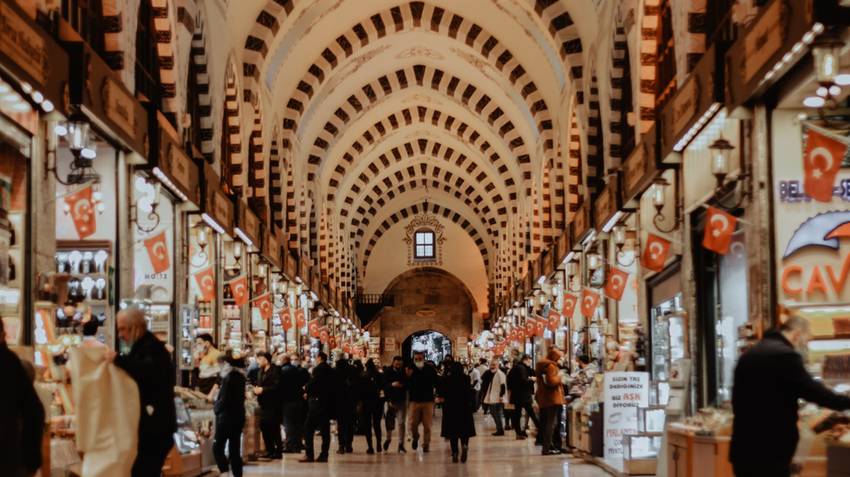
Some of the most visited market districts in Turkey operate on a narrow window that most itineraries quietly ignore.
The Grand Bazaar in Istanbul and the bazaar lanes of Antalya’s old quarter are morning-to-afternoon spaces, and by the time many travelers arrive mid-afternoon, post-lunch, mid-exploration, those same districts are either past their functional peak or actively winding down.
Understanding market districts in Turkey that become almost unusable after peak shopping hours is less about avoiding them and more about using them correctly.
This is not a complaint about overcrowding. It is a structural observation: covered bazaars are physically built around daytime commerce, their stone corridors trap heat progressively through the day, and their vendor rhythms follow patterns set centuries ago. The rhythm is not broken. It just does not match a traveler arriving at 14:30 expecting open lanes and patient sellers.
Knowing when these places tip from navigable to frustrating – and what they become afterward is actually the more useful piece of intelligence.
How the Grand Bazaar in Istanbul compresses through the day
The Grand Bazaar (Kapalıçarşı) has over 4,000 shops distributed across roughly 60 covered streets. On paper, that sounds like room. On the ground, it does not feel that way by 11:30 on any day between April and October.
The main artery, Kalpakçılar Caddesi, is where the compression becomes physical first. By mid-morning the lane is body-width on both sides, vendors calling from doorways, and the stone floor, uneven, worn smooth over centuries, makes fast walking impossible without collision. The side lanes off this artery stay navigable longer, but that is partly because they also close earlier: some of the smaller specialty corridors begin shutting around 16:30.
The heat compounds everything. The bazaar’s roof keeps direct sun out, but stone retains warmth, and by 13:00 the interior temperature in the deeper sections runs noticeably higher than the street outside.
Visitors who arrived at 10:00 feeling fresh are often ready to leave by 12:30 without having covered much ground, not because the bazaar is uninteresting but because the physical environment asks more of the body than the map suggests.
Arrival before 09:30 – when the bazaar opens but tour groups have not yet moved in – gives a genuinely different experience. Lanes that will be shoulder-to-shoulder by noon are walkable at a pace that allows actually looking at things. The same Kalpakçılar Caddesi at 09:45 and at 12:30 feels like two separate places.
By 17:30, the character flips entirely. Shutters come down progressively, the crowd thins but the remaining vendors are packing rather than selling, and the atmospheric density of the peak hours gives way to something more like an empty theater set. The bazaar officially closes around 19:00, and the surrounding streets, Nuruosmaniye, Yağlıkçılar Caddesi quiet down fast afterward.
The Spice Bazaar: smaller, faster to saturate
The Mısır Çarşısı operates on a tighter footprint and closes slightly earlier than the Grand Bazaar, which surprises some travelers who plan to visit both in the same afternoon. Most stalls are shut by 19:00, and the late-afternoon crowd inside the covered section is specifically dense because the space is genuinely small.
The surrounding Eminönü streets – the outdoor extensions of the spice market, running toward the water stay active longer and give more room, but the energy is different from the covered interior.
For travelers who find the Grand Bazaar too compressed, the Spice Bazaar often works better as an early morning anchor than as a second stop: arrive before 10:00, move through the covered section before the midday tour traffic arrives, then drift toward the water and the Galata Bridge.
Pairing both bazaars in the same late-morning visit tends to produce diminishing returns. The sensory load stacks, the lanes feel narrower the second time, and by the time most people exit the Spice Bazaar it is close to the hour when both districts start closing progressively anyway.
Antalya’s Kaleiçi market lanes: a different rhythm, same compression window
Antalya’s old town market operates differently from Istanbul’s covered bazaars but shares the same functional time window. The lanes inside Kaleiçi are narrow, sometimes dropping to two-person width, and the mix of souvenir shops, leather vendors, and carpet galleries means the commercial density is high relative to the physical space.
Peak activity here falls between 10:00 and 13:30. After 17:00 the shops begin closing progressively, and by 19:30 many of the interior lanes are effectively empty of commerce, though the restaurants along the harbor wall maintain a separate evening rhythm entirely.
The market district and the waterfront dining district in Kaleiçi operate on parallel but non-overlapping schedules, which is useful to hold in mind when planning a day there.
In summer, the heat in these lanes becomes a real factor by late morning. The alleys in Kaleiçi receive direct sun until mid-afternoon and there is limited shade on the primary market corridor.
Travelers who visit between 10:30 and 13:00 in July or August are navigating both crowd pressure and direct sun simultaneously, which is manageable but costs energy faster than a cooler-weather visit. For a deeper read on how Antalya’s neighborhoods behave after the beach crowds thin, the Antalya local life after the beach node covers the evening geography more specifically.
Who finds this rhythm workable and who does not
Travelers who enjoy markets but run on their own schedule – mid-morning coffee, slow start, arrive when it feels right often find Turkish bazaar districts genuinely difficult to use correctly. The peak shopping window is specific and the post-peak experience is either too compressed or already closing, with not much middle ground.
Early risers, photographers, and travelers who have already visited once and know the layout tend to get the most from these spaces. A second visit to the Grand Bazaar is almost always better than the first, not because the bazaar changes but because knowing where the side lanes are makes it possible to avoid the main artery during peak pressure.
For travelers who prefer browsing at their own pace without time pressure, open-air produce markets in other Turkish cities – particularly in Gaziantep’s covered bazaar district or Bursa’s Kapalıçarşı, both structurally similar but receiving significantly fewer international visitors offer the same commercial texture with considerably less density.
The social atmosphere in these markets stays closer to working local commerce than to a tourist corridor, which changes how the whole experience feels.
Travelers already weighing Istanbul against a first visit that leans more toward neighborhoods and rhythm than specific sights might find the Istanbul first-timer fit read useful for calibrating how much of the bazaar circuit to build in versus treating it as a single morning stop.
What the districts become after closing time
This is actually worth knowing. The area immediately surrounding the Grand Bazaar – Nuruosmaniye Mosque, the street leading toward Çemberlitaş, the tea gardens tucked just off the main approach – becomes noticeably quieter and more pleasant once the mid-afternoon crowd disperses. The vendors are closed, but the architectural fabric is still there, and it is much easier to actually see it.
The same applies to the backstreets behind the Spice Bazaar after 17:00. The Eminönü waterfront, which is at maximum density during bazaar hours, shifts to a more local rhythm by early evening – ferry commuters replacing tour groups, the fish sandwich vendors on the Galata Bridge pier doing steady trade with people finishing their day rather than starting their excursion.
In Antalya, the post-market evening in Kaleiçi belongs to the restaurants and the harbor view. The commercial lanes that were moving steadily at 11:00 are quiet corridors by 20:00, which makes walking through them to reach the waterfront actually enjoyable in a way the midday version is not.
Understanding the market districts as morning spaces that transform into atmospheric evening corridors reframes the whole visit. The decision is not “should I go to the bazaar” but “what time do I want to be there, and for what.”
Timing windows that resolve most of the friction
For the Grand Bazaar: before 10:00 for browsing at a real pace, or between 15:30 and 17:00 if the goal is atmosphere rather than shopping, accepting that some corridors will be closing. Avoid 11:30 to 14:00 if crowd pressure is a concern.
For the Spice Bazaar: before 10:00 pairs well with the Grand Bazaar as a same-morning double, covering both before peak density. As a standalone late afternoon visit the covered section is smaller and easier to manage, but plan to be finished by 18:30.
For Antalya’s Kaleiçi lanes: the 09:30 to 11:30 window is the most comfortable in any season, giving both commercial activity and manageable movement. Summer specifically warrants the early start.
The common pattern across all three is that the useful window is earlier than most itineraries place it, and the post-peak state changes character rather than simply emptying out. Both versions of these places have their own logic. Only one of them suits a relaxed browsing pace.
For travelers whose broader interest is understanding how Turkish coastal cities feel beyond the sightseeing layer, the Antalya neighborhood fit guide covers the residential and commercial rhythms outside the old town perimeter.
Where the district sits in a longer trip
Istanbul’s bazaar quarter works best as a first or second morning in the city, before the rhythm of the trip has settled into a slower pace. Placing it later in a stay day four or five, when energy is lower and the pace has softened – tends to produce the kind of visit where the crowds feel heavier than they objectively are, because the body is already carrying accumulated days.
In Antalya, the Kaleiçi market visit functions well as an early-day activity before the beach or as a standalone morning when the weather pushes against outdoor plans. It is compact enough to complete in two hours if the goal is shopping and browsing, or to extend across a morning if the interest is in the architecture and the tea houses rather than the commercial layer.
Neither district rewards the rushed afternoon visit that many itineraries inadvertently produce. They are not destinations to tick off between lunch and a sunset; they are places that open properly in the morning and close their doors, both literally and atmospherically, well before most travelers finish dinner.
Reading these districts correctly before you go
The market districts of Turkey’s major cities are not difficult places. They become difficult at specific hours and in specific conditions, and understanding that before arrival turns a potentially frustrating experience into a straightforward one. The Grand Bazaar at 09:45 on a weekday morning is a genuinely interesting place to spend two hours. The same space at 13:00 on a Saturday in June is a test of patience, not an exploration.
The practical intelligence here is simple: these are morning spaces. The traveler who builds the bazaar visit into the first hours of the day, before other plans accumulate, tends to come away with a much cleaner read of what the place actually is. The traveler who arrives at 14:00 expecting the same experience finds market districts in Turkey that have already passed their peak – and will spend the next hour navigating both crowds and closures simultaneously.
Neither the crowds nor the early closing hours are problems unique to Turkey. They are the natural behavior of covered commerce rooted in pre-industrial rhythms that never adjusted to tourist schedules. Adjust to them instead, and the visit resolves itself.
Frequently asked questions about Turkish market districts and peak hours
1. What time does the Grand Bazaar in Istanbul become difficult to navigate?
The Grand Bazaar reaches its busiest point between 11:00 and 14:00, when main arteries like Kalpakçılar Caddesi become genuinely difficult to move through at a normal pace. By 17:30 many interior vendors begin closing, and by 19:00 the covered sections are largely shut. Arriving before 09:30 or after 15:30 gives significantly more room to move.
2. Which Turkish market districts close earliest after peak shopping hours?
Covered bazaars with historic structures – including Istanbul’s Grand Bazaar and Antalya’s Kaleiçi market lanes – tend to wind down earliest, often by 18:00 to 19:00. Open-air spice and produce markets in cities like Gaziantep or Bursa may run slightly later on weekdays, but most are functionally quiet by 20:00.
3. Is the Spice Bazaar in Istanbul worth visiting after the Grand Bazaar?
The Spice Bazaar (Mısır Çarşısı) follows a similar rhythm but closes earlier in the day than many visitors expect – most stalls shut by 19:00. It is significantly smaller and more manageable than the Grand Bazaar, making it a reasonable pairing if you arrive before 10:00 or between 15:00 and 17:30 when the midday peak has passed.
4. Do Turkish market districts become harder to use in summer because of heat as well as crowds?
In covered bazaars, heat builds inside stone corridors through the morning and peaks between 13:00 and 16:00, compounding the crowd pressure. Open-air market districts in cities like Antalya or Gaziantep become notably harder to navigate on foot in July and August once direct sun hits the lanes, typically from 10:30 onward. Early morning visits – before 09:30 – resolve both issues simultaneously.
5. Are there market districts in Turkey that stay active and navigable into the evening?
Evening market activity in Turkey is more common in weekly produce markets and in some covered passages in larger cities, but the historic bazaar districts specifically are primarily daytime spaces. Istanbul’s Kapalıçarşı and Antalya’s old market lanes are genuinely quieter and partially closed by early evening. For evening commercial activity, the modern pedestrian streets in city centers – like İstiklal in Istanbul – follow a different rhythm and stay active well past 21:00.