
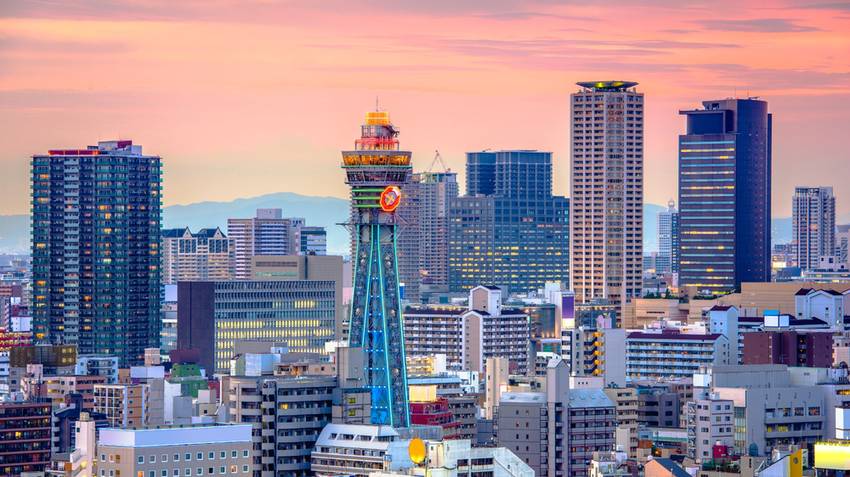
Osaka has a particular way of landing on people. The food arrives faster than expected, the streets are louder than the maps suggest, and by the second evening most first-time visitors have quietly stopped planning and started following whatever looks interesting. That shift usually happens near water, somewhere between one meal and the next.
This first-time traveler guide to Osaka is oriented toward the arrival experience: what the city actually feels like before the itinerary takes over, how the different parts relate to each other, and which rhythm suits which kind of traveler. Osaka rewards a certain looseness. It does not particularly reward over-scheduling.
The city sits inside a wider regional network that includes Kyoto, Kobe, and Nara, all reachable within 30 to 50 minutes by rail. For many visitors, Osaka functions as the base that makes the whole Kansai region accessible, which changes how you think about pacing your time here.
What Osaka actually feels like when you arrive
The first thing most people notice is the density at street level. Not visually overwhelming, but physically close, in a way that feels social rather than oppressive. Shops open onto the street, restaurants display their menus in lit cases outside, and the navigation between neighborhoods happens mostly on foot through covered arcades called shotengai, where the light is constant and the weather irrelevant.
Dotonbori, the canal district, is the image most travelers arrive with, and it delivers on its own terms: loud, lit, moving fast after 18:00, and genuinely entertaining rather than hollow. The issue is that it represents only one register of the city. A short walk south into Namba Parks, or northwest toward Shinsaibashi’s quieter side streets, and the energy pulls back considerably. Osaka has volume, but it also has residential neighborhoods where the evening pace is noticeably slower.
The food culture is not exaggerated in the guides. Takoyaki stalls, okonomiyaki counters, ramen shops with six seats and no reservations – these are not performances for visitors. They are how the city eats. Locals queue before the good places open. Dinner runs from around 18:30 to well past 22:00, and second dinners are not unusual.
The transit network: what to understand before you use it
Osaka Metro is clean, frequent, and largely self-explanatory once you understand that it is one of three or four overlapping systems you will encounter. JR lines run through the city and connect to the regional network; private lines like Hankyu and Kintetsu serve specific corridors and are faster than the Metro for certain destinations.
The practical result is that some transfers involve leaving one network entirely and entering another, which means separate gates, separate fares, and occasionally a few minutes of walking between platforms. The signage is bilingual and the Google Maps routing is reliable, but the first few transfers tend to feel more complicated than they are.
A one-day or two-day Osaka Metro pass is useful if you are staying in the central districts. If you plan day trips to Kyoto or Nara, an ICOCA card (a prepaid IC card available at major stations) handles most fares across all networks without requiring per-journey ticket purchases. It is not essential, but it removes a repetitive friction from the trip.
Travelers weighing a first Japan trip against the question of which city to anchor in will find the Tokyo first-visit orientation covers the same decision from the other side, including how the two cities differ in pacing and social density.
How days tend to unfold in Osaka
Mornings here are quieter than the rest of the day suggests. The covered arcades open gradually between 10:00 and 11:00; most food stalls are operational by late morning. There is a local coffee and breakfast culture concentrated around neighborhood kissaten, the older-style cafes where the food comes with the drink and the seating is narrow and slow.
Midday is when the central districts start filling, particularly around Shinsaibashi and the shopping corridors. Late afternoon is a reasonable time to move between neighborhoods, either on foot or by Metro, before the evening energy arrives. The stretch from around 17:30 to 22:00 is when Osaka is most fully itself: the izakayas fill, the street food queues form, and Dotonbori becomes something worth walking through at least once, even if you find a quieter counter for the actual meal.
Travelers who enjoy this kind of evening-led city rhythm often recognize similar patterns in Bangkok’s neighborhood structure, although Osaka operates at a noticeably more compact scale and generally requires less planning to move comfortably between districts.
The walking load is real. Central Osaka is navigable on foot, but the distances between districts accumulate across a full day. Comfortable shoes matter more here than in cities where the sights are concentrated. By day three, most people have figured out a rhythm that mixes walking and Metro rather than trying to do everything on foot.
Who Osaka fits and who it does not
First-time visitors to Japan who are anxious about navigating a complex city tend to find Osaka more approachable than Tokyo. The scale is smaller, the transit logic is denser but more geographically contained, and the social atmosphere is warmer and less formal. Conversations at food counters happen naturally; standing in a queue is a social moment rather than a wait.
Travelers comparing large Asian cities through the lens of pace and daily navigation often find the Seoul versus Busan comparison useful as a parallel decision, particularly when thinking about transit simplicity, neighborhood structure, and how much urban intensity they actually want from a first trip.
Travelers who want a slow, contemplative experience are working against the city’s nature. That register exists in Osaka, particularly in neighborhoods like Tennoji or along the quieter stretches of the Yodo River, but it requires deliberate routing away from the center. If the goal is a reflective, temple-and-garden kind of Japan, Kyoto is a more natural fit and an easy day trip from here.
Families with younger children generally find Osaka manageable. The food culture makes eating with kids straightforward, the transit is stroller-compatible in most main stations, and the energy of the city is engaging rather than intimidating. Solo travelers and couples work equally well; the city is social enough that being alone at a counter never feels awkward.
The Dotonbori question: how to use it without letting it dominate
Most Osaka itineraries center on Dotonbori, and it earns its reputation. The canal, the signs, the food, the movement – it is a genuinely good evening. But travelers who stay in the area for multiple days often notice that it operates in a narrow emotional register: loud, commercial, and relentlessly lit. The appeal depends on how long you are in it.
One evening walk through Dotonbori is essentially required. A meal somewhere along or just off the canal is a reasonable extension of that. Beyond that, the energy either suits you or it does not, and the city has enough other territory to make it easy to leave. Amerika-mura to the west, Hozenji Yokocho to the east, and the neighborhood streets south of Namba all offer something quieter within ten minutes on foot.
The canal itself is most atmospheric between about 19:00 and 21:00, when the neon is fully on and the pedestrian flow is dense but still moving. Later in the evening, the crowd composition shifts and the lanes near the bridge become noticeably busier. Most travelers find one deliberate visit more satisfying than treating it as a home base.
Day trips and how they change the Osaka stay
Osaka’s position in the Kansai region makes it a natural hub for short day trips, and this has a real effect on how a four- or five-day visit feels. Kyoto is 15 minutes by Shinkansen or 75 minutes by Hankyu express, with the cheaper option being genuinely viable for a day trip. Nara is 45 minutes by direct train. Kobe is 25 minutes from Osaka-Umeda via Hankyu.
The effect of day-tripping is that Osaka absorbs the logistical pressure of being a base city rather than a destination in itself, which suits the city’s rhythm. Coming back to the same izakaya two nights in a row, knowing which shotengai shortcut to take, having a regular kissaten for the morning – these small familiarities tend to make a longer Osaka stay feel comfortable rather than repetitive.
Seasonal rhythm and when to come
Late spring is a particularly good window for a first visit. May is warm but not yet humid, the evenings are long enough to move between neighborhoods without rushing, and the tourist volume is present but not overwhelming. The city is visibly energized coming out of the cooler months, with outdoor terraces opening and the evening street culture extending its hours.
Summer arrives with heat that accumulates by mid-morning and stays through the evening. The city operates fully and the food culture does not slow down, but the walking demands feel more taxing than they look on paper, and Dotonbori in August runs at a higher pressure. Travelers who handle heat easily and enjoy social density often find summer Osaka genuinely engaging; others generally prefer to avoid July and August for a first visit.
Autumn, particularly October into early November, is the other strong window. The temperatures are comfortable, the light in the afternoons is good, and the day-trip corridors to Kyoto and Nara are visually at their best. Crowds peak around mid-November for autumn foliage, but the earlier part of the season is relatively uncrowded.
What Osaka does well for a first visit to Japan
For a first-time traveler guide to Osaka to be honest about what the city offers, it needs to name what makes it a good entry point: the approachability of the food culture, the navigability of the transit network once oriented, and the city’s capacity to be both intensely stimulating and genuinely restful depending on which neighborhoods you move through.
Osaka is not the Japan of minimalist aesthetics and contemplative gardens. That register exists here in small doses, but it is not the city’s identity. What Osaka does consistently well is the kind of daily life that feels immediately legible: eating at counters, moving through covered markets, navigating a dense transit network that mostly works, and ending the evening somewhere that did not require a reservation. For many first-time visitors to Japan, that combination of accessibility and energy makes Osaka the easiest city to actually inhabit rather than just visit.
The fit is strongest for travelers who want urban immersion with low social friction, who enjoy food as a daily organizing principle, and who are comfortable with a certain amount of ambient noise and movement. If the goal is quieter historical depth, the city is better used as a base than as the destination itself.
Continuing the exploration
Travelers who find themselves wanting to understand the neighborhood-level logic of Osaka more precisely – which district suits which energy state, where the quieter residential pockets sit relative to the tourist corridors – will find that dimension opens up considerably once the first visit is oriented. For readers building out a first Japan itinerary across multiple cities, the neighborhood fit question is the one that most changes how the trip feels on the ground, and it is worth reading carefully before committing to where to stay.
Frequently asked questions about visiting Osaka for the first time
1. How many days do you need in Osaka for a first visit?
Three to four days gives a first-time visitor enough time to move across the main districts without feeling rushed. Two days is possible but leaves almost no room for the slower, more local rhythm the city rewards once you stop following a checklist.
2. Is Osaka easy to navigate for first-time visitors?
The transit network is extensive and well-signed in English, but the overlap between JR lines, Osaka Metro, and private rail like Hankyu takes a little orientation. Most travelers find their bearings by the second day, and a day pass removes most of the friction from the start.
3. What is the best area to stay in Osaka for a first visit?
Shinsaibashi and Namba put you closest to the evening energy and within walking range of Dotonbori. Umeda suits travelers who want slightly more breathing room and better rail connections north toward Kyoto or Kobe.
4. When is the best time to visit Osaka for the first time?
Late spring and early autumn are the clearest windows. Late April into May brings warm days and comfortable evenings before the humidity arrives; October into early November offers similar conditions after the summer heat fades. Summer is fully operational but significantly warmer and busier.
5. How does Osaka compare to Tokyo for a first visit to Japan?
Osaka is denser in terms of social energy and noticeably more informal in its street culture; conversations start more easily and eating at a counter feels more natural than in many Tokyo neighborhoods. The city is smaller and more navigable in scale, which makes a first experience of Japan feel less abstract and more immediately livable.