
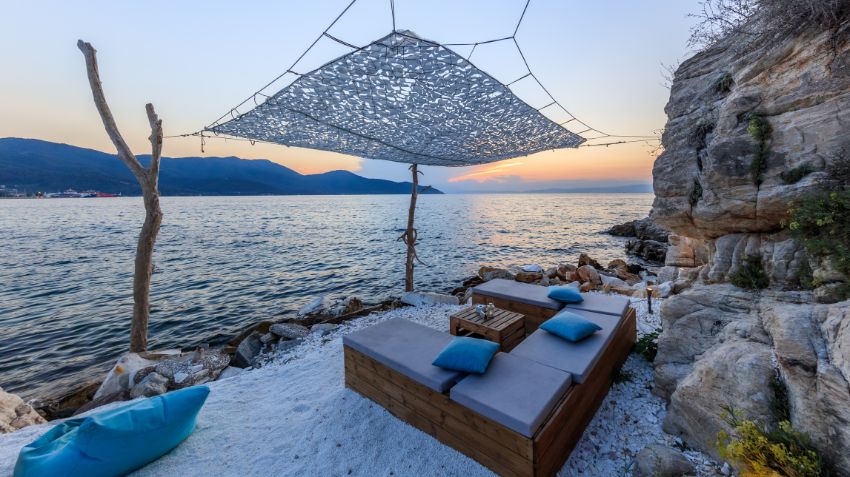
Thassos sits closer to the Greek mainland than most Aegean islands – a short ferry from the northern coast, forested almost entirely down to the waterline, with beaches that alternate between soft sand and flat marble slabs polished smooth by the Aegean.
For a first-time traveler guide to Thassos, the island’s particular quality is easy to miss in the planning stage: it is greener, quieter in register, and more self-contained than the southern Cyclades, and it moves at a pace that rewards slowing down rather than covering ground.
The water along the west and south coasts is shallow enough to walk out a long way before it deepens, and the marble beaches at Alyki – white stone meeting clear water with a ruined ancient sanctuary nearby – are unlike anything else in Greece. The forested hills trap a faint pine and resin smell that carries down to some of the coastal roads, and the villages inland sit in a noticeably cooler register than the shoreline, especially in the hours around midday.
In July, the island is at full activity. The main beaches are busy, the tavernas in Limenas and the coastal villages fill from around 20:30 onward, and the ferry from Keramoti runs reliably through most of the day. None of this tips into the kind of saturation that makes some Greek islands feel claustrophobic in August. Thassos has room, and it still moves at a pace that makes it easy to find a quieter stretch of coast once you know where to look.
Thassos in photos
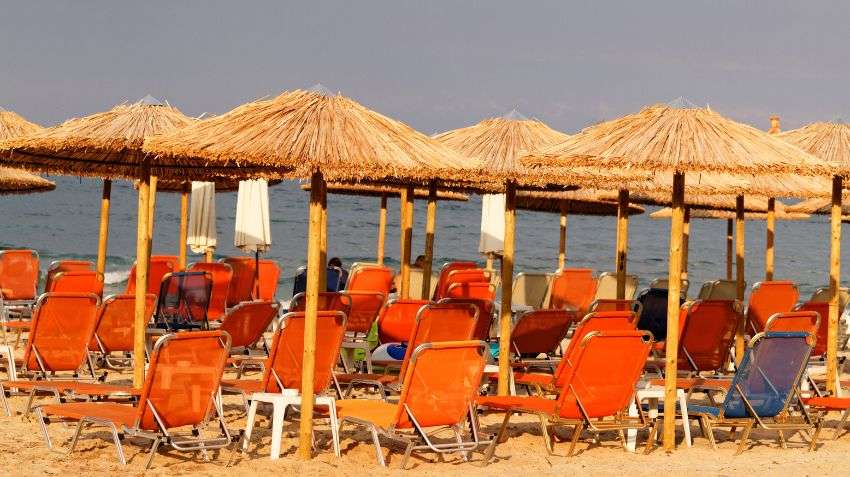
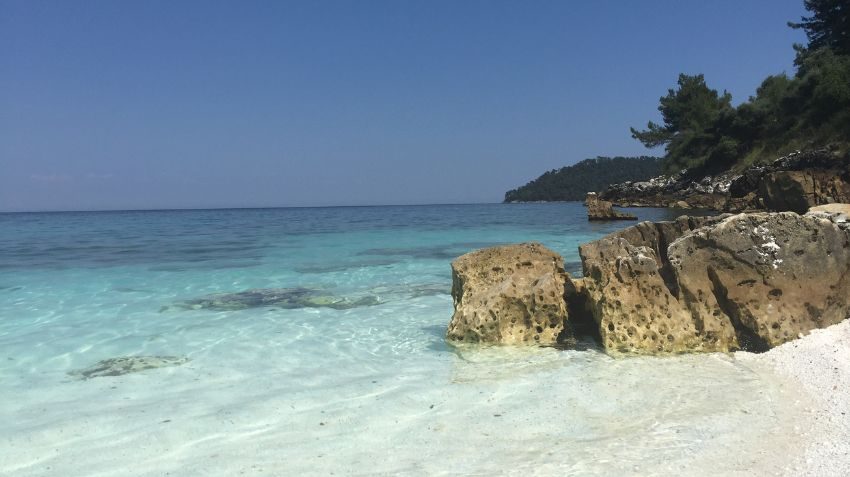
What Thassos feels like for first-time visitors to Greece’s northern islands
Most first-time visitors arrive expecting a smaller, less complicated version of the Cycladic islands they have seen in photographs. Thassos is genuinely different in character. The landscape is denser – the island is one of the most forested in the Aegean, and the interior roads wind through pines and plane trees in a way that feels entirely apart from the bleached, wind-exposed look of Santorini or Mykonos.
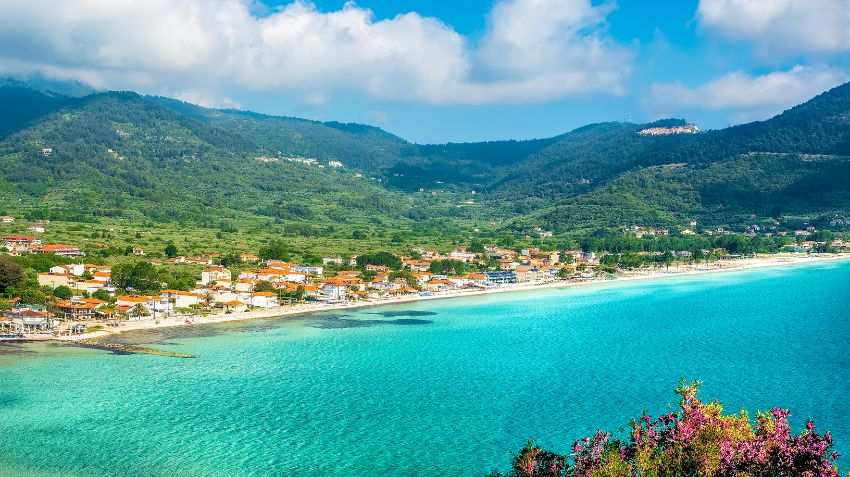
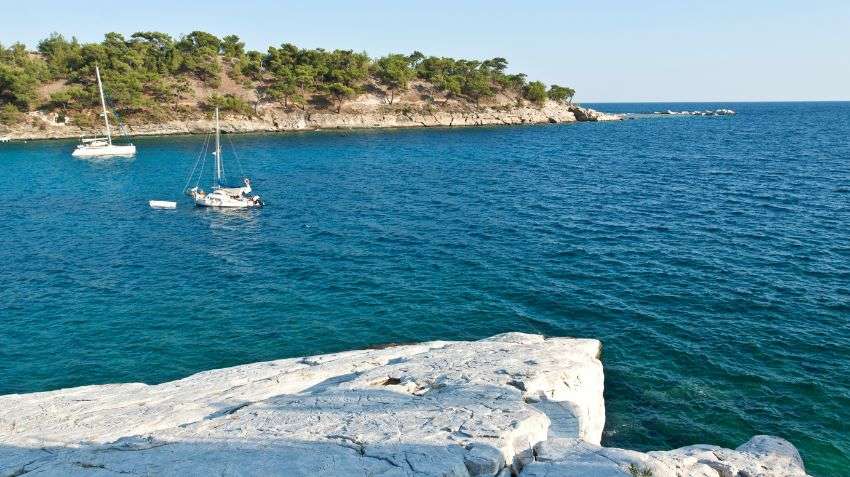
The beaches here tend toward long sandy stretches on the east coast and quieter, more textured coves and marble formations on the south and west. Golden Beach, near Skala Potamias, is wide enough that even in peak summer there is real space between groups. Alyki, further south, has the kind of stillness in the water and geometry in the stone that makes people stay longer than they planned. The snorkeling around the submerged marble blocks is clear and calm in the morning before the wind picks up after noon.
The main town, Limenas (also called Thassos Town), is where most people arrive by ferry and where the services concentrate – car rentals, tavernas, a small archaeological museum, the ancient agora. It is functional and pleasant without being particularly atmospheric in the way that older, less developed villages tend to be. The real character of the island sits further along the coast road and up in the hillside villages like Theologos and Kastro, where the afternoon light falls differently and the pace has almost nothing in common with the ferry quay.
Is Thassos right for your travel style as a first-time visitor?
Thassos works particularly well for travelers who want a beach-anchored trip without the social intensity of the more heavily photographed islands. The infrastructure is good without being resort-polished – you can find a quieter taverna without much effort, the beaches have room to breathe outside the immediate peak hours, and the island is small enough to feel familiar after a couple of days without feeling enclosed.
It suits couples and families with young children well, partly because of the shallow water on the western beaches and partly because the island’s rhythm is genuinely unhurried. Solo travelers who want solitude alongside the option of a lively harbour evening will find Limenas a comfortable base.
The island also appeals to travelers who want a digital detox with some structure – the Greek island beaches digital detox read covers how to build that rhythm across the northern Aegean, and Thassos fits naturally into that pattern.
The fit shifts for travelers who want nightlife beyond a late taverna dinner, a dense cultural programme, or the kind of scene-driven social energy that some of the Cycladic islands carry. There are no clubs in any meaningful sense, the archaeological sites are interesting but compact, and the island’s appeal is primarily coastal and environmental rather than urban or cultural.
How to get around Thassos and arrive from the mainland ferry
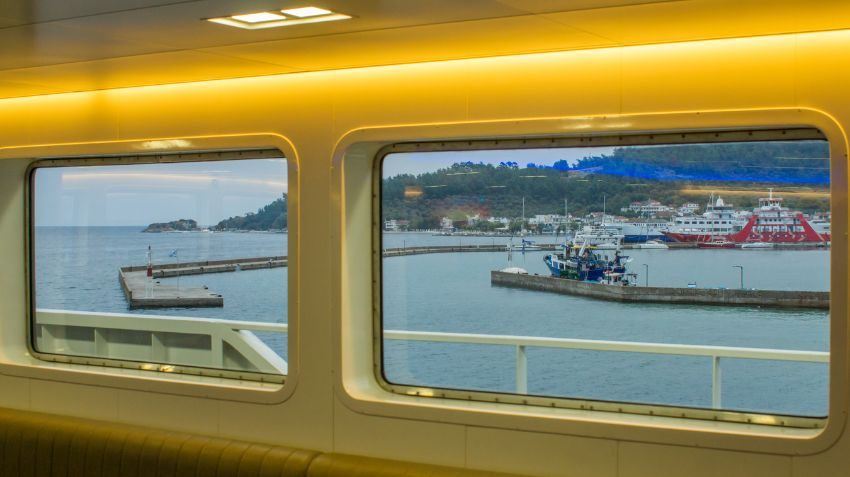
The arrival sequence is simpler than many first-time visitors expect. Kavala airport receives domestic flights from Athens and a handful of European charter routes in summer. From the airport, a taxi or local bus connects to Keramoti port – around 40 minutes – where the ferry to Limenas takes approximately 15 minutes. The crossing is short enough that the scheduling is generous: ferries run through most of the day in July, and missing one is not a significant problem.
The alternative crossing from Kavala port is longer, around 70 minutes, but may suit travelers arriving directly at Kavala city without a vehicle. Both routes land at Limenas.
Once on the island, the coastal road forms a loop around the entire perimeter, which is both the main route and the primary way of understanding how the island connects. A bus service runs between the main villages and beach areas, and for shorter stays concentrated in one area, it is sufficient.
For anything more exploratory – the south coast beaches, the inland villages, the forest roads toward the peak of Ypsarion – a rental car or scooter makes a genuine difference. Limenas has several rental agencies and the process is straightforward. Most travelers who arrive without a vehicle arrange one on their first morning.
Walking within individual villages and beach areas works well – Limenas itself is compact, and most coastal villages are navigable on foot within their own footprint. The distances between beaches and villages along the coastal road are not walkable in summer heat, so treating the car or bus as the connective tissue between destinations is the realistic pattern.
Best beaches and areas to explore on Thassos for a first trip
The island’s beaches cover enough range that the first visit rarely runs out of variation. Golden Beach and Skala Potamias on the east coast are the longest and most popular, with the kind of shallow, warm water that works well for full days. They are genuinely full by mid-morning in July, but the sheer width of Golden Beach means finding space is rarely a problem – it is more about finding the right stretch.
Alyki, on the southern tip, is where the island’s marble geology becomes the most visible. The stone is white and flat, worn smooth, and the water over it turns an unusual shade of pale turquoise in the right light. There are two small coves divided by a rocky promontory, with the ruins of an early Christian basilica above.
It gets busy around midday, but arriving before 10:00 or staying into the late afternoon gives the place a quieter atmosphere. The evening light on the stone around 19:00 is worth timing for.
The inland villages – Theologos, Maries, Kastro – offer a different register entirely. Theologos in particular, the oldest continuously inhabited village on the island, sits high enough in the hills that the coastal heat is replaced by shade and the sound of running water. The tavernas here are slow and unhurried in a way that feels removed from the beach rhythm, and the stone architecture is well-preserved. An afternoon up here, followed by a return to the coast for an evening swim, is one of the more satisfying patterns the island supports.
Travelers who find Thassos starts pulling them toward quieter coastal pockets may want to look at how the broader northern Aegean compares – the Agrari Beach in Mykonos read covers a similarly sheltered, lower-key beach experience in a very different island context, useful for understanding what Thassos does differently.
Best time to visit Thassos for a first-time traveler
July and August represent the island at full summer intensity – beaches busy, tavernas open late, ferries running on a dense schedule, accommodation at peak rates. The energy is genuine rather than forced, and the island handles the volume better than many comparably sized Greek destinations. The forested landscape keeps Thassos measurably cooler than the barren Cycladic islands at the same time of year, and the afternoon sea breeze on the west-facing beaches arrives reliably enough to make midday bearable rather than retreating-to-the-room demanding.
June and September are the windows that many repeat visitors prefer. The water is warm from June onward, the crowds are thinner, prices drop noticeably, and the pace across the island softens. In September particularly, the beaches begin to empty by early afternoon, the light changes quality – lower, warmer, longer in the evening – and the tavernas are not yet closing for the season. This is the window where Thassos shows its more self-contained, unhurried character most clearly.
May and October are viable for travelers who want the landscape and the walking without the beach crowds. Some facilities are reduced or closed entirely, ferry schedules thin out, and the sea is cool enough to discourage swimming for many visitors. The island in these months is quieter than almost anywhere else in the northern Aegean, and the interior trails and village life become the primary draw.
Is Thassos worth visiting for a first-time traveler to Greece?
For a first-time traveler guide to Thassos, the honest answer to whether it is worth the trip is almost always yes – with a clear sense of what the island actually is. It is not a cultural destination in the way Athens demands attention, and it is not a party island in any sense. It is a place where the day organizes itself around water, shade, food, and the particular pleasure of a Greek island that has not been entirely reshaped by tourism infrastructure.
The fit is strongest for travelers who want beaches with enough variety to sustain several days, a pace that allows genuine decompression, and the kind of self-contained island loop that does not require constant planning. It works for first-time visitors to Greece who want to understand what the country’s island rhythm actually feels like without navigating the full social density of the Cyclades. And it works for return visitors to Greece who have done the more obvious islands and want something that operates on a different frequency – greener, quieter, and more anchored to the landscape than the scene.
The conditions under which it fits less well are specific: travelers seeking late nights, a dense cultural programme, or the aesthetic of the whitewashed Cycladic landscape will find Thassos moves differently. For everyone else, the marble beaches, the forested hills, the unhurried taverna evenings, and the short ferry crossing from the mainland make it an island worth understanding before committing to anywhere else in the north.
Continue exploring: Rhodes Town or Heraklion as a Greek island base covers the comparison for travelers weighing a more urban-anchored island trip alongside the kind of coastal and village rhythm Thassos offers.
If the pace and landscape of Thassos are pulling you toward the northern Aegean, the Corfu Town neighborhood fit read covers how a different kind of Greek island town – more Venetian in architecture, more urban in rhythm – structures the same decision about where to base and how to move.
Thassos first-time visitor FAQ: arrival, transport, beaches, best time and how many days
1. How do you get to Thassos for the first time?
Most visitors fly into Kavala airport and take a short taxi or bus to Keramoti port, where ferries cross to Limenas in around 15 minutes. The Kavala port crossing is also possible but takes closer to 70 minutes. Ferries run frequently in summer, making the arrival sequence straightforward once you know the port connection.
2. Do you need a car on Thassos?
A rental car or scooter opens the island considerably. The coastal bus connects major villages, but many of the quieter beaches and the forested interior roads are far more accessible with your own transport. Most visitors staying longer than a couple of days find a car worth arranging on arrival in Limenas.
3. What is Thassos like for a first visit in summer?
July and August bring the island to full life – the beaches are busy through midday, the tavernas fill late, and the harbour at Limenas has a relaxed social rhythm that carries well past sunset. The forested hills keep temperatures more manageable than much of the Aegean, and early morning swims before the beach crowds arrive are part of what gives summer here its particular character.
4. Which part of Thassos is best for a first-time visitor?
Limenas serves as a natural first base – central, well-connected by ferry, and with enough tavernas and services to settle in quickly. From there, the south and west coasts open up: Skala Potamias and Golden Beach for longer sandy stretches, Alyki for the marble shoreline, and the quieter villages inland for a different register entirely.
5. How many days do you need on Thassos?
Four to five days covers the main coastal rhythm comfortably – enough time to shift between a couple of beach areas, take an evening in one of the inland villages, and let the pace slow down properly. Longer stays suit travelers who want to explore the interior roads, find their own quiet corner, and stop treating the island like a checklist.