
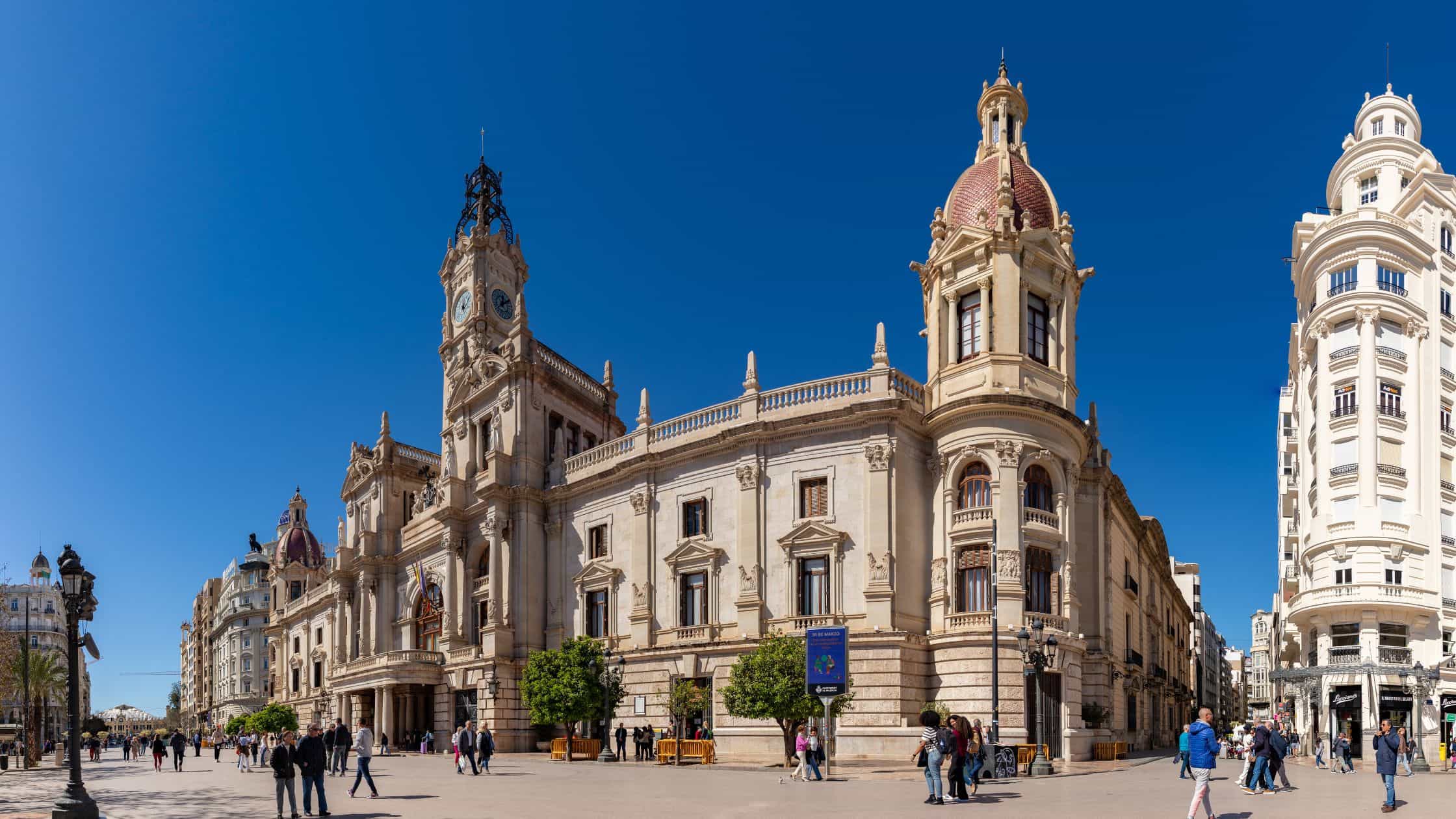
Valencia tends to resolve itself faster than most Spanish cities. The layout is readable, the transport is direct, and the rhythm of the place becomes clear within a day or two. For a first-time traveler guide to Valencia, the most honest starting point is this: the city is calmer than its reputation suggests, more comfortable to navigate than Barcelona, and significantly more livable than its size would imply.
That doesn’t mean it’s quiet. By late spring, the terraces along Ruzafa fill before 21:00, the old town promenade stays active until well past midnight, and the beach tram runs packed from late morning. But the city has a rhythm to it, and first-timers tend to find it within 48 hours.
What Valencia is like for first-time visitors
The airport is close and the metro is direct. Line 5 runs to the city centre in around 20 minutes, no transfers, and the signage is clear enough that almost no one gets confused. This is worth noting because arrivals in Spain don’t always go this smoothly.
The centre itself is flat. Genuinely flat. After any city with hills, the absence of gradient is something you notice on the first walk, and again at the end of the second day when your legs aren’t sore.
The old town, known as Barrio del Carmen, sits inside a former riverbed that was redirected in the 20th century and converted into a long park. That park, the Turia Garden, is about 9 kilometres long and runs through the city like a green corridor connecting the historic core to the City of Arts and Sciences at the eastern end.
The streets in El Carmen are narrow and the paving is uneven stone, which slows you down, but not unpleasantly. The main pedestrian axis through the old town concentrates foot traffic by midday, especially on weekends, but the parallel streets thin out quickly and the noise drops within a block or two of the main route.
Is Valencia right for your travel style?
Valencia works well for travelers who want a full Spanish city experience but are considering alternatives to Barcelona. The Barcelona first-time guide offers a useful comparison in pacing, scale, and daily rhythm.
It also suits people who want a beach within reach of a city centre without committing entirely to a resort. The combination of walkable neighborhoods, a functioning metro, and a beach you can actually reach by tram is less common in Mediterranean cities than it sounds.
Slow travelers tend to adapt quickly. Remote workers in particular find the city comfortable: the coffee shop culture in Ruzafa is well developed, co-working options exist without much searching, and the pace of a morning in the neighborhood doesn’t push back against a few hours of work. Days here naturally stretch toward a long lunch and drift into the evening without urgency.
The city is less suited to travelers who want continuous activity or a very dense cultural programme in a short time. The museum offer is solid but comfortably sized, and outside of Fallas season in March, there isn’t the steady stream of major events that Barcelona or Madrid sustain year-round.
How to get around Valencia and reach the beach
Most first-timers are often surprised by how much time the Turia Garden absorbs. Walking one full stretch of it from the old town to the City of Arts and Sciences takes around 45 minutes at a relaxed pace, and the return trip (or the tram back) adds to it.
It’s the kind of route that starts as a morning walk and becomes a half-day without any particular decision being made.
The beach is further from the centre than it looks on a map. It’s not unreachable, the tram from the city connects directly, but it’s a 20-25 minute ride plus a walk to the sand, which means it works better as a destination for a half-day or a full afternoon than as a quick detour.
Malvarrosa, the main city beach, gets most active by midday from June onward. The sand is wide and flat, the promenade behind it is exposed with limited shade, and by 14:00 on a summer weekend the access points see real foot traffic. Going before 11:00 or returning after 17:30 produces a different experience.
Within the city, Ruzafa and the old town are the two zones first-timers spend most of their time. Ruzafa functions as the more local-facing neighborhood: independent restaurants, a food market on weekday mornings, streets that fill for dinner between 21:00 and 22:30.
Travelers who find themselves comparing neighborhoods rather than destinations may also find the Barcelona neighborhood guide useful as a reference point for how different Spanish cities organize their urban experience.
El Carmen is older, more atmospheric in the medieval-street sense, and noisier on weekend nights when the bar concentration along certain streets means ambient sound doesn’t drop until late.
If you’re weighing Valencia against other Spanish cities on a multi-city trip, the Spain four-city circuit read covers how Valencia sits inside a longer itinerary and what changes when you add or remove it.
Best time to visit Valencia
May and June are arguably the most comfortable months for a first visit. The weather is warm but the city hasn’t yet shifted into full summer operating mode, which means restaurants are easier to walk into, the beach isn’t at peak activity, and the streets in the old town are navigable while remaining easy to explore.
By July, the summer temperatures become more influential. The stone streets in El Carmen and around the central market hold warmth from about 13:00 onward, and the difference between walking at 18:00 and 21:00 is significant.
Locals adapt by eating late, staying indoors through the hottest hours, and moving toward the seafront in the evenings where there is occasionally a breeze. Visitors who build their schedule around that rhythm find summer Valencia genuinely enjoyable. Visitors who align with the city’s summer rhythm often find the experience more enjoyable.
Spring and early summer also mean the beach activates without the full August intensity. The Malvarrosa strip is busy but not packed. Water temperature rises to a point where swimming is comfortable from late May onward, and the evening promenade along the seafront becomes part of the city’s daily rhythm rather than just a tourist loop.
Travelers curious about how city beaches work in Spain more broadly, the city beach access read for Spain covers the practical dynamics of urban beach use across Spanish destinations.
Best areas to stay in Valencia for first-time visitors
For most first-timers, Ruzafa is the right base. It’s well connected, has enough accommodation variety to suit different budgets, and puts you within easy distance of both the old town and the metro. The neighborhood has a morning coffee culture that works well for slow starts, and the restaurant scene in the evenings is dense without being overwhelmingly touristy.
El Carmen is the obvious alternative for travelers who want to be inside the historic fabric. The streets are quieter during the day and significantly livelier at night, which is either a feature or a a different fit depending on your sleep preferences.
The buildings are older and the accommodation tends toward smaller guesthouses and boutique hotels rather than larger properties. Worth noting: cobblestone surfaces and the occasional steep threshold make it less practical if you’re traveling with large or heavy luggage.
The beach neighborhoods, primarily Cabanyal and the area closest to Malvarrosa, are a reasonable option for travelers whose trip is primarily beach-focused. The difference is that you’re further from the old town and the main restaurant clusters, so the city’s urban offer becomes something you take a tram to rather than walk out your door into.
What to know before visiting Valencia
The central market deserves more time than most people give it. Mercat Central is a functioning food market, not a tourist installation, and it closes around 14:30.
Travelers wanting a fuller market experience generally benefit from arriving earlier. Going between 09:30 and 12:00 gives a different picture of the city’s food supply chain and is more useful as an orientation to what the local diet actually looks like.
The City of Arts and Sciences is further from the old town than most people expect. On the map it looks like a 20-minute walk. It’s closer to 40-45 minutes at a comfortable pace along the Turia Garden path, or a short metro ride depending on where you’re starting. Allocating a half-day for the complex is more realistic than treating it as a detour.
Valencia’s dinner timing is later than most northern European visitors expect. Kitchens in most restaurants don’t really start filling until 21:00, and arriving at 19:30 often means being seated in an quieter room with service that’s clearly not yet at pace. Aligning to local timing makes the experience considerably better, both for the food and for the atmosphere around it.
For travelers weighing a first visit to Valencia against a first visit to Madrid, the Madrid first-time orientation read lays out a useful contrast in rhythm, cost, and daily pace.
Travelers deciding between Spain’s Mediterranean and Andalusian rhythms may also find the Seville vs Valencia comparison useful before committing to one city.
Is Valencia good for solo, couple and budget travel?
Valencia suits a broad range of traveler types, but it particularly rewards people who want their pace to emerge from the city rather than being imposed on it. Three or four days is enough for a first visit that covers the main areas without feeling rushed.
Five or six nights works well for travelers who want to include day trips, spend more time at the beach, or simply stay long enough for the neighborhood rhythm to feel familiar.
Solo travelers tend to find it comfortable. The city is well lit, walkable, and the café culture in Ruzafa means spending time alone in a public space doesn’t require constant movement.
Couples on a first Spain trip often find it more intimate and more intimate in scale than Barcelona. Groups vary more, but the concentration of good restaurants in a relatively compact area makes dinner logistics easier than in more sprawling cities.
Budget travelers do well here. Accommodation is cheaper than Barcelona or Madrid at comparable quality levels, the food market keeps grocery costs low, and the free or low-cost public space, the Turia Garden, the beach, the market, the old town streets, makes up a large portion of what actually constitutes a good day in Valencia.
Valencia first-time visitor FAQ
1. How many days do first-time visitors usually need in Valencia?
Three to four days is enough to cover the old town, the City of Arts and Sciences, and the beach without feeling rushed. Travelers who want a slower rhythm or plan to day-trip toward the Albufera natural park tend to stay five or six nights.
2. Is Valencia easy to navigate without a car?
Yes. The metro from the airport is direct, the old town and Ruzafa are walkable, and the beach tram runs frequently. A car is useful only if you plan excursions outside the city, which most first-timers skip.
3. When is the best time to visit Valencia for the first time?
April through June and September through October give the most comfortable conditions. Summer works well if you plan around beach mornings and late evenings, but the interior streets stay warm well past sunset from June onward.
4. Is Valencia or Barcelona better for a first visit to Spain?
They suit different rhythms. Barcelona is denser, more internationally crowded, and harder to pace on a short trip. Valencia is easier to read, cheaper, and operates at a tempo that rewards a slower approach. Travelers who want a full Spanish city experience without high-season activity levels often find Valencia more satisfying.
5. Which neighborhood should first-time visitors stay in Valencia?
Ruzafa is the most practical base for first-timers: well connected, dense with cafes and restaurants, and close enough to the old town without being inside the noisier historic core. El Carmen suits travelers who want to be inside the medieval street pattern, accepting slightly older infrastructure and more ambient evening noise.