
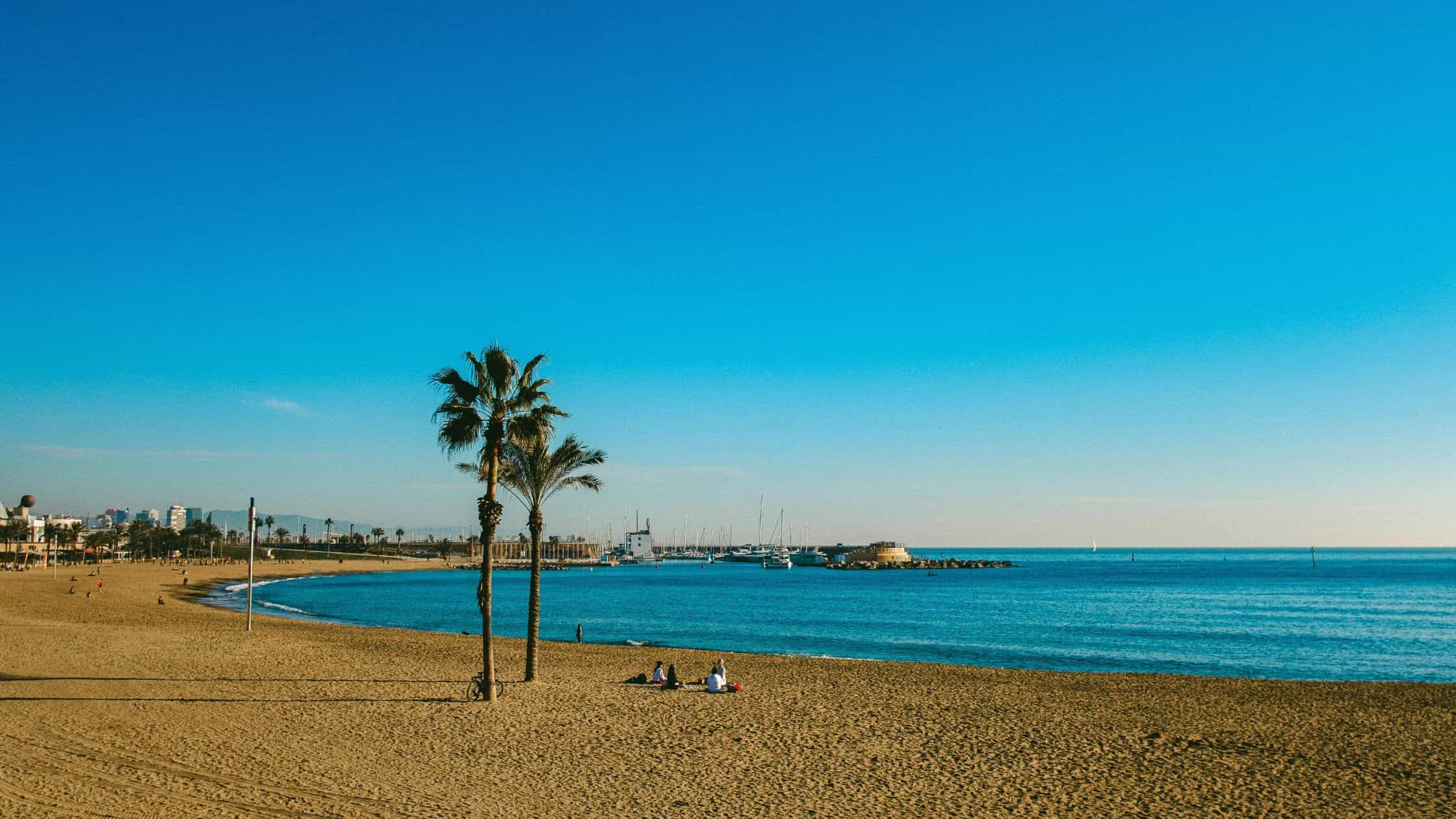
Spain’s coastal cities carry their beaches differently from purpose-built resort towns. The sand is there, the water is accessible, and you can be back in the old town for lunch without it feeling like an expedition.
City beaches for quick dips and casual strolls are built into the daily rhythm of places like Malaga, Barcelona, and Valencia rather than being the sole reason to go, which changes what you should expect from them and how you should use them.
The experience is inherently urban. A motorbike will pass closer to the waterline than you expect. A promenade bar will have the same menu as the one next to it. None of this is a problem if you approach these beaches as part of the city rather than an escape from it.
Best city beaches in Spain for a quick swim
The practical appeal is access.
1. In Malaga, La Malagueta is roughly a fifteen-minute walk from the cathedral.
2. In Barcelona, Barceloneta sits one metro stop from the main visitor corridor, though the walk from the station to the water involves crossing the promenade and navigating beach vendors along the way.
3. In Valencia, Las Arenas connects to the city by a tram line that runs frequently in summer and less so after 22:00.
What these beaches give you is the water, a working promenade, and proximity to everything else. What they offer instead is quiet, privacy, or the sensation of being somewhere remote. The beaches become most active from late morning onward, the umbrellas are close together by 11:00 in summer, and the promenade traffic is continuous. On the other hand, the bars are open, the showers work, and you can leave your bag at a café table rather than burying it in sand, which is not nothing.
The sea quality varies. Barcelona’s beaches are consistently monitored and generally clean, though water clarity decreases after rain. Malaga’s La Malagueta holds a Blue Flag designation in most recent seasons. Valencia’s Cabanyal-adjacent stretches are cleaner than they were a decade ago. In all three cities, the water is calmer and clearer in the morning before the crowds and boat traffic build up. Travelers curious how Barcelona balances beach access with urban density can continue with the Barcelona first-time guide, which explores the city’s rhythm beyond the waterfront.
Are Spanish city beaches right for your travel style?
City beaches suit travelers who are already in a coastal city for reasons beyond the beach itself and want access to the water without committing a full day to it. A one-hour morning swim before sightseeing, or an evening walk along the promenade after dinner, is exactly the shape these places are built for. Locals use them this way routinely, arriving late afternoon, staying through sunset, leaving by 21:30 when the restaurants fill.
They do not suit travelers whose primary goal is a beach holiday. If the quality of the sand experience, the clarity of the water, or the quietness of the surroundings is the main objective, a city beach will are usually better served by smaller coastal towns, and the friction of crowds and noise will feel like a problem rather than a feature. The same budget, applied to a smaller coastal town an hour out, typically buys a considerably more relaxed beach day.
Solo travelers and couples doing city trips tend to find city beaches easy and low-pressure. Families with young children can work around the crowd timing, arriving early and leaving by midday. Groups planning to spend six or more hours on the sand will find it benefit from earlier arrival times space, shade, and the midday compression.
Best time of day to visit a city beach in Spain
The beach changes character several times across a single day. Before 10:00, the sand is about half-occupied and the light is still low enough to make the promenade walk genuinely pleasant. Between 11:00 and 16:00 on a summer weekday – and most of the day on summer weekends – the activity reaches its peak. Towels are close together, the promenade narrows functionally because pedestrians are competing with cyclists and vendors, and the water fills with people. It is still usable, but it creates a different experience from the morning hours than most short-stay visitors expect.
After 17:30 the crowd redistributes. Some people leave for dinner; others arrive for the evening session, which runs differently. The light is better, the water has been warming all day, and the bar terraces on the promenade become the actual social destination. By 20:00, the beach itself is quieter but the promenade is at its busiest, which is a useful distinction if you are deciding between a swim and a walk.
Sea breezes pick up most afternoons after 14:00, which brings the temperature down but also makes shade structures less reliable. Umbrellas flip and rental chairs migrate. On days with stronger coastal wind, the sand itself becomes part of the ambient experience in a way that is more noticeable than many visitors expect.
Best beach promenades in Malaga, Barcelona and Valencia
On many city beach visits, the promenade ends up being the part people remember more than the swim and this is not accidental. The paseo maritimo in Malaga, the Barceloneta boardwalk, and Valencia’s seafront boulevard are designed for movement, cycling, walking, stopping for something cold, continuing. The rhythm is comfortable. You are not committing to a destination; you are just moving along the water, which has a specific quality that the interior of a city cannot replicate.
The best promenade walking in most cities happens in the hour before sunset, when the direct heat has dropped and the light flattens out. In May and early June, this window arrives earlier than in August, and the crowds are thinner, making the stroll genuinely leisurely and remains comfortably paced. By July and August, the same walk in the same hour involves significantly more people moving in both directions, which changes the pace entirely.
Travelers weighing a stay with beach access against an interior city base often find that the Malaga first-timer portrait helps clarify how much the coastal setting shapes the daily rhythm, as opposed to just adding a swim option.
Best time of year for Spanish city beaches
Late spring and early autumn are the most efficient windows for this kind of visit. The water in May is cooler than midsummer but swimmable for most people, especially by late morning.
The promenades are already active but not compressed. Restaurants on the seafront have their full menus and adequate staffing. June sharpens all of this, warmer water, longer evenings, more activity – without yet tipping into the August peak, when all the above conditions hold but with considerably more people occupying the same space. September is arguably the best month for the casual beach rhythm. The water retains its summer warmth into the third week of the month.
Crowds thin noticeably after the first weekend, restaurants shift back to local-dominant clientele, and the evening promenade walk loses the activity levels that makes it feel like crowd management in August. The light is lower and the shadows longer, which makes the afternoon usable in a way that July midday never quite is.
For travelers building a Spain circuit that includes a coastal city stop alongside interior cities, the Spain four-city circuit read covers how to sequence the coastal and inland legs without losing days to transit overlap, which is a real useful planning factor in a country where high-speed trains change the geometry of what is reachable in a day.
Easiest city beaches to reach in Spain
The logistics differ enough between cities to affect how you use the beach on a short trip. Barcelona’s Barceloneta is close on a map but the walk from central accommodation involves crossing the Gothic Quarter and then the Born, which takes longer than it looks, especially with beach gear.
Travelers deciding between Spain’s two most accessible urban beach cities may also find the Barcelona vs Malaga comparison useful for understanding how beach access changes the wider city experience. The L4 metro line covers it in one stop, but the station exit deposits you on the promenade rather than the sand, meaning there is still a choice to make about which stretch to aim for.
Malaga’s beach situation is simpler. The city is compact, the waterfront is flat, and La Malagueta is a direct walk from almost anywhere in the center. The promenade continues along several beaches east of the main one, which are less visited and more residential in character. Reaching them requires either a longer walk along the seafront or a bus, but the sand is less dense by the time you get there.
Valencia’s beaches sit slightly further from the old town than in Malaga. The tram from the historic center takes around fifteen to twenty minutes, and the connection is straightforward. The beach itself is wider than Barceloneta and the promenade is more active, though the area behind it is more functional than atmospheric.
For travelers considering Valencia beyond the beach itself, the Valencia first-time guide explores how the city’s wider atmosphere and daily rhythm compare with other coastal destinations in Spain.
How to plan a short visit to a Spanish city beach
City beaches for quick dips and casual strolls work best when the expectation is calibrated to what they are: urban beaches with all the logistical ease and none of the resort isolation. The traveler who arrives at 09:00, swims for forty minutes, walks the promenade for another thirty, then heads back into the city for breakfast has used the beach well.
The traveler who arrives at 13:00 in August expecting to stake out a comfortable patch of sand for the afternoon will find the experience different from what many visitors initially imagine and the payoff less clear. The seasonal window matters more than the city, within reason. A May or September visit to any of these beaches offers considerably more ease than the same trip in the second week of August.
The water, the promenade, and the rhythm of the surrounding streets all function more naturally outside the peak activity period and the swim itself is more satisfying when you are not navigating a crowd to get to it.
Spanish city beaches FAQ
1. What is the best time of day to swim at a city beach in Spain?
Early morning, roughly 08:00 to 10:30, and again from 19:00 onward are the most workable windows. Midday crowds compress the sand significantly, and the water remains warm enough for evening swims through most of summer.
2. Are city beaches in Spain suitable for a quick swim without spending the whole day?
Yes, and that is how many locals use them. A one to two hour visit in the morning or early evening fits easily around sightseeing or a full city day, without needing to plan around chairs, towels, or midday heat.
3. Which Spanish city has the most accessible urban beach?
Barcelona and Malaga both have metro or train access directly to the beach, which makes them practical for a short visit. Malaga’s La Malagueta is a ten to fifteen minute walk from the historic center, while Barcelona’s Barceloneta is one metro stop from the main tourist corridor.
4. Do Spanish city beaches get most active during summer?
In July and August, yes, between roughly 11:00 and 17:00 on weekends. The same beaches in May, June, or September offer considerably more space, the water is still warm enough, and the promenades stay active without the compression.
5. Is it worth visiting a city beach in Spain if you only have one or two days?
For a short city trip, an early morning or evening beach visit adds texture to the stay without competing with sightseeing time. The experience is less about lying in the sun and more about the rhythm of the city meeting the coast, which is something even a forty-five minute walk along the promenade captures well.