
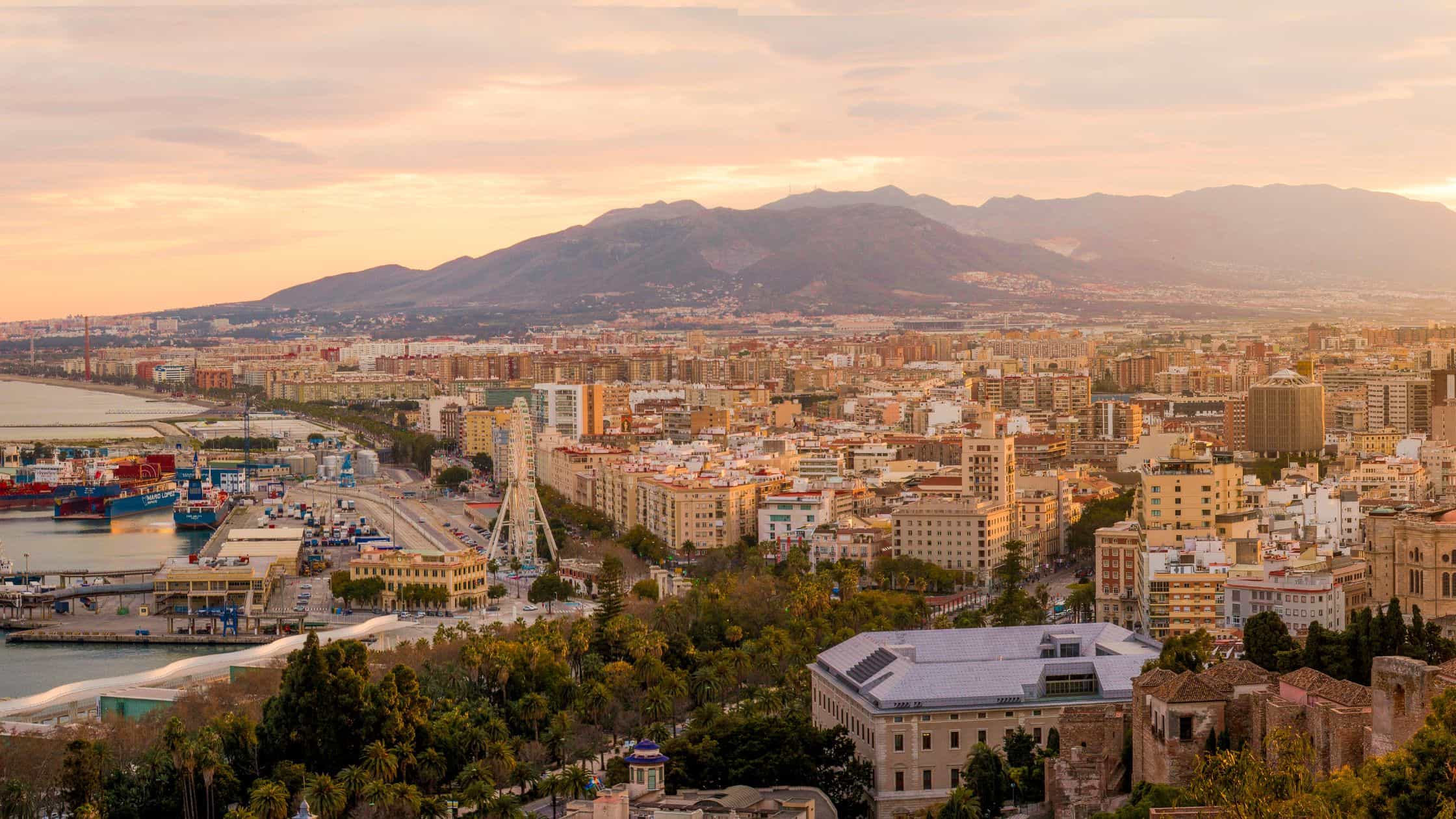
Malaga takes a few hours to read correctly and the first impression from the airport approach is a coastal city with a lot of new construction spreading north along the hills, which does not prepare you for the actual historic centre a few kilometres west.
Once you are in it, the scale makes sense and the city stops feeling anonymous. This is a practical first-time traveler guide to Malaga for anyone arriving without strong preconceptions and trying to understand whether the place fits them before committing to the calendar.
The city sits at the eastern end of the Costa del Sol, but the way it feels on the ground is different from the resort strip that runs west toward Marbella and Estepona. Malaga has a centre that belongs to itself: a cathedral that took two and a half centuries to build and still lacks its second tower, a Moorish fortress sitting directly above the Roman theatre ruins, streets that narrow and widen in ways that do not feel designed for tourism even when they are full of tourists. That tension is the place.
The weather entering summer is already decisive. May temperatures sit in the mid-twenties, evenings cool to something comfortable, and the light in the late afternoon on the marble streets has a quality that makes it easy to understand why people who come for a week start pricing long-term rentals. June is when this shifts toward something more active.
What Malaga is like for first-time visitors
The historic centre is small enough to cross on foot in fifteen minutes, but dense enough that you will not feel you have run out of it after two days. Calle Larios, the main pedestrian artery, is wide and lined with nineteenth-century buildings.
It functions as both a promenade and a practical street: locals walk it with bags from the covered market nearby, and tables from neighbouring bars spread onto it in the evenings. It is loud in the middle of the day and still busy after midnight on weekends. Two streets in either direction and the character changes. The Soho district to the south of the centre has galleries and wine bars and the kind of coffee shops that attract remote workers and local creatives in roughly equal numbers.
The streets around the cathedral are quieter, shadier, with older residential buildings above and small restaurants below. The Alcazaba neighbourhood near the fortress is where the cobbles start and the hill angle becomes noticeable.
The harbour area – the Muelle Uno development – reads differently from the historic centre. It is polished and commercial, with restaurants that are visually impressive and deliver food that is often lean toward a broader Mediterranean style rather than a distinctly local one. It is pleasant for an evening walk and a glass of something near the water. It reveals a different side of Malaga than the historic center.
Kitchens here operate on a Spanish schedule. Lunch is between 14:00 and 16:00 and is the main meal of the day. Dinner rarely begins before 21:00 for locals; restaurants serving earlier are largely adjusting for northern European visitors. If you eat at 19:00 you will often have the room to yourself. By 22:00 the same room will be full and noticeably louder.
Is Malaga right for your travel style?
The city works particularly well for travellers who want cultural density without the continuous pace of a larger capital. The Picasso Museum, the Thyssen collection, the Carmen Thyssen nearby, the contemporary art centre in the Soho district, there is enough material to fill several days without forcing a schedule. But the city does not demand engagement with any of it.
You can spend an afternoon in a bar in the Lagunillas neighbourhood eating anchovies and fried fish and feel entirely justified. Solo travellers tend to settle here quickly. The street-level social energy is present but not pressuring, and the density of small bars with counter seating makes eating and drinking alone easy and comfortable and naturally comfortable.
Couples find it easy to fill four or five days. Families with young children do fine in the centre, though the cobbled streets near the Alcazaba are stroller-unfriendly past a certain point. Travellers who need a strong late-night scene beyond bars and restaurants will find the city more centered around bars and restaurants than clubs – the club culture exists but it is not the city’s centre of gravity.
One seasonal reality worth understanding Malaga in high summer (July and August) is genuinely hot. Midday temperatures regularly exceed 35 degrees Celsius, and the marble and stone of the historic centre retain heat in a way that is fine if you plan around it, early mornings, a long lunch pause, evenings and best enjoyed when you follow the city’s summer rhythm.
How to spend your days in Malaga
Mornings are the most useful part of the day in summer. The Mercado de Atarazanas, the central covered market close to Calle Larios, opens early and the best produce counters and fish stalls are busiest before 11:00. Coffee in one of the small bars along the outer edges of the market costs less than half what the tourist-facing cafes on the pedestrian street charge, and you will not be the only visitor doing this.
The Alcazaba is best visited before 11:00 or after 17:00. Midday on the exposed stone paths is not comfortable in late spring and summer, and the view from the top is often most enjoyable during the cooler parts of the day.
The Roman theatre below it is free and visible from the street if you want to see it without entering. The Picasso Museum has timed entries and books up; checking availability the evening before rather than the morning of is a reasonable habit. Afternoons between 14:00 and 17:00 are genuinely slow in the city. This is not a myth from another era – the rhythm is still real.
Many smaller shops close, the streets quiet significantly, and the smart move as a visitor is to follow the logic and align with it. A long lunch, a pause somewhere with a fan, a museum with air conditioning. The city comes back to life around 18:00 and the evenings have a completely different energy from midday: cooler, more populated, louder. The beach is close and functional, though Malagueta beach directly adjacent to the city centre is not the region’s most dramatic stretch of coastline of coastline in the region.
Travelers interested in how urban beaches function across Spanish coastal cities can also read the city beaches guide, which compares where these beaches work best for swimming, walking, and everyday use.
It is useful for a morning swim before the crowds arrive, and local families use it seriously, which gives it a more grounded feel than the resort beaches further west. For the first visit, it is worth knowing it exists without building the trip around it.
How to get from Malaga Airport to the city centre
Malaga Airport (AGP) is one of the better-connected regional airports in Spain, with direct routes from most of northern Europe running year-round and increasing significantly through summer. The airport sits about 8 kilometres from the city centre. The Cercanias commuter train connects the airport to the city in roughly twelve minutes and costs very little; it deposits you at Malaga-Centro Alameda station, which is a short walk from Calle Larios.
Taxis to the centre are available but the train is genuinely easier and faster during arrival peaks.
Within the centre, almost everything is walkable. The distance from the Soho district in the south to the Alcazaba in the north is around twenty minutes on foot, and the terrain is flat except for the hill up to the fortress. City buses cover the wider urban area, and the bus network is legible if you use a transport app. The city does not have a metro in the conventional sense – the suburban rail lines are useful for day trips but not for navigating the centre.
Day trips are easy and worth factoring into a first visit. Ronda is about ninety minutes by bus through dramatic hill country. The small white towns of the Axarquia region to the east are reachable by local bus or rental car. Granada is two hours by bus or just over an hour by high-speed train from the María Zambrano station, which is a different station from the central one near the airport line, so worth confirming before booking.
Travelers who enjoy Málaga’s relaxed coastal rhythm but want to compare it against a denser Mediterranean city with stronger beach culture, more neighborhood variety, and a larger urban coastline should also read the Barcelona neighborhood guide.
How to get around Malaga and plan day trips
Seville is two hours by high-speed train and offers a denser, more architecturally striking city experience with more cultural programming and a stronger flamenco scene. The rhythm is similar to Malaga’s in the evenings but the city is larger and requires more orientation time. Granada has the Alhambra and a university neighbourhood energy that Malaga lacks; it is cooler in summer and has a different social texture. Malaga as a base for both is a reasonable strategy for a first trip to Andalusia.
Travelers curious how Malaga compares with Andalusia’s larger cultural center can continue with the Seville first-time guide, which explores how the city’s rhythm, scale, and atmosphere differ from Malaga.
For travellers considering a broader Mediterranean circuit rather than focusing on southern Spain, the dynamics of pacing, coastal access, and old-city walkability that make Malaga work also appear in parts of the Greek and Turkish coastlines, though at very different price points and with different infrastructure. Those interested in another Mediterranean city built around a different balance of beaches, urban space, and daily rhythm may also find the Valencia first-time guide useful as a comparison.
Malaga also works as the starting point for a longer Andalusian sweep, and comparing it against Madrid as an entry point into Spain is a decision more first-timers face than is often addressed directly. The Madrid first-time orientation covers what changes when you begin in the capital instead.
How many days to spend in Malaga
Three nights is the honest minimum to stop feeling like you are rushing. Four nights allows one day trip and still leaves the city with something left unexplored. A week starts to feel slow in the best way around day four, when you stop consulting a map and start choosing bars by whether the counter looks right.
Accommodation in the historic centre puts you within walking distance of everything but comes with a more active evening atmosphere on the main streets, especially on Thursday through Saturday nights. The Soho district is slightly removed and quieter after midnight. The area between the two, around the cathedral, offers a middle ground. Prices rise significantly from June onward; May rates are considerably more reasonable for a first visit that does not need to happen in peak season.
Travelers who have already decided on the city and are now choosing where to base themselves can continue with the Malaga neighborhood guide, which compares the city’s main areas through atmosphere, pacing, and traveler fit.
Bring light layers for evenings even in late spring. The sea breeze off the bay drops the temperature more than the daytime heat suggests it will. The marble underfoot is also slippery when wet, and the winter rains leave surfaces that stay polished longer than you might expect. On a clear May morning, standing on the Alcazaba looking down at the port and the new part of the city spreading north, the place makes complete sense. Malaga sits at the intersection of several larger European travel routes.
Questions first-time visitors ask about Malaga
1. How many days do you need in Malaga as a first-time visitor?
Three to four days is enough to get a real feel for the city without forcing the pace. The historic centre is walkable and compact, and the rhythm encourages slow mornings and long evenings rather than ticking off sights. If you plan day trips to the surrounding coast or inland towns, four to five days works better.
2. Is Malaga a good destination for first-time visitors to Spain?
It works well as an entry point, especially compared to larger Spanish cities. The scale is manageable, the climate is welcoming most of the year, and the airport connections are strong. It also has a clearly defined centre that does not require much orientation time, which makes it easier for travellers arriving without much context for Andalusian geography.
3. What is the best time to visit Malaga for a first trip?
Late spring and early autumn tend to work best for first visits. May and June offer warm weather before the summer crowds arrive in full. September and early October are similarly comfortable, with slightly lower temperatures and a more local feel returning to the streets after August. Summer is manageable but the heat midday is real and the city centre gets considerably more crowded.
4. Is Malaga easy to navigate without knowing Spanish?
In the central tourist and restaurant areas, English is widely understood. Away from the main streets and museums, interactions tend to be in Spanish, but Malaga is not a city where basic communication becomes a friction point. Menus, transport signage and museum information are generally available in English.
5. What kind of traveller does Malaga suit best?
Malaga tends to fit travellers who enjoy a relaxed but still culturally active pace: people who want good food, walkable streets, warm evenings and a base that does not demand relentless movement. It works well for solo travellers, couples and slow travellers. It is less suited to visitors who need a dense, fast-paced city with a strong after-midnight scene or extensive nightlife options beyond the harbour area.