
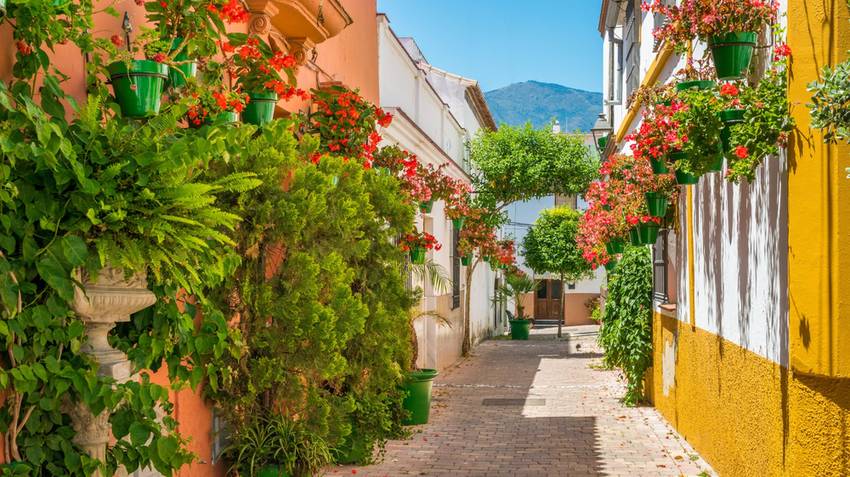
Malaga in late spring has a particular quality in the early evening – the stone of the old city still warm from the afternoon, the terraces starting to fill, the day not quite finished but already tilting toward dinner. The neighborhoods of Malaga read very differently from each other depending on what time it is and what kind of trip you are actually on.
That contrast is worth understanding before you book. The city is compact enough that the wrong base rarely ruins a trip, but the difference between staying in the historic centre and staying in Pedregalejo, a few kilometres east along the coast, is the difference between two different cities with the same name. One is audible, central, and social past midnight. The other has a chiringuito on the beach and a bus that comes every ten minutes.
This read focuses on the neighborhoods themselves – their daily rhythm, who they suit, and where the seams show when the fit is off.
The historic centre and Soho: the city’s loudest and most walkable core
The Centro Histórico occupies a compact grid between the Alcazaba hill and the port, roughly walkable from end to end in fifteen minutes. In spring the streets fill steadily from around noon and stay active until well past midnight on weekends. The Picasso Museum, the cathedral, and the main bar and restaurant streets are all in or adjacent to this zone, which is both its appeal and its limitation.
Noise is the honest constraint. The pedestrian corridors near Calle Granada and the area around Plaza de la Merced carry conversation and music from the bars through the walls of most hotels and apartments until at least one in the morning. Short-stay travelers who want to be inside the action tend to absorb this easily. Travelers on a longer visit who need proper sleep often find themselves considering a move by day four.
Soho sits directly south of the centre, between the cathedral and the port. It has a different texture: wider streets, murals, a handful of concept restaurants and independent cafes, somewhat less foot traffic on the main residential streets. The social energy is still there but the acoustic load is lower, and the walk to the waterfront takes five minutes. For remote workers who want the walkable core without the pure tourist axis, Soho tends to be the more functional choice.
The neighbourhood sits comfortably for stays of three to seven days. Beyond that, the question is usually whether the evening noise is working for you or against you.
Pedregalejo and El Palo: the residential coast east of the centre
Pedregalejo is the neighbourhood that people who have been to Malaga more than once tend to mention when they stop talking about the centre. It runs along a narrow coastal strip about four kilometres east of the old city: a promenade, a sequence of small coves with calm water, seafood restaurants that open at lunch and close when the last table leaves, and apartment buildings where people actually live year-round.
The rhythm here is noticeably different. Mornings are quiet enough that you hear the water. The market on Calle Bolivia runs on Tuesday and Saturday mornings and serves the neighbourhood rather than visitors. By summer the beach fills by mid-morning, but the promenade stays walkable at most hours and the sea breeze arrives reliably in the afternoon – something the landlocked streets of the historic centre miss entirely.
Getting downtown is the daily friction point. The number 11 bus connects Pedregalejo to the city centre and runs frequently enough during the day, though the last departures thin out after midnight. The journey takes about twenty minutes. For travelers who are genuinely planning beach mornings and occasional evening trips into the centre, this transit rhythm works naturally. For travelers who want to be in the centre every evening past midnight, it eventually becomes a small but recurring inconvenience.
El Palo extends further east, quieter still. It is more residential, more local, and has fewer visitor-facing amenities than Pedregalejo. It suits slow travelers who want to genuinely disappear into a neighbourhood rather than observe one from its edge.
Travelers weighing a neighbourhood-centered European coastal city against Malaga often find the Florence neighborhood fit read useful for comparison – the logic of choosing a residential base over a central one works similarly in both cities, even though the cities themselves feel nothing alike.
La Malagueta and the waterfront: beach access without leaving the city
La Malagueta is the beach district immediately east of the port, closer to the centre than Pedregalejo and considerably more visitor-facing. The beach itself is large and urban – the city is visible in every direction, the promenade connects directly to the port area, and the chiringuito strip runs the full length of the sand.
By early afternoon in summer the beach reaches peak activity. The atmosphere is more that of a city beach than a coastal resort, which is exactly the point for many people – you can walk to the Pompidou branch in fifteen minutes or be back in the old town in twenty. For travelers who want beach access without committing to a coastal base outside the centre, La Malagueta works as a compromise, though the accommodation options in the immediate area are more limited than either the centre or Pedregalejo.
The promenade between La Malagueta and Pedregalejo is a pleasant forty-minute walk in the direction of El Palo – flat, coastal, and shaded in sections by palms. In spring and early summer it is one of the better morning walks in the city, before the heat accumulates on the pavement.
Teatinos and the university area: the local city most visitors skip
Teatinos is a large residential and university district west of the centre, easily reached by metro. It does not appear in most short-stay itineraries, and the absence is logical – there is no historic architecture, no beach proximity, and no particular reason to be there if you are visiting for less than a week.
For remote workers or digital nomads planning a month or longer, the calculation is different. Rents in Teatinos run lower than comparable apartments in the centre or near the coast. The neighbourhood has the practical infrastructure of a residential city district – supermarkets, pharmacies, co-working spaces, local bars where the clientele is overwhelmingly students and residents – and the metro connects it to the centre in about fifteen minutes. It is the kind of area that makes sense when the goal is living in a city rather than touring it.
Who fits which neighbourhood, and where the fit breaks down
Short-stay travelers, first-timers, and people who want to move between sites without transit friction: the historic centre or Soho. The walks are short, the restaurants are close, and you will rarely need to think about a bus schedule.
Travelers on a second visit, those who are actively seeking a slower rhythm, couples who want a coastal base with a real local character, and anyone whose trip extends past five days: Pedregalejo or El Palo deserve serious consideration. The tradeoff is twenty minutes of transit each time you want the centre. The payoff is an evening table at a chiringuito with your feet near the water and neighbours rather than tourists at the next table.
Remote workers on one to three month stays who prioritize cost efficiency without losing city access: Teatinos is the honest answer, even though it appears in almost none of the standard neighbourhood guides.
The neighbourhood choice matters most in summer. In late spring the entire city is still at a manageable scale, the terraces are warm without being oppressive, and the historic centre has not yet shifted into its peak-season density. Arriving in May or early June gives you the widest flexibility – almost any neighbourhood base works well.
Travelers who find themselves wanting a smaller-scale coastal city after a dense urban stint in Spain sometimes drift toward the Valencia first-time traveler read for a sense of how a comparable coastal city manages its neighbourhood logic differently.
Getting around and how the neighbourhoods connect
Malaga’s centre is genuinely walkable. The distance from the Alcazaba to the port is under a kilometre on flat ground, and the walk from the cathedral area to Soho takes about eight minutes. Most visitors staying in the historic core never use public transit to move within the centre itself.
The metro line runs from the airport to the city centre and on toward Teatinos – a straightforward single line with no transfers required for the main journey. The airport-to-centre connection takes about twelve minutes and costs around two euros, which is worth knowing if you arrive to find taxis queuing. The bus network covers the coastal barrios effectively; the number 11 along the coast and the lines toward the eastern beaches run frequently enough during the day that transit planning stays light.
Cycling infrastructure is limited in the historic centre – the streets are narrow and pedestrianised in sections – but the promenade east toward Pedregalejo is flat and agreeable on a rented bike in the morning hours before foot traffic builds.
What to expect in the lead-up to summer
May and early June are the window when the city’s rhythm is at its most readable. The terraces are open, the evenings are warm enough to sit outside until late, and the beach is usable without the mid-morning compression that arrives in July. Locals eat late by most northern European standards – dinner rarely starts before 21:00 in the restaurants that are actually full – and this rhythm carries through the outdoor spaces, which stay animated well past midnight even on weeknights.
By July the centre accumulates heat in its stone streets through the afternoon, and the sea breeze that reaches Pedregalejo and the coastal promenade becomes a meaningful reason to choose the eastern neighbourhoods over the interior. The city does not shut down in August – Malaga is a year-round city with a real population – but the rhythm shifts noticeably toward later hours and coastal proximity.
Spring is also when the neighbourhood differences are easiest to observe without the intensity of peak season layered on top. If you are deciding where to base yourself and have any flexibility on timing, late May gives you the most informative version of the city before summer changes the scale.
Malaga’s neighbourhoods and the traveler who fits them
The neighborhoods of Malaga reward the traveler who comes with a clear sense of what they actually want from the city. The historic centre is convenient, social, and honest about its noise. Soho offers the same walkability with slightly more room to breathe. Pedregalejo and El Palo are a different proposition entirely – residential, coastal, and genuinely slower, with a transit link that is easy to overlook until the night you most need it.
None of these areas require extensive planning to navigate, but the decision matters more than it does in cities where every neighbourhood feels interchangeable. Malaga’s coastal barrios and its historic core are different enough that choosing between them is actually a choice about what kind of trip you are having. Getting that right tends to make everything else easier.
Travelers weighing how Malaga fits into a broader Andalusian route often find the Seville first-visit read useful for understanding how the two cities approach their respective rhythms – similar latitude, different pace logic.
See which traveler profiles fit this destination – the neighbourhood read above covers the spatial logic; the traveler-fit angle goes deeper into who actually settles well here versus who tends to want something different after a few days.
Contextual navigation
For those extending into southern Portugal after Malaga, the Lisbon vs Porto first-timer comparison covers the neighbourhood-base decision in a different coastal context, which tends to clarify thinking rather than add to it.
Neighborhoods of Malaga: frequently asked questions
1. Which neighborhood in Malaga is best for first-time visitors?
The Centro Histórico puts first-timers within walking distance of the Alcazaba, the Picasso Museum, and the main restaurant streets. It is noisy in the evenings and well into the night, which suits short stays better than two-week slow travel. Soho, just south of the cathedral district, works well for repeat visitors who want a slightly lower decibel level without losing the walkable core.
2. Is Pedregalejo worth staying in for a week or longer?
Pedregalejo earns its reputation with longer stays. The seafood chiringuitos, the flat promenade, and the quieter residential pace make it feel like a different city from the centre – slower, local, and easier to settle into. Getting downtown takes about 20 minutes on the number 11 bus, which runs often enough not to feel like a constraint.
3. Where do remote workers and digital nomads tend to stay in Malaga?
Soho and the area around Calle Larios have the densest concentration of co-working spaces and cafe tables that tolerate a laptop for more than one coffee. Pedregalejo is quieter but requires planning around bus timing if you need to be anywhere by a fixed hour. The city’s mild spring and summer climate means outdoor work sessions on a terrace are a realistic option for much of the year.
4. How loud is Malaga at night by neighborhood?
The historic centre and Soho carry significant noise through the weekend until two or three in the morning, especially in summer when terraces stay open later. Pedregalejo thins out considerably after midnight. El Palo, a few kilometres further east, is the quietest of the coastal barrios and feels genuinely residential by late evening.
5. What is Malaga like in summer compared to spring?
Late spring gives you the city at its most comfortable: warm evenings, terraces filling after sunset, the centre busy but not saturated. Summer shifts the rhythm toward later hours – locals eat past 21:30, the beach fills by mid-morning, and the air on the inland streets holds heat well after dark. The coastal barrios catch a sea breeze that the historic centre misses almost entirely.