
Few Indonesia trips offer a contrast as irresistible as Komodo and Canggu. Komodo begins with sunrise boats, wild dragons and impossibly clear water. Canggu unfolds through surf mornings, slow coffee and evenings that disappear into rice-field restaurants.
They feel worlds apart, yet combining them is exactly what makes the journey memorable. The real choice is where to begin, which place to use as your anchor and how to let one experience transform the other.
What Komodo and Canggu each feel like on the ground
Komodo is organized around Labuan Bajo, a small port town on Flores that functions primarily as a gateway rather than a destination. The real experience starts once you are on the water. Liveaboards leave in the early morning and the day is shaped entirely by boat schedules, dive times, and the rhythm of the national park.
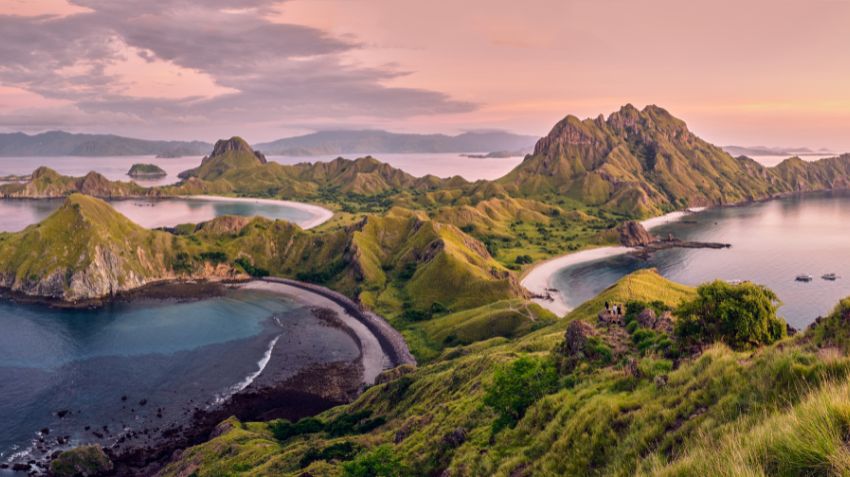
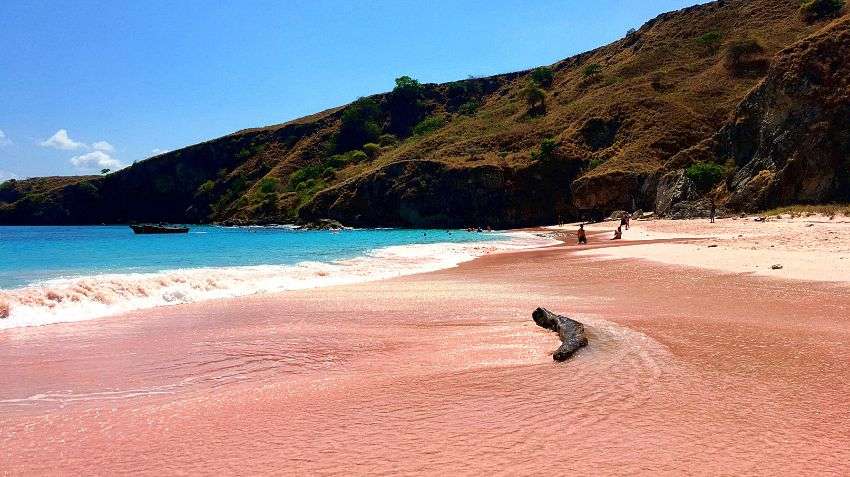
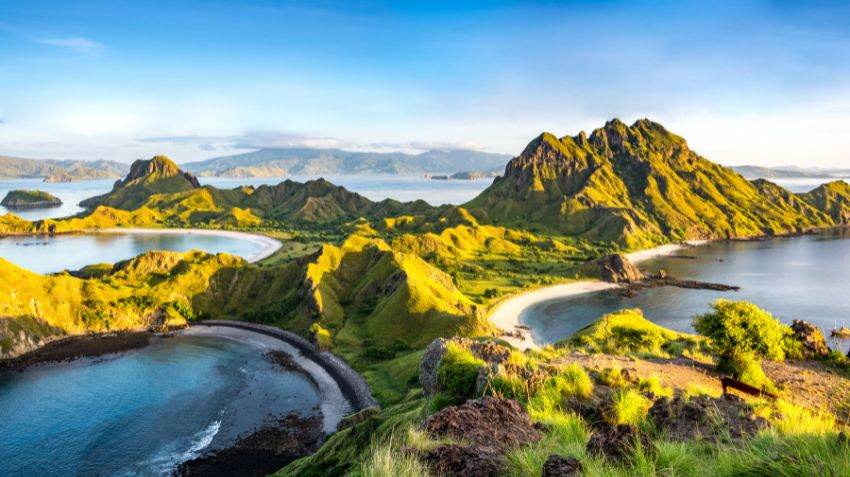
Pink Beach catches the light around 07:00 before other boats arrive. Padar Island’s ridge hike takes about forty minutes and is better done before the heat settles in, which in peak summer means starting well before 09:00.
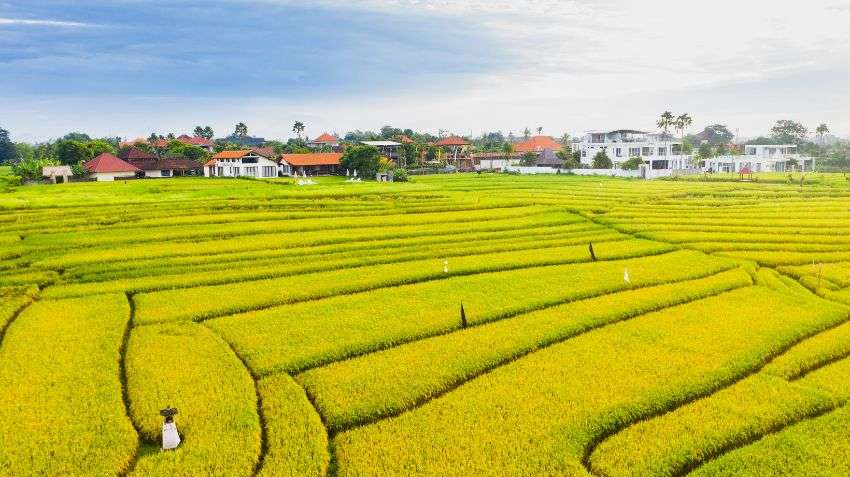
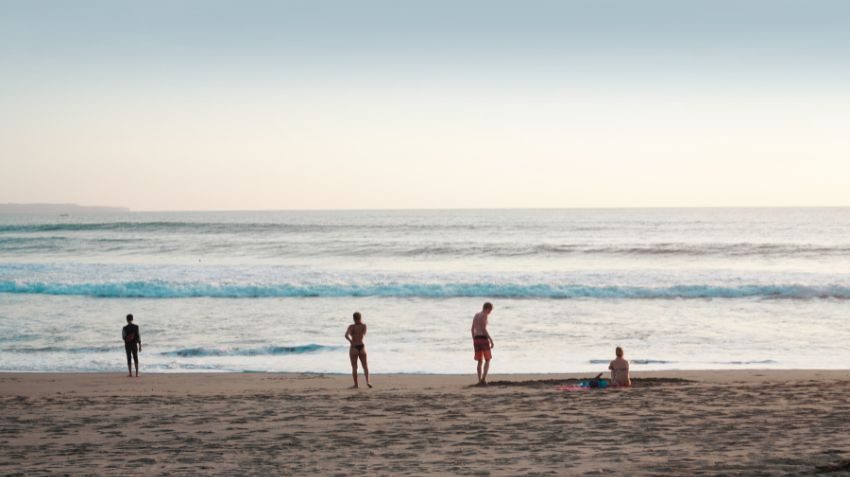
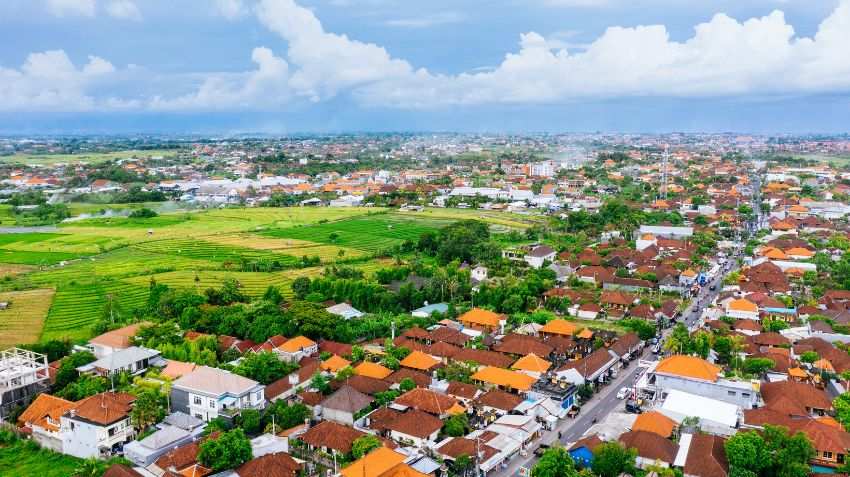
Canggu operates on a completely different logic. It is technically a neighborhood on Bali’s southwest coast, but it functions more like a village that grew into itself – surf access from Batu Bolong Beach, a grid of cafes and co-working spaces between rice fields and villas, and an evening scene that concentrates around Echo Beach and a handful of streets in between.
Mornings start slowly. Most people are on their first coffee by 09:00 and on a scooter by 10:00. The social tempo picks up in the late afternoon and holds through dinner without ever becoming aggressive.
The acoustic register is different too. Komodo is wind, water, and near-silence on the boat between sites. Canggu has the consistent low-level ambient sound of a well-occupied surf town – scooters, playlists from open-front cafes, the occasional rooster who has not calibrated to anyone’s schedule.
Komodo and Canguu in photos
Komodo or Canggu: which suits your travel style?
Komodo works best for travelers who genuinely want to be somewhere remote and who are comfortable with the structure that comes with it. Liveaboards run to a schedule. The national park entry system has gotten more organized in recent years, which means certain sites book out and spontaneous decisions have less room.
If the point of your trip is underwater life, the dragons, and the specific feeling of being an hour offshore with no signal, Komodo delivers that with very little competition from anything similar in the region.
It is a less comfortable fit for travelers who need to stay connected, who want flexibility to sleep in or change plans, or who find the logistics of remote marine travel more stressful than rewarding. The distance from Bali adds a flight, the accommodation range in Labuan Bajo is narrower than Canggu’s, and once you are on a liveaboard you are committed to that group and that schedule for the duration.
Canggu suits a different energy entirely. Remote workers who want a place that does not demand a plan each morning find it immediately comfortable. Solo travelers land in its social scene within a day or two without effort.
Couples who want to decompress rather than explore find the pace agreeable. It also works well as a re-entry point after something more intense – the Bali pacing guide covers how long most travelers need to actually settle into that rhythm before the island starts to feel like more than just a base.
The profile that does not fit Canggu well is someone expecting pristine nature, cultural depth, or anything resembling quiet. It is a town shaped significantly by international visitor culture – excellent coffee, fast internet, and plenty of people who are also figuring out where they are going next. That is an asset for some travelers and a character notes for others.
How to visit Komodo and Canggu on the same Indonesia trip
The most common sequence is Bali first, Komodo second. This works partly because flights from Ngurah Rai Airport to Labuan Bajo are frequent and take around an hour, but also because it gives you a few days to settle into Indonesia’s pace before committing to the tighter logistics of the national park. Arriving in Canggu after a long-haul flight and spending four or five days there before heading to Flores means you board your liveaboard already adjusted – to the heat, the food, the general rhythm of things.
The reverse order (Komodo first, Canggu after) also works well and has its own logic: you use the intensity of the liveaboard early when your energy is highest, then decompress in Canggu for the final stretch. Some travelers find Canggu feels more rewarding when they arrive needing to slow down rather than when they arrive having just flown in from Europe or North America.
Budget-wise, Komodo adds cost. A reputable liveaboard in the national park runs significantly higher than even a comfortable stay in Canggu, and peak-season boats (particularly in July and August) book weeks or months in advance.
Day trips from Labuan Bajo are cheaper but give you less time at the best sites and almost no flexibility with tides and lighting conditions. If the Komodo experience matters to you, a liveaboard is worth the planning rather than the improvisation.
For travelers who are also thinking about how Jakarta fits into an Indonesia itinerary, the Bali vs Jakarta first-timer fit covers the decision logic for that additional leg, including how each compares as an arrival city.
What sits near Komodo and Canggu worth adding to the trip
From Labuan Bajo, Flores itself is underused by most visitors who fly in and out purely for the national park. The road east toward Bajawa and Kelimutu crater lakes is one of the more quietly rewarding overland routes in eastern Indonesia – not fast, not easy in the conventional sense, but for travelers with time and a reasonable tolerance for long bus or car journeys, it adds a layer of volcanic highland culture that contrasts sharply with the coastal park experience. Most people do not do this, which is partly what makes it worth considering.
From Canggu, Ubud is the most natural continuation – about ninety minutes by car, a completely different register (quieter, cooler, more interior-focused), and easy to layer in either before or after the coast.
For travelers who find Canggu’s pace right but want to understand more of what Bali holds, the Bali area guide breaks down how the different zones on the island feel against each other, which is useful if you are deciding whether to move base mid-trip or stay put.
Nusa Penida sits thirty minutes by fast boat from Sanur and pulls a high-tempo day-trip crowd in peak season – dramatic cliffs, Manta Point, Kelingking Beach. Worth it as a day trip if you have not dived Komodo, less essential if you have.
If you are weighing how much time to give the whole Bali leg before or after Komodo, the Bali days pacing read works through the different trip lengths honestly, including where the stay starts to feel too short and where it naturally extends.
Travelers building a longer Indonesia circuit often find that anchoring in Canggu, looping to Komodo, and then returning to a quieter Bali area gives the trip a natural arc – intensity in the middle, decompression on either end.
Should you choose Komodo or Canggu for your Indonesia trip?
If you are only going to Indonesia once and want the experience that is hardest to replicate anywhere else, Komodo is the answer. The dragons are genuinely singular. The dive sites around Banta Island and Crystal Rock produce a specific kind of underwater memory that Bali’s waters do not match. The effort required to get there – the planning, the flight to Flores, the boat – is proportional to what you find on the other side of it.
If you are building a trip around daily comfort, creative work, social ease, and the particular pleasure of a surf town that has figured out how to feed and caffeinate people well, Canggu is an easier and more consistently satisfying base.
It is the kind of place where the Komodo vs Canggu question eventually resolves itself: you spend a few days there, understand the rhythm, and either feel ready to go somewhere more demanding or realize you have found exactly what you needed.
For most travelers, the best answer is both – sequenced thoughtfully, with enough time in each to actually arrive rather than just pass through.
Travelers building a wider Indonesia itinerary who want to understand how Jakarta fits alongside Bali and Flores will find the Jakarta days and pacing guide useful for that additional decision layer.
Komodo vs Canggu FAQ: traveler fit, timing, remote work, pacing and first Indonesia trip
1. What is the main difference between Komodo and Canggu?
Komodo is a remote marine destination built around boat travel, dragon sightings and diving; Canggu is a low-key surf and remote-work town on Bali’s southwest coast. The experiences overlap very little – one is offshore immersion, the other is slow daily rhythm on land.
2. Can you visit both Komodo and Canggu on the same trip?
Yes, and the combination works well. Most travelers spend a week or so in Canggu at the start or end, using it as a base before or after a liveaboard or Labuan Bajo trip. The flight from Bali to Labuan Bajo takes roughly an hour.
3. Is Komodo or Canggu better for remote workers?
Canggu is the clearer fit for remote work, with a well-established co-working scene, reliable fast internet in most cafes, and a rhythm that bends easily around a flexible workday. Komodo is mostly offline by design – connectivity on the water is limited and that tends to be part of the appeal.
4. When is the best time to visit Komodo and Canggu?
The dry season between April and October is the most reliable window for both. Komodo’s sea conditions are calmer, visibility for diving is clearer, and the Canggu surf has more consistent swell. August is peak season and brings the fullest atmosphere to both, especially Canggu’s beach and food scene.
5. Which is better for a first trip to Indonesia, Komodo or Canggu?
Canggu tends to work better as a first entry point – it is easier to settle into, has strong food and accommodation options at every price point, and gives you room to understand the pace of Indonesia before committing to a logistically denser trip like Komodo. That said, if diving or wildlife is the reason you are going, Komodo is worth planning first.