
The best areas to stay in Bali are less about finding the right beach and more about finding the right daily rhythm. The island is large enough that each zone operates almost independently – different social energy, different pace, different version of what an ordinary afternoon looks like.
July is peak season along the coast. The beach corridors in Seminyak and Canggu are at their most active, which for some travelers is exactly the point. For others, it pushes the decision toward Ubud, Uluwatu, or the quieter pockets of the Bukit Peninsula, where the same month feels noticeably different. The choice of base shapes almost everything: how the mornings feel, how far you walk before needing a scooter, how much of the day you spend in transit versus simply being somewhere.
What follows is not a ranked list. It is a map of the different rhythms on offer, with enough detail to tell which one matches where you actually are in your trip right now.
What each Bali area actually feels like on the ground
Seminyak is the most structured of the southern areas. The beach road has a clear corridor feel – restaurants, boutiques, and beach clubs arranged along a recognisable strip, with the beach itself running wide and west-facing, so late afternoon light lands well on it.
By July the beach club stretch near Potato Head and Ku De Ta is operating at full seasonal rhythm, which means arrival at a sun lounger before 11:00 matters if you want choice. Two streets inland the tempo drops; the side streets are quieter and shadier, which is where most of the better smaller restaurants are anyway.
Canggu sits about 20 minutes north of Seminyak by scooter and runs on a different social logic. It is the more café-and-co-working end of the island, with a younger, longer-stay demographic and a day-to-day rhythm organised around morning coffee, beach at Batu Bolong, and late-evening activity near Berawa. The beach itself is darker sand than Seminyak and faces into stronger surf – better for watching than swimming for most visitors. The main road (Jl. Raya Canggu) is narrow and gets congested mid-afternoon; walking it is fine for 10 minutes, but most movement between areas requires a Grab ride or a scooter.
Ubud operates on an almost entirely different register. The air is cooler – sitting at around 25 km inland and 300 metres above sea level, evenings there feel noticeably different from coastal Seminyak. Mornings start early, with the market on Jl.
Raya Ubud active before 08:00 and the rice terrace walks around Tegalalang passable before the tour groups arrive around 09:30. By 10:30 the main street is busier. The town rewards slow days, early starts, and afternoon pauses – restaurants here tend to close kitchens earlier than coastal areas, with many finishing service around 21:30.
Is a Bali coastal base right for your travel style?
The southern beach corridor suits travelers who want immediate access to water, social energy in the evening, and easy lateral movement between Seminyak, Canggu, and Uluwatu without long drives. It also suits people who are making short trips – five to seven days – and want to stay mobile without anchoring in one atmosphere for too long.
Seminyak works best as a first base for most first-time visitors. It is the most straightforward entry point: accommodation range is wide, Grab connections are reliable, and the beach is one of the more naturally beautiful stretches in the south. The trade-off is that it is also the most expensive zone per night, and in July the peak-hour beach walk near Double Six has a noticeably high visitor presence.
Uluwatu and the Bukit Peninsula cliffs offer a quieter southern option that some travelers find works better for a second stay, after they have already seen the main Seminyak circuit. The clifftop warung spots around Bingin and Padang Padang have a removed, almost village-level calm, and the sunset ritual at Uluwatu temple – arriving around 17:30 for the kecak performance as the light changes over the Indian Ocean – is a specific kind of evening that doesn’t feel replicated elsewhere in Bali. The access roads are steep and the walking radius is small, so a scooter or reliable Grab schedule matters more here than in other zones.
How to use Bali’s different areas across a longer stay
Most travelers staying longer than a week end up moving at least once, and the natural split is between two or three days at the coast and a stretch inland. Ubud makes more sense as a second stop than a first – arriving there after a few days of beach rhythm makes the quieter pace feel like a choice rather than a limitation.
The drive from Seminyak to Ubud takes roughly 90 minutes by Grab or private driver, more in afternoon traffic. The route itself passes through Batubulan and Mas, where the road runs alongside craft workshops and temple walls for most of the approach – the last 20 minutes feel distinctly different from the coastal south. Once in Ubud, most guesthouses are within walking distance of the central market and the main temple, but the rice terrace guesthouses along Jl. Bisma and Jl. Penestanan are a 15-minute walk uphill, and the last stretch is steep with an uneven surface under foot.
Nusa Dua sits in a different category from both Seminyak and Ubud. It is Bali’s contained resort zone: wide access roads, flat walking, calm beach conditions, and a self-enclosed feel that limits independent cafe and restaurant culture. It suits families, couples looking for very calm swimming water, and travelers who actively prefer not managing scooter logistics. The beach along the Nusa Dua strip is clean and relatively uncrowded compared to Kuta because access requires going through the resort complex. It is less connected to the rest of Bali’s activity rhythm, which is either the point or the limitation depending on what you came for.
Travelers considering a longer stay in Bali – three weeks or more – often find Canggu works as a functional home base in a way that Seminyak and Ubud do not. The co-working infrastructure is denser there, the café culture genuinely supports working mornings, and the neighborhood has enough independent restaurant variety to avoid repetition across a month.
If the Canggu energy starts running at a higher tempo than you want, the first-time Bali guide covers the broader island orientation, including how the different zones connect across a full itinerary.
Best Bali neighborhoods by traveler type and trip shape
For first-time visitors
Seminyak as a primary base, with one or two nights in Ubud. The beach quality, restaurant density, and Grab accessibility make it the lowest-effort entry point for orienting to the island before making more specific choices.
For remote workers and longer stays
Canggu suits people who want the café and co-working infrastructure to actually support a working week. The mornings there – before the beach crowd arrives around 11:00 – are calm enough to work from almost any of the main cafés on Jl. Batu Bolong without much ambient noise. Ubud works for people who prefer a quieter weekday rhythm and don’t need beach access as part of their daily pattern.
For couples and slower-tempo trips
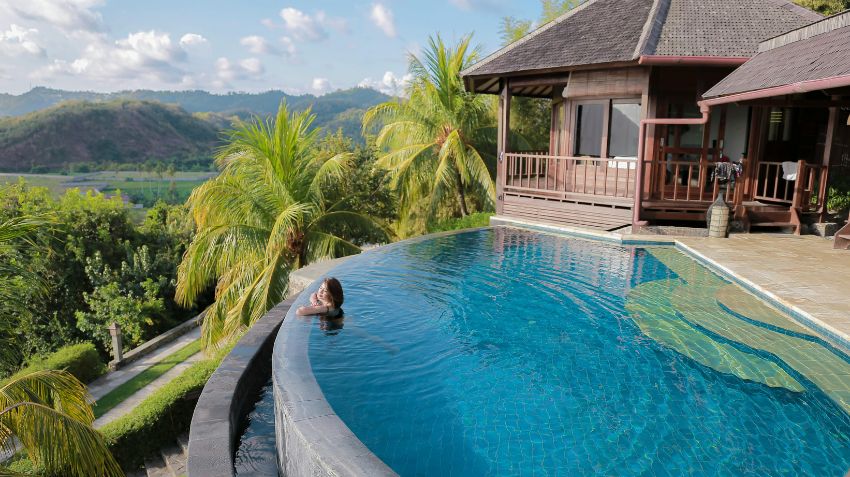
Ubud suits couples who want to spend more of the day in a specific place rather than moving between zones. The mid-range and boutique accommodation there tends to have more spatial character per dollar than coastal Seminyak – pool villas overlooking rice terraces are common at a price point that would buy a standard room near the beach.
For families
Nusa Dua offers the most contained and lower-traffic environment. The beaches are sheltered, the walking between resort areas is flat, and the absence of dense scooter traffic along the main beach road removes the main logistical consideration families typically encounter in Seminyak and Canggu.
How to move between Bali’s areas and plan around July crowds
July crowds concentrate along the coastal corridor between Kuta and Seminyak, and along the main Ubud tourist axis around the monkey forest and central market. The beach clubs in Seminyak reach peak capacity by early afternoon on weekends; arriving before 11:00 or after 17:00 changes the experience substantially.
Grab is reliable throughout the southern corridor and covers the Ubud route without difficulty. The app works consistently, prices are fixed before you accept the ride, and availability is generally good except during late-evening airport hours when demand spikes.
Renting a scooter makes the most sense for people staying in Canggu, where the roads north toward Echo Beach and the quieter back-road routes toward Pererenan are best explored at your own pace. The road surface in most of these areas is reasonable but narrow – a 125cc automatic is easier to manage than a larger bike on the smaller lanes.
Private drivers become worthwhile for the Ubud trip if you are traveling with luggage or want flexibility on stop timing. The cost is higher than Grab but not dramatically so for longer routes; many guesthouses can arrange a reliable driver for the 90-minute transfer.
For travelers weighing Bali against another Indonesian destination, the Jakarta neighborhood guide covers how a city-first Indonesia itinerary tends to sequence differently from a Bali-first approach – useful context if you are still deciding how much of the archipelago to take in during the same trip.
Is Bali worth staying in multiple areas or is one base enough?
One base works well for stays under six nights, as long as you choose it deliberately. For most first-time visitors of that length, Seminyak in the south or Ubud in the interior both function as self-contained experiences without requiring lateral movement. The trap is picking a base for reasons of price or convenience without accounting for daily rhythm – Kuta, for example, sits between Seminyak and the airport, which is geographically convenient, but its beach strip and night market run at a higher tempo than most non-party travelers actually want.
The Jakarta first-time guide covers what an Indonesian trip looks like when it opens with a capital city before moving to Bali – a sequence that changes the pacing logic and the way both destinations sit in relation to each other.
For stays of eight nights or more, two bases almost always produce a more satisfying trip than one. The contrast between Seminyak’s evening-coastal energy and Ubud’s cool morning pace is part of what makes Bali feel larger than it actually is.
Each place genuinely teaches you something different about how the island organizes itself, and the 90-minute transfer between them is easy enough that changing bases doesn’t eat the trip. The best areas to stay in Bali are not universally ranked – they depend on which version of the island you came to find, and how many days you have to find it.
Bali areas to stay FAQ: best neighborhoods, July crowds, remote work, Ubud vs coast and transport
1. What is the best area to stay in Bali for first-time visitors?
Seminyak works well for most first-time visitors: it has a wide range of accommodation, good restaurant access, and easy Grab connections to Uluwatu and Canggu. The beach stretch here is long and faces west, so the late afternoon light over the water is one of the more memorable parts of a first stay.
2. Is Ubud or Seminyak better for a Bali trip?
It depends on whether you want coast or interior. Seminyak suits people who want beach rhythm, evening activity, and easy movement between southern Bali spots. Ubud suits those who want cooler air, rice terrace walks, and a slower daily pace. Many travelers split their stay between both, spending the first half in the south and finishing in Ubud.
3. Where should digital nomads and remote workers stay in Bali?
Canggu is the most established base for remote workers, with strong café wifi culture, co-working spaces, and a longer-stay community feel. Ubud works well for those who prefer quieter mornings and fewer social distractions. Both areas have enough infrastructure for a month-long stay without feeling like a transit zone.
4. Is July a good time to visit Bali?
July is one of Bali’s driest months, which makes it genuinely good for outdoor activity. The trade-off is that it falls inside peak school-holiday season, so beach corridors in Seminyak and Canggu are at their most active. Uluwatu and the Bukit Peninsula stay comparatively calmer, and Ubud’s mornings remain quiet before the day tours arrive around 09:30.
5. How far apart are Bali’s main areas and how do you get between them?
The main southern areas – Seminyak, Canggu, Kuta, and Uluwatu – are all within roughly 30 to 60 minutes by Grab, though afternoon traffic near Kuta can extend that. Ubud sits about 90 minutes from the coast depending on the route and time of day. A scooter rental opens up more flexibility, particularly for reaching quieter roads around Canggu and the Bukit Peninsula cliffs.
6. Where is the quietest place to stay in Bali?
The Bukit Peninsula cliffs around Uluwatu and Bingin offer the most removed atmosphere in southern Bali: clifftop access, small warung restaurants, and an evening sunset ritual at Uluwatu temple that still feels distinct from the main tourist circuit. Ubud’s smaller guesthouses along the rice terrace paths are another quieter option, particularly in the mornings before the day-trip traffic arrives.