
Jakarta takes a day or two to read correctly. The city doesn’t reveal itself in a single walk, a taxi window, or a first evening out. It reveals itself in layers, one neighbourhood at a time, and the question of how many days in Jakarta is really a question of how many layers you want to reach.
Three days and you will understand the city’s shape and rhythm. Five days and you start to feel at home in it. Less than two and you leave with impressions rather than understanding. The city rewards patience, and it punishes the itinerary that tries to see everything by Thursday morning.
What Jakarta feels like during the first few days
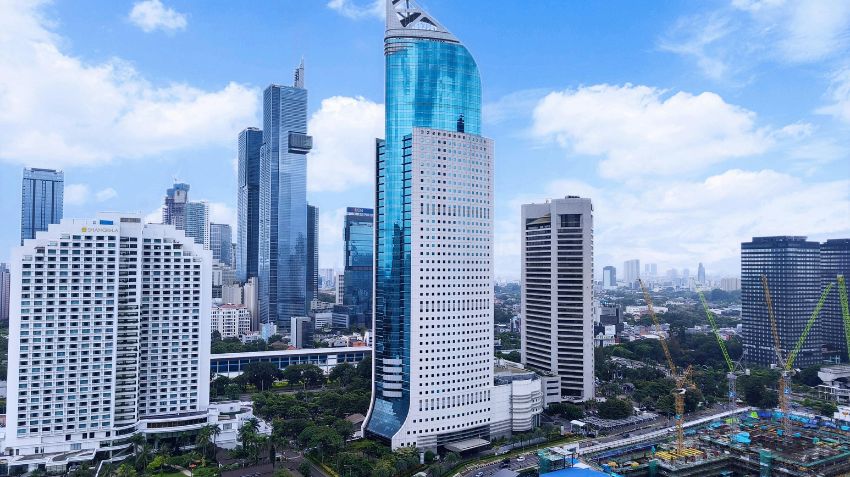
The city is large in a way that most European cities are not, and the scale takes a morning to absorb. Jakarta is not one walkable core with surrounding neighbourhoods. It is a collection of distinct zones, each with its own atmosphere, separated by road distances that are short on a map and longer in traffic. Kota Tua, the old colonial quarter near the northern harbour, feels completely different from the glass towers of Sudirman and SCBD, which in turn feels different from Kemang’s tree-lined streets and restaurant terraces further south.
By day two, most travelers stop treating Jakarta as a single place and start treating it as several cities with shared infrastructure. That shift is the point where the trip starts working properly.
Mornings in Kota Tua are quiet enough to hear pigeons on the cobblestones of Fatahillah Square. By 10:30 the square fills with visitors and the coffee warungs along the periphery get busy. The afternoon light across the Dutch-era facades turns deep orange around 17:30, and the neighbourhood empties quickly after that, shifting its social energy toward the food lanes east of the square.
Travelers deciding where to stay before planning their itinerary can also explore the Jakarta neighborhood guide, which compares the city’s main districts by atmosphere, movement, and traveler fit.
How to pace Jakarta across three, four or five days
A three-day structure gives you the core. One full day in Kota Tua and the northern harbour area, one day around the museum belt and the calmer residential streets of Menteng, and one day with no fixed plan – which in Jakarta usually means following a food recommendation deeper into a neighbourhood than you intended.
Four days adds the breathing room to do Kemang properly in the evening, to take the Transjakarta down to Blok M and understand a different social register entirely, and to see how the city changes character after 21:00 when the warung strips on side streets come fully alive.
Five days starts to feel like genuine familiarity. You know which ride-hail pickup point outside your hotel avoids the midday bottleneck. You’ve developed a preference between two coffee spots in the same neighbourhood. The city has started to have texture that belongs to you rather than to the guidebook.
Anything beyond five days works best with a specific anchor: a long food itinerary, a particular stretch of the arts scene around Tebet, or using Jakarta as a base for a day trip to Bogor or the Thousand Islands. Without that anchor, the sixth and seventh day can feel like repetition rather than depth.
If you’re still deciding whether Jakarta is the right starting point for Indonesia, the Jakarta travel guide explains what the city feels like before you build the rest of the itinerary.
How to get around Jakarta during your trip
Cross-city movement runs on Grab and Gojek, and both work reliably throughout the day. The Transjakarta BRT runs its own dedicated corridor through the commercial spine – Sudirman, Thamrin, and onward – and it bypasses the general traffic rhythm that shapes every car journey between 08:00 and 10:00 and again from 17:00 to 19:30.
Within Kota Tua or Menteng, walking is the right mode once you are already there. Getting there from a hotel in SCBD is a ride-hail trip, not a walk. The city’s distances are real and the heat through midday makes spontaneous long walks less comfortable than the map distance would suggest. Most travelers find that structuring each day around one or two neighbourhoods, rather than trying to cross the city multiple times, keeps the energy right across the full visit.
The Airport Railink connects Soekarno-Hatta to Sudirman and Manggarai in around 40 minutes and is the cleanest arrival path for travelers heading to the commercial centre. Damri buses are slower but cover more hotel zones directly, making them useful for stays in areas the rail doesn’t reach. The choice is mostly geographic rather than qualitative – both work.
Jakarta in photos
How Jakarta’s pacing shifts with the season
July and August sit in the dry window, and the city feels its most open during this period. Outdoor dining, the evening food culture, and the night market energy around Glodok and the harbour district are all at their most consistent. The air in the mornings before 10:00 is as close to comfortable as Jakarta gets, and the late afternoon light across the canal areas in Kota Tua has a quality that travelers who arrive in the wet season never quite see.
The wet season from November through March doesn’t close the city. Jakarta’s covered malls, museum spaces, and indoor food halls run at full tempo regardless of what the sky is doing. What changes is the texture of outdoor movement. Heavy rain arrives quickly in the afternoon, usually for 30 to 90 minutes, then passes.
Travelers who build their plans around morning outdoor movement and indoor afternoon activities find the wet season surprisingly workable. Those who try to replicate a dry-season walking schedule into February find themselves standing under awnings more than intended.
Long national weekends see a noticeable rise in domestic travel through Jakarta’s transit hubs and into the leisure zones around the city. If the Jakarta leg of a trip happens to overlap with Idul Fitri or another major national holiday, the city’s rhythm changes substantially – some areas quiet down as residents leave the city, while certain districts run at an entirely different energy. It’s worth knowing the Indonesian holiday calendar before fixing dates.
Travelers continuing to Bali after Jakarta may also find the Bali travel guide useful for understanding how the island’s daily rhythm differs from Indonesia’s capital.
Is Jakarta the right stop, or should you add more time elsewhere in Indonesia?
Jakarta makes most sense as part of a wider Indonesia itinerary rather than the sole destination. Three to four days here alongside a week in Bali, or a loop that includes Yogyakarta, gives Jakarta the right weight in the overall trip. Used as an entry or exit point with two or three deliberately slow days, it leaves a clear impression without overstaying its role.
Travelers who arrive in Jakarta hoping for Bali’s coastal rhythm will find themselves adjusting faster than expected. The two places operate at entirely different registers. If that comparison is already forming in your thinking before you arrive, the Bali vs Jakarta first-timer comparison works through the trade-offs between the two in more detail, which often helps in sequencing the trip correctly.
Bogor is worth a day trip if the itinerary has room. The commuter rail runs there from Kota station in about an hour and the temperature drop is noticeable within twenty minutes of leaving the city. The Botanical Gardens are large enough to spend a full morning in without rushing and the town itself has a slower cadence that contrasts well with Jakarta’s scale.
The Thousand Islands, reachable by fast boat from the northern harbour in 45 to 75 minutes depending on the island, offer something else entirely – open water, quieter beaches, and almost no urban noise.
For travelers still deciding how to structure the Indonesian leg of a broader Southeast Asia trip, the Bali pacing guide covers how long Bali actually needs across different trip styles, which tends to be the decision that shapes how many days Jakarta gets by default.
If accommodation is the main decision after choosing Bali, the Bali neighborhood guide compares the island’s main areas by travel style and trip length.
Is Jakarta worth visiting for first-time travelers to Indonesia?
For first-time visitors specifically, Jakarta earns its place in the itinerary not because it competes with Bali or Yogyakarta on atmosphere, but because it gives Indonesia a context that smaller destinations don’t. The scale of the city, the food culture, the colonial-era architecture in Kota Tua, and the way the social life of 30 million people organises itself across a hundred distinct neighbourhoods – that is a version of Indonesia that is real and worth understanding.
The question of how many days in Jakarta usually resolves itself once the traveler is honest about what they want from the city. Two days for orientation and a sense of scale. Three for the core experience. Four or five for genuine familiarity and the kind of food and neighbourhood depth the city quietly rewards. Beyond that, a specific interest carries it forward. Jakarta doesn’t need to be the longest stop on a trip to Indonesia, but two rushed days treated as a transit layover will leave most travelers with the feeling that they missed something – because they probably did.
The Jakarta first-time visitor guide covers what to know before you arrive – arrival logistics, neighbourhood orientation, and the small practical things that make the first day run more smoothly.
If the neighbourhood question is what’s shaping the decision on where to base yourself, the Jakarta areas guide maps out which parts of the city suit different rhythms and trip lengths.
Jakarta visit FAQ: days needed, best time, transport, day trips and Bali comparison
1. How many days in Jakarta is enough for a first visit?
Three days covers the essential rhythm well. One day in Kota Tua and the old harbour area, one day across the museum belt and Menteng’s quieter streets, and a third day to settle into whichever neighbourhood felt most alive. Travelers with more time find Jakarta rewards a fourth or fifth day for the food scene alone.
2. Is Jakarta worth visiting before or after Bali?
Jakarta works well as a bookend rather than a centrepiece. Arriving into Jakarta first gives a useful sense of Indonesia’s urban scale before Bali’s entirely different rhythm takes over. Some travelers reverse the order and use two or three days in Jakarta as a reorientation after the coastal slow pace of the south.
3. What is the best time of year to visit Jakarta?
June through September is the driest window, with lower humidity and more consistent outdoor conditions. The wet season from November through March brings daily afternoon rain that tends to be heavy and brief rather than all-day, but it does reshape the timing of outdoor plans noticeably.
4. How do you get around Jakarta without a car?
Grab and Gojek handle most cross-city movement reliably and cheaply. The Transjakarta BRT runs a dedicated corridor through the commercial spine and connects several major areas without the stop-start rhythm of general traffic. Within compact districts like Kota Tua or Kemang, walking is genuinely pleasant once you are already there.
5. Can you do a day trip from Jakarta?
Bogor is the most natural one, about an hour south by commuter rail, with the Botanical Gardens and a cooler temperature that contrasts noticeably with the city. The Thousand Islands are accessible by fast boat from the northern harbour and offer a complete change of atmosphere for a day or an overnight – open water, quieter pace, and the feeling of arriving somewhere else entirely.