
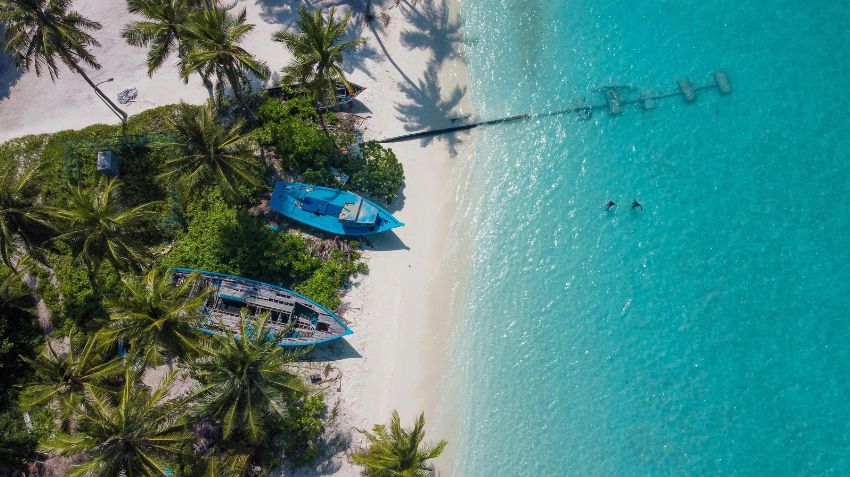
Both islands arrive on the shortlist for the same reason: a house reef you can enter from the beach, an atmosphere that asks very little of you, and the kind of quiet that starts working on the second day. The question of Kuramathi vs Meeru is less about which is better and more about which version of that quietness fits your particular trip.
Kuramathi is the larger island, with more terrain to cover and more decisions built into each day. Meeru is smaller, more contained, and organises itself around a slower, more uniform rhythm. Both can deliver an excellent Maldives stay; the one that delivers yours depends on what you’re actually looking for in July.
What Kuramathi and Meeru feel like for visitors
Kuramathi sits in the North Ari Atoll, about an hour and a half from Malé by speedboat. The island is one of the longer inhabited resort islands in the Maldives, which means walking from your villa to the main restaurant area can take fifteen minutes if you’re at the far end. That size creates something unusual for a Maldives resort: a sense of actual landscape.
The vegetation is dense enough that you lose sight of other guests, the beach shifts character from one end to the other, and there’s a stretch on the western edge where the sand goes quiet well before the day does.
The reef here is a genuine asset. Nurse sharks pass through regularly in the shallower sections of the lagoon, and rays appear close enough to the beach entry that you don’t need to swim far to find them. Morning light on the reef before 09:00 is a different experience entirely from midday – cooler water, better visibility, and the fish at a different level of activity.
Meeru occupies a smaller footprint in North Malé Atoll, closer to the airport. The crossing is shorter, which some arrivals find worth the trade-off on its own. The island has a more enclosed feel – easier to know the whole place within the first afternoon, easier to find your way around without much orientation. The reef is calmer in terms of entry conditions, well-suited to independent snorkelling for guests who aren’t confident divers.
The social tempo is noticeably lower than Kuramathi; fewer guests visible at any given time, quieter public areas, a daily rhythm that tends toward long breakfasts and unhurried afternoons.
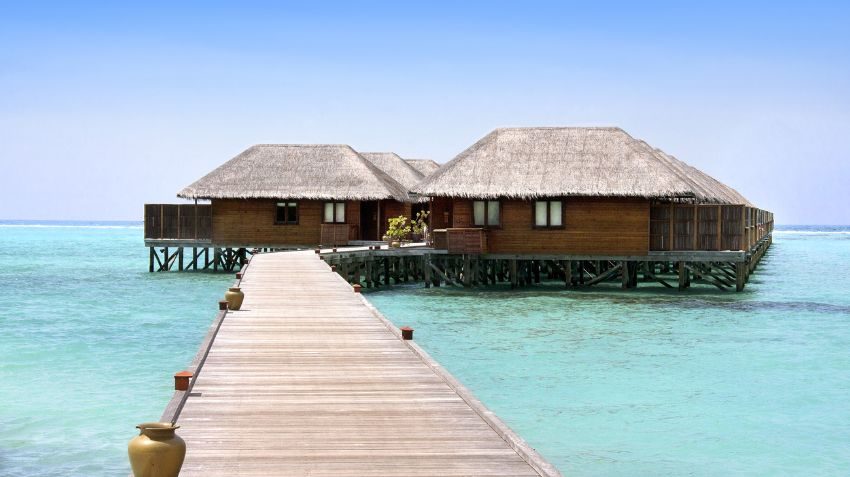
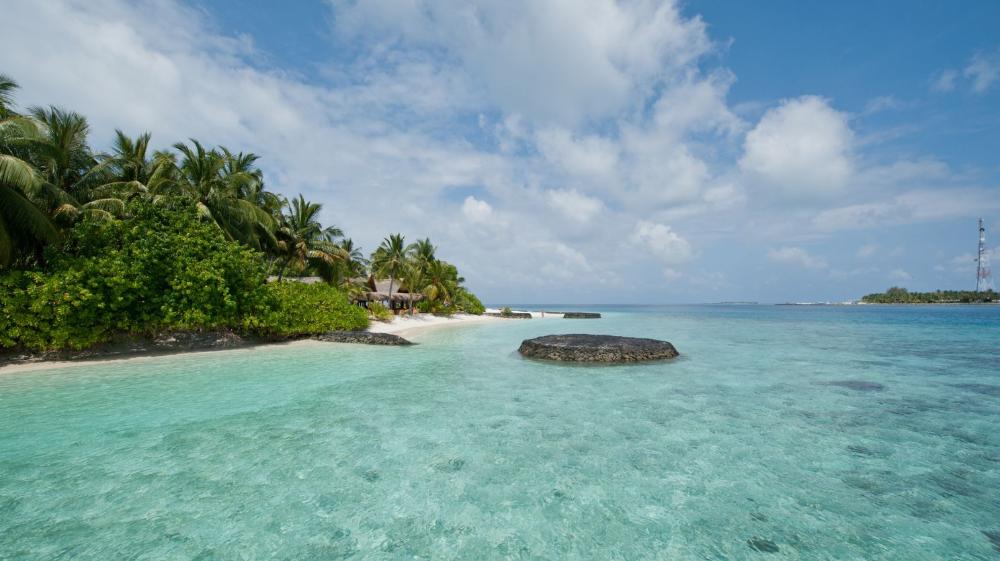
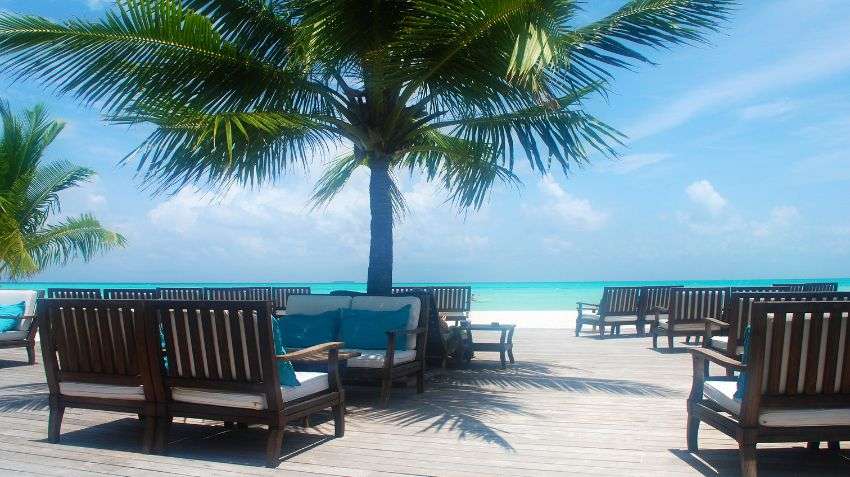
Kuramathi and Meruu in photos
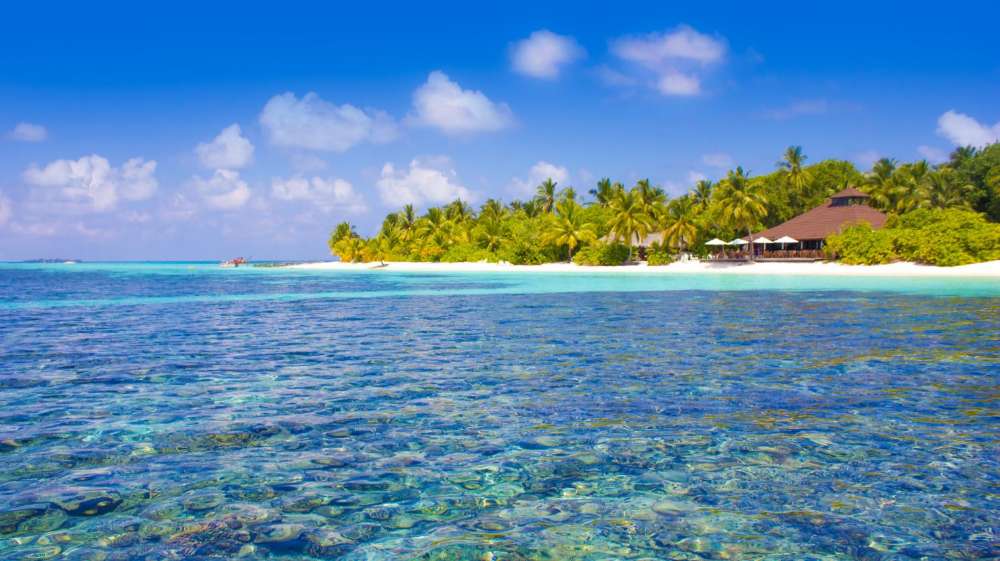
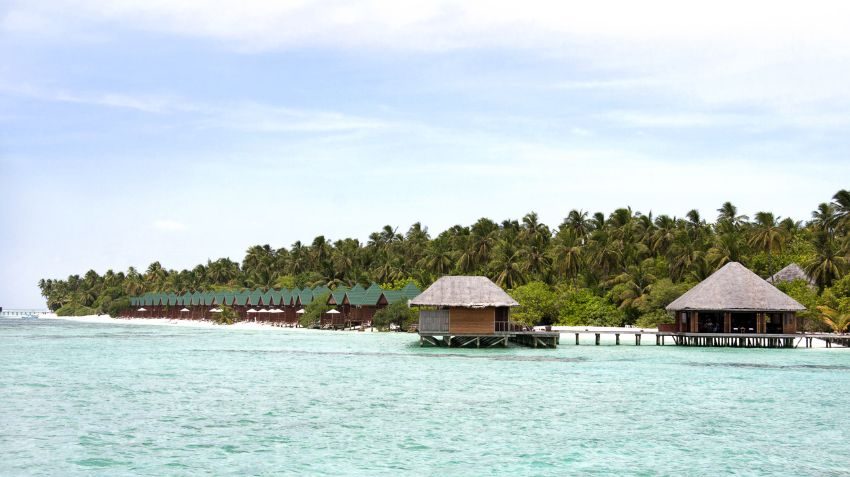
Kuramathi or Meeru: which resort suits your travel style?
Kuramathi fits travellers who want reef variety alongside the stillness. Divers will find the proximity to multiple dive sites a practical advantage, and guests who want a day organised around water sports, a sunset bar, and different dining options across the island will find the layout works for them. The size also means a longer stay doesn’t feel repetitive – there’s enough variation in the beach, the reef access points, and the general atmosphere to sustain five or six nights without the island feeling small by day three.
Meeru fits travellers who want simplicity above all. Couples looking for uncomplicated days, families with young children who benefit from a compact layout, or anyone coming off a demanding stretch of work who wants the minimum number of decisions between arriving and settling – Meeru’s contained scale is a feature rather than a limitation for all of those.
The reef is a little less varied than Kuramathi’s, but for a guest whose main interest is floating above coral in clear water every morning, that distinction rarely matters in practice. Travellers who want a resort with a lot of internal activity, evening entertainment, or a wide spread of facilities will likely find Meeru quieter than expected.
How to visit Kuramathi and Meeru on the same trip
Island-hopping between two resorts in the Maldives is logistically possible but uncommon. Most visitors choose one and stay for the duration – typically five to seven nights – because the transfer system is built around single arrivals and the rhythm of both islands rewards settling rather than moving. If you’re splitting a longer trip between two islands, the more practical pairing is usually Meeru first (shorter transfer from Malé, easier first-day arrival) and then a separate trip for Kuramathi rather than back-to-back in the same holiday.
July’s lower occupancy actually makes both islands easier to arrive into than peak season. Speedboat transfers from Malé run on resort schedules, so the timing of your Malé connection matters more than the season itself. Kuramathi’s transfer takes roughly ninety minutes; Meeru’s is noticeably shorter, which makes it more forgiving if you’re arriving on a tight connection. Both transfers are on the open water, so conditions vary – morning crossings are generally smoother than late afternoon ones.
If you’re considering adding a day in Malé before or after either resort, the contrast between the city’s compact density and the island’s open water horizon is worth the logistics. The Malé vs Meeru city-resort contrast covers that transition in more detail, including how to pace the arrival day without losing half of it to the transfer.
What sits near Kuramathi and Meeru worth adding to the trip
Neither island is designed around day trips – the resort model in the Maldives keeps most guests on the island for the duration. But the Maldives as a broader decision has natural continuation points depending on what draws you. North Ari Atoll, where Kuramathi sits, is one of the better-known dive and snorkelling zones in the country, and guests who want to explore beyond a single house reef often combine a liveaboard segment with a resort stay rather than island-hopping between properties.
For travellers still weighing the broader comparison across Maldives islands in this size and price range, the Kuramathi vs Kuredu comparison maps a closely related decision – useful if Kuramathi is already on your shortlist but you want to see how it sits against another island with a different ownership model and reef profile.
Is Kuramathi or Meeru the right choice for your Maldives trip?
The clearest way to settle the Kuramathi vs Meeru decision is to think honestly about what you want a Maldives day to actually contain. If the answer is reef variety, dive access, spatial variety across the island, and enough internal activity to structure a week without repetition, Kuramathi is the stronger fit. If the answer is simplicity, a compact and easy-to-read environment, and a pace that removes decisions rather than adding them, Meeru delivers that more reliably.
July makes both accessible – lower occupancy, softer rates, mornings that are generally clear enough for reef time before the afternoon settles into its own particular quiet. The reef will be there either way; the question is which island you want to come back to after it.
Kuramathi vs Meeru FAQ: reef access, transfer, conditions, traveler fit and snorkelling
1. What is the main difference between Kuramathi and Meeru?
Kuramathi is the larger island with more varied terrain, longer walking distances between facilities, and a wider range of water sports and dive sites close to the house reef. Meeru is smaller and more intimate in layout, with a calmer social tempo and a reef that rewards snorkellers who prefer proximity over variety. The practical difference shows up in how days feel: Kuramathi has more decisions built into it; Meeru tends to organise itself around fewer choices and slower mornings.
2. Which is better for snorkelling, Kuramathi or Meeru?
Both islands have accessible house reefs, but Kuramathi’s reef is generally considered one of the richer in the North Ari Atoll, with nurse sharks and rays a regular presence in the shallower sections. Meeru’s reef is calmer and more enclosed, which makes it easier for first-time or less confident snorkellers to enter the water independently. Serious divers tend to favour Kuramathi’s proximity to multiple dive sites; casual snorkellers often find Meeru’s reef less intimidating to navigate alone.
3. Is July a good time to visit Kuramathi or Meeru?
July falls in the Maldives green season, which means both islands run at quieter occupancy and rates are noticeably softer than in peak winter months. The trade-off is occasional afternoon cloud and light rain, though mornings are usually clear enough for reef time. For travellers who prefer calm over crowd, July on either island tends to feel unhurried and genuinely restful in a way that January rarely does.
4. Which island suits couples versus families?
Kuramathi’s size gives it a more varied atmosphere – quieter beach stretches at one end, livelier bars and water sports activity at the other – which tends to suit couples who want some spatial separation between relaxation and activity. Meeru has a more contained feel with a slower daily rhythm, which works well for families with younger children who benefit from a compact, easy-to-navigate environment. Neither island is exclusively one or the other; it’s more a question of how much structure you want built into the day.
5. How do you get to Kuramathi and Meeru from Malé?
Kuramathi is reached by speedboat from Malé, with the crossing taking roughly an hour and a half depending on sea conditions – it’s a straightforward transfer that arrives you in the North Ari Atoll with the water gradually turning lighter as you move away from the capital. Meeru, situated in North Malé Atoll, is also accessible by speedboat and sits closer to the airport, making the transfer noticeably shorter. For travellers connecting through Malé with limited layover flexibility, Meeru’s proximity is a practical advantage worth factoring into the decision.