
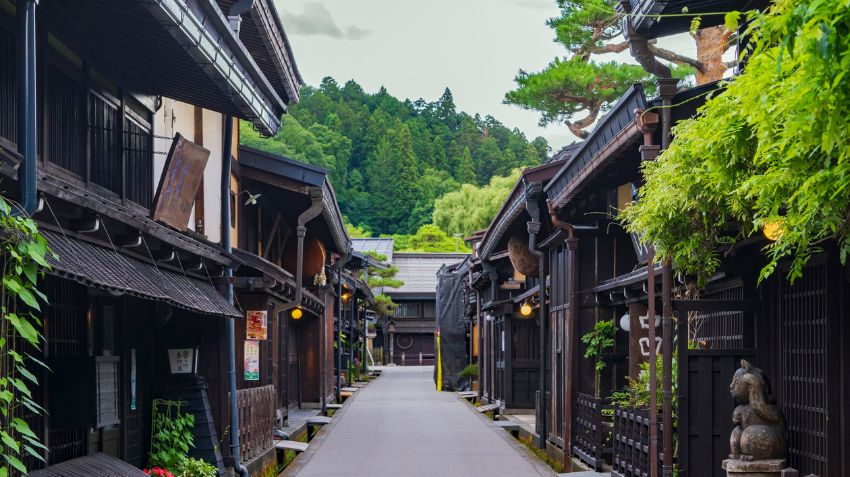
The choice between Kyoto and Osaka is not really about which city is better. It is about what kind of day you want to be living by the third morning. One city asks you to slow down; the other keeps moving whether you slow down or not.
Kyoto vs Osaka sits at the center of almost every Japan itinerary, and for good reason: the two cities are thirty minutes apart by train, genuinely different in rhythm and atmosphere, and each one pulls at a different kind of traveler. The distance makes it easy to see both. The difference in feel makes the choice matter more than people expect. In summer, both cities are running at high tempo. The question is what kind of tempo suits you.
What Kyoto, Japan feels like for travelers
Kyoto does not announce itself. The city unfolds slowly, district by district, through temple gates and wooden shopfronts and long stone lanes that shade themselves in the morning and hold heat through the afternoon. The first impression is often that it is quieter than expected, at least away from the main sites.
That quietness is real, but it is time-dependent. Fushimi Inari’s lower torii path fills by 10:00 on any given summer morning. Arashiyama’s bamboo grove is walkable in relative calm before 09:00 and noticeably busier by 10:30. The city rewards early starts in a way that few destinations make so visible: the light is different, the stone is still cool underfoot, and the lanes through Higashiyama have a particular stillness before the shops open.
By afternoon, Kyoto settles into a different rhythm. The major corridors stay active, but the side streets east of Kiyomizudera and the neighborhoods around Fushimi thin out, and the city gradually shifts toward its evening character: low lantern light in Gion, the sound of wooden sandals on stone, restaurants beginning to fill around 18:30. It is a city with a strong morning-to-evening arc, and travelers who follow that arc tend to leave feeling they saw something real.
What Osaka, Japan feels like for travelers
Osaka builds through the day and peaks at night. That is not a generalization; it is the operational logic of the city. The area around Dotonbori canal starts animated in the early evening and stays loud well past midnight, with food stalls, izakayas, and the kind of dense foot traffic that makes navigation feel like participation rather than transit.
The city’s grid is flat and easy to read, which changes the experience of moving through it. There is none of Kyoto’s vertical effort on stone paths or the long climb to hillside temples. Osaka is a city that keeps you at street level, where the energy comes from the density of what is happening horizontally rather than from landscape or elevation.
Shinsaibashi in the early evening, Namba late at night, Shinsekai at any hour: the city’s different districts each carry their own version of the same social confidence. Osaka has a reputation for being friendlier and louder than most Japanese cities, and that reputation is grounded in something you notice on the second day. Conversations happen more easily. Restaurant interactions feel warmer. The social tempo is higher and less formal.
Kyoto or Osaka, Japan: which city suits your travel style?
Kyoto tends to work better for travelers who move slowly, prefer more visual and spatial beauty over social energy, and want to feel genuinely removed from the standard urban pulse of a modern city. Introverts often find it calibrated to their pace. Couples on a quieter trip, solo travelers doing long walks with pauses built in, anyone interested in temple architecture, tea culture, or the Zen-influenced aesthetic of Japanese design: Kyoto fits those profiles cleanly.
Osaka suits travelers who want to eat constantly, move fast, stay out late, and engage with a city that is actively performing its own identity. It works well for people who find Kyoto slightly too subdued after two days, for food-led travelers who treat itakameshi bars and takoyaki counters as the point of the trip, and for anyone who values a city that does not require careful timing to feel alive.
Neither city is wrong. The fit question is just worth answering honestly before you book three nights in one place and realize on day two that the rhythm is not yours.
How to visit Kyoto and Osaka in the same Japan trip
Most itineraries that include both cities run better with Osaka as the base. The accommodation is generally less expensive, the evening energy is higher, and the Hankyu express to Kyoto runs in around fifteen minutes from Umeda, making early starts to Kyoto temples logistically straightforward from an Osaka hotel.
Two days in Kyoto and two nights in Osaka is a common structure, and it works. One full day gives you Arashiyama or the eastern temple district but not both comfortably. Two days allows a slower morning in one area and a longer afternoon somewhere else, which is closer to how Kyoto actually reveals itself.
Travelers who stay in Kyoto itself often find that the city’s daytime rhythm and its evening quietness work well together, but that the accommodation costs and the earlier nightlife cutoff require a different expectation. Kyoto’s evenings are not uneventful, but they are softer. Gion’s narrow streets after 21:00 are the city at its most atmospheric; they are also largely residential, and the experience is one of stillness, not activity.
In summer specifically, the early morning window matters more in Kyoto than in most seasons. By 11:00, the main tourist corridors are at their most active and the heat on paved stone paths has already built. Travelers who start by 07:30 and return to their accommodation or a cafe between 12:00 and 15:00 consistently report the better experience, then moving again toward the evening. Osaka does not require the same heat management; the city’s covered shopping arcades and air-conditioned interiors make midday movement less of a consideration.
If you are weighing whether to add Tokyo to this itinerary, the Tokyo vs Kyoto comparison addresses how the scale and rhythm of Tokyo shifts the whole trip structure, not just the city itself.
Kyoto vs Osaka, Japan: temples, nightlife and daily rhythm
Kyoto’s major sites require timing strategy in a way that Osaka’s do not. Fushimi Inari is free and open around the clock, which makes a pre-dawn or early morning visit genuinely rewarding rather than logistically difficult. Kinkakuji and Arashiyama have natural bottlenecks in the late morning that cannot really be routed around; arriving early or very late in the afternoon is the structure that works.
Osaka’s trade-off is different: the city’s energy is largely nocturnal, and travelers who want to be asleep by 22:00 or who find dense crowds on a food street high-tempo after a day of walking may find the city’s peak hours run opposite to their own. Dotonbori at 21:00 is the point of Osaka for one traveler; for another it is the part of the city they walk through quickly to get somewhere quieter.
Namba and Shinsaibashi reward a particular kind of engagement. If you like being inside a city that is fully performing, the area pulls you in. If you prefer the city to leave you alone while you observe it, Osaka’s core is less accommodating than Kyoto’s eastern neighborhoods in that regard.
For travelers planning their first time in Osaka specifically, the Osaka first-visit pacing read covers the neighborhood structure and how to move through the city without overloading the first two days.
Best time to visit Kyoto and Osaka in summer
July in both cities runs warm, and in Kyoto the humidity builds in the stone-lined temple precincts in a way that changes the experience of a long afternoon walk. The morning window before 09:00 is genuinely more comfortable and logistically quieter. This is not a minor adjustment; it is the difference between a pleasant temple visit and one that requires more effort than the setting deserves.
Osaka’s covered arcades through Shinsaibashi and the dense indoor-outdoor transition of the Dotonbori area make the city more navigable during summer afternoons. The humidity is present there too, but the urban structure provides more relief.
Both cities are busier in summer than in autumn or spring, and both are worth it. The scale of what Kyoto offers in terms of visual architecture and spatial atmosphere does not diminish in summer; it just requires a different timing structure to access comfortably. Autumn is Kyoto’s most celebrated season, and if the trip can flex toward October or November, the light on the maple-lined temple paths in late afternoon is something that the summer version of the city does not replicate. But summer Kyoto, approached with the right rhythm, is a different and legitimate experience in its own right.
Kyoto or Osaka: which Japan city should you choose?
The Kyoto vs Osaka decision is really a question about which city you want to end your days in. Kyoto’s evenings are quieter, its morning start is more rewarding, and its atmosphere rewards patience. Osaka’s evenings are its strongest hours, and the city gives back most to travelers who arrive with appetite and without a strict curfew.
Both cities function cleanly as bases for the other. The train connection is short enough that choosing one does not close off the other. The real choice is about which rhythm you want to fall asleep to and which kind of morning feels worth waking up for. On those terms, Kyoto and Osaka are genuinely different answers to the same trip.
Travelers who find after two days in Kyoto that they want more social tempo and less considered quietness tend to feel the shift immediately when they arrive in Osaka. The reverse is also true: a few days in Osaka’s energy often makes Kyoto’s early mornings feel like the part of Japan the trip was actually building toward.
If you are still deciding whether Kyoto or a city with a different kind of density suits the overall shape of your Japan trip, the first-time Tokyo read adds the third point of comparison that helps many travelers understand what they are actually prioritizing.
Kyoto vs Osaka FAQ: first visit, day trips, slow travel, temple timing and transport
1. Is Kyoto or Osaka better for a first visit to Japan?
Both work well for a first visit, but they serve different rhythms. Kyoto rewards travelers who want to move slowly through temples, gardens, and quieter districts; Osaka suits those who want to eat well, move fast, and stay out late. Many first-timers split two or three nights between the two, using the Hankyu or JR lines to cross in under thirty minutes.
2. Can you stay in Osaka and day-trip to Kyoto?
Yes, and it is one of the most practical arrangements in Japan. The express train between Osaka and Kyoto runs in around fifteen minutes from Hankyu Umeda. Staying in Osaka gives you lower hotel prices and livelier evenings, while Kyoto’s temples and neighborhoods are fully reachable in the morning before crowds build.
3. Which city is better for slow travelers or introverts?
Kyoto tends to suit slower pacing and lower social intensity, especially in its eastern neighborhoods like Higashiyama or Fushimi. The quieter side streets there empty out by late afternoon, and mornings around Philosopher’s Path have a stillness that Osaka rarely offers. Osaka’s energy is more continuous and social, which suits a different kind of traveler.
4. What is the best time of day to visit Kyoto’s major temples in summer?
Before 08:30 is consistently the most rewarding window. Fushimi Inari’s lower gates are walkable without significant crowds by 07:30 on most summer mornings, and Arashiyama’s bamboo path is at its quietest before 09:00. By midday the major corridors are at full activity, and the stone paths hold heat through the afternoon.
5. Which city is easier to navigate without speaking Japanese?
Both cities have well-signed transit and English-language station displays, but Osaka’s grid layout and straightforward metro make orientation simpler on arrival. Kyoto’s bus network, while extensive, requires more attention to route numbering and can feel slower during peak visitor hours. Subway lines in Kyoto are fast and clear when the destination is near a station, and the early morning temple walk from many central hotels requires no transit at all.