

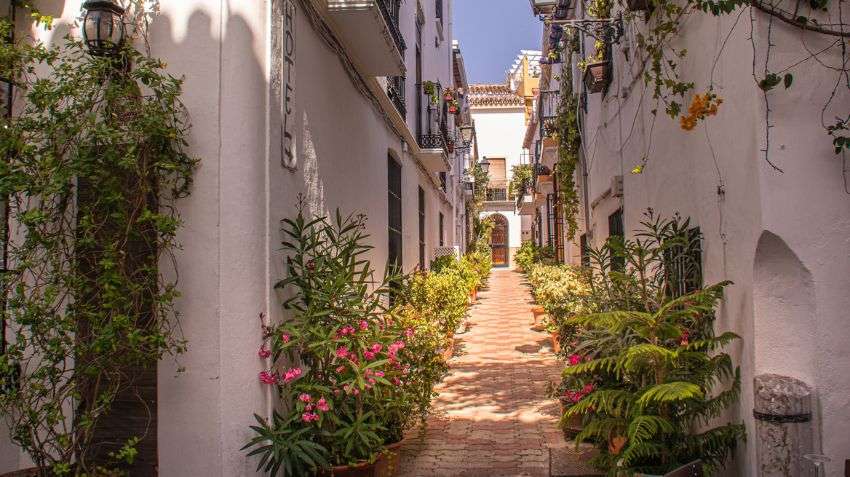
Marbella arrives differently depending on where you first land in it. Step into the Old Town on a warm evening and the city feels genuinely layered — whitewashed walls, orange trees in the central square, the smell of jasmine drifting from a courtyard somewhere nearby.
Drive in along the coastal road from Málaga and you get a different picture entirely: resort hotels, manicured roundabouts, the marina at Puerto Banús. This first-time traveler guide to Marbella exists because those two versions of the city are real, they coexist, and knowing which one you are visiting changes almost every decision.
In peak summer the city runs at full social tempo. The beach promenade fills by late morning, the Old Town stays animated until well past midnight, and the coastal strip between Marbella and Puerto Banús becomes the loudest version of itself.
The rhythm is not slow. But there is a particular quality to a Marbella evening in July — the light on the port wall around 20:30, the tables spilling out across the plaza, the sound of the city shifting gears from afternoon heat into night — that makes the timing feel earned rather than excessive.
The city is smaller and more walkable than its reputation suggests, which helps first-time visitors orient quickly. The Old Town sits just back from the seafront, dense and navigable on foot in twenty minutes. The beach stretches to the east and west. Puerto Banús is about six kilometres west along the coast. These three anchors organise most of what a first visit actually needs.
What Marbella feels like for first-time visitors
The Old Town – the Casco Antiguo – is genuinely pleasant in a way that is not always guaranteed in resort cities. The lanes are narrow, the plazas are proportionate, and Plaza de los Naranjos still functions as a real gathering point rather than a purely tourist staging area. Morning coffee there feels different from midday: fewer people, longer shadows from the orange trees, the local bakeries still doing most of their business.
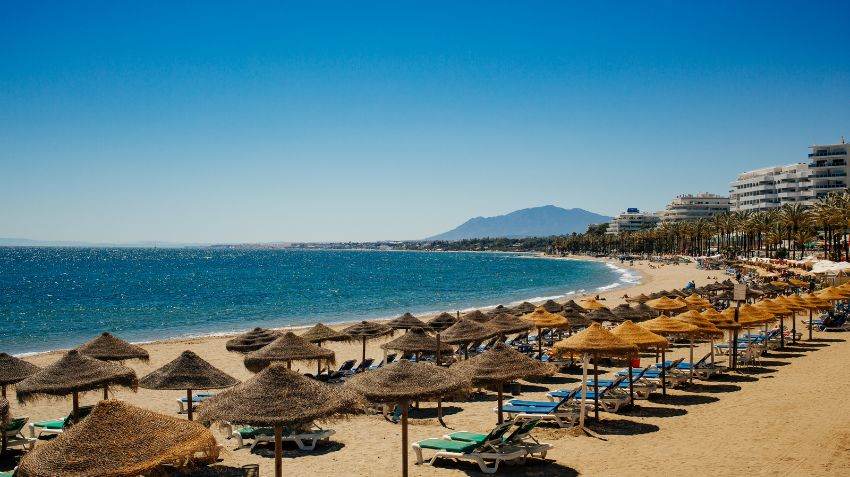
The beach closest to the centre is well-maintained and faces south, which means afternoon sun sits on it long. By early afternoon in summer it becomes one of the busiest stretches; the atmosphere shifts noticeably toward late afternoon when the light softens and the social energy along the Paseo Marítimo picks up again. The promenade itself is flat and long, which makes it one of the better evening walks on the Costa del Sol.
Puerto Banús operates at a different register. The port is unambiguously glossy, built around yacht berths and restaurants with outdoor terraces overlooking the water. It can feel overproduced to travelers who are not seeking that version of the coast, but the waterfront walk there at dusk is worth the taxi ride even if you stay for a single drink and leave. The contrast with the quieter lanes of the Old Town – thirty minutes away by road – is part of what makes Marbella spatially interesting.
Marbella in photos



Is Marbella right for your travel style?
Marbella works well for travelers who want a beach base with actual character nearby. The Old Town gives the city a second layer that pure resort destinations lack, and the ability to move between a whitewashed historic centre and a modern seafront without much planning is a genuine structural advantage.
It tends to work less well for travelers who are specifically seeking a quieter, low-key coastal experience with few tourists around. In summer, visitor activity is high throughout the centre and the beach. Travelers who want a slower pace or a more local atmosphere might find the rhythm suits them better in the shoulder season – late September or early October, when the city still carries warmth, the beaches are quieter, and the Old Town becomes easier to explore without the peak-window crowd activity.
Solo travelers, couples, and small groups all find a natural fit here. Families with young children manage well if they stay close to the beach and avoid the later evening rhythm. The city does not reward those who arrive expecting Andalusian authenticity in the way Seville or Granada delivers it – Marbella is a coastal resort that happens to contain an Old Town, not the other way around. That ordering matters when setting expectations.
Travelers working out whether the Costa del Sol or a more historically dense city suits their trip better will find the Barcelona and Málaga comparison useful as a wider frame for the region.
How to get around Marbella as a first-time visitor
Málaga-Costa del Sol Airport is the primary arrival point. Direct buses connect the airport to Marbella regularly, with the journey taking roughly 45 to 60 minutes depending on traffic along the coastal road. In July and August the coastal road can be slower in the afternoon; morning arrivals are generally more straightforward. Taxis cover the same route faster and are a reasonable option for travelers with luggage or arriving late.
Within Marbella itself, the Old Town is compact enough to navigate entirely on foot. The main beach and the Paseo Marítimo are a short walk from the centre. For Puerto Banús, taxis and ride-hailing apps are the most practical option; the local bus runs along the coastal road but at a frequency that makes taxis the default for most visitors, especially in the evening.
The city does not have an urban metro or tram network. Movement is organised around walking in the historic core, the promenade on foot or by bike along the seafront, and taxis for anything beyond that radius. This works well given the geography – the city is not physically large, and the distances between its main areas are manageable once you understand the layout.
A note on the beach itself
The beaches closest to the Old Town are urban city beaches – clean, well-serviced, and busy in summer. For a quieter stretch, the beaches east of the centre toward Elviria tend to have more space. The beach clubs along the Golden Mile operate differently from the public beaches; they require reservations in peak season and come with a pricing structure that reflects the clientele they serve. Both coexist along the same coastline, which is characteristically Marbella.
Day trips and nearby stops worth adding to a Marbella trip
Ronda is the most natural day trip from Marbella and one of the more genuinely memorable ones on the Costa del Sol. The drive up through the Serranía de Ronda takes about an hour and arrives at a hilltop city built around a gorge crossed by a famous 18th-century bridge. The elevation means cooler temperatures even in August, and the city is walkable in a half-day. It fits particularly well for travelers who want to balance beach days with something architecturally substantial.
Málaga is 45 minutes east and functions as a natural complement to Marbella. Where Marbella is resort-oriented, Málaga is a working Andalusian city with a functioning historic centre, a strong food scene, and a more local atmosphere. Travelers who spend two or three days in Marbella and then continue to Málaga often find the contrast useful.
The Alicante first-visit read covers similar Costa territory for travelers considering a wider Mediterranean Spain itinerary beyond just the Costa del Sol.
Gibraltar is reachable in around an hour and offers a strange, somewhat memorable experience for first-time visitors – part British territory, part Mediterranean peninsula, with a cable car to the upper rock and views across to Morocco on clear days. It is not essential, but it is genuinely unlike anywhere else on a Spain itinerary.
For travelers weighing Marbella against another Spanish island or coastal city, the Palma de Mallorca first-time guide covers a similar resort-with-character structure in a different geography, which can help clarify which coastal register better fits the trip.
Continue exploring the Spanish coast and its pacing logic through the Nodaliso destination graph – the nodes on Andalusia, the Balearics and the wider Mediterranean coastline connect the rhythms that sit near Marbella.
Is Marbella worth visiting for a first trip to the Costa del Sol?
For a first-time traveler guide to Marbella, the honest synthesis is this: the city delivers best when visited with both versions of it in mind. The Old Town gives it substance, the beach gives it ease, and Puerto Banús gives it spectacle – and the ability to move between those registers in a single day is what makes it a coherent base rather than a single-note resort.
The summer rhythm is genuinely social and often beautiful in the evenings, though the peak-August window demands some patience with visitor activity in the most central areas. Shoulder season visitors – particularly September – tend to find the balance shifts in their favor: the sea is still warm, the city is calmer, and the Old Town recovers something of its own pace.
Travelers who want the beach as the primary event, with an atmospheric city centre as a secondary layer, will find Marbella a more complete experience than most of the Costa del Sol provides.
Marbella first-time visitor FAQ: best time, days needed, Old Town, where to stay and arrival from Málaga
1. When is the best time to visit Marbella for the first time?
Late May through June and September into October give the most balanced experience: warm enough for the beach, fewer peak-August crowds, and the Old Town easier to move through in the evenings. July and August are the most active months socially, with long nights and a full promenade, but the city reaches its highest visitor activity then.
2. How many days do you need in Marbella?
Three to four days is enough to settle into the Old Town rhythm, spend proper time on the beach, and make at least one easy side trip. Visitors who want to explore Puerto Banús and a day trip toward Ronda usually find five days more comfortable.
3. Is Marbella worth visiting if you are not into nightlife?
Yes. The Old Town has its own quieter character – morning coffee on Plaza de los Naranjos, slow lunch in the back lanes, evening walks along the port. The nightlife reputation belongs mainly to Puerto Banús and the beach clubs; the town itself supports a slower pace well.
4. Where should first-time visitors stay in Marbella?
The Old Town puts you close to the most atmospheric part of the city and within walking distance of the beach. The Golden Mile and Puerto Banús suit travelers who prioritise the resort end of the experience, but require a taxi or ride-hailing app to reach the historic centre easily.
5. How do you get from Málaga Airport to Marbella?
The direct bus from Málaga Airport to Marbella runs regularly and is the most straightforward option for most arrivals. Taxis cover the same route faster and work well for groups or travelers with luggage; the coastal road in summer can add time depending on traffic.