
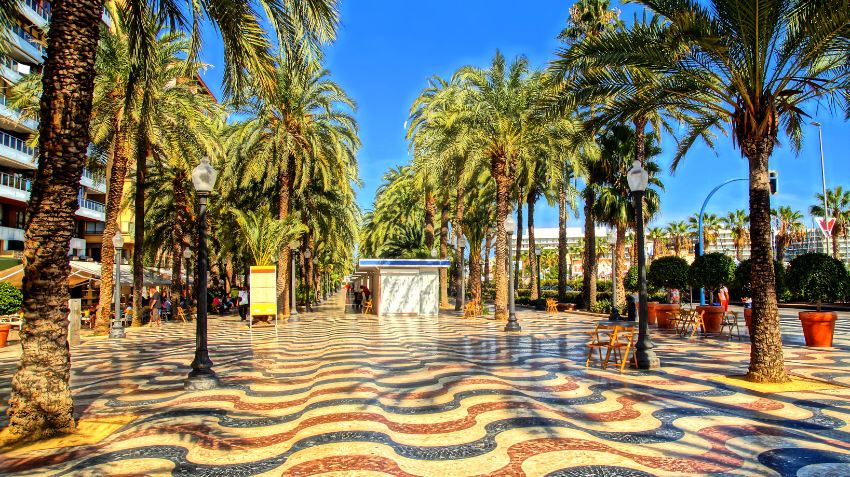
Alicante sits at the edge of the Mediterranean with a directness that takes a moment to register. The castle is visible from almost everywhere in the lower city, the sea is never more than a short walk, and the Explanada de España – the long palm-lined promenade along the waterfront – fills with people in the early evening in a way that feels genuinely local rather than staged for tourists. This is a useful first-time traveler guide to Alicante precisely because the city is easier to read than most people expect.
It is not a city that asks much of you. The old town is compact, the beach is central, the evenings are long and the pace follows the Mediterranean rhythm of late meals, slow afternoons and a second life that begins after sunset.
What surprises most first-time visitors is how complete it feels for a mid-sized Spanish city – there is a real neighbourhood to explore in the Barrio Santa Cruz, a castle with serious views, a covered market, a waterfront that faces west and catches the light well past eight in the evening.
What Alicante feels like for first-time visitors
The scale works in your favour. Unlike Valencia or Barcelona, Alicante never feels like a place you need to decode. The historic centre sits directly above the port, the old town climbs the southern face of the castle hill, and the Postiguet beach begins almost where the Explanada ends. You can walk the full width of the most interesting part of the city in twenty minutes, which means the first day has an ease that larger cities don’t offer.
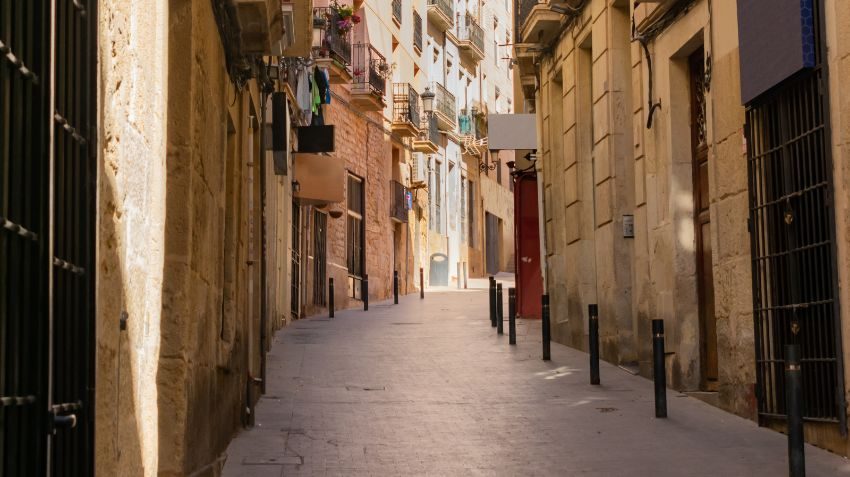
The Barrio Santa Cruz is where the city starts to feel like it has depth. The streets here are narrow and stepped, with coloured facades and window boxes, and the neighbourhood sits directly below the castle walls on the hill’s western side. It’s quieter than the port and noticeably cooler in the shade of late morning, when the lower city is already starting to heat up. The walk from the Barrio to the castle entrance is steep – around fifteen minutes on uneven stone – but the view from the top, with the port and the bay laid out below, is one of those moments that reframes the whole city.
The Mercado Central on Avenida Alfonso el Sabio is worth an early morning visit, when the produce stalls are still full and the surrounding cafés have tables outside. By midday the market pace shifts and the city starts moving toward its long afternoon register. Stone walls hold the day’s warmth well into the evening – walking the old town at ten at night, after the temperature has dropped a few degrees and the street lighting comes on at the base of the castle, is a different experience from the same streets at three in the afternoon.
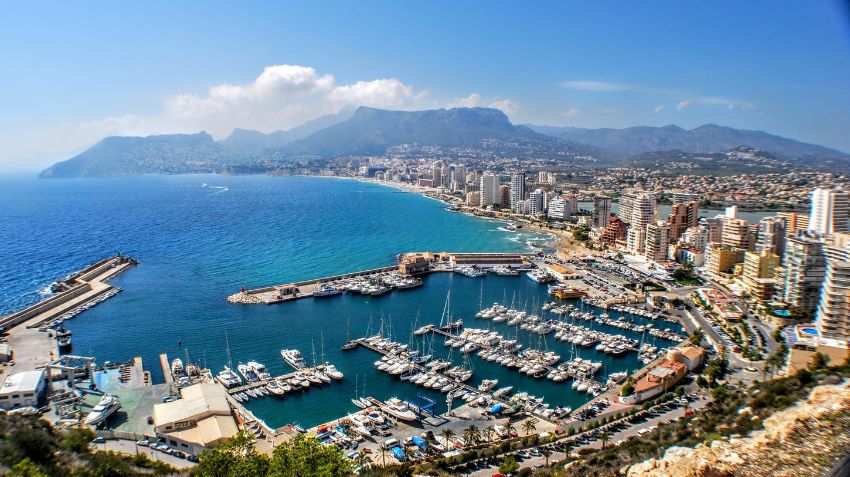
Alicante in photos

Is Alicante right for your travel style?
Alicante suits travellers who want a genuinely Spanish city without the scale and complexity of Madrid or Barcelona. The beach is real and central, the evenings are sociable without requiring planning, and the old town rewards slow walking rather than structured sightseeing. It fits well for people who want a few clear days of alternating between beach time and city exploration without a packed itinerary.
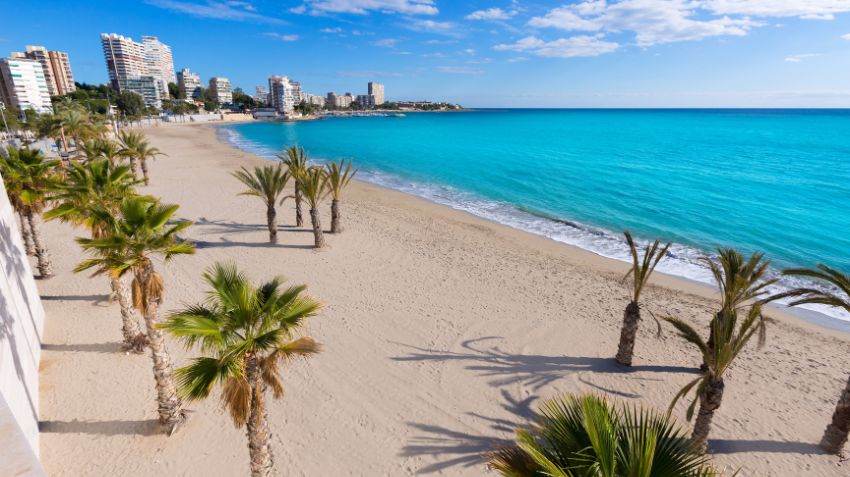
Solo travellers and couples tend to find the pace natural. The city has a strong local social rhythm – the pre-dinner paseo, the late tables, the outdoor terraces that stay animated well past midnight in summer – and it absorbs both visitors and residents into the same spaces without obvious separation. Families with younger children also use the city comfortably; the Postiguet beach is sheltered and accessible directly from the promenade, and the flat waterfront area means there’s no terrain complexity for a few days.
The fit shifts for travellers looking for a genuinely quiet retreat. In August especially, the Explanada and the beach area operate at a high-energy tempo through most of the day and into the night. Two streets back from the main tourist corridors it calms considerably, and the Barrio Santa Cruz keeps its own quieter register, but the overall acoustic character of the city in peak summer is warm and social rather than restful.
Travellers who want coastal calm without the summer rhythm might find the shoulder season – late September through October, or late April through May – a better match for the city’s slower-paced self.
How to get around Alicante as a first-time visitor
The airport is close. The C-6 bus connects Alicante-Elche airport to the Puerta del Mar boulevard near the port in around thirty minutes, running frequently enough that most travellers don’t need to plan around it. Taxis and ride-hailing options are available outside arrivals for those with heavier bags or arriving late.
Inside the city, almost everything first-time visitors want to see is walkable from the centre. The Postiguet beach, the Barrio Santa Cruz, the Explanada, the Mercado Central and the castle hill are all within a fifteen-to-twenty-minute walk of each other on flat or gently sloping ground, with the exception of the castle ascent itself.
The TRAM Metropolità is the main reason to use public transport – it runs north from the city centre toward El Campello, Benidorm and Altea, giving easy access to quieter stretches of coastline without needing a car.
The Renfe train station sits in the centre of the city, connecting Alicante to Elche, Murcia, Valencia and Madrid. For travellers using Alicante as a base rather than a single stop, the combination of TRAM for the Costa Blanca coast and Renfe for further destinations makes the city one of the more logistically flexible bases on the Spanish Mediterranean.
Day trips from Alicante and where to go next on the Costa Blanca
The ferry to Tabarca island departs from the port and takes around forty-five minutes each way. Tabarca is small, flat and quiet – the main village is walled and the surrounding waters are a marine reserve, which makes it one of the better swimming spots accessible from the city without needing a car. It gets crowded on summer weekends, so a midweek morning departure gives a calmer experience and more time before the afternoon boats bring day visitors from other coastal towns.
Altea, about forty minutes north by TRAM, has a different atmosphere entirely – a white hilltop old town above a seafront, with a slower pace and a noticeably quieter coastline than Alicante. For first-time visitors curious about the contrast between Alicante’s city energy and the more subdued coastal towns further up the Costa Blanca, the Altea read is often where that comparison clarifies.
Elche, south of the city by train, offers a different kind of day out – the palm grove (one of the largest in Europe) and the old town give it a character distinct from anything on the coast.
Travellers deciding between Alicante and other Spanish Mediterranean cities often reach a clearer answer once they read the Palma de Mallorca first-time guide alongside this one – the two cities share a Mediterranean energy but read quite differently once you’re inside them.
For those weighing a broader Spain trip, the Valencia neighborhood fit covers the most direct coastal-city comparison to the north.
Is Alicante worth visiting for a first trip to Spain?
For a first-time traveler guide to Alicante, the honest answer is that it depends on what kind of Spain you are looking for. If you want a place that gives you Mediterranean coast, a real Spanish city rhythm, a walkable old town with genuine neighbourhood character and evenings that unfold naturally without planning, Alicante delivers all of this at a scale that doesn’t require much effort. It is not trying to be Barcelona or Seville, and that is precisely what makes it work for the right kind of visit.
Summer arrivals will find a city at full energy – the beach, the Explanada, the castle lit at night, the terraces still full at midnight. Those arriving in late September or early October will find the same city with a slower exhale: fewer people on the beach, cooler evenings, the same structure with a different register.
Either version is a valid reason to go. The city suits travellers who want presence and ease rather than complexity, and who are happy to let the day shape itself around the Mediterranean instinct for lingering.
Continue exploring the Costa Blanca and Spain’s Mediterranean coast through the Ibiza first-time guide for a different register of the same sea, or use the Granada or Madrid comparison if you’re deciding between inland Spain and the coast for your trip.
Alicante first-time visitor FAQ: days needed, best season, old town, airport transfer and day trips
1. How many days do you need in Alicante as a first-time visitor?
Three days is enough to cover the old town, Santa Barbara Castle, the Postiguet beach and a relaxed evening or two on the Explanada. A fourth day opens the option of a day trip to the Tabarca island or up the coast toward Altea.
2. When is the best time to visit Alicante?
Late spring and early autumn are the most comfortable windows, with warm temperatures, fewer beach crowds and the full city rhythm still running. Summer is the highest-energy season with festivals and a packed waterfront, though the heat peaks in July and August and the Explanada fills with visitors well into the night.
3. Is Alicante worth visiting beyond its beaches?
The Barrio Santa Cruz, the Mercado Central and the castle hill give the city a clear identity beyond the waterfront. An evening in the old town, with the castle lit above and the terraces slowly filling for dinner, is the part most first-time visitors say they didn’t expect.
4. How do you get from Alicante airport to the city centre?
The C-6 bus runs frequently from the airport to the city’s main boulevard and takes around 30 minutes, making it one of the most straightforward airport connections on the Spanish Mediterranean coast.
5. Is Alicante a good base for day trips along the Costa Blanca?
It works well as a base: the TRAM line north reaches Benidorm and Altea, the ferry to Tabarca island departs from the port, and Elche with its famous palm grove is a short train ride south. The city’s relaxed evening pace means returning after a full day out still feels restful rather than rushed.