
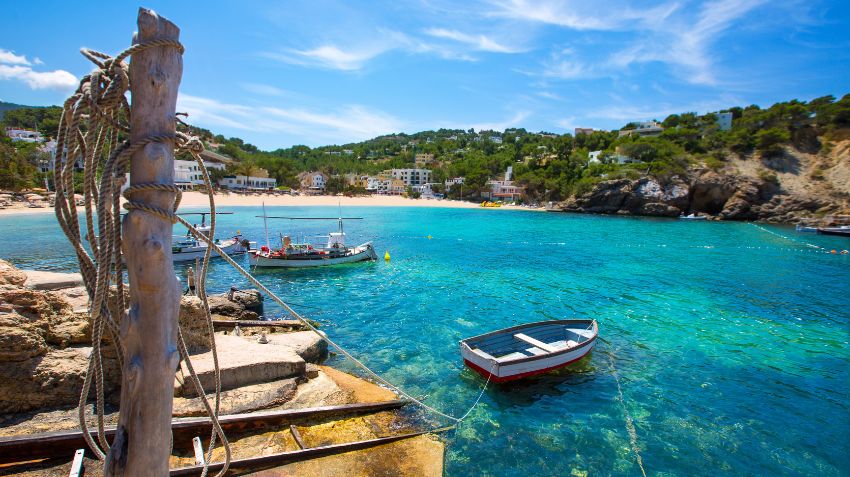
The island has two distinct registers, and most first-time visitors only book themselves into one of them. The white walls of Dalt Vila at dusk, the pine-scented roads in the north, the coves where the water stays clear even in August – these sit alongside the club terraces and the pumping marina strip without much contradiction. Ibiza works as a first trip when you understand what you’re actually arriving into.
This first-time traveler guide to Ibiza is built around that question: what kind of place is it, in practice, and what does a week here actually feel like? Not the version from a 2003 documentary, and not the sanitised boutique-hotel version either. The island in summer runs at a high tempo from late morning until well after midnight, but it also has a northern interior where small restaurants close when the family is done cooking, and bays where the only sound is the water moving against rock.
What Ibiza actually feels like for first-time visitors
Ibiza Town is the natural anchor. The marina and the commercial strip below Dalt Vila run at a confident, social pace from mid-morning onward, with terrace cafes, boutiques, and enough foot traffic to feel genuinely alive even before the evening crowd arrives. The old walled city above – Dalt Vila – operates in a different register entirely: narrow stone lanes, a cathedral at the top, long views across to Formentera. It’s worth arriving on foot through the main gate around 19:30 in summer, when the temperature has dropped a little and the light catches the walls at a low angle.
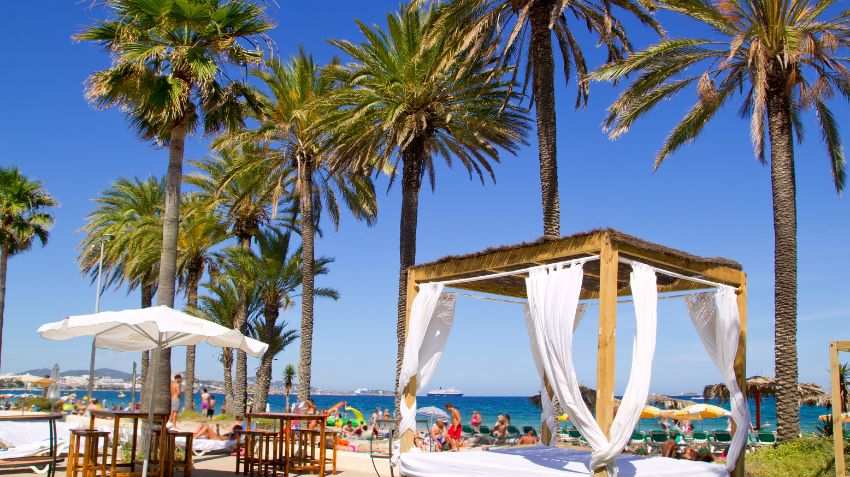
San Antonio, on the western side, is the other major base. It has the Sunset Strip, a cluster of bars facing west over the water, and a beach-club atmosphere that starts early and runs late. The scale is different from Ibiza Town: flatter, more commercial, more concentrated nightlife infrastructure. It suits a specific kind of trip – one where the beach and the evening scene are the primary logic – and it’s honest about what it is.
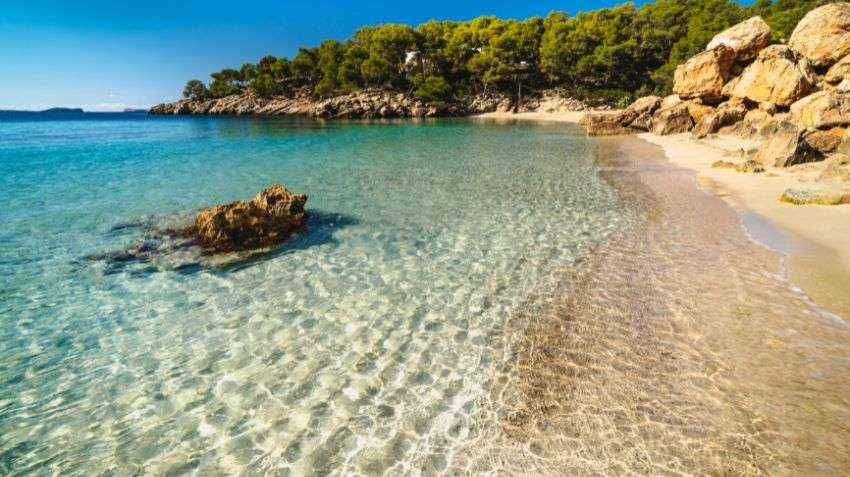
Between those two poles, the rest of the island opens up. The north and northeast – around Portinatx, Sant Joan, the road toward Cala Llenya – feel genuinely unhurried. Local restaurants that open at 13:30 and stop serving when the kitchen decides it’s done. Pine trees down to the waterline. A pace that has nothing to do with the club calendar.
Ibiza in photos

Is Ibiza right for your travel style?
It fits travelers who want range within a single destination. If your idea of a good week involves a different beach every day, a few long dinners, one or two late nights, and a morning or two with no plan at all – Ibiza handles all of that without you having to choose between them. The island is small enough to cover in a week without feeling rushed, and varied enough that five days doesn’t feel repetitive.
It works less well for travelers who want full quiet immersion. Even the calmer northern villages see increased visitor activity through July and August, and the island’s acoustic character – music from terraces, late-night movement, ferry arrivals in the small hours – is real. Travelers who want the Balearic rhythm without the high-season energy might find that September is closer to what they’re imagining, or that Formentera – reachable by ferry in 30 minutes from Ibiza Town – offers the quieter counterpart they’re after.
Solo travelers, couples on a first long-trip together, and groups of friends who want different things on the same holiday tend to find the island easier to navigate than they expected. The internal range is the real asset.
If you’re deciding where to stay before planning the rest of the island, the Barcelona neighborhood guide offers a useful contrast between an island base and one of Spain’s largest urban destinations.
How to get around Ibiza as a first-time visitor
The airport sits about 7 kilometres south of Ibiza Town. The L9 bus runs directly into the capital, takes around 20 minutes, and costs a few euros. Taxis are plentiful and reliable from the terminal. Either option works well for arriving into Ibiza Town; San Antonio requires a change or a taxi.
Once you’re on the island, the public bus network – operated by Autocares Voramar – connects Ibiza Town, San Antonio, Santa Eulalia, and a handful of beaches. It’s a reasonable system for the main corridors. For the smaller coves, the northern bays, and anything off the main routes, a hire car or scooter changes the trip significantly. Most of the bays that look best on a map are 10 to 20 minutes from the nearest bus stop, often on roads that don’t reward walking with luggage.
Within Ibiza Town itself, everything that matters is walkable. The marina, Dalt Vila, the main restaurant streets – all within comfortable range of each other. San Antonio is similarly compact. The island rewards having wheels, but a first week based in Ibiza Town without a car is entirely viable if you’re selective about which beaches you target.
If you’re combining Ibiza with mainland Spain, the Spain itinerary guide explains how the Balearic Islands fit into a wider multi-city route.
Moving between the coasts
The road across the island from Ibiza Town to San Antonio takes about 20 minutes by car and runs through flat agricultural land that feels nothing like the coast. The northern road toward Sant Joan is slower and more winding, but the light on those inland roads in late afternoon – long shadows through pine, the occasional farmhouse – is a different kind of Ibiza that most visitors don’t find by accident. If you’re hiring a car, that drive is worth building in once.
Ibiza beaches: what to expect by season and zone
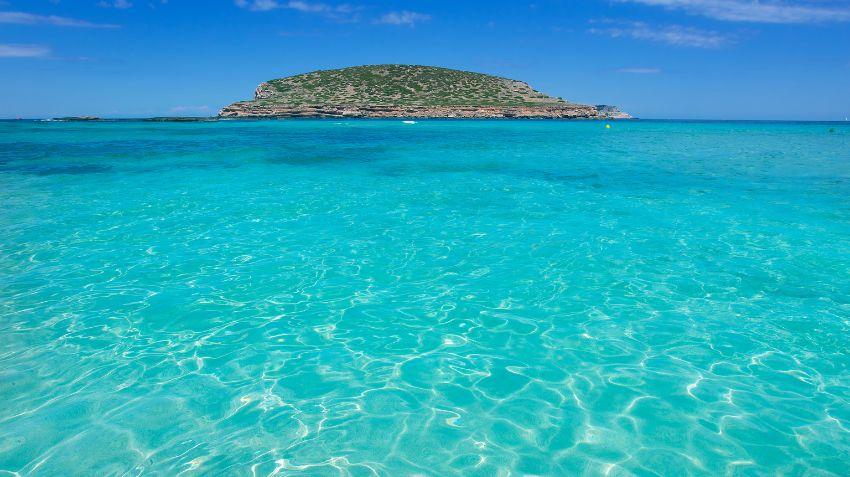
High summer – July and August – means the major beaches like Playa d’en Bossa, Cala Bassa, and Cala Vadella are at full activity by 11:00. Sun loungers on the main strips are usually pre-booked through beach clubs or fill fast. The water is warm, clear, and genuinely beautiful, and the beach-club atmosphere on the southern and western coasts is exactly what it looks like in photographs.
The eastern coves – Cala Mastella, Es Canar, Cala Nova – run quieter. They’re smaller, less developed, and the crowd thins out noticeably. Cala Mastella in particular, with its tiny wooden restaurant on the rocks, has a particular morning quality: arrive before 10:00 and you’ll have the cove largely to yourself for an hour before the first boats come in.
June and September shift the register across the whole island. The same beaches exist, the same water temperature is essentially there, but the crowd activity decreases enough that you can choose a spot more freely and the afternoon pace feels slower. September has an additional quality: the light is lower, the evenings cool faster, and the island starts to feel like it’s finding a different rhythm.
If you are deciding between two very different beach experiences, the Benirràs Beach or Cala Vadella comparison explains how sunset atmosphere, swimming conditions, family fit, access and evening rhythm differ between the two coves.
Travelers who discover they prefer relaxed coastal days over nightlife can also explore the Spain city beaches guide for mainland alternatives with a different rhythm.
Ibiza nightlife for first-time visitors: what it is and how to approach it
The major clubs – Pacha, Ushuaia, Amnesia, Hi Ibiza – operate at a scale that most visitors haven’t encountered before. Capacities in the thousands, internationally known residents, production levels that are genuinely impressive if that’s your register. Tickets for headline nights often sell in advance, and prices reflect the scale. If you’re coming primarily for the club experience, the planning needs to happen before you arrive.
But the island’s evening life is wider than the clubs. The marina in Ibiza Town, the Sunset Strip in San Antonio from around 19:00 onward, the terrace bars across Dalt Vila – these carry a long, social evening that doesn’t require a club ticket. Many visitors build a week around one or two major nights and fill the rest with the slower version, which turns out to be a good ratio.
The clubs run late. Very late. The rhythm for club nights tends to be: dinner at 22:00 or 23:00, a pre-party bar from midnight, the club from 02:00. If that structure sounds like work, the island’s non-club evening scene stands entirely on its own.
Where to base yourself in Ibiza on a first visit
Ibiza Town is the default and generally the right call for a first trip. It has the most varied dining, the old town to explore on foot, the marina for evening walks, and reasonable bus connections to the main beaches. If you’re not renting a car, it’s the most self-sufficient base.
San Antonio makes sense if the beach-club atmosphere and the Sunset Strip are central to your trip. The accommodation options there tend to be more affordable than Ibiza Town, and the western beaches – Cala Bassa, Cala Conta – are easier to reach from that side of the island. It’s a more single-register base, which is either a feature or a limitation depending on what you’re after.
Santa Eulalia, on the east coast, is calmer and more family-oriented. It has a long promenade, a good local restaurant scene, and a ferry connection to Ibiza Town that takes about 40 minutes. Travelers who want a quieter evening atmosphere and easier beach access without the club-zone energy often find it works better than either of the main alternatives.
For those weighing Ibiza against a different kind of Spanish coastal trip, the Madrid or Malaga comparison covers a contrasting Spanish register – mainland, city-focused, and at a different pace entirely.
And if you’re building a broader Spain trip around the Balearics, the Barcelona first-time guide covers the natural mainland gateway and what changes when you arrive there after a week on the island.
Is Ibiza worth visiting for a first trip to Spain?
It depends on which Spain you’re looking for. If the answer involves a beach, warm water, long evenings, and some degree of social energy – yes, without much qualification. The island delivers on all of that more reliably than most coastal destinations in Spain, and the range within a single week is genuinely wider than the reputation suggests.
If your first Spain trip is primarily about cities, food culture, architecture, and the particular rhythm of the mainland – Ibiza is a different kind of destination and should be approached as such, probably in combination with a city stay rather than instead of one. The island is not trying to be Barcelona or Seville, and it doesn’t need to be.
For first-time visitors who arrive knowing that the island runs two parallel versions of itself – the high-tempo coast and the quieter north – and who build their week around both, Ibiza tends to be more satisfying than expected. The calibration happens before you book, and the trip follows from there.
If you’re weighing the coastal Spain options more broadly, the Barcelona and Malaga comparison covers two very different mainland registers side by side.
And for a Spain comparison that cuts into the cultural interior versus the south, the Granada or Madrid read maps that decision from a first-timer’s perspective.
Ibiza first-time visitor FAQ: best time, days needed, beaches, nightlife and evening atmosphere
1. When is the best time to visit Ibiza for a first trip?
Late May, June and September offer the most balanced window: sea temperatures are warm, the main beaches and venues are fully open, and the intensity of August crowds has either not yet arrived or has already eased. July and August deliver the full energy of the island, including the large club nights, but also the densest visitor activity and highest prices.
2. Do I need to rent a car in Ibiza?
Not necessarily for a short stay based in Ibiza Town or San Antonio. The public bus network connects the main towns and several beaches, and taxis cover the airport and marina areas reliably. For quieter coves in the north and east – places like Cala Mastella or Cala Llenya – a hire car or scooter gives you real freedom and changes the experience noticeably.
3. Is Ibiza only for clubbers, or does it work for other kinds of travelers?
The club reputation is real but covers only part of the island. The north and east – Portinatx, Santa Gertrudis, the smaller inland roads – run at a genuinely slower tempo, with local restaurants, pine-backed coves and almost no nightlife infrastructure. First-time visitors who plan for both registers tend to find the island more layered than expected.
4. How many days do you need in Ibiza on a first visit?
Five to seven days gives you enough time to cover Dalt Vila, two or three beach styles, at least one evening in the old town, and a day in the north without feeling rushed. Shorter stays of three nights work if you concentrate on Ibiza Town and the southern beaches, but leave little room for the quieter parts of the island that shift the overall impression significantly.
5. What does Ibiza Town feel like in the evening?
The old town settles into a particular evening rhythm around 20:00, when the day-trip heat lifts and the light on the cathedral walls turns a deep amber. The marina fills steadily from early evening with a mix of locals and visitors, restaurants stay lively until well past midnight, and the narrow streets inside Dalt Vila carry a quieter, cooler version of the island that most people don’t expect on a first visit.