
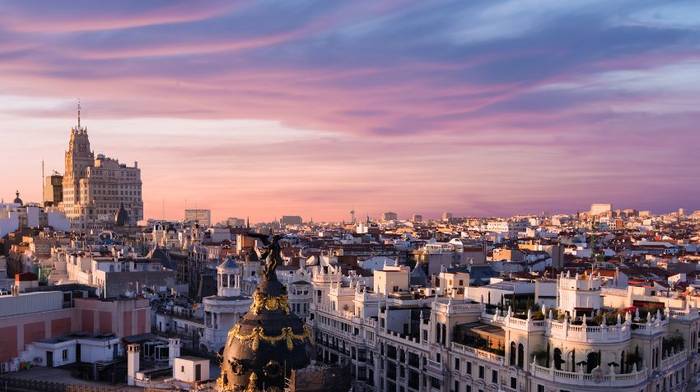
Choosing between Madrid and Malaga comes down to the kind of Spain you want to experience first: a vibrant capital shaped by culture and long evenings, or a relaxed coastal city built around the sea and a compact historic centre.
Madrid feels expansive, energetic, and culturally rich, with neighbourhoods that reveal themselves gradually throughout the day. Malaga is easy to settle into, warm in character, and naturally connected to its Andalusian food, harbour, and seafront rhythm. Both share Spain’s love of late dining and lively evenings, but each offers a distinctly different way to experience the country.
This node works through the real trade-offs between the two – not as a ranked list, but as a set of conditions that suit different travelers, different trip lengths, and different moments in the summer season. Travelers building a broader route through the country may also find the Spain itinerary guide useful for understanding where Madrid fits alongside Spain’s other major cities.
Madrid atmosphere and travel experience
Madrid rewards patience. The first day can feel slightly anonymous – a large, flat, sun-bleached city with wide avenues that take longer to cross than the map suggests. By the second day, the rhythm begins to clarify. The neighbourhoods around Malasaña and Chueca are compact and walkable; the area between La Latina and Lavapiés has a slower, more residential quality in the mornings, with bakeries opening early and the vegetable market on Calle de los Embajadores running until early afternoon.
For travelers approaching the capital for the first time, the Madrid travel guide explores how the city’s neighborhoods, museums, and daily rhythm connect together.
The Prado sits in a different register entirely – one of the largest art collections in Europe in a building that does not hurry you. A half-day here is not generous; two to three hours is closer to the minimum before the rooms start to blur. The walk back from the Paseo del Prado toward the old centre, past Retiro and through the back streets of the Austrias district in the late afternoon, is the part that often makes Madrid feel like itself. Late afternoon light on the ochre facades along Calle Mayor, the city beginning to shift from day to evening tempo.
Evenings in Madrid are long and deliberate. The terraces off Calle de las Huertas and around Plaza de Santa Ana start to fill between 20:00 and 21:00, reach a natural density by 22:30, and sustain that into midnight without much effort. The city does not wind down quickly, which is either its appeal or the reason some travelers prefer to use it as a three-night stop rather than a longer base.
What Malaga is like for travelers
Malaga’s airport is 15 minutes from the centre by Cercanías commuter rail – a short, uncomplicated arrival that sets a different tone from the start. The historic centre is compact enough to read within a few hours of landing: the Alcazaba up on the hill, the cathedral and its unfinished tower, the market on Calle Atarazanas, the port promenade curving south toward the beach. None of it requires a metro map or much advance planning.
Travelers considering a longer stay on the coast may also find the Malaga neighborhood guide useful for understanding how the city’s districts differ in atmosphere and pace.
The food scene here is underestimated. The area around El Palo to the east and the tapas bars inside the old town run on fresh fish and local wines – particularly the sweet Málaga wines and the local Moscatel – in a way that feels specific to the city rather than generic Andalusian. Pescaíto frito, fried small fish eaten standing at a counter near the port, is the kind of local ritual that requires neither a reservation nor a guidebook to find.
The Soho district, just south of the historic centre, carries a different energy – street murals, independent cafés, a cluster of galleries that emerged around the Centre Pompidou Málaga. It is quieter than the old town by midday and tends to come alive in the late afternoon when the heat begins to soften. For travelers whose itinerary includes some slower working mornings, the cafés around this area hold that rhythm easily.
Madrid vs Malaga: getting around and daily pace
This is where the choice becomes concrete. Malaga is a genuinely walkable city. The distance from the Alcazaba to the port to the Soho district covers most of what you would want to see in a day, and the terrain is largely flat, with the main exception being the climb up to the castle. Suitcases roll smoothly from the train station to most central accommodation.
Madrid requires more movement. The key areas – Retiro, the Prado, the Austrias old town, Malasaña, the Reina Sofía – are each interesting on their own terms, but they do not sit close enough together to cover on a single afternoon walk. The metro handles this well, and the network is extensive, but it does take a day or so to map the transfer structure naturally. Line 8 from Barajas airport to the centre requires a transfer at Nuevos Ministerios; the process is clear once you have done it, but it adds an arrival sequence that Malaga does not.
For travelers who are early in a longer Spain trip and want to settle quickly without spending the first day orienting themselves, Malaga’s scale is an asset. For travelers who actively want urban density and plan to cover cultural ground seriously, Madrid’s scale is the point.
Which travelers Madrid and Malaga suit best
Madrid fits travelers who want a capital experience – contemporary art, a serious food culture, late evenings that feel genuinely urban, and enough neighbourhood variation to sustain four or five days without repetition. Solo travelers, couples, and anyone whose main interest is museums and Spanish cultural life will find Madrid difficult to over-schedule. The city absorbs time without difficulty.
Malaga suits a different appetite. Slow travelers, those arriving from a long-haul flight who want a gentler first entry into southern Spain, remote workers who need a city light enough to hold a working week around afternoon walks, or anyone planning to use it as a base for Andalusia more broadly – Ronda is an easy day trip by bus, and the Costa del Sol towns are accessible in under an hour. The city also suits couples who want beach access without fully committing to a resort stay.
Travelers who find large cities high-tempo will generally fit Malaga better on a first visit. Malaga can feel slightly limited after four or five days if you are not making day trips, whereas Madrid rarely runs out of content. Conversely, those arriving in summer without a tolerance for heat-shaped city rhythms will find both cities require some adjustment to the long-afternoon pause before the evening begins – though Malaga’s sea breeze tends to arrive reliably by late afternoon, which Madrid does not offer.
Travelers weighing whether Malaga compares to another southern Spanish city in the same trip will find the Seville or Valencia comparison useful for mapping that wider Andalusian itinerary.
Best time to visit Madrid or Malaga
Both cities are in early summer season. Madrid in June is one of its cleaner windows – the evenings are long (light past 21:30), the terrace culture is at full expression, and the city has not yet settled into the slower, more tourist-heavy pulse of July and August when many local families leave for the coast. The Prado and Reina Sofía stay open through summer, and the Retiro gardens hold their green well into July.
Malaga in June runs warmer and slightly more active along the waterfront than in May. The beaches on the Malagueta stretch and the Pedregalejos neighbourhood to the east begin filling from midmorning. The peak activity window on the sand is roughly 11:00 to 14:00 before the afternoon heat shifts people toward shade and restaurants. Evening returns to the waterfront from around 19:30, when the light on the water changes and the promenade fills with a mix of locals and visitors.
Autumn is when both cities shift register. Madrid in September and October is particularly well-regarded among travelers who have visited both seasons – the cultural calendar reopens, temperatures drop to a comfortable range, and the city feels more local. Malaga’s late-season window runs well into October, with sea temperatures remaining swimmable and the old town noticeably quieter than peak summer.
For travelers thinking about Barcelona alongside these two options, the Barcelona vs Malaga comparison covers how the Mediterranean coastal city energy compares to Malaga’s more compact Andalusian register.
How to combine Madrid and Malaga in one trip
A Madrid-Malaga split is one of Spain’s more logical first-trip structures. The AVE high-speed train connects the two cities in approximately two and a half hours, running several times daily and arriving in Malaga’s central station a short walk from the old town. Booking in advance reduces the cost significantly; the corridor is well-served and reliable.
If Madrid becomes the urban half of the trip, the Madrid neighborhood guide helps match accommodation choices to different travel styles and daily routines.
A natural sequence is three nights in Madrid – enough to cover the Prado, one or two neighbourhoods properly, and the evening rhythm – followed by two to three nights in Malaga, which gives the trip a coastal resolution that contrasts well with the capital. Some travelers invert this and start in Malaga for an easier arrival, then travel north to Madrid as the final stage. Both sequences work; the energy arc is slightly different, with the Malaga-first version ending the trip at a higher cultural intensity.
Travelers planning the neighbourhood stay in Madrid after deciding on this sequence will find the Madrid neighborhood stays read useful for matching accommodation location to the rhythm of each day.
Should you choose Madrid or Malaga?
The Madrid vs Malaga question for first-time travelers is less about which city is better and more about which entry point into Spain fits the trip you are actually taking. Madrid is a capital that rewards depth – more time, more walking, more willingness to follow the city’s evening logic rather than fight it. Malaga is a coastal city that rewards ease – quicker to orient, lighter to navigate, warmer in daily atmosphere, with a natural arc toward the sea and the south.
Travelers comparing Spain’s major city experiences more broadly may also find the Madrid versus Barcelona comparison useful before finalizing a first itinerary.
If your first visit is a week or less and you want the clearest, most immediate sense of what southern Spain actually feels like day-to-day, Malaga is probably the more manageable entry. If the trip is longer, culturally motivated, or genuinely curious about what makes a Spanish capital different from any other European one, Madrid earns its time. The combination of both, connected by two and a half hours of fast rail, remains one of the more satisfying Spain itineraries for precisely this reason: each city resolves what the other leaves open.
Madrid vs Malaga travel FAQ
1. Is Madrid or Malaga better for a first visit to Spain?
It depends on the kind of experience you want. Madrid is a large European capital with a dense cultural offer, long evenings, and a city rhythm that rewards several days of exploration. Malaga is a compact coastal city with a lighter tempo, easy access to the sea, and a strong food scene centred on the old town and the port area. First-time visitors who want a sense of Spain as a country often start with Madrid; those looking for a more relaxed southern atmosphere tend to prefer Malaga.
2. How many days do you need in Madrid vs Malaga?
Madrid takes at least three full days to feel unhurried – the Prado alone justifies a half day, and the neighbourhoods between Malasaña, La Latina and Retiro require time to settle into. Malaga works well in two to three days, with enough left over to make a half-day trip to Ronda or a morning on the nearby coast.
3. Which city is easier to navigate for first-time visitors?
Malaga is significantly more compact. The historic centre, the port, the Alcazaba, and most restaurants sit within comfortable walking distance of each other. Madrid has a well-structured metro system, but the city’s scale means you will use it often, and the transfer structure on certain lines takes a few days to read naturally.
4. Can you combine Madrid and Malaga on the same trip?
Yes, and it makes a natural arc. The AVE high-speed train connects Madrid and Malaga in around two and a half hours, making a split itinerary genuinely comfortable rather than logistically complicated. A common sequence is three nights in Madrid followed by two or three in Malaga, letting the coastal rhythm of the south resolve the pace set by the capital.
5. When is the best time to visit Madrid or Malaga?
Late spring and early autumn offer the most comfortable windows for both cities. In Malaga, May and October bring warm sea temperatures with fewer visitors than July and August. Madrid in June is excellent – the evenings are long, the terraces are open, and the city carries an energy that the deeper summer months slightly mute. Autumn in Madrid, particularly September and October, has a particular quality: the cultural season reopens, the light changes, and the city feels more itself.