
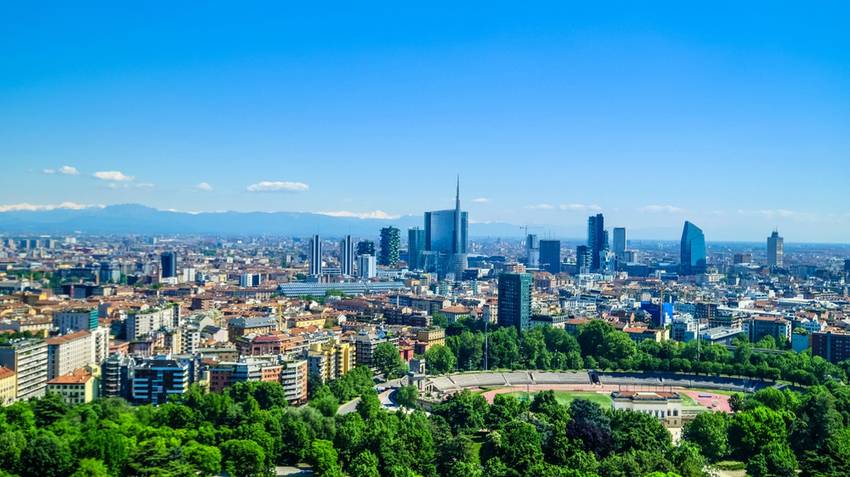
Milano does not arrange itself the way travelers expect. The neighborhoods of Milano are spread across a flat, grid-adjacent city where the distance between what looks close on a map and what feels close on foot can be deceptive.
Choosing where to stay shapes the entire trip, not just the commute back at night.
Most first-time visitors anchor too close to the Duomo out of instinct, then spend the trip walking through the same tourist corridor. The city has more distinct characters than that, and the right neighborhood depends less on the sights and more on the daily rhythm you are after.
This is not a ranking, it is a read of what each zone actually feels like, who it tends to suit, and where the tradeoffs land.
What Milano actually feels like to move through
The first thing that surprises most people is how quiet the residential streets are, even a few blocks from the main arteries. Milano is a city with a strong internal logic: the center is active and commerce-facing, the outer neighborhoods are genuinely lived-in, and the two rarely bleed into each other the way they do in Rome or Naples.
Rome distributes its energy differently from Milano, with neighborhood transitions that feel more abrupt and emotionally distinct from one district to another. Travelers still deciding between the two urban structures often find the Rome neighborhood guide useful for understanding how much accommodation choice changes the experience there compared to Milano’s flatter and more internally consistent layout.
The metro is clean, straightforward, and color-coded in a way that rarely causes confusion. Four lines, minimal transfer complexity. Getting from one neighborhood to another takes ten to fifteen minutes in most cases, which means where you sleep does not have to determine where you spend your days. That freedom changes the calculus on accommodation.
Spring is the easiest season to be a first-timer here. Temperatures are comfortable, terraces open early in the day, and the city has not yet shifted into the compressed energy of summer, when business visitors and leisure travelers overlap with major events.
By late May the evenings already feel different, with aperitivo hour starting to pull people outdoors in a way that defines the city’s social rhythm for the next three months.
The Duomo area: central, convenient, and more tiring than it sounds
Staying within a ten-minute walk of the Duomo puts you at the geographic and commercial center of the city. Everything is technically accessible. The first morning feels excellent.
By day two, the pedestrian density between the cathedral and Galleria Vittorio Emanuele starts to register differently. The streets narrow around the main sights, and the mix of tour groups, shoppers, and commuters moving through the same corridors creates a pace that is hard to slow down inside. Finding a café that is not operating at full volume before 10:00 takes some effort.
This area works well for travelers who want proximity above everything else, plan to cover a lot of ground across the city, and are not particularly bothered by ambient noise. It works less well for anyone who needs the base itself to feel restful.
Brera: the neighborhood most first-timers wish they had chosen
Brera sits just north of the center, close enough to walk to most major sites, distinct enough to feel like its own place. The streets are narrower, the residential-to-commercial ratio tilts toward liveable, and the morning pace is noticeably slower than the Duomo axis. Coffee in Brera in the morning feels like a different city than coffee near the train station.
The Pinacoteca di Brera is here, which draws visitors, but the neighborhood absorbs them without collapsing into tourist infrastructure. Restaurants stay open late and tend toward the local end of the spectrum. Accommodation is more expensive than comparable options in the southern neighborhoods, but the walkability payoff is real.
For first-time visitors who want to feel like they understand Milano a little, rather than just passed through it, Brera is the most forgiving starting point. It is also the neighborhood that works best for travelers arriving slightly exhausted and needing a few quiet mornings before the city makes demands on them.
Navigli: the evening-first option that needs context
The Navigli canal district is the part of Milano that appears most in social feeds and travel shortlists, which tells you something about the audience it attracts. It is lively, the canal-side bars open around 18:00 and stay that way, and the aperitivo culture here is as dense as anywhere in the city.
What it is less good at is mornings. The neighborhood is oriented toward evening activity, and the residual noise from late-night terraces means the streets stay restless well past midnight. Staying there with the plan to sleep before 23:00 and start early is not an obvious fit.
The metro access is reasonable (the Porta Genova stop on Line 2 is the main entry point), but it is a longer ride to the northern neighborhoods than the map suggests. Navigli suits travelers who want the social energy of Milano to be part of the experience rather than just a backdrop, and who are staying long enough to let the evening rhythm become their natural one rather than fighting it.
Travelers weighing whether this kind of canal-neighborhood energy fits their travel style, or whether something calmer might serve them better, often find the Venice vs. Milano comparison read useful at this point, particularly on how social density differs between the two cities at different hours.
Porta Romana and Porta Venezia: the residential middle ground
These two neighborhoods sit on opposite sides of the center and share a similar character: residential enough to feel settled, connected enough to access the city without effort, and neither optimized for tourists nor entirely indifferent to them.
Porta Venezia, to the northeast, has good café density, a mix of older and newer residents, and a food scene that covers more ground than the tourist-facing center. It is also close to the Giardini Pubblici, one of the few large green spaces inside the inner ring, which becomes relevant in late spring and early summer when the heat starts to press against the stone streets by early afternoon.
Porta Romana, to the south, is slightly quieter and slightly less visited. The streets have a different texture from Brera: less curated, more functional, still pleasant. The tram network covers both neighborhoods well for destinations the metro does not reach directly.
Both options work particularly well for travelers staying longer than three nights, who benefit from a neighborhood that feels like a daily base rather than a launching pad. The body notices the difference between staying somewhere that has a rhythm and somewhere that is just proximate to things.
What the accommodation decision actually changes
The practical consideration that most guides underweight is the suitcase question. Milano’s streets are flat, which helps, but the distance from Malpensa airport to the city center (roughly 45 minutes on the Malpensa Express to Cadorna or Centrale) means you arrive with luggage and, often, at an hour when checking in directly is not possible. Knowing which metro line your accommodation sits on matters more on arrival day than it does on day three.
The Malpensa Express deposits travelers at either Milano Cadorna (Line 2, green, direct to Navigli and Porta Genova) or Milano Centrale (Lines 2 and 3, covering most of the city). Linate, the closer airport, is now connected by tram Line 5, which runs into the city in around 30 minutes and links to the metro at Lotto. Neither airport arrival is particularly stressful, but the walk from Centrale to a hotel in Brera with a full bag is longer than it appears on maps.
For travelers who are still deciding between Milano and the rest of northern Italy before committing to a neighborhood at all, the Florence vs. Venice fit comparison sits on the same decision level, particularly for those wondering whether a smaller-scale city might suit them better before the summer calendar fills up.
How the neighborhoods shift as summer arrives
Late spring is a forgiving window. The city is active but not yet at the compression level of June and July, when trade fair schedules and leisure tourism overlap and accommodation prices in the central neighborhoods move noticeably. By mid-June, staying in Brera without booking weeks ahead becomes difficult.
Summer also changes which neighborhoods are comfortable to walk through at midday. The stone streets and absence of shade along major arteries like Corso Buenos Aires or the streets near Centrale mean that the 13:00 to 16:00 window becomes something to plan around rather than push through. Neighborhoods with covered arcades or interior courtyards, or those with more tree cover like Porta Venezia near the gardens, handle the afternoon differently than the open central streets.
The aperitivo window, reliably between 18:00 and 21:00 across most of the city, is where Milano recalibrates. Streets that felt busy in an uncomfortable way at noon feel social and manageable at 19:30. Choosing a neighborhood that puts you within a short walk of a good aperitivo street, rather than requiring a metro trip to reach one, changes the daily rhythm considerably. Navigli, Isola (just north of Garibaldi station), and Porta Venezia all sit well for that.
Where most first-time visitors actually end up feeling comfortable
The neighborhoods of Milano sort themselves fairly cleanly once you know what kind of energy you are bringing to the trip. Brera absorbs first-timers well because it offers the city without overwhelming it.
The Duomo zone is practical but demanding. Navigli rewards travelers who lean into the evening culture rather than treating it as a side effect. Porta Venezia and Porta Romana are quieter reads of the same city, suited to anyone who wants density to be optional rather than default.
The question worth asking before booking is not which neighborhood is best but which version of the day you want to step into by default. Milano is flat, connected, and easy to navigate once you are there. The friction is not in the movement; it is in the mismatch between a neighborhood’s natural rhythm and the one you actually wanted when you booked it.
Spring arrivals have good options across all of these zones. The city is at its most accessible before the summer calendar starts pulling in the same direction as everyone else’s plans.
Travelers who discover they want a more layered and less commercially concentrated version of northern Italy often continue the decision toward Venice rather than deeper into Milano itself. The Venice vs Milano comparison breaks down how the atmosphere, social density, and daily pacing diverge once evenings become part of the trip rather than just the sightseeing hours.
For travelers still deciding whether Milano’s spread-out structure is the right fit at all, the Florence vs Venice comparison maps two much more compact versions of Italy, each with a very different relationship to movement, scale, and daily rhythm.
Neighborhoods of Milano: questions first-time visitors ask
1. Which neighborhood in Milano is best for first-time visitors?
Most first-time visitors do well in Brera or near the Duomo area. Brera is quieter and walkable with good restaurant density; the Duomo zone is more central but noticeably busier, especially on weekends. Both give easy metro access to the rest of the city.
2. Is Milano walkable enough to explore without the metro?
The city center is flat and walkable, but the neighborhoods travelers most want to see are spread across several kilometers. Walking between Brera, the Navigli canals, and Porta Romana is possible but takes time. The metro covers the gaps efficiently and rarely requires more than one transfer.
3. What is the Navigli neighborhood like for a first visit to Milano?
Navigli is livelier and more local-feeling than the Duomo area, especially in the evenings. The canal streets stay active until late, which works well for travelers who want an aperitivo atmosphere. It is louder at night than the northern neighborhoods, which suits some travelers and not others.
4. Which area of Milano is quieter and better for slow travelers?
Porta Romana and the areas around Porta Venezia are calmer options that still sit close to the metro. They have residential street texture, fewer tourist-facing businesses, and a more settled daily rhythm. Suitable for travelers who want central access without staying inside the densest visitor corridor.
5. How far in advance should I book accommodation in Milano for summer?
Summer in Milano combines leisure visitors with business travelers and frequent trade fair calendars, so popular neighborhoods fill quickly. Booking four to six weeks ahead for June and July is a reasonable baseline; major fashion or design events can compress availability further and push prices noticeably higher.