
The question of where to stay in Seville is not really about landmarks. It is about what kind of evening atmosphere you prefer under your window at midnight, how far you are willing to walk in warm evenings that often continue well after sunset, and whether you want the center to be your daily backdrop or something you visit on foot from somewhere quieter.
The eighborhoods of Seville are compact enough that the choice feels low-stakes from a map but meaningful once you are living it for three or four days. The historic core is small. The river divides things more psychologically than physically.
And the difference between a street that stays loud until 02:00 and one that settles earlier in the evening is sometimes a single block. Late spring is a good moment to be thinking about this. Summer is close enough that accommodation in the center fills up and prices climb, but the city is not yet at full summer rhythm.
The decisions you make now, which area, which pace, how many days, will feel different in June than they would have in March. Travelers who are still deciding whether Seville itself fits their trip can start with the Seville first-time guide before narrowing the decision down to individual neighborhoods.
Best areas to stay in Seville
Seville’s historic center clusters around three gravitational points: the Cathedral and Alcázar complex to the south, the old Jewish quarter of Santa Cruz wrapping around it to the east, and El Arenal stretching toward the river to the west. These three bleed into each other in a way that makes the boundaries feel administrative rather than real.
North of the center, La Macarena is a different texture. Wider streets, fewer tourists, a neighborhood that functions on its own terms most of the year. The basilica of the same name draws visitors, but the rest of the barrio operates at a different register, local market, residential blocks, bars that open for workers rather than travelers.
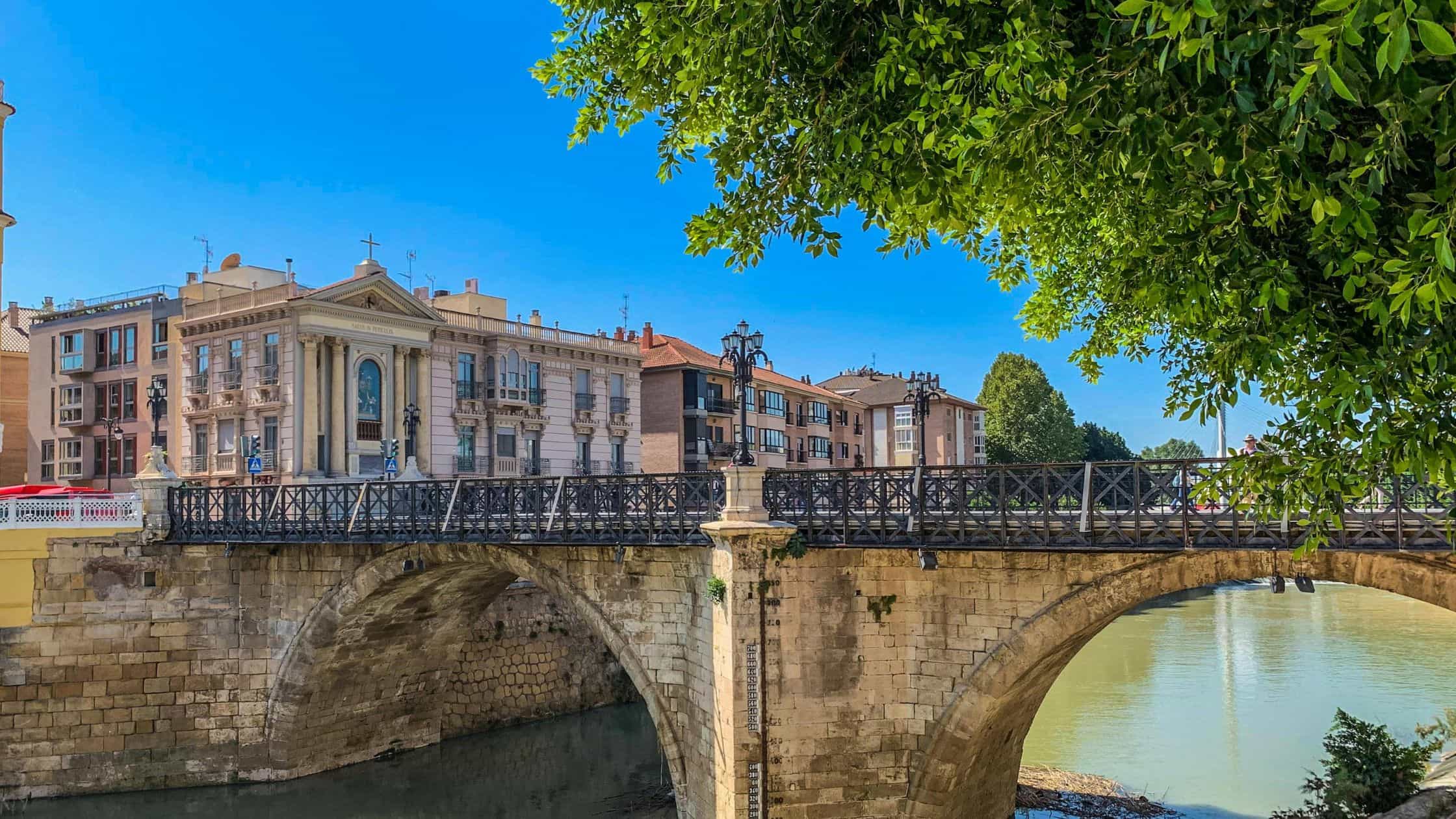
Triana sits across the Guadalquivir entirely. It is technically close on a map (the Isabel II bridge is a five-minute walk from El Arenal), but psychologically it occupies a separate world. Locals feel strongly about Triana’s identity, which is not an affectation.
The neighborhood has its own ceramic tradition, its own flamenco lineage, its own covered market, and a riverside promenade that fills up on warm evenings with people who are not looking at their phones. Then there is Nervión, the modern district east of the center, largely residential, structured around a commercial corridor and a football stadium. Travelers rarely choose it deliberately.
It is where you end up when the historic center is sold out, or when you are staying for two weeks and want a kitchen, a supermarket downstairs, and the option of a normal morning.
Is Santa Cruz the best area to stay in Seville?
Santa Cruz is the neighborhood most first-time visitors default to, and the logic is sound: the Alcázar is at one end, the cathedral is steps away, and the labyrinthine alleys make it feel like the “real” Seville even though it functions almost entirely as a tourism district.
The lanes are genuinely narrow, which matters in summer. Stone reflects and holds heat; by 15:00 in July the alleys reach temperatures that change the pace of movement considerably. The same narrowness means noise from restaurants and bars bounces directly into windows. Accommodation here is plentiful and tends to be priced at a premium for the convenience, though quality varies considerably from one street to the next.
For a two or three night visit, Santa Cruz is still the rational choice. You walk out of your accommodation and you are already in the thick of the city. For anything longer, the atmosphere becomes more noticeable over time. The streets stay busy well past midnight on weekends, and not in a way that quiets gradually, it tends to drop off suddenly, which means the the evening atmosphere tends to remain active later into the night.
Is Triana a good neighborhood to stay in Seville?
Triana works for travelers who want residential texture without being far from the center. The walk from Calle Betis along the river to the cathedral takes about fifteen minutes at a casual pace – longer if you stop at the market or get caught behind a delivery van on the bridge.
Travelers who enjoy Triana’s slower river-facing rhythm often respond similarly to Malaga’s older coastal neighborhoods, where the day also organizes itself around evening walks, late dinners, and lower-density movement than central Madrid or Barcelona. The Malaga first-time traveler guide explores that southern coastal pacing in more detail.
The neighborhood is not quiet exactly, but it is quieter in the way that matters: the noise is more local. Bars open earlier, close at more predictable hours, and cater to people who live nearby.
The Mercado de Triana has a covered section with stalls that open from around 09:00 and close in the early afternoon, which structures the morning in a useful way if you are prone to drifting aimlessly before coffee. The main difference is the river crossing later in the day.
On a third or fourth day when you have already walked eight or nine kilometers, adding the bridge both ways starts to matter. Travelers with rolling luggage also have a practical consideration: the bridge surface and the cobbled approach on the Triana side add a little extra distance than a flat pavement.
Accommodation options are fewer and more spread out than in Santa Cruz, and the price point for equivalent quality tends to be somewhat lower. Not dramatically so, but enough to matter over a longer stay.
Is La Macarena or Nervión better for a longer stay?
La Macarena is the neighborhood that gets described, accurately, as “where locals actually live” – and like all versions of that phrase, it contains a caveat. It is also the neighborhood that works particularly well for travelers looking for a specific rhythm: a slower morning, a market visit before the tourist circuit, fewer menus in English, and the willingness to walk twenty minutes to the Alcázar instead of five.
For travelers on longer stays (a week or more), or remote workers who need the day to organize itself around something other than sightseeing, La Macarena absorbs daily life better than Santa Cruz. There are cafés with no particular reason to rush you out. Side streets that see no one recognizable as a tourist. A physical terrain that is flatter and shadier in parts than the southern historic core.
Nervión is the pragmatic choice more than an inspired one. If you are based in Seville for a month, if you are attending something near the Estadio Ramón Sánchez-Pizjuán, or if you found accommodation here that ticked every box except “atmospheric”, it works.
The metro and bus connections to the center are functional, and the neighborhood runs on a schedule that feels more European-urban than Andalusian-leisurely, which is either a relief or the whole point you were trying to escape depending on where you are coming from.
Best Seville neighborhood for summer
Seville in July and August is a different city from Seville in May. Not qualitatively different in culture or character, but physically different in a way that affects which neighborhood makes sense.
The heat in the narrow streets of Santa Cruz is not a small consideration. The alleys provide shade in the morning, but by early afternoon the stone has absorbed enough thermal load that the shade offers a different experience from the morning hours.
travelers who prefer milder daytime conditions or who plan to do extended walking during the day, will find that living inside the labyrinth is different from visiting it. El Arenal has slightly wider streets with a bit more air movement near the river.
The Torre del Oro promenade gets direct sun but picks up the breeze off the Guadalquivir in the late afternoon. Triana’s riverside walk (Calle Betis and the promenade above it) catches cross-river wind in a way the interior of Santa Cruz never does.
The midday pause is not a cultural stereotype; it is an daily rhythm in summer. Kitchens tend to close between roughly 16:00 and 20:30 at many traditional spots, and the streets empty noticeably between 14:30 and 18:00. Whichever neighborhood you are in, the rhythm of the day shapes around this gap. Neighborhoods with more local infrastructure (a supermarket, a cool interior, a quiet café) fit naturally into the pause than places where the only options are tourist restaurants staying open for visitors who have not adapted their schedule.
Travelers who like the idea of southern Spanish rhythm but prefer a different summer rhythm from Seville in midsummer often adapt more comfortably to Valencia instead. The coastal airflow, flatter geography, and beach access change how the day feels physically, even when temperatures are similar on paper. The Valencia first-time traveler guide is useful contextual reading for understanding that difference.
Travelers deciding between Spain’s Mediterranean and Andalusian rhythms may also find the Seville vs Valencia comparison useful before choosing where to base a longer trip.
If you are weighing Seville against other Spanish cities on a longer circuit, the Spain four-city circuit read covers how Seville’s pace and neighborhood logic compare to Madrid, Barcelona, and Valencia at the same season.
How to choose the right area to stay in Seville
The neighborhood question in Seville usually resolves into a few actual decision variables, once the atmospheric preferences are accounted for:
How many nights? Under three nights, proximity to the major sites wins. Santa Cruz or El Arenal keep movement simple. Four nights or more, and the question shifts toward livability: preferred evening atmosphere, morning rhythm, how much you want the neighborhood to have its own logic rather than existing as a backdrop to the Alcázar queue.
What time of year? In late spring (now, essentially), almost any central neighborhood works because the evening temperatures are pleasant and the daytime temperatures remain comfortable. By July, the calculation tilts toward wider streets, cross-river breeze, or a more residential base with a long midday anchor.
Who are you traveling with? A couple on a short trip optimizes differently than a solo traveler staying two weeks, or two people sharing an apartment and splitting the cost of a slightly larger flat in Triana. The neighborhood question and the accommodation format question are linked more than most travel planning allows for.
Frequently asked questions about Seville’s neighborhoods
1. What is the best neighborhood in Seville for first-time visitors?
Santa Cruz is the most practical base for a first visit: short walking distances to major sites, plenty of accommodation options, and an easy orientation grid. The the main difference is the evening atmosphere and summer heat trapped in narrow alleys. Triana works better for travelers who want more local rhythm and do not mind crossing the river to reach the historic center.
2. Is Triana a good place to stay in Seville?
Triana suits travelers who prefer a residential feel over visitor activity. The neighborhood sits across the Guadalquivir river, about a 10-15 minute walk from the cathedral area. Markets, tile workshops, and a slower evening pace define the rhythm. It is less practical if you plan to visit multiple sites in a single day without retracing your steps.
3. Which Seville neighborhood is best for avoiding summer heat?
No central neighborhood changes Seville’s summer experience entirely, but El Arenal and parts of Alameda de Hércules have wider streets with some shade and cross-breeze. Stone streets in Santa Cruz hold heat until well past midnight in July and August. Early morning movement and a long midday pause are the real adaptations – neighborhood choice helps at the margins, not fundamentally.
4. How far are Seville’s main neighborhoods from each other?
The historic core is compact enough that Santa Cruz, El Arenal, and the Cathedral area are all within a 10-15 minute walk of each other. Triana adds a river crossing. La Macarena, the northern neighborhood, is about 20-25 minutes on foot from the center. Most neighborhoods of Seville are walkable from each other, but summer temperatures change how the city is experienced across the day.
5. Is Seville’s city center worth staying in or should I pick an outer neighborhood?
Staying in the historic center makes a short visit (2-3 nights) logistically simple. For stays of a week or more, outer areas like Triana or Nervión offer better value, quieter mornings, and a different daily rhythm. The center reveals its rhythm more quickly than it seems on the first day, especially in summer.