
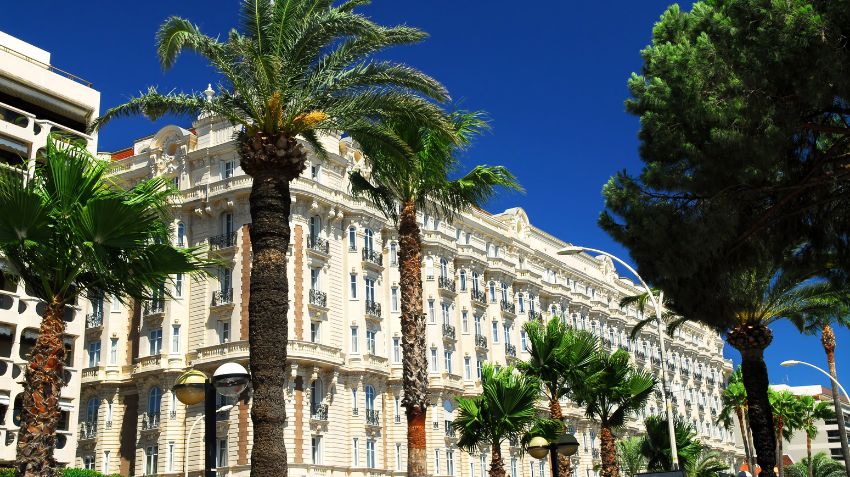
Paris draws you into a world of neighborhoods, cafés and streets that keep revealing themselves. Cannes turns everything toward the Mediterranean, where mornings begin by the water and evenings unfold along the Croisette
Both offer an unmistakably French experience, but create completely different trips. The real choice is whether you want to disappear into the scale of Paris or let the Riviera set the rhythm of your days.
Paris vs Cannes: city break or French Riviera experience?
Paris gives you urban density in the most complete sense. The scale of it does not announce itself from the airport – it assembles gradually as you move through the first few neighborhoods. By the second morning, you understand that the city will not run out of things to offer before you run out of days.
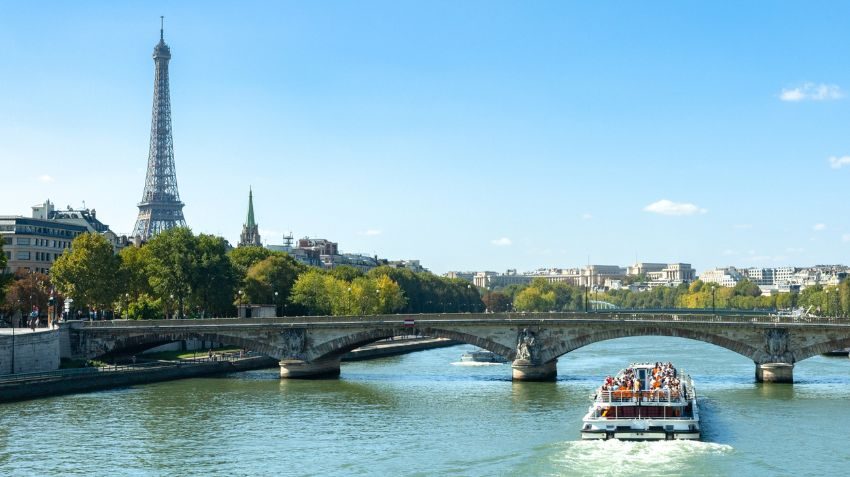
The Seine, the covered passages, the side streets off the main boulevards that hold small bistros operating on a lunch-only rhythm – these are not things you tick off. They accumulate.
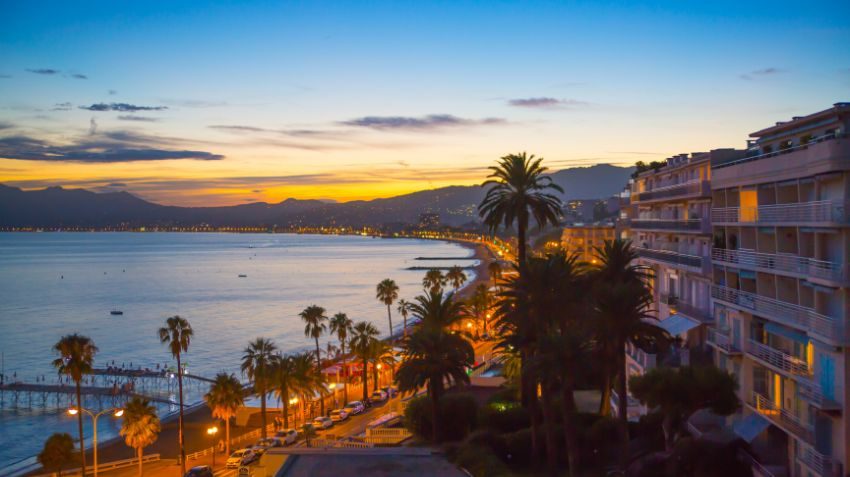
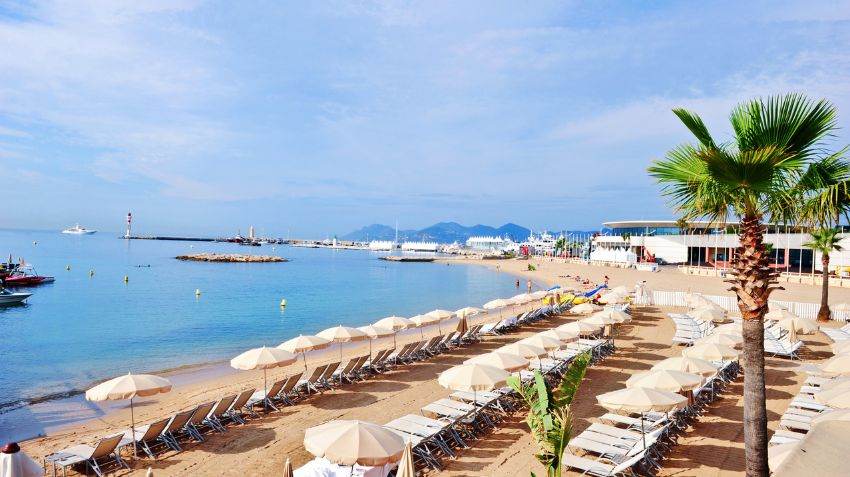
Cannes is a different proposition. It is compact, oriented toward the sea, and structured around pleasure in a specific Mediterranean way: long breakfasts near the port, beach time that extends naturally into an afternoon aperitif, evenings on the Croisette where the light on the water after 20:00 in summer carries its own quiet pull. Le Suquet, the old quarter above the waterfront, is narrow and stone-paved and noticeably cooler than the seafront by late afternoon. The town is small enough to know well in two days.
The sensory registers are distinct. Paris in August smells of warm stone, Métro corridors, and bread. Cannes smells of salt, pine from the hills, and sunscreen in the streets closest to the beach. These are not trivial differences – they are the substance of the experience.
Cannes and Paris in photos
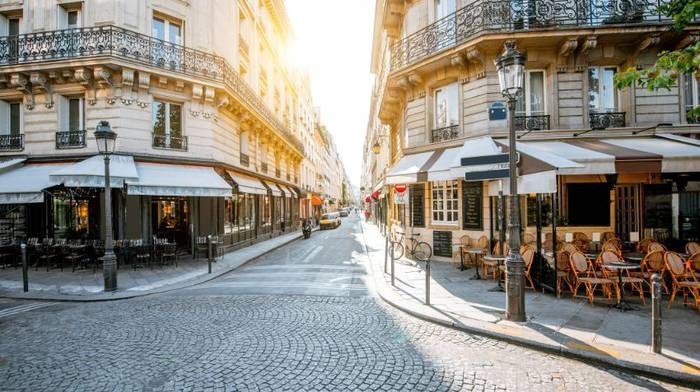
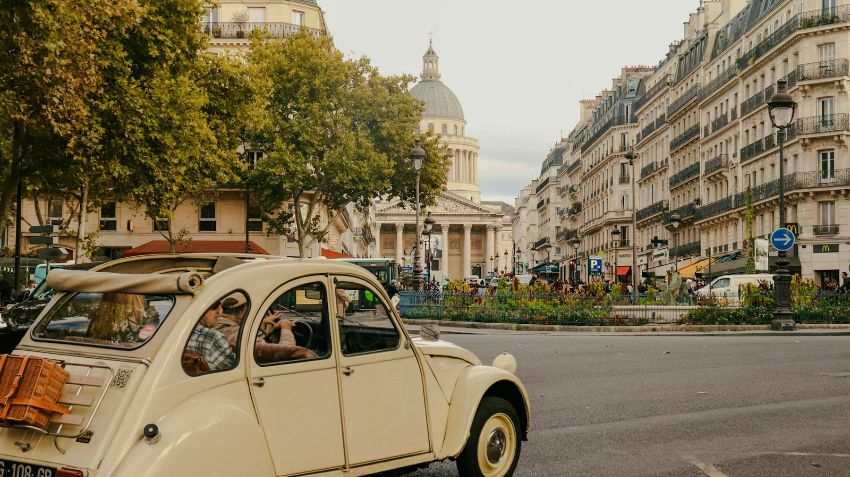
Paris or Cannes: where should you spend more time?
Paris suits travelers who want to move through a city continuously and have it keep rewarding that movement. It is the right choice for first-time visitors to France who want a full cultural orientation, who are comfortable navigating a large metro network, and who find dense urban environments stimulating rather than tiring.
It also has the infrastructure for any travel style: quiet hotel streets in the Marais, neighborhoods that thin out after dinner, covered passages where you can spend two hours without noticing the weather.
Cannes suits travelers who want the south of France as the primary register: the sea as a constant reference point, days that structure loosely around the beach and the waterfront, and a scale that does not require planning. It works particularly well as the second city on a trip, after Paris has already provided the cultural density. Travelers who find large capitals tiring after four or five days often find that Cannes is exactly the counterweight they needed to book but did not know to ask for.
The combination that tends to disappoint is spending too few days in each. Paris in two days is a surface reading. Cannes in four days starts to feel like you have run its perimeter a few times. The natural split for a combined trip is four to five days in Paris, two to three in Cannes, with a clear sense of what each one is for.
How to travel from Paris to Cannes by train or plane
The TGV from Paris Gare de Lyon reaches Cannes in around five and a half hours, sometimes with a change at Nice. It is a comfortable connection and the arrival into Cannes puts you close to the waterfront almost immediately, which is a good way to have your first impression of the town. Alternatively, flying into Nice Côte d’Azur and taking the regional train west to Cannes takes around 30 minutes and often makes more sense if you are sequencing the trip Paris-first and flying home from the Riviera.
Within Paris, the Métro covers the city with enough density that most neighborhoods are accessible without surface transport. The system rewards familiarity after the first day, but the maps are legible from the start. Cannes has no metro. The town is small enough that most visitors walk the main areas without needing transit, and taxis cover the cases where walking is not practical.
If you are thinking about what else sits along the Riviera, Antibes and Nice are both on the regional rail line east of Cannes and take under 30 minutes. Nice in particular gives you a larger city with a different tempo – noisier around the Cours Saleya in the morning, quieter in the backstreets of the old town by early afternoon. The Paris or Marseille comparison covers a similar sequencing question if the south of France calls in a different direction.
Paris and Cannes in summer: weather, crowds and best months
Paris in August runs at a slightly reduced local tempo – many Parisians leave, and the city operates at a more visitor-facing register than in June or September. This is not a problem for first-time visitors; it just means the neighborhood feel is diluted in some areas. The city’s major sites are busiest in the late morning and early afternoon. The Seine embankments, the Luxembourg Garden in the early morning, the covered passages between 10:00 and noon – these retain their quality regardless of the season.
Cannes in summer peaks in beach activity through the late morning and early afternoon. The Croisette gets busier as the day progresses, and the quieter stretch toward La Bocca or the beach east of the port tends to have more breathing room than the central sections. Evenings on the Croisette have a different quality entirely: the Palais des Festivals is calm, the port restaurants are open, and the light on the water in the hour before sunset is the part of Cannes that the festival photographs do not capture.
Late spring and early autumn suit both cities well. May and September in Paris give you a city at full energy but without the concentrated visitor flow of July and August. In Cannes, the same windows offer warm weather, swimmable water, and a pace that feels more like the town actually lives rather than how it performs for a summer audience. May in Cannes does coincide with the film festival, which compresses accommodation prices and availability significantly – worth knowing if you are planning around that window.
Best day trips from Paris and Cannes
From Cannes, the Lérins Islands are the most immediate continuation worth building half a day around. The ferry from the old port takes around 15 minutes to Île Sainte-Marguerite, where the fort and pine-lined paths feel entirely separate from the town you left.
The island empties in the late afternoon as the last ferries leave, and the morning crossing – before the beach crowd arrives on the mainland – gives you the island in its quietest state. Antibes, 15 minutes east by regional train, has an old town that runs at a calmer pitch than Cannes and a covered market that stays lively through the morning.
From Paris, the range of day trips is wider but the quality of the extension depends on what you are looking for. Versailles is the obvious choice for first-time visitors and absorbs a full day easily. Travelers who want a complete city rather than a palace grounds often find Fontainebleau more satisfying as a half-day departure, and the forest around it gives the trip a different texture entirely.
Lyon as an overnight – or as its own stop on the way south – is a natural continuation for anyone interested in French food culture at a pace that runs slower than Paris. The Lyon first-visit read covers the neighborhood structure and river rhythm for anyone weighing it as a third stop.
For travelers deciding between Bordeaux and Lyon as a complement to Paris or as an alternative southward trajectory, the Lyon or Bordeaux comparison works through the key differences in pace, scale and traveler fit.
If Paris is already confirmed and the question is simply where to stay within it, the Paris neighborhoods read covers the main areas and who each one suits.
Is Paris or Cannes better for your France itinerary?
For most first-time visitors to France, Paris is the more complete starting point: it is where the cultural density, the neighborhood variety, and the scale of what France offers as a travel country are most fully present. Cannes is not a lesser version of that – it is a different kind of trip, built around the sea, the Riviera light, and a pace that slows down considerably compared to the capital. The Cannes vs Paris question rarely resolves as an either/or; it more often resolves as a question of sequence and proportion.
The combination works well when each city is allowed to do its own job: Paris as the dense, exploratory opening, Cannes as the place where the trip exhales. Travelers who want that exhale built into their itinerary tend to leave both cities with a clearer sense of what they came for. Travelers who skip one of them often find themselves curious about what the other one would have added.
Paris vs Cannes FAQ: travel time, days needed, beaches and best time to visit
1. Is Cannes or Paris better for a first trip to France?
It depends on what you want your first France trip to feel like. Paris gives you a dense, endlessly layered city where each arrondissement reads differently and two weeks would still leave things unresolved. Cannes is smaller and coastal, built around the Croisette, a few calm streets behind it, and the rhythm of the Riviera. Many first-time visitors find Paris the more complete introduction to France, but Cannes makes sense if you want a slower, sea-facing counterpart on the same trip.
2. How many days should I spend in Cannes versus Paris?
Paris typically takes four to six days before the main areas start to feel familiar rather than new. Cannes works well at two to three days: long enough to settle into the beach rhythm, walk the old quarter Le Suquet, and take the ferry to the Lérins Islands. If you are combining both, a roughly four-plus-two split gives each city room to breathe without one shortchanging the other.
3. How do you travel between Paris and Cannes?
The TGV connects Paris Gare de Lyon to Cannes in around five and a half hours, with some services requiring a change at Nice. Flying into Nice Côte d’Azur and taking the regional train to Cannes is often quicker overall, especially if you are coming from outside France. The train into Cannes arrives close to the waterfront, which makes arrival feel immediate rather than staged.
4. What kind of traveler suits Cannes rather than Paris?
Cannes fits travelers who want the south of France atmosphere: slower mornings, the sea as a reference point, and days that move between the waterfront and the hills without urgency. It works particularly well for anyone who finds large capitals tiring after several days, or for travelers who want to anchor a Riviera base and make short trips along the coast to Antibes or Nice. Paris is the better fit for travelers who want cultural density, neighborhood variety, and a city that rewards being walked continuously.
5. What is the best time to visit both Cannes and Paris?
Late spring and early autumn tend to serve both cities well. In Paris, May, June and September offer comfortable temperatures and a city at its most active without the concentrated summer visitor flow. In Cannes, the same windows give you warm weather, swimmable water and a calmer promenade than July and August deliver – though May coincides with the film festival, which significantly raises accommodation prices and should be planned around rather than stumbled into.