
Paris is the France you imagine; Marseille is the France that surprises you. Choosing between them means deciding whether your first trip should feel iconic and effortless or raw, Mediterranean and unexpected.
Paris unfolds through grand boulevards, world-famous museums and a metro that connects everything. Marseille pulls you toward its old port, layered streets and unmistakable coastal energy. Both are rewarding, but in completely different ways. The right choice depends on which version of France you want to discover first.
What Paris and Marseille feel like for first-time visitors
Paris is a city that makes sense spatially in a way few European capitals do. The arrondissements spiral outward from the centre, the Seine anchors your orientation, and the neighbourhoods shift character gradually enough that you rarely feel you have crossed a wrong line. In summer, the Marais stays lively into the evening, the terraces along the canal fill steadily after 19:00, and the light on the Seine around 20:30 in July has a specific quality that the city somehow delivers reliably every time.
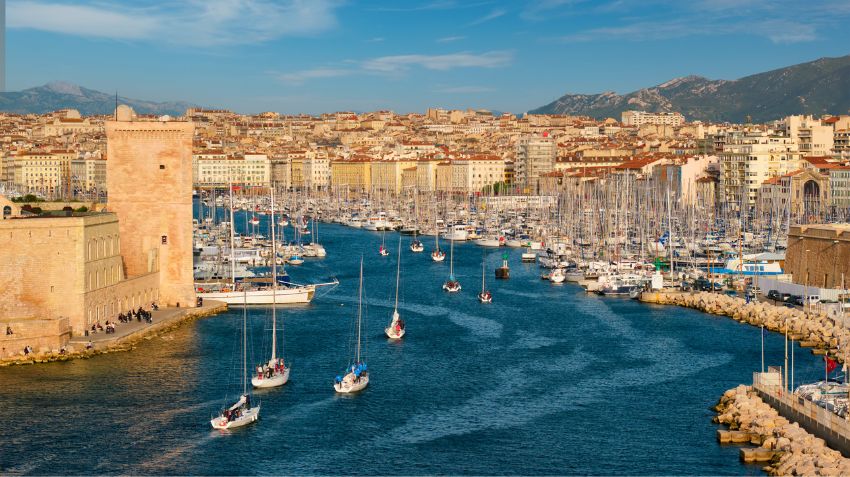
Marseille operates on a different register. The Old Port is genuinely the heart of daily life, not a set piece for visitors, and the atmosphere on the quay in the early evening, boats moving, fish market long finished, locals eating outside at small tables facing the water, is the closest thing the city has to a signature. The stone is warmer here.
The pace does not decelerate gradually the way it does in Paris; it simply starts slower and stays that way, except on the waterfront where the energy picks up around aperitif hour and holds until well past midnight.
Paris in August means the city is partly Parisian and partly not. Locals leave, visitors arrive in volume, and some of the neighbourhood rhythms that make Paris interesting thin out. The museums fill early. Queues at major sites form on the shaded side of the plaza well before opening. Marseille in August is hot and very active along the Corniche and around the calanques, with the beaches reaching peak activity by late morning. Both cities reward an early start more in summer than at any other time of year.
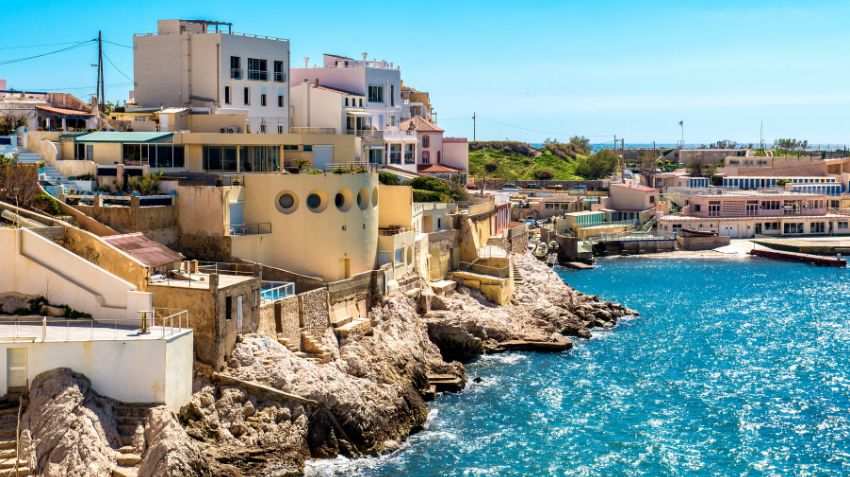
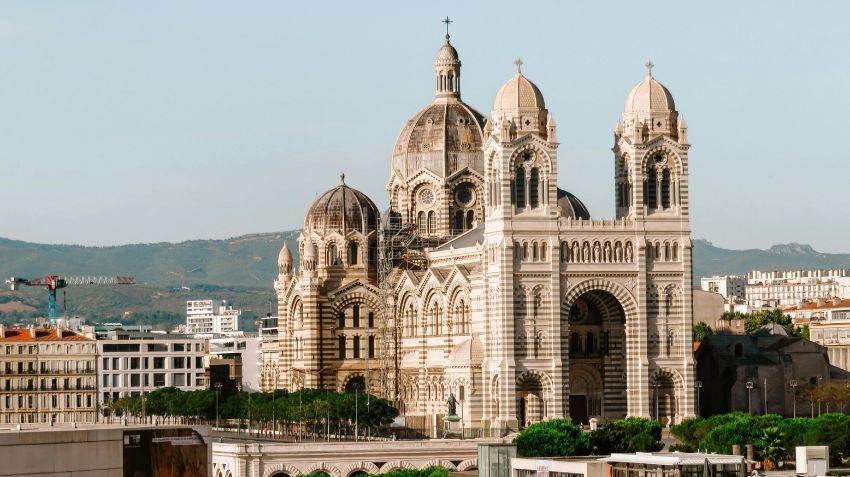
Marseille in photos


Paris or Marseille: which city suits your travel style?
Paris suits travelers who want density, cultural infrastructure, and the satisfaction of a city that rewards purposeful movement. A first-timer in Paris can spend four days doing almost nothing but walking between arrondissements and eating well, and leave with a coherent picture of what the city is. The metro is generous enough that you do not need to plan transfers carefully. The neighbourhood fit between Le Marais, Saint-Germain, Montmartre and Oberkampf covers most traveler types.
Marseille suits travelers who are comfortable with a city that asks more of them upfront. The reward is real, but it does not appear immediately. The first day at the Old Port can feel like any Mediterranean port city. By the second afternoon, after a walk up through Le Panier or a morning trip out toward the calanques by boat, the city starts to feel specific in a way that Paris, for all its texture, does not quite replicate.
Marseille works particularly well for travelers who find Paris slightly over-curated, and for anyone who wants a Mediterranean coastal city without the full resort character of the Côte d’Azur further east.
Who might reconsider Marseille as a solo first France stop: anyone with a short trip who wants guaranteed cultural throughput, anyone navigating France with limited French (Paris has more English-language infrastructure), and anyone whose travel energy runs better in a city with clearer visitor-facing signposting.
Travelers who want a Mediterranean city with a more polished Riviera atmosphere should also compare Marseille with the first-time Nice guide, especially if the south of France is the main focus of the trip.
How to visit Marseille and Paris on the same first trip to France
The TGV between Paris Gare de Lyon and Marseille Saint-Charles takes approximately three hours, which makes combining the two cities straightforward from a logistics standpoint. The question is sequence and pacing, not transport.
Most first-timers who do both tend to start in Paris, partly because flights into CDG are more frequent from most departure points, and partly because Paris functions well as an entry into France: it is legible, well-connected and easy to orientate from. After four or five days in Paris, the shift to Marseille feels like a gear change rather than a destination switch. The city is slower, warmer, saltier, and requires less planning.
Going the other way, Marseille first and then Paris, works better for travelers coming from southern Europe or for those who want to move from loose to structured. The rhythm shift from Marseille to Paris can feel slightly abrupt if you have settled into the slower coastal pace. Worth knowing, not a reason to avoid the sequence.
For a ten-day first trip to France, a practical split is five days in Paris, one travel day mid-trip, and three to four days in Marseille with at least one excursion toward the calanques or a half-day to Cassis. The cities do not compete; they complement each other in a way that is actually unusual in a country with this many cities worth visiting.
For a broader route that includes Paris, Marseille and other major French cities, the France itinerary guide explains how to sequence them without unnecessary backtracking.
Travelers who find themselves wanting to go deeper into French regional city life after spending time in both capitals often look at the Lyon or Bordeaux direction next. If that question is already forming, the Lyon or Bordeaux comparison covers the contrast between those two at the same decision stage.
What sits near Paris and Marseille worth adding to the trip
From Paris, day trips to Versailles and Fontainebleau are well-established for good reason, but within a first France trip the more interesting question is usually whether to extend toward the Loire Valley or toward Reims for a half-day. Neither requires a logistics plan beyond a direct train and a willingness to leave Paris by 09:00.
If you’re still deciding whether your first France trip should focus on the capital or the Mediterranean coast, the Paris vs Nice comparison explores that choice in more detail.
From Marseille, the calanques are the obvious continuation, accessible by boat from the Old Port or by a combination of bus and short walk from Cassis. The boat route from the Old Port in the morning, with the white limestone visible from the water, is one of those experiences the region delivers specifically and that does not photograph the way it looks in person.
Aix-en-Provence is 35 minutes by bus or train and adds a quieter, more contained Provençal register to the trip. If the Marseille stay runs three nights or more, spending one of them in Cassis and coming back by boat is a sequence that tends to be the part of the trip people remember.
Travelers continuing inland after Marseille can also use the first-time Lyon guide to understand how Lyon fits between the Mediterranean and northern France.
For travelers weighing a longer France itinerary that adds Lyon or Bordeaux alongside Paris and Marseille, the first-time Bordeaux guide covers how that city fits a sequenced France visit and what kind of traveler rhythm it suits best.
Travelers who end up gravitating toward the Paris neighborhood question specifically, trying to decide between Le Marais, Montmartre or the Left Bank as a base, will find the spatial logic laid out in the Paris neighborhoods read.
Should you choose Marseille or Paris for your first visit to France?
For most first-time visitors to France, Paris is the right starting point. Not because it is the obvious choice, but because it delivers a complete and legible version of French urban life with the least amount of navigation overhead. The city’s infrastructure, cultural density and neighbourhood variety give a first-timer multiple ways into France without requiring them to have already formed a sense of what kind of traveler they are in this country.
Marseille is a more rewarding choice for a first trip if you are already comfortable in southern European port cities, if you want coast alongside urban life, or if your travel energy runs better in places that do not perform for visitors. Adding Marseille to a Paris trip, rather than choosing between them, is almost always the better frame for a trip of ten days or more. The two cities together give you a more complete picture of what France actually contains than either one does alone.
The Marseille vs Paris question resolves differently depending on how long you have, what you want from the trip, and whether you are looking for cultural saturation or something closer to lived Mediterranean atmosphere. Both cities deliver what they promise; the fit shifts depending on where you are in your travel life and what you came looking for.
Continue exploring: if you are narrowing down where in France to go after Paris and Marseille, the Lyon and Bordeaux reads cover two cities that each hold up well as a third stop on a longer France trip.
Marseille vs Paris FAQ: first visit, train travel, safety, best time and city rhythm
1. Is Marseille or Paris better for a first trip to France?
It depends on the rhythm you are looking for. Paris gives you the full density of European capital life, art, history and a metro that takes you anywhere without much planning. Marseille runs slower, feels more Mediterranean, and works better if you want a coastal city with a distinct local atmosphere and fewer tourist layers. Some travelers find doing Paris first and Marseille as a second stop is the most natural sequence.
2. How many days do you need for Marseille and Paris combined?
A practical first trip usually gives Paris four to five days and Marseille two to three. Paris takes longer to feel settled in, while Marseille reveals its core quickly around the Old Port and a handful of connected quarters. The TGV between the two runs in about three hours, so the transfer is easy to drop into the middle of a ten-day France trip.
3. Is Marseille safe for first-time visitors?
The areas most first-time visitors use, the Old Port, Le Panier, the waterfront and the Corniche, are active and well-frequented. Like any large port city, Marseille has quieter residential zones further north where visitors have less reason to go. Staying oriented around the central and southern quarters gives a straightforward experience.
4. What is the best time to visit Marseille and Paris?
Late spring and early autumn suit both cities well. Paris in June and September has long days, manageable visitor numbers and comfortable temperatures for walking between arrondissements. Marseille shines from May through October, with the coast and calanques at their best in the shoulder months before the August peak fills the waterfront and the popular beaches reach their fullest activity by midday.
5. Can you travel between Marseille and Paris by train?
Yes, and it is one of the more comfortable intercity connections in France. The TGV from Paris Gare de Lyon to Marseille Saint-Charles runs in roughly three hours, with frequent departures across the day. Booking in advance gives considerably better fares, and the train drops you directly into the heart of each city without the airport transfer overhead.