
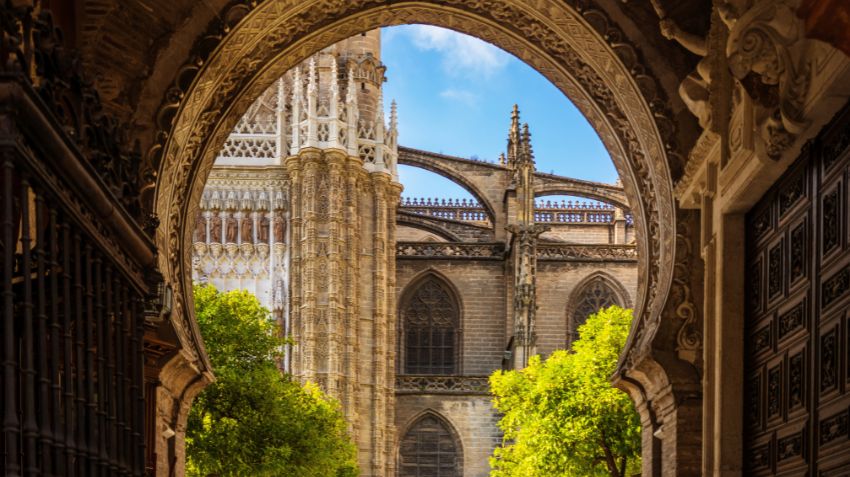
Seville and Malaga are only two and a half hours apart by train, yet they create completely different Andalusian trips. Choosing between them means deciding which atmosphere you want to wake up to and which rhythm you want your days to follow.
Seville draws you into tiled courtyards, shaded streets and evenings that come alive after 21:00. Malaga opens toward the Mediterranean, combining beaches, waterfront walks and a lighter coastal pace.
In summer, both cities save their best energy for mornings and evenings, when the streets reopen, terraces fill and Andalusia feels most alive.
What Seville and Malaga feel like for visitors in summer
Seville in summer is one of the most internally consistent cities in Spain. The streets empty at midday, not metaphorically but quite literally. Shutters close, squares drain, the city goes quiet in a way that feels almost conspiratorial, as if the whole place has agreed to something the tourist has not been told about.
What replaces the midday is a long, slow afternoon that eventually dissolves into an evening of unusual energy: tapas bars filling between 21:00 and midnight, outdoor tables claiming whatever shade the buildings cast, the Guadalquivir embankment becoming a slow-moving social corridor under warm orange light.
Malaga in summer holds some of that same pattern but with different proportions. The afternoon is less aggressively quiet, partly because the sea is close enough that a breeze reaches even the interior streets, partly because the city’s social rhythm is slightly less structured than Seville’s. The historic centre around Calle Larios and the Atarazanas market area stays active across more of the day.
The beach at La Malagueta fills from mid-morning onward, and by early afternoon it reaches a kind of full rhythm – not unpleasant, but fully underway. Evenings in the Soho district and around the cathedral quarter carry a relaxed energy that starts earlier than Seville’s.
The sensory register differs, too. Seville smells of orange blossom in spring and warm stone in summer. Malaga carries salt air and espresso on almost any street near the port. One city smells like an interior; the other smells like somewhere opening outward.
Malaga and Seville in photos
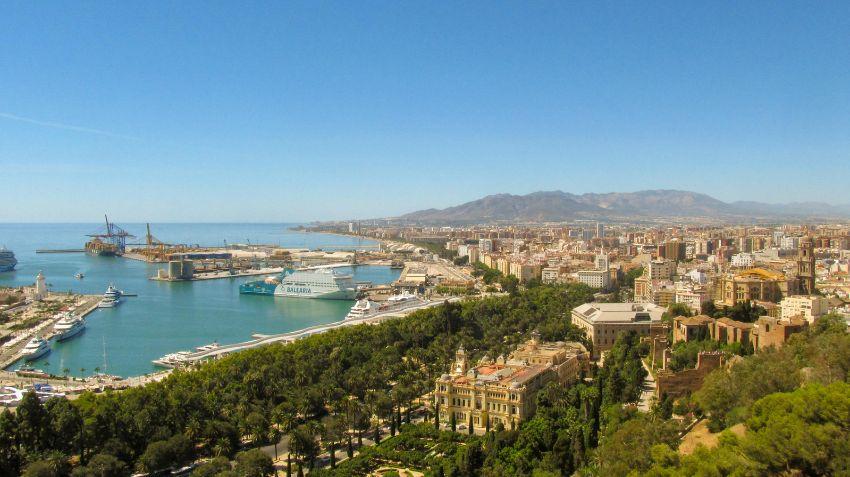
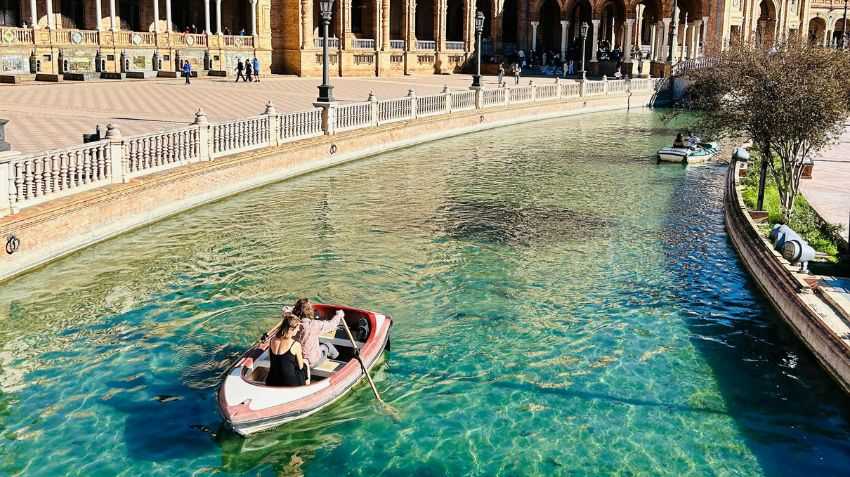
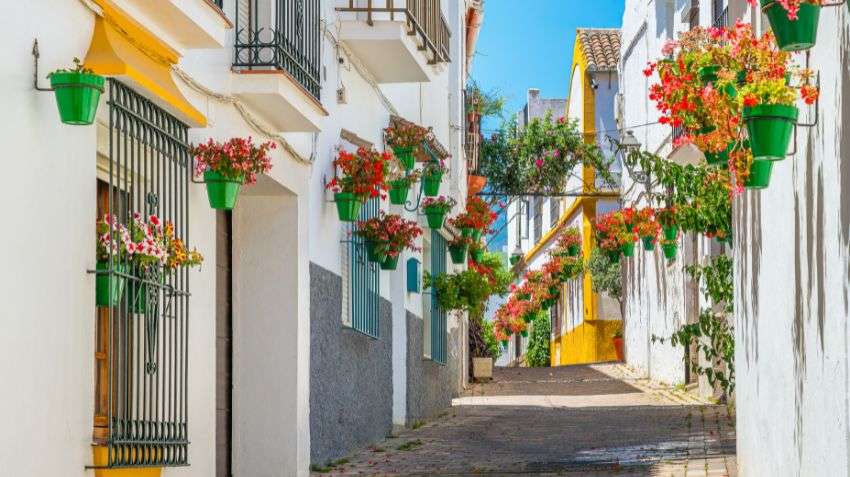
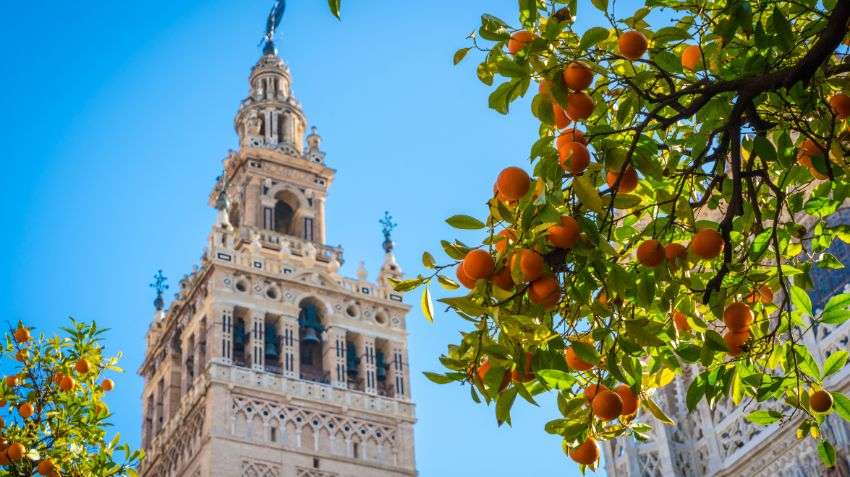
Seville or Malaga: which city suits your travel style?
Seville fits travelers who want to feel genuinely inside a city. The historic core is large enough that walking it without a destination feels rewarding rather than purposeless. The Triana neighborhood across the river runs on its own rhythm, slightly more residential, slightly less curated, and the walk back along the Guadalquivir at dusk is among the more quietly satisfying things the city offers. Seville rewards people who are comfortable with the city directing the day rather than the other way around.
Malaga suits travelers who want a coastal anchor without committing to a full beach holiday. The Picasso Museum, the Alcazaba and the Roman theatre sit within a ten-minute walk of each other in a centre that does not feel overwhelmed by them. The city is easier to pace independently than Seville – more legible on a map, more forgiving of arriving without a plan.
For remote workers or slow travelers spending a week or more in Andalusia, Malaga’s structure tends to feel more sustainable. Seville, for the same traveler, works better as an immersive four-day experience than as an indefinite base.
Those who should reconsider Seville: travelers who find densely atmospheric cities physically intense in heat, who want a beach within walking distance, or who prefer a city that does not ask them to sync with its rhythm. Those who might find Malaga underwhelming: travelers seeking a city with strong architectural narrative and cultural weight in every direction they walk.
How to visit Seville and Malaga on the same trip
The two cities work well as a sequence rather than a pair of parallel bases. Most travelers find the combination lands better when Seville comes first. Arriving into Seville, spending three days inside its density, then moving to Malaga by train gives the trip a natural decompression arc. The coastal arrival in Malaga after several days in Seville’s stone alleys feels like the day the windows open.
The reverse – Malaga first, then Seville – works too, but the emotional logic runs differently. Malaga’s ease can make Seville’s intensity feel slightly sudden on arrival. Manageable, but less smooth as a progression.
In terms of time, three days in Seville and two or three in Malaga fits most trip lengths of seven to ten days in Andalusia. From Seville, Granada is a natural adjacent node if the itinerary has room, sitting about three hours east by bus and operating in a completely different register – cooler, more vertical, quieter across more of the day. From Malaga, the coastal towns toward Nerja or the hill villages of the Axarquia open up easily by bus or car for a day out of the city’s rhythm.
Travelers weighing Seville against other Spanish alternatives rather than only pairing it with Malaga will find the Seville vs Valencia comparison useful, particularly for understanding how Seville’s cultural weight sits alongside a more Mediterranean pace.
For those already drawn to Malaga and wondering how it compares to Spain’s larger cities, the Madrid vs Malaga read works through the contrast between capital energy and coastal register in the same Spain trip context.
Summer pacing in Seville and Malaga: when the day actually works
Both cities have the same broad answer to summer heat: avoid midday outdoors, extend the morning, and give the afternoon back to the city. The practical implementation differs.
In Seville, the pattern is more strict. A useful day in summer starts before 10:00 when the morning air is still and the great interior spaces – the Alcázar, the Cathedral, the Casa de Pilatos – feel like they belong to whoever arrived early. By 13:00, moving between outdoor sites feels effortful in a way that is not rewarding. The siesta is not a myth in Seville; it is an active social contract. The second half of the day begins properly around 18:00, and the real energy of the city does not arrive until after 21:00.
In Malaga, the window is slightly wider. The coastal air keeps mornings productive until closer to 13:30, and the evening activates a little earlier, with many of the good tapas bars on Calle Granada and around the Merced square filling by 20:30. The beach functions best in the first two hours of the morning or after 18:00, when the light shifts west and the temperature drops enough to make the sea feel like a reward rather than a duty.
The Malaga neighborhood read at Malaga areas and which fits your trip goes into more detail on which parts of the city hold the most useful rhythm for different pacing preferences, including which districts decompress faster and which stay active well into the night.
What sits near Seville and Malaga worth adding to the trip
From Seville, the most natural extensions are inland and cultural. Córdoba by train takes under an hour and a half and delivers one of the more dense architectural experiences in Spain – the Mezquita in the morning, before the corridors fill, is one of those places where the scale of the interior takes a moment to process. Jerez de la Frontera, about an hour south by bus, runs at a quieter tempo and rewards an afternoon without demanding anything of the visitor. Both work as day trips from Seville without needing to change the base.
From Malaga, the logic turns coastal. Nerja, about an hour east by bus, is smaller and calmer with a seafront balcony square and beaches that hold more space per person than La Malagueta. Frigiliana, a white village fifteen minutes uphill from Nerja, fills quickly on summer mornings but offers a genuinely different texture from both cities.
To the west, the road toward Marbella passes through a different kind of Costa del Sol – more resort-oriented and less useful for travelers who came to Malaga for the city rather than the coast. Worth knowing as context, not necessarily worth a day.
Should you choose Seville or Malaga for your Spain trip?
The honest answer is that the two cities are not really competing. They serve different moments in a trip and different states of travel. Seville is the city that asks you to slow down and pay attention to it, and what it gives back for that attention – the courtyard light at noon, the evening density of the Alameda, the surprise of Triana on a weekday morning – is substantial and specific. Malaga is the city that lets you find your own rhythm quickly, offers real cultural weight without insisting on it, and keeps one foot permanently in the sea.
If the Andalusia question is still open, the Barcelona and Malaga comparison at Barcelona vs Malaga offers a useful frame for how coastal Spain scales across different city sizes and energy registers.
In summer, both cities work best when approached on their own terms: later mornings, longer lunches, evenings that run past what seems reasonable. The Seville or Malaga pacing and comparison ultimately lands on temperament. A traveler who wants to feel absorbed by a place tends to find Seville the right answer.
A traveler who wants a base that stays interesting without becoming total tends to prefer Malaga. Many people find they want both, which is why the train between them exists and runs often.
Seville vs Malaga FAQ: first visit, summer pacing, combining both cities, days needed and slow travel fit
1. Is Seville or Malaga better for a first visit to Spain?
Seville suits travelers who want to move slowly through an architecturally dense city, spending days between shaded courtyards, tile-clad plazas and long dinners. Malaga works better for those who want a coastal anchor with a walkable historic centre that does not ask much of them physically or temporally. Both reward a first visit, but they deliver different rhythms.
2. Which city is hotter in summer, Seville or Malaga?
Seville sits inland and holds heat in its stone alleys well into the night, making summer afternoons genuinely quiet on the streets. Malaga sits on the coast and benefits from sea air and afternoon breeze, which keeps the outdoor temperature more workable for longer. Both cities slow down at midday; Seville does so more completely.
3. Can you visit both Seville and Malaga on the same trip?
Yes, and the combination works well. The train between them runs in roughly two and a half hours, making a three-to-four day split in each city a natural structure. Most travelers find Seville better as the opening city and Malaga as the coastal decompression that follows.
4. How many days do you need in each city?
Seville opens up properly after two nights, but three days gives the city enough room to feel unhurried. Malaga works well in two days as a destination in its own right, or three if you add a day trip along the coast toward Nerja or into the Axarquia hills.
5. Which city suits slow travelers or remote workers better?
Malaga tends to fit slow travelers and remote workers more naturally, with a compact centre, a reliable coastal rhythm and a lower baseline intensity. Seville works well for slower trips too, especially in autumn when the light turns amber and the crowds thin, and the city reveals a quieter, more residential character that summer keeps largely out of sight.