
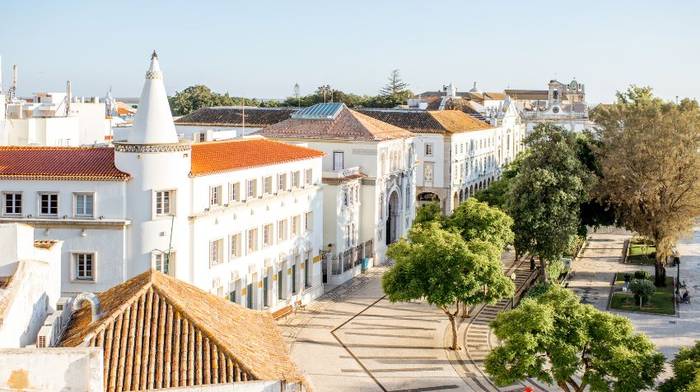
The neighborhoods of Faro do not announce themselves the way they do in larger cities. There is no obvious boundary between one district and the next, no dramatic architecture change, no shift in noise that tells you you have crossed into somewhere new. The city unfolds gradually, and that slow reveal is part of what makes choosing where to base yourself here worth thinking about carefully.
Faro is small enough that almost every central area is walkable from every other, but the experience of each district varies enough that the choice still matters. The old town inside the medieval walls feels nothing like the marina strip a few hundred meters away, and both feel nothing like the quieter residential streets that start just west of the train station. Getting the base right shapes the whole stay.
Travelers planning a broader Algarve trip may also find the Portugal itinerary guide useful for understanding how Faro fits within a multi-city route across the country.
This is not a city where you pick a neighborhood for convenience and then leave each morning to do something else. In Faro, the neighborhood is the experience. The rhythm of your days will come from what is immediately around you – the morning café, the afternoon light, the direction your first evening walk naturally takes.
Cidade Velha: is it the best area to stay in Faro?
The Arco da Vila is the main entrance into Cidade Velha, and the transition is immediate. Stone narrows, the sound of the surrounding streets drops away, and the scale shifts to something much more compressed and quiet. Inside the walls there are a cathedral, a Roman museum, a few restaurants, some guesthouses, and not much else in the best possible sense.
Mornings here are still. The day visitors – and there are plenty of them in summer – tend to arrive between late morning and mid-afternoon, walk through, have a coffee in the cathedral square, and leave. After around 18:00 the district returns to the people who are actually staying in it. The cathedral square in late evening, with the facade catching the last of the western light around 20:30, is one of those small and specific experiences that travelers describe long afterwards without quite being able to explain why it affected them.
The walking surface inside the walls is uneven – wide cobblestones with irregular joins, and a short uphill section from the archway to the square that is easy enough on foot but will test a wheeled suitcase. Accommodation options are limited and tend to book ahead, especially from June through September. If you can get a room inside the walls, the evenings alone justify the effort.
Faro Marina: best area for first-time visitors
Walk back through the Arco da Vila and turn left, and within five minutes you are on the marina promenade. This is where Faro’s social life concentrates in summer. Terraces run along the water, the ferry pier for the Ria Formosa islands is just to the east, and the old town is close enough that you can walk into it and back in half an hour without a plan.
The marina strip is the easiest base for a first visit because it resolves almost everything logistically without requiring local knowledge. The main restaurants are here, the taxis appear reliably, and the ferry to Ilha Deserta or Ilha do Farol – both sandbar islands accessible from Faro without a car or tour package – leaves from the pier a short walk east. By early evening in summer the waterfront fills with a mix of tourists and locals, and it stays active until around midnight on weekends without becoming particularly loud on the residential streets one block in.
For travelers still deciding whether Faro matches their travel style, the Faro travel guide explores the city’s overall rhythm, attractions, and role within the Algarve.
For travelers who want the Ria Formosa islands as the primary reason for being in Faro, the marina base makes particular sense. The morning ferries leave early enough that being close to the pier matters more than any atmospheric consideration.
Baixa: Faro’s city center for food and local life
The pedestrianized Rua de Santo António and the streets around it are where Faro functions as an ordinary Portuguese city rather than a tourist destination. Bakeries that open at 08:00 and run out of the good pastries by 09:30, small restaurants where lunch still costs eight euros and nobody is performing anything for anyone, a covered market that runs until early afternoon. This area has no particular atmospheric signature beyond that of a working Portuguese town center, and that is its appeal.
Staying in the Baixa puts you between the marina and the train station, with both walkable in under ten minutes. It is a sensible base for travelers who are using Faro as a hub for day trips along the Algarve by rail, since the station is close and the Algarve line connects Faro to Lagos in the west and Tavira in the east without a car. The mornings here smell of coffee and fresh bread and bus exhaust in roughly equal proportions – not especially atmospheric, but genuinely lived-in.
Santo António: Faro’s quieter residential area
Past the train station, the city changes character with almost no transition marker. The streets around Santo António and stretching north into the Mouraria quarter are residential in the way that few parts of the Algarve’s main towns still manage to be. There are local cafés that do not have menus in English, small grocery shops, and a near-complete absence of tourism infrastructure.
For remote workers or slow travelers spending a week or more in Faro, this part of the city often suits better than the waterfront. The pace is slower, the accommodation tends to be less expensive, and the daily rhythm of the neighborhood is oriented around the people who live there rather than the people passing through. It is also quieter at night, which matters more by day four than it does on arrival.
The trade-off is distance from the old town and marina, which is not large on a map but can feel more significant in the heat of a July afternoon. The walk takes around fifteen minutes; a taxi from here to the ferry pier costs less than five euros.
Travelers weighing this kind of slower residential base against a more central Algarve option – or wondering how Faro’s pace compares to a city with a very different energy altogether – often find the Faro or Coimbra comparison a useful frame for understanding what each place asks of you across a longer stay.
How to choose where to stay in Faro
Faro airport sits four kilometers from the marina. Bus lines 14 and 16 cover the route in roughly fifteen minutes, stopping near the train station and the main central streets. The arrival experience is unremarkable – a small regional airport with a single terminal – and the transit into the city is straightforward enough that a first-time visitor has no real reason to pre-book a taxi.
The train station is at the eastern edge of Baixa, a five-minute walk from the marina. All the neighborhoods described above are reachable on foot from there. If you are arriving with significant luggage and heading to the residential west, a taxi from the station makes more sense than the walk in summer – not because the distance is great, but because the route takes you across an exposed stretch without shade around midday.
Travelers arriving from northern Portugal often compare Faro with Porto before choosing where to spend more time, making the Porto or Faro comparison a useful next read.
The Ria Formosa lagoon is visible from the marina promenade and from the old town walls. The ferry pier is a natural anchor for anyone here primarily for the islands. For a broader sense of how to use Faro as a base and what sits around it, the Faro travel guide covers the wider context of the city and its relationship to the Algarve beyond the resort strip.
Which area of Faro suits your travel style?
Cidade Velha suits travelers who are happy to accept limited accommodation choice and a slightly inconvenient walking surface in exchange for evenings that feel genuinely separate from the rest of the city. It is not a practical base for anyone with a car, since parking inside the walls does not exist in any useful sense. It rewards slow travelers, couples, and anyone who wants the evening walk to feel like arriving somewhere rather than moving between two functionally identical streets.
The marina works for first-time visitors, anyone using Faro as a Ria Formosa island base, and travelers who want maximum flexibility without needing to make decisions in advance. It is the least atmospheric choice but also the most forgiving one.
Baixa suits travelers using the rail network for Algarve day trips, and anyone who finds the idea of a genuinely Portuguese town center more appealing than a tourist waterfront. Accommodation here tends to be simpler and slightly less expensive than on the marina.
The residential west – Santo António and the Mouraria quarter – suits longer stays, remote workers, and travelers who find that proximity to local infrastructure matters more to them than proximity to the main sights. If Lisbon’s neighborhood logic is something you already think about, the dynamics here are comparable in miniature; the best areas to stay in Lisbon read covers a parallel set of trade-offs in a much larger city.
Best neighborhoods in Faro: which one should you choose?
The neighborhoods of Faro are close enough together that no single choice locks you out of anything. A base in Santo António does not mean you miss the old town; a base in the marina does not mean you cannot find a quiet lunch on a residential street. The city is small enough that the districts bleed into each other across a normal day on foot.
What the neighborhood choice actually determines is the texture of the time you spend not doing anything in particular – the morning coffee, the late evening walk, the quality of the quiet outside your window at 23:30. Those small daily moments are where Faro’s different districts diverge most clearly, and where getting the match right matters most for how the stay actually feels.
Faro suits travelers who are comfortable with a city that does not perform. It is not trying to impress anyone. The right neighborhood for you is probably the one that matches the rhythm you are looking for, not the one closest to the most attractions – because in Faro, the distances between attractions are small enough that they are never the real variable.
Frequently asked questions about neighborhoods of Faro
1. Which neighborhood in Faro is best for a first visit?
The area immediately around the marina and Baixa is the most practical base for a first visit. It puts you within ten minutes of the old town, the ferry pier to the Ria Formosa islands, and the main restaurants, without requiring a car or transit knowledge to get started.
2. Is Faro’s old town worth staying in?
Cidade Velha has only a handful of accommodation options inside the walls, but the atmosphere after 21:00 is noticeably different from anywhere else in the city. The streets empty of day visitors, the light softens over the cathedral square, and the scale becomes genuinely intimate. If you can get a room there, it tends to shape the whole stay.
3. Which part of Faro is quietest for longer stays?
The residential streets west of the train station, around Santo António and into the Mouraria quarter, run at a slower tempo than the waterfront. Local cafés, morning bakeries, and an almost complete absence of tourist-facing infrastructure make it well-suited to remote workers or travelers spending more than four or five days.
4. How far is Faro airport from the city center?
The airport sits about four kilometers from the marina. Bus line 14 and 16 cover the route in roughly 15 minutes depending on traffic, with stops near the train station and the main central streets. Taxis run around 10 to 15 euros for the same trip.
5. What is the atmosphere like in Faro in summer?
Early summer evenings in Faro have a particular quality: the light over the Ria Formosa lagoon turns copper around 20:30, the marina terraces fill without becoming dense, and the city shifts into a slower rhythm that stays pleasant well into the night. The old town is busiest between 11:00 and 17:00; outside those hours it belongs almost entirely to the people staying in it.