
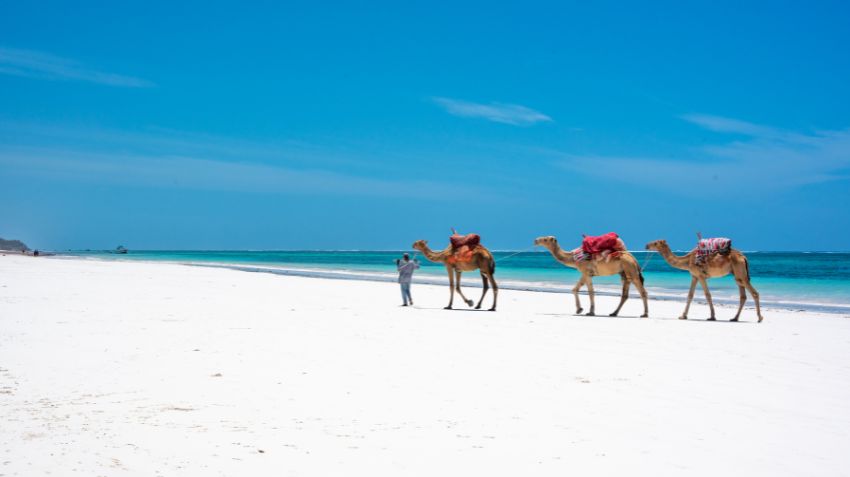
Zanzibar and Mombasa share the Indian Ocean, but create two completely different East Africa beach trips.Zanzibar draws you into island days shaped by Stone Town, warm water and an unhurried coastal rhythm. Mombasa combines beaches with city energy, easy safari access and the freedom to continue deeper into Kenya.
From July to October, both coasts offer clear skies, comfortable temperatures and inviting sea conditions. The real choice is whether you want your journey to unfold slowly on an island or begin at the coast and open toward a larger African adventure.
What Zanzibar and Mombasa actually feel like for first-time visitors
Zanzibar’s atmosphere is defined by the island’s scale. Stone Town sits on the western tip, a dense labyrinth of carved doors, coral stone walls, and narrow alleys where the smells of cloves, cardamom, and charcoal grills shift from one street to the next. The rest of the island spreads out into long stretches of coastline separated by small fishing villages and resort clusters. There is no urgency here, and the island does not impose one.
By early afternoon most of the beaches shift into a slower register: snorkeling trips return, beach bars fill up slowly, and the light on the water turns from flat white to something warmer as the sun drops. The east coast around Paje has a wide, shallow tidal flat that locals wade across at low tide; the north around Nungwi keeps water accessible most of the day. Switching between them requires commitment, but that is part of what makes the island feel worth exploring properly.
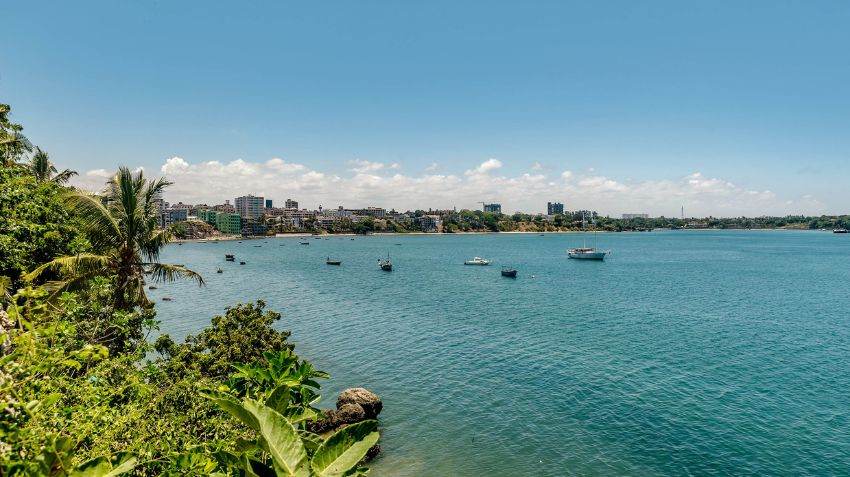
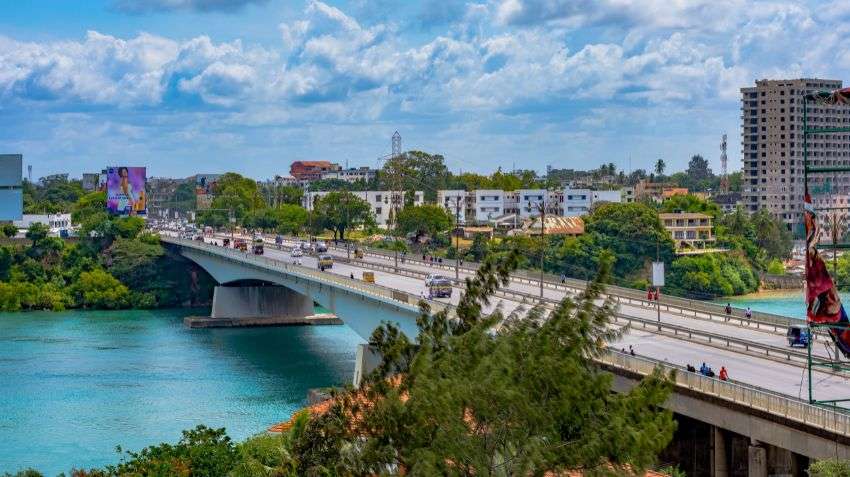
Mombasa reads differently from the moment you arrive. The city has genuine urban weight: traffic on Moi Avenue, the old dhow harbor smell near the Old Town, market stalls that run into each other. The beach experience lives north of the city along the North Coast resort corridor, which operates at a more familiar resort tempo. The separation between the city and the beach is physical and intentional. Most travelers anchor on the North Coast and dip into Mombasa itself for a day, visiting Fort Jesus and the Old Town before returning.
The Old Town itself carries a Swahili coastal character that feels related to Zanzibar’s Stone Town but with a mainland energy underneath it. The alleyways are narrower, the Arabic and Portuguese architectural traces more compressed, and the foot traffic heavier. An evening walk from Fort Jesus toward the dhow harbor around 19:00, when the light is low and the fishing boats come in, is one of the better quiet moments the city offers.
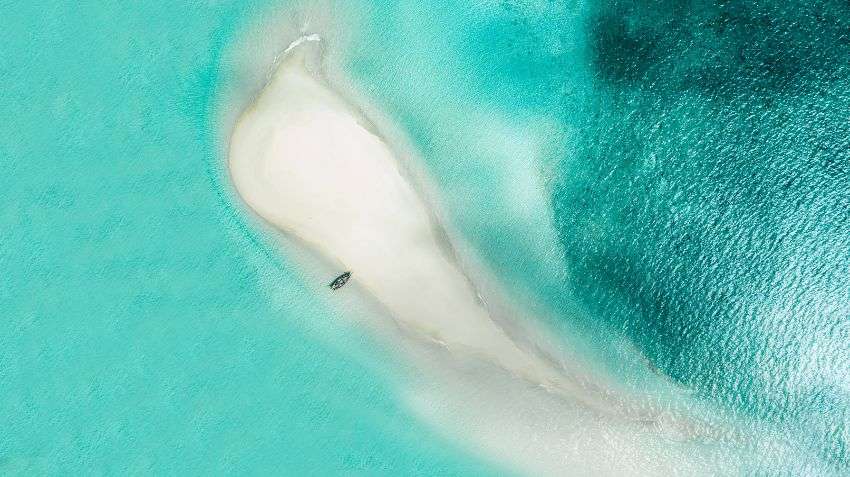
Zanzibar and Mombasa in photos
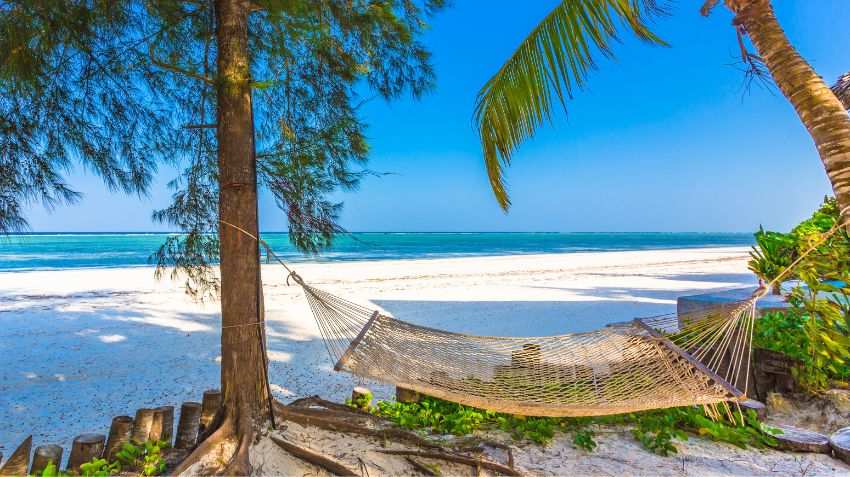
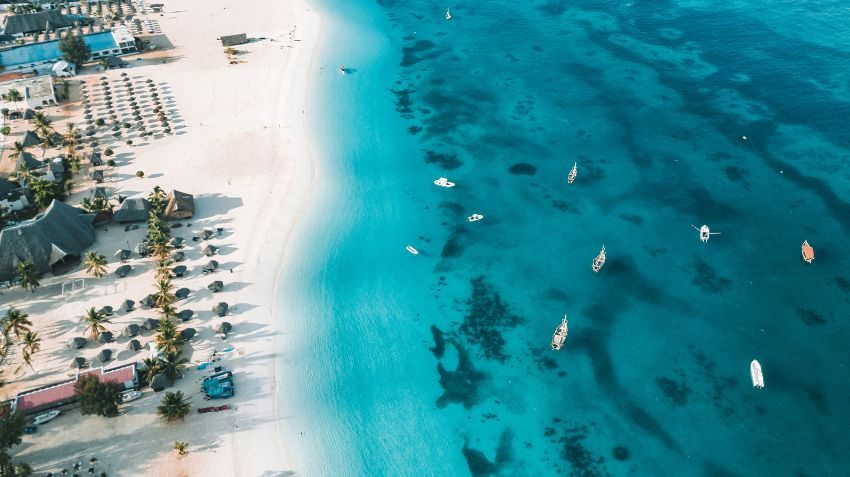
Zanzibar or Mombasa: which coast suits your travel style?
Zanzibar fits travelers who want the island’s self-containment to do the work. You do not need to organize much beyond getting there and choosing which part of the coast to base yourself in first. The days fill on their own: a morning snorkel, a slow breakfast, an afternoon on the sand, an evening in Stone Town for the night market at Forodhani Gardens. That is not simplicity as a limitation; it is simplicity as the point.
Solo travelers and couples on a slower pace tend to find the island easy to settle into. The lack of a pressing agenda suits people who want a genuine decompression after a longer trip or a demanding period at work. Divers find Zanzibar’s waters rewarding, with sites accessible from most coastal bases without long boat rides.
Mombasa suits travelers who want the beach but do not want only the beach. The proximity to Tsavo East and Tsavo West, both reachable in a few hours by road, makes the Kenya coast a natural start or finish for a safari itinerary. If a game drive is already in the plan, anchoring on the Mombasa coast and treating it as the relaxation leg of a longer trip is a clean and logical structure. Families with children often work well in the North Coast resorts, which are built for that kind of stay.
Where Mombasa works less well is for travelers expecting the island atmosphere of Zanzibar. The resort corridor has its own appeal, but it does not have Zanzibar’s cultural gravity or the sense that the beach and the history are inseparable from each other.
How to travel between Zanzibar and Mombasa as a first-time visitor
Getting to Zanzibar most commonly means flying through Dar es Salaam or Kilimanjaro, with the island served by direct international flights from a number of regional hubs. Once on the island, movement is straightforward: shared taxis and dala-dalas connect Stone Town to the main coastal villages, and the distances are short enough that island-hopping between the north and east coasts in a single trip is realistic without much planning overhead.
Stone Town is compact enough to navigate on foot for most of the day, though the narrow alleys that make it atmospheric also mean you will take the same wrong turn twice before you stop needing the map. That is part of how the town reveals itself.
Mombasa’s logistics are slightly more layered. Moi International Airport sits south of the city, connected by the Likoni Ferry crossing for travelers heading to the South Coast, and by road directly for the North Coast resort corridor. The North Coast resorts are mostly 20 to 40 minutes from the city center depending on traffic, which in Mombasa can behave unpredictably in the late afternoon. Most travelers on the North Coast rent tuk-tuks for local movement, hire a driver for city excursions, and use organized transfers for safari legs.
Traveling between Zanzibar and Mombasa on a single trip is possible but not naturally efficient. There is no direct ferry link, and flights between the two require a connection, typically through Nairobi or Dar es Salaam. Most first-time visitors choose one coast and return for the other on a future trip, which is probably the more honest advice to follow.
What sits near Zanzibar and Mombasa worth adding to the trip
From Zanzibar, the most natural continuation is Pemba Island to the north, significantly less visited, with some of the better diving in the region and an atmosphere that is several steps quieter than anywhere on Zanzibar itself. The mainland side, including a few days in Stone Town before heading to a northern beach, is a well-worn and easy-to-pace structure. Mafia Island, further south in the Tanzanian archipelago, sits at the other end of the effort spectrum: remote, unhurried, and focused almost entirely on marine life.
From Mombasa, Tsavo East and Tsavo West are the most obvious extensions. Diani Beach, 30 kilometers south of Mombasa on the South Coast, carries a quieter energy than the North Coast resort corridor and has its own small independent restaurant scene that rewards a day trip or an overnight stay. Watamu and Malindi further north are both smaller, slower coastal towns that suit travelers who want a lower-key Kenya coast experience after the busier Mombasa resort area.
Travelers who realize mid-trip that they want more of Zanzibar’s cultural depth and island rhythm than a beach-only stay can deliver will often find the Zanzibar first-time orientation a useful reference for structuring the Stone Town days alongside the beach stays.
For those still in the early stages of deciding which part of the island to anchor in, the question of base location shapes the entire trip’s pacing, and the Zanzibar area stays read covers the north versus east coast trade-off in practical terms.
Compare pacing and atmosphere: the decision between an island base and a mainland coastal city is really a decision about what kind of daily rhythm you want, and both coasts reward the traveler who arrives with some sense of which one they are actually choosing.
Should you choose Zanzibar or Mombasa for your first East Africa beach trip?
The honest answer is that they solve different problems. Zanzibar is the right choice for travelers who want the East African coast to feel self-contained, slow, and culturally layered, where Stone Town and the beaches exist as one continuous experience rather than two separate legs. Mombasa is the right choice for travelers who want the coast as part of a larger Kenya itinerary, particularly when a safari is already in the frame and the beach is the recovery chapter rather than the main event.
For a genuine first East Africa beach trip where the ocean and the island atmosphere are the primary draw, Zanzibar carries more of what makes that coast distinctive. For travelers who want flexibility, urban access, and the option of moving inland without a second international flight, Mombasa earns its place as the better base. The choice between Zanzibar and Mombasa for a first East Africa beach trip rarely comes down to quality; it comes down to which kind of trip you are actually on.
Zanzibar vs Mombasa FAQ: best time to visit, days needed, daily pace, combining both and trip structure
1. Is Zanzibar or Mombasa better for a first East Africa beach trip?
Zanzibar suits travelers who want a self-contained island rhythm with clear water, quiet beaches and Stone Town as a cultural anchor. Mombasa works better for those who want to combine a beach stay with easy access to Tsavo or Amboseli for a quick safari extension. The choice usually comes down to whether you want an island atmosphere or a mainland base.
2. What is the best time to visit Zanzibar and Mombasa?
July through October is the clearest, least rainy window for both coasts, with trade winds keeping temperatures comfortable and seas relatively calm. December through February is also popular and warm, though Zanzibar in particular sees more visitor activity over Christmas and New Year. April and May bring the long rains and are generally avoided by first-time visitors.
3. How many days do you need in Zanzibar versus Mombasa?
Zanzibar rewards five to seven nights minimum: Stone Town alone takes a couple of days to settle into, and switching beaches between the north and southeast adds natural pacing variety. Mombasa functions well as a four-to-five night stay, especially when combined with a safari leg inland, since the city itself is better used as a gateway than as a slow-stay base.
4. Can you visit both Zanzibar and Mombasa on one trip?
It is possible but requires some logistical planning. The most natural route combines Nairobi or Kilimanjaro as a flight hub with either coast as a finish, rather than traveling directly between the two. Flying between Mombasa and Zanzibar involves a connection and adds cost; most first-time visitors choose one and return for the other.
5. What does the daily pace actually feel like in Zanzibar compared to Mombasa?
Zanzibar runs slower. Mornings stretch into late breakfasts, afternoons settle into beach time or shade, and Stone Town comes alive again around sunset when the heat softens and the alleys start filling with the smell of grilled seafood from the Forodhani night market. Mombasa has more urban energy, especially around the Old Town and the North Coast resort strip, and the days feel more structured around movement between places.