
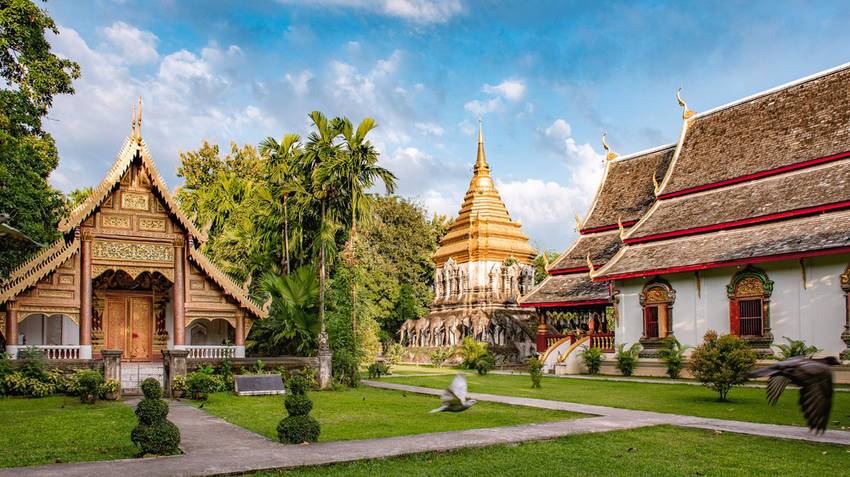
Chiang Mai works differently from most cities in Thailand. The pace slows almost immediately, the streets narrow into temple walls and teak shophouses, and the logic of the place reveals itself district by district rather than all at once. It is the kind of city where you settle in rather than tick off.
The neighborhoods here are genuinely distinct from each other, not just in geography but in atmosphere, resident mix, and daily rhythm. Where you base yourself shapes the version of Chiang Mai you experience. A week in Nimman is a different trip than a week inside the moat, and a longer stay in Santitham is different again.
Travelers still deciding whether Chiang Mai belongs in their Thailand itinerary can continue with the Chiang Mai first-time guide before narrowing the neighborhood decision.
Is the Old City a good area to stay in Chiang Mai, Thailand?
The square moat frames Chiang Mai’s historic core, and first-timers almost always start here. It makes sense. Nearly every temple of significance sits within walking distance, the Saturday and Sunday Walking Streets pull crowds from across the city, and the concentration of guesthouses, street food, and cafes means you rarely need to think about logistics.
The streets inside the moat are mostly quiet during the day – a scooter threading past a temple gate, monks walking in single file in the early morning, the smell of incense and frangipani drifting from a courtyard. The atmosphere shifts around 17:00 when the markets and food stalls set up and the foot traffic picks up gradually through the evening.
It is the right base for a first trip or a stay of three to five days. Longer, and some travelers find the visitor activity pulls against the quieter experience they were looking for. The Old City is not a residential neighborhood in any ordinary sense – it is a living temple district that happens to have very good guesthouses – and that character is worth understanding before you book two weeks there.
Nimman: cafes, coworking, and the city’s newer energy
Nimman Road and the grid around it runs at a different register entirely. This is where Chiang Mai’s cafe culture is most concentrated – six or seven streets of independent coffee shops, roasters, coworking spaces, and restaurants that rotate their menus. The food scene here is genuinely strong, and the density of places to sit and work with reliable internet makes it the default landing zone for digital nomads and remote workers.
The main stretch of Nimman gets busy on weekends and can feel more like a commercial strip than a neighborhood by Saturday afternoon. But two blocks in either direction the tempo drops quickly. Side streets have residential households alongside small cafes, and mornings on those sois – before 09:00, with coffee from a local shop and almost no one around – carry a particular kind of ease.
Nimman sits about 2 km west of the Old City moat. Close enough to reach by songthaew in ten minutes, separate enough to feel like a different city. It suits people who plan to stay a week or more, who want their accommodation near good cafes rather than near temples, and who do not mind a certain amount of commercial energy as the background hum of their day.
Travelers choosing between Chiang Mai’s cafe-centered lifestyle and the capital’s larger urban scale may find the Bangkok first-time guide useful for understanding how daily life differs between the two cities.
Travelers weighing Chiang Mai against Bangkok for a longer working stay will find the contrast useful in the Bangkok vs. Chiang Mai comparisonwhich covers the tempo difference between the two cities at the lifestyle level.
Is Santitham a good area for longer stays in Chiang Mai, Thailand?
Santitham sits just north of the Old City moat and is the neighborhood that longer-stay travelers tend to discover by accident, then wish they had found sooner. The streets here are functional and residential. Local market stalls, motorcycle repair shops, small noodle restaurants with no English menus, som tam places with plastic chairs set out at 10:00. It is not a designed experience.
Accommodation costs less here, noticeably so. The walking distance to the moat is around fifteen to twenty minutes, which is workable on foot in the cool season and an easy songthaew hop in warmer months. There is no particular scene to be part of, which is exactly the point for certain travelers.
It works well for anyone staying two weeks or longer who wants to slip into something closer to ordinary daily life in Chiang Mai rather than the curated version. The morning market on Chang Phueak Road is worth the early start – busy, local, and mostly ignored by the tourist infrastructure.
Is the Night Bazaar area good for staying in Chiang Mai, Thailand?
The eastern side of the city – roughly the zone between the moat and the Ping River – centers on the Night Bazaar and spreads into a few quieter riverside streets. The Bazaar itself runs seven nights a week and fills a large covered and open-air complex with handicrafts, clothing, and food stalls. The atmosphere is dense and commercial in the way night markets usually are; it works as an evening activity rather than a place to base yourself unless proximity to that specific rhythm is what you are after.
The Ping River runs along the eastern edge of this zone, and a few guesthouses and boutique hotels have positioned themselves along it. The riverside is quieter than Nimman and noticeably less busy than the Old City, with good food options close by and a slower pace in the mornings when the river carries light in a way the moat streets do not.
This area suits travelers who want a middle register – more local than the Old City core, more animated than Santitham, and with slightly easier access to the airport road than Nimman.
How to get around Chiang Mai neighborhoods in Thailand
Chiang Mai has no metro or rail link. The main way to move between neighborhoods is by red songthaew – shared pickup trucks that run fixed routes for a low flat fare and are genuinely practical for most journeys during daylight hours. After around 21:00 they thin out, and Grab tuk-tuks or taxis pick up the slack.
Renting a scooter changes the experience significantly. Most inter-district trips become five to ten minutes rather than fifteen to twenty, and the flexibility of reaching the outer markets, Doi Suthep temple, or the craft villages along the San Kamphaeng road without coordinating transport is real. That said, traffic in the moat area can be dense around 17:30 to 19:00, and parking inside the Old City requires patience.
The airport sits about 4 km south of the Old City. Most airport taxis quote a fixed fare and take twenty to thirty minutes depending on traffic. There is no meaningful public transit link to the terminal, so the first and last journeys of a trip here always involve a taxi or a pre-booked pickup.
For travelers planning to combine Chiang Mai with beach time, the jump south to Phuket is common enough to be worth planning before arrival. The first visit to Phuket guide covers what to expect in terms of pace and geography, which is a fairly different register from the north.
Travelers whose Thailand plans are centered around the coast may also find the Chiang Mai versus Phuket comparison useful when deciding how much time to allocate to the north versus the beaches.
Where to stay in Chiang Mai, Thailand by traveler type
The Old City moat area suits first-time visitors, shorter stays of three to five days, and anyone whose primary interest is the temple architecture and historic fabric. It is also the most straightforward base if you want to be inside the action without logistics overhead.
Nimman fits remote workers, longer stays, and people whose daily rhythm centers on coffee shops and coworking rather than sightseeing. It also suits couples who want a restaurant scene with range.
Santitham fits slow travelers and extended stays – anyone comfortable navigating an unmarked local market, eating from places with no tourist infrastructure, and trading proximity to the main attractions for a quieter, more grounded daily rhythm.
The riverside east of the Night Bazaar fits travelers who want a calmer stay without leaving the central city entirely, or who are visiting primarily for the market culture.
None of these areas suits travelers who need reliable late-night public transit, fast urban connectivity, or a nightlife scene that runs past 01:00. Chiang Mai closes earlier than most travelers expect on weeknights, and the city’s energy is weighted toward the afternoon and early evening rather than the late night.
Best time to stay in Chiang Mai, Thailand
June through September is the rainy season in Chiang Mai – not all-day rain, but daily afternoon downpours that arrive with reasonable consistency and cool the city quickly. Mornings are usually clear and usable. The heat and humidity are present throughout the day, which makes the cafe culture even more central than usual. Most visitors are in air-conditioned spaces by early afternoon, returning to the streets around 17:00 when the temperature drops and the day’s character shifts.
The crowds thin considerably compared to the November to February peak window. Accommodation costs less, walking is more comfortable in the mornings, and the city runs at a calmer tempo. The downside is that Doi Suthep and the mountain roads can be inaccessible after heavy rain, and the air quality issue – significant during the February to April burning season – is not a concern in summer.
For travelers who want to experience Chiang Mai without peak-season visitor activity, the summer months offer a version of the city that runs at a noticeably different pace. The Old City at 08:00 in July, before the rain arrives and before most guesthouses have served breakfast, has a quality that the high-season version rarely does.
How to choose the best neighborhood in Chiang Mai, Thailand
Chiang Mai works well as either an opening or a closing chapter of a Thailand trip rather than a middle stop. Arriving in the north first gives you time to settle into Thailand’s pace before the faster energy of Bangkok or the beach logistics of the south. Ending here gives a slower decompression after days of island movement.
Five to seven days covers the main districts and a day trip or two to the surrounding valleys. Ten to fourteen days is enough to begin feeling genuinely settled – to have a usual cafe, to know which songthaew route runs past your guesthouse, to stop consulting a map for most short walks.
Travelers weighing whether to add coastal Thailand to their itinerary alongside the north might find the Pattaya first-timer guide useful for understanding how different the coastal register is from the Chiang Mai pace – the gap between the two atmospheres is wider than the geography suggests.
Reading Chiang Mai by district before you arrive
Chiang Mai rewards travelers who arrive with a sense of which version of the city they are looking for. The Old City gives you the historic register and the most navigable first few days. Nimman gives you the infrastructure for a working stay. Santitham gives you the quieter, longer-stay version that most visitors only hear about second time around. The riverside east sits between them in both geography and atmosphere.
For travelers comparing neighborhood choices across Thailand’s largest cities, the Bangkok neighborhood guide offers a useful contrast to Chiang Mai’s much smaller urban footprint.
The city is flat, easy to navigate without speaking Thai, and tolerant of a range of paces – from three fast days of temple visits to three slow weeks of market mornings and afternoon rain. What it does not do well is late-night energy, resort-style leisure, or the kind of beach-and-pool rhythm that draws people to southern Thailand. Chiang Mai is a city for wandering, settling, and eventually finding a daily routine you did not plan in advance. For the right kind of traveler in the right rhythm, that is exactly the point.
Chiang Mai neighborhoods FAQ
1. What is the best neighborhood to stay in Chiang Mai for a first visit?
The Old City moat area gives first-timers the densest access to temples, walking streets, and the Saturday and Sunday night markets. It runs busy in the evening but quiets down by midnight on most nights, and nearly everything worth seeing in the historic core is reachable on foot from there.
2. Is Nimman Road a good area for remote workers in Chiang Mai?
Nimman works well for remote workers who want reliable cafes with strong Wi-Fi and a walkable coffee-to-coworking radius. The strip gets busy on weekends and the commercial energy is higher than the Old City, but a few blocks off the main road the pace drops considerably and the mornings stay calm.
3. What is Santitham like for longer stays in Chiang Mai?
Santitham sits north of the Old City and runs at a noticeably slower, more residential tempo. It suits travelers staying two weeks or more who want local markets, quieter streets, and lower accommodation prices without being far from the action. The walk to the moat takes about fifteen minutes.
4. How do you get between Chiang Mai neighborhoods without a scooter?
Red songthaews (shared pickup trucks) connect most districts for a fixed low fare and run throughout the day. App-based tuk-tuks through Grab cover the gaps and work well for evening returns when songthaews thin out after around 21:00. Most inter-neighborhood hops take ten to twenty minutes.
5. What time of year is best for visiting Chiang Mai?
November through February brings cool evenings, low humidity, and the clearest air of the year, which is when the city feels most comfortable to walk and explore. The Loi Krathong and Yi Peng lantern festivals fall in November and draw significant visitor activity, but the atmosphere around the moat during that week is something the city does unlike anywhere else in Thailand.