
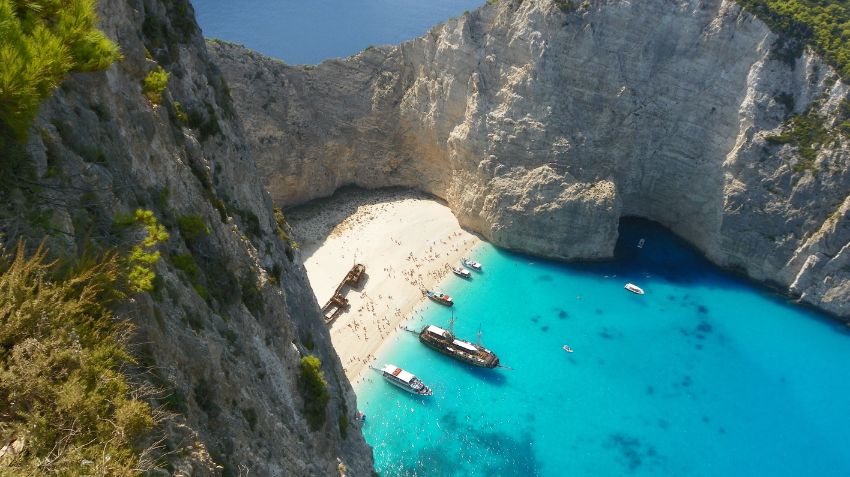
Zakynthos in July sits at peak brightness: the sea along the Vassilikos peninsula runs a clear pale turquoise, the old town harbour fills with evening walkers well past ten, and the whole island operates on a rhythm pulled between beach hours and late dinners. Finding the best areas to stay in Zakynthos is less about choosing the prettiest spot on the map and more about understanding which part of the island matches how you actually want to spend your days.
The island is not large, but it is meaningfully varied. The northeast coast around Tsilivi runs a relaxed family-friendly tempo. The south around Laganas is the island’s most social zone, built around long beach days and nights that extend well past midnight. Zakynthos Town has a harbour atmosphere and a local life that resorts rarely replicate. And the northwest and the Vassilikos peninsula sit quieter, slower, further from the package-holiday circuit.
Zakynthos in photos
What Zakynthos feels like as an island base
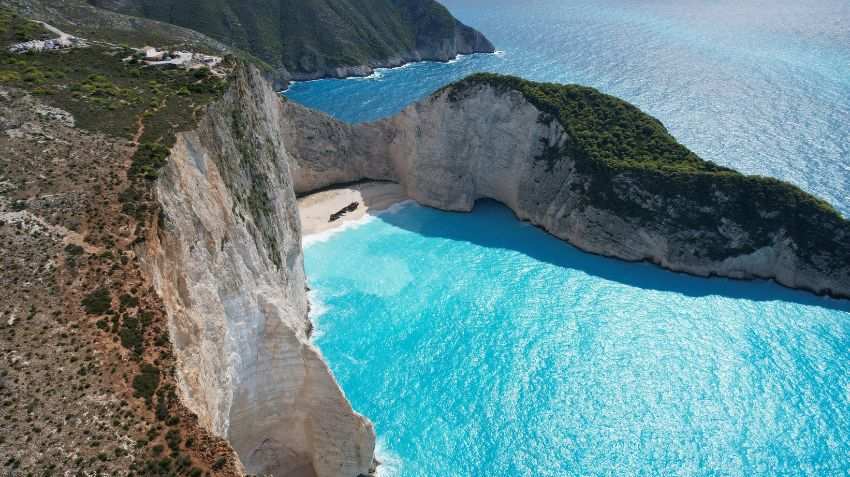
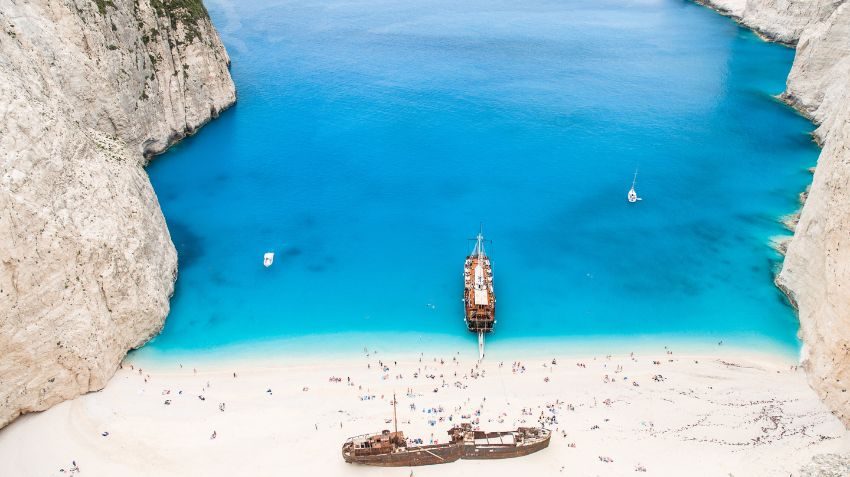
Zakynthos is a beach island in the way that Santorini is not. The draw is physical: specific coves, specific water colors, a handful of beaches that justify the flight on their own. Navagio is the one on every phone screen, but it is not the only reason people come. Porto Zoro on the Vassilikos peninsula, the twin bays of Xigia and Makris Gialos in the north, the long stretch at Gerakas – these are beaches with their own distinct character, and they are spread across a landscape that takes about forty minutes to cross by car.
That spread matters when choosing a base. Unlike islands where the main town is close to everything, Zakynthos requires a decision about proximity. Most beach resorts sit at some distance from Zakynthos Town, and many of the island’s most interesting coastline is on the western cliffs or the southern peninsula, accessible mainly by rental vehicle. The local bus network covers the main resorts but runs on a schedule that becomes unreliable after midday.
In peak summer, the southern coast from Laganas through to the airport road carries most of the island’s visitor activity. The northeast coast around Tsilivi runs busier than its reputation suggests by mid-July. The quieter rhythms are in the north and along the Vassilikos road, where the pace is genuinely slower and the road noise disappears two minutes after you turn off the main highway.
Zakynthos Town: who it suits as a base
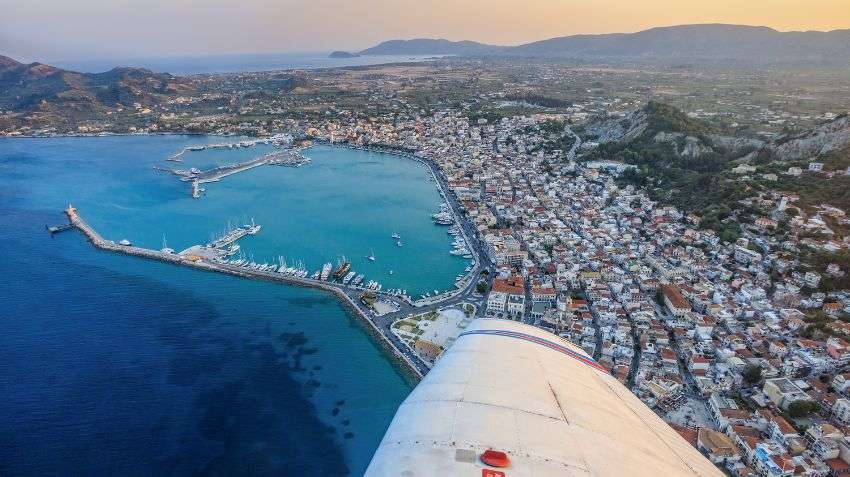
Zakynthos Town – known locally as Chora – was almost entirely rebuilt after the 1953 earthquake, which gives it an unusual coherence for a Greek island capital: wide, walkable streets, neoclassical facades, a long harbour that faces west and catches the late afternoon light across the water.
The town suits travelers who want an evening life that is not solely tourist-facing. The area around Plateia Agiou Markou has cafes and bars with a local crowd mixed in; the harbour restaurants run later than the resort strips, and the fish market area near the port has a texture that feels more like a functioning town than a service zone for beach tourists. Mornings are quiet enough to walk the backstreets without company.
It is also the most practical base if you are moving around the island by bus or relying on taxis. The port connects to the mainland at Kyllini, and the main bus station is centrally located. That said, the town beach is not the island’s best – most people staying here use the town as an evening base and drive or take a bus to the beaches during the day. Accommodation tends to be a mix of small hotels and apartments, priced slightly below the larger resort areas in the same season.
Tsilivi and the northeast coast: best for families and first visits
Tsilivi is the island’s most straightforward resort zone. The beach is sandy and slopes gently into calm water, the strip behind it has enough restaurant variety for a week without repetition, and the eight-kilometre road back to Zakynthos Town is easy to drive at any hour. For a family with children or for travelers who want facilities without searching for them, it works reliably.
It is not a quiet zone in July. The beach fills by late morning, and the main street runs lively into the early hours around the bar area. But the noise is distributed along the strip rather than compressed into a single venue, and it is easy to find accommodation a few streets back from the beach where the acoustic register drops noticeably by midnight.
Further northeast, Alykanas and Alykes run at a lower tempo. Alykes in particular has a long, relatively shallow beach with a salt-lake backdrop that gives it an unusual look for the island. The village has fewer bars, the visitor mix skews toward couples and older travelers, and the evenings are genuinely quiet after 22:00. For travelers who want the northeast coastline but prefer a slower pace, Alykes is usually the better fit than Tsilivi.
Travelers weighing the Greek island neighborhood decision more broadly might find the Thassos area guide useful alongside this one – it covers a similar set of trade-offs on an island with a more forested, less resort-oriented character.
Laganas and Kalamaki: the southern beach strip
Laganas has the longest beach on the island – a wide, flat arc of sand that is genuinely impressive at low activity in the early morning, when the sun comes from behind the hills to the east and the water is still. By midday, the beach is at full summer tempo, and by evening the main street is the loudest single zone on Zakynthos.
It suits a specific traveler well: someone who wants the beach to be the center of the day, who enjoys the social energy of a resort strip, and who is not particularly bothered by noise after midnight. For that traveler, Laganas delivers exactly what it promises. For anyone else, it is probably not the right base, and one night is enough to confirm that.
Kalamaki sits immediately to the east of Laganas, shares access to much of the same beach, but runs at a noticeably quieter register. The bar scene is smaller, the accommodation feels less concentrated, and the proximity to the Caretta-Caretta sea turtle nesting beaches gives the area a slight ecological awareness that shapes its character – sections of the beach are managed protection zones, which limits some activities but also keeps them calmer. Most travelers who want southern beach access without the Laganas tempo find Kalamaki the more livable option across a week.
Vassilikos peninsula: the quieter, more independent southeast
The Vassilikos peninsula extends south from the airport road into a landscape of pine-backed beaches and narrow roads that fork toward small coves. Porto Zoro, Banana Beach, Gerakas – these are among the island’s best beaches in terms of water quality and natural setting, and they sit within fifteen minutes of each other along a single peninsula road.
Travelers still deciding between different Greek island atmospheres may also find the Mykonos or Paros comparison useful for understanding how resort energy and beach rhythm change between islands.
Staying in the Vassilikos area works well for travelers who are happy with a rental car and do not need a strip of restaurants within walking distance. The accommodation here is mostly smaller hotels, villas and apartment rentals – fewer large package-holiday complexes, more independent properties. The nearest large supermarket requires a drive, and most evenings end early because there is simply not much infrastructure for staying out late.
What the peninsula offers in return is a pace that feels genuinely different from the resort zones. Mornings at Gerakas, before the day-trippers arrive by boat from Laganas, have a particular quietness – clear water, light through the pine trees, the sound carrying across the bay. It is the kind of base that suits slow travelers, couples on a longer stay, or anyone who wants beach quality without the surrounding infrastructure.
For travelers who find themselves drawn to this kind of pace on a Greek island, the Greek island beaches digital detox read covers the broader logic of which island zones support that rhythm best.
Is Zakynthos right for your travel style?
Zakynthos works best for travelers who prioritize water and coastline above everything else. The island’s real offering is in its specific beaches – the color of the water at Porto Zoro, the setting at Navagio (seen from the cliff rather than the beach, since boat access is the only way down), the calm of the Vassilikos peninsula at dawn. If those things are what you are looking for, the island delivers them consistently in summer.
It is less suited to travelers who want cultural density, a historic old town with layered architecture, or a food scene that competes with larger Greek cities. Zakynthos Town has its charm, but the 1953 earthquake removed most of what age gives to other island capitals. The food is good without being remarkable.
The traveler-fit question really comes down to base choice. The island has enough variation between Laganas, Tsilivi, Vassilikos and the quieter north that most traveler types can find a zone that suits them, as long as they are making that choice consciously rather than defaulting to the first available accommodation.
Peak July and August are the fullest and noisiest window; September keeps the warmth and the sea while losing most of the crowd activity, and for many independent travelers it is the more usable season.
If you’re planning to combine Zakynthos with the mainland or another island, the Greece itinerary guide explains which routes work best depending on your available time and travel style.
For a more urban island-city pairing, the Rhodes Town or Heraklion comparison which addresses the question of basing on an island with more town infrastructure.
Zakynthos areas FAQ: best base, families, crowds, Laganas and September
1. What is the best area to stay in Zakynthos for a first visit?
Zakynthos Town suits first-time visitors well: it has the widest choice of accommodation, the most reliable restaurant and bar scene, and direct access to the harbour and ferry connections. The evenings here have a genuine local rhythm that beach resorts rarely replicate.
2. Which area in Zakynthos is best for families?
Tsilivi and Kalamaki are the most practical family bases. Both have calm, shallow-entry beaches, a walkable strip of restaurants, and organised facilities. Tsilivi sits closer to Zakynthos Town, which makes day trips straightforward; Kalamaki is quieter and closer to the Caretta-Caretta nesting beaches.
3. Where should I stay in Zakynthos to avoid the crowds?
The northwest coast, particularly around Alykes and the villages above Volimes, runs at a noticeably slower tempo than the south. Vassilikos and Porto Roma on the Vassilikos peninsula also offer a quieter rhythm, though the roads in are narrow and a car is essential.
4. Is Laganas worth staying in, or is it better as a day trip?
Laganas works well for travelers who want a social, high-tempo beach week and are not bothered by late-night noise. It is genuinely lively in a way that some visitors enjoy and others find relentless. For most people who want both beach access and evening atmosphere without the volume, Kalamaki next door is a better fit as a base.
5. What is Zakynthos like in September compared to July and August?
September keeps the warm sea and the full restaurant season but sheds most of the peak-summer activity. Beaches have space in the morning, the harbour in Zakynthos Town is easier to walk, and the island’s quieter villages feel genuinely unhurried. For most independent travelers, it is the most comfortable window to explore the island.