
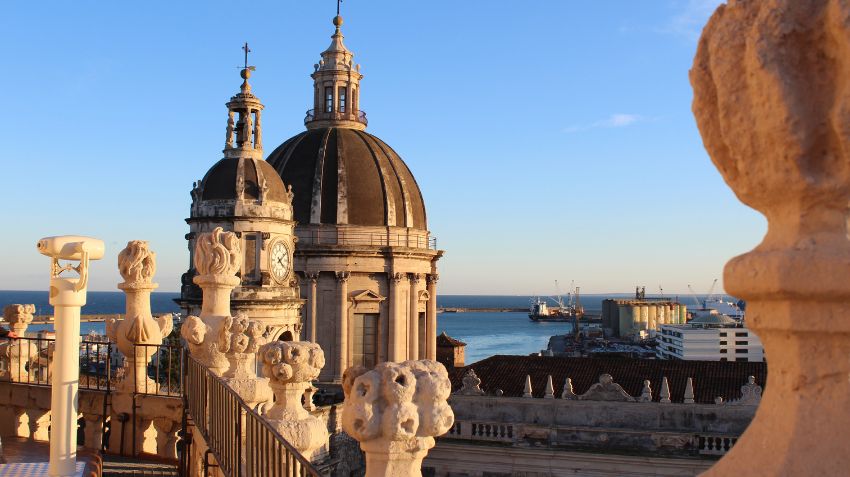
Catania reveals itself through texture before landmarks. Black lava stone runs beneath your feet and across the facades, rebuilt from the same volcanic material that once buried the city. By late afternoon, the baroque squares catch the light, the stone still holds the day’s heat, and Catania begins to feel raw, theatrical and unmistakably Sicilian.
This first-time guide is about understanding that rhythm before you arrive: when the fish market is most alive, which hours are worth protecting, how the city changes between a two-day visit and a longer stay, and what lies close enough to extend the trip without leaving Catania behind.
Sicily’s second city feels less polished for tourism than Palermo or northern Italy, and that is part of its pull. Dinner tables still belong largely to locals, service moves slowly, and arancini, horse meat sandwiches and fried fish are not staged traditions. They are simply part of everyday Catania.
What Catania feels like for first-time visitors
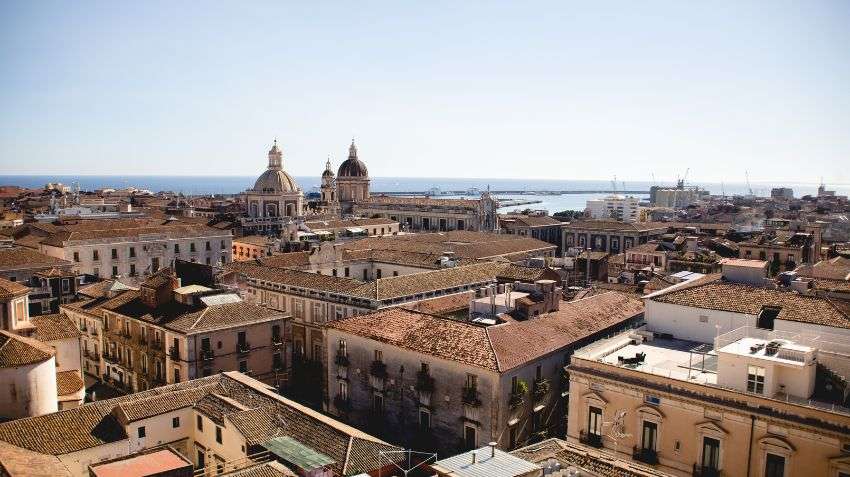
The city’s centre is compact enough that most first-time visitors cover it on foot without planning to. Via Etnea runs almost perfectly straight from Piazza del Duomo northward, past the main churches and the Villa Bellini gardens, and most of what a short visit needs sits within ten minutes of that axis.
La Pescheria – the fish market – occupies a sunken square just off the cathedral piazza and is worth building a morning around. Before 10:00, the vendors are in full voice over swordfish, sea urchins, red shrimp and enormous tuna, all arranged on the black lava stone slabs in a way that makes the market feel less like shopping and more like a recurring public event. By early afternoon the stalls are gone and the square is quiet again, so timing matters more here than at most markets.
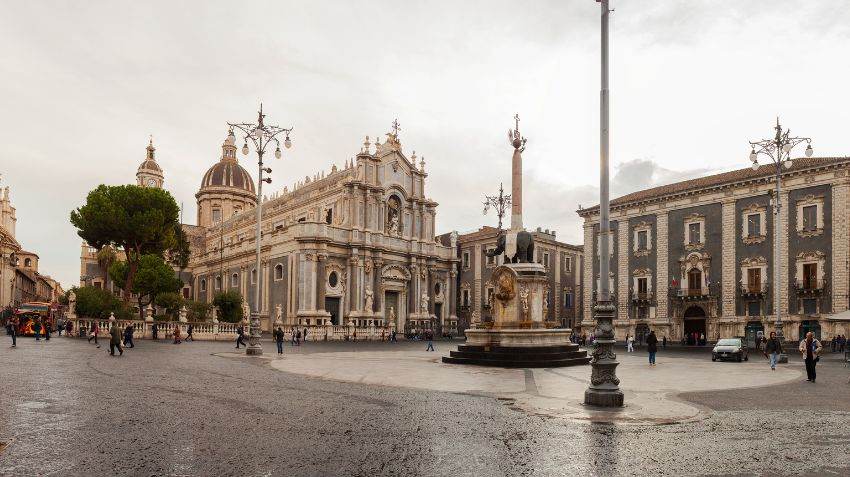
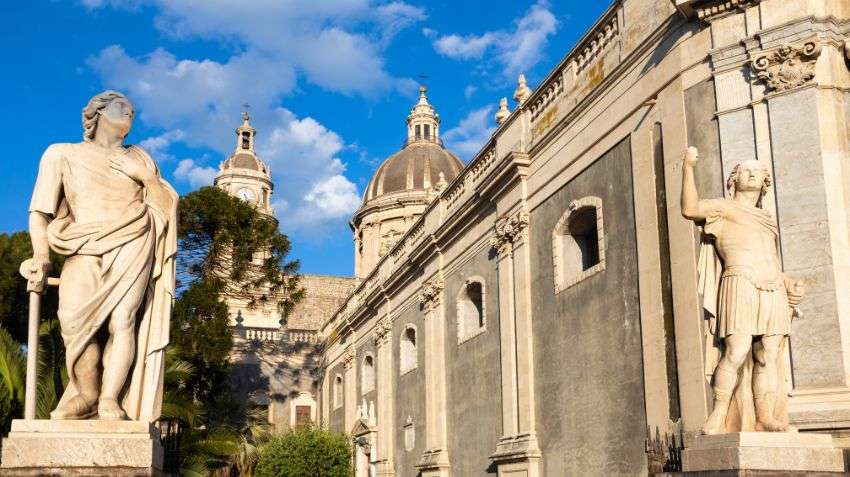
The baroque architecture is genuinely distinctive – not because it is the most decorated baroque in Italy, but because the entire historic centre shares the same dark volcanic palette. White stucco ornament against black lava stone creates a contrast that reads quite differently from the honey-coloured baroque of Lecce or the warm plaster of Palermo. The Piazza del Duomo in the evening, when the fountain is lit and the cafes around the square are filling, has a specific gravity to it that most first-time visitors do not expect from a city this size.
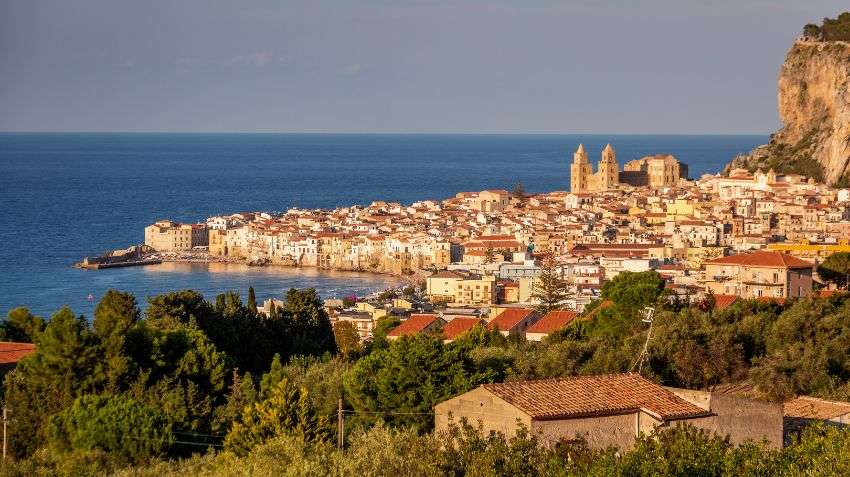
Catania in photos

Is Catania right for your travel style?
Catania works well for travelers who want a southern Italian city experience without the organisational overhead of Palermo or the visitor saturation of Taormina. The city is the right scale for two or three days – legible enough to navigate without effort, dense enough with food and architecture to stay interesting, and positioned well for day trips to Etna and the eastern coast.
It fits less naturally for travelers who want beach-focused time as a primary activity. The city sits on the sea but does not have a usable beach in the centre. The Lido di Playa stretch south of the harbour is accessible, though the better coastal options – Aci Castello, Aci Trezza, or further south toward the baroque towns of the Val di Noto – require a bus or car.
Travelers who want slow coastal rhythm as the centrepiece of their Sicily stay would find a base elsewhere more practical, with Catania as a day trip in the other direction. The Palermo first-time read covers that alternative if you are weighing the two Sicilian cities against each other before deciding where to anchor.
How to get around Catania as a first-time visitor
The airport sits around 5 kilometres from the historic centre. The Alibus city bus connects arrivals to Piazza Stesicoro and the main train station in around 20 minutes during normal traffic conditions, running frequently through the day. The taxi rank outside arrivals is metered and reliable – a reasonable choice for late arrivals or anyone with heavier bags.
Catania has a metro, though it is a single line running from the airport area toward the northern edge of the city. For most first-time visits it is a marginal convenience; the historic centre is compact enough that almost everything a short stay needs is walkable from a central hotel. Buses cover the outer neighbourhoods and the coastal towns to the north, and ride-hailing apps operate in the city for late-night or cross-town movement.
Walking the lava stone streets is the natural pace for the baroque centre. Some of the narrower side streets use older paving that slows things down, especially in the midday heat of summer. The city’s rhythm in August shifts accordingly – mornings are active from 07:30 onward, the market runs until early afternoon, and the hours between 13:00 and 17:00 tend toward shade, long lunches and cafes. The evening restarts properly after 20:00, and restaurants fill closest to 21:00.
Getting to Etna and the coast
Etna is accessible without a car from Catania. The Circumetnea railway loops around the volcano’s base – useful for atmosphere, less so for reaching the crater zones. For the southern crater trail and the higher altitude approaches, the most direct option is a guided tour departing from the city or a transfer to the cable car at Rifugio Sapienza. A morning departure leaves the afternoon for return and a late lunch back in the city, which is a natural rhythm for the trip.
Aci Trezza and Aci Castello are accessible by bus from Catania’s main bus station and are the closest coastal options with genuine character – a working fishing harbour, the Cyclops rock formations visible from the shore, and a pace that settles considerably compared to the city. The bus ride is short enough that neither needs to be an overnight stop.
Day trips and nearby stops worth taking from Catania
The Val di Noto baroque towns – Noto, Ragusa, Modica – are a logical extension for anyone staying three or more days. Noto in particular is worth the trip for the completeness of its baroque streetscape, most of it rebuilt after the 1693 earthquake in a single sustained architectural campaign. The bus connections from Catania run regularly and the town is compact enough to cover in a half-day, leaving time to return to the city in the evening.
Taormina sits an hour north by train and is included in most Sicily itineraries, though it runs at a considerably higher visitor tempo than Catania, especially in summer. It works well as a day trip – the Greek theatre, the views toward Etna across the bay, a long late lunch – without necessarily needing an overnight stay.
Travelers who are weighing a longer stop in eastern Sicily and want a sense of how Catania fits within a wider route through Palermo and the interior will find that the Palermo neighbourhood guide covers the western anchor of that circuit in useful detail.
For travelers who want to understand how Catania compares to other Italian cities with a similar compact, food-forward character – Bologna is an instructive parallel for mainland Italy, structured differently but carrying a comparable density of daily life in a navigable historic centre.
The Bologna travel guide sits close enough in spirit to be a useful read alongside this one, especially if you are building a longer Italy trip around cities with that kind of rhythm.
Explore Catania by season to understand how the city changes between summer’s late-evening energy and the quieter autumn pace when the tourist activity thins and the baroque centre returns to something closer to its daily life.
Is Catania worth visiting for a first trip to Sicily?
For a first-time traveler guide to Catania, the honest answer is: the city rewards the visit most clearly when the traveler has two full days rather than one, and when the itinerary is built around mornings at the market, long lunches in the side-street trattorias, and evenings that start late.
That particular rhythm is not an adjustment to Catania – it is the city’s actual operating logic, and visitors who follow it rather than fight it tend to find the place considerably more satisfying than the tourist-facing literature suggests.
The lava stone city is not the most photographed version of Sicily, and that is part of what makes it interesting. It suits travelers who want cultural density in a navigable format, who eat seriously, and who are happy to use a base strategically for Etna and the eastern coast rather than trying to cover everything from a single centrally located room in Taormina. For that kind of traveler, Catania is a genuinely good fit.
Catania first-time visitor FAQ: days needed, summer visit, fish market, airport transfer and day trips
1. How many days do you need in Catania as a first-time visitor?
Two full days cover the historic centre comfortably – the fish market, Piazza del Duomo, Via Etnea and an evening in one of the side-street restaurants. A third day opens up a half-day trip to Etna or the coast at Aci Trezza, which most first-time visitors find is the natural extension of the city stay.
2. Is Catania worth visiting in summer?
Summer is when Catania runs at its fullest rhythm – the fish market is at its most theatrical in the morning, the baroque squares fill with people after dark, and the sea at nearby Aci Castello is an easy afternoon reset. The city genuinely comes alive after 20:00, so visitors who shift toward that evening pace tend to get the most out of it.
3. What is the La Pescheria fish market like and when should you go?
La Pescheria occupies a sunken square just off Piazza del Duomo and is one of the more alive market spaces in southern Italy – vendors calling across swordfish, sea urchins and enormous tuna laid out on lava stone slabs. Go before 10:00 for the full atmosphere; by noon the stalls are winding down and the square shifts back to quiet.
4. How do you get from Catania airport to the city centre?
The Alibus connects the airport to Piazza Stesicoro and the main train station in around 20 minutes, running frequently through the day. Metered taxis from the official rank outside arrivals are a straightforward alternative, especially if you arrive late or with larger bags.
5. How does Catania compare to Palermo for a first visit to Sicily?
Catania runs tighter and more navigable than Palermo – the baroque centre is compact, the food scene is concentrated, and the city’s energy has a pace that rewards two or three focused days. Palermo carries more layers and a bigger historical spread, which suits travelers who want to spend longer and move more slowly through a Sicilian city.