
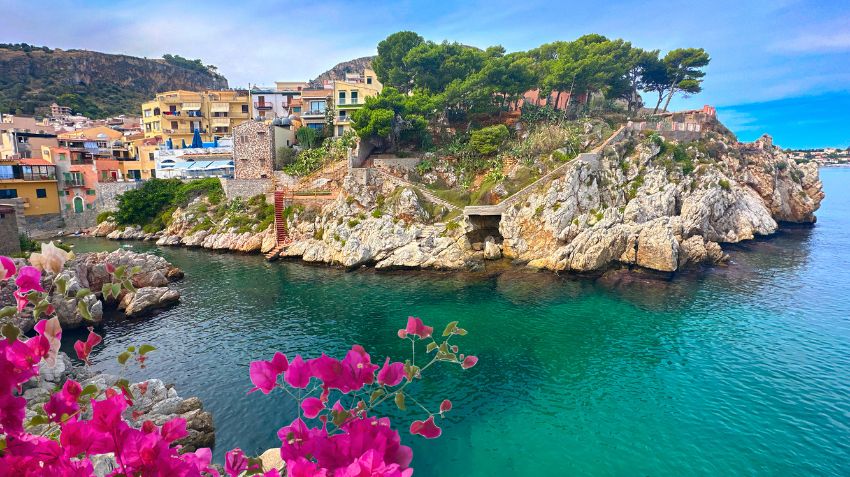
Palermo arrives as sound before anything else: a market vendor, a motorino, the particular echo of stone alleys that haven’t changed in two centuries. The city has an appetite for the present moment that very few Italian cities match, and the best areas to stay in Palermo are as much about which rhythm you want to live inside as which landmarks you want near the door.
The question of where to base yourself here is genuinely worth thinking through. Palermo’s central districts are close enough that you could walk between most of them in twenty minutes, but the textures differ in ways that shape the whole trip. One neighbourhood smells of the market at 8am; another keeps itself quiet until the evening heat breaks. Neither is wrong. They suit different travelers in different states.
What Palermo’s central neighbourhoods feel like on the ground
The city’s old town is divided loosely into four historic mandamenti – administrative quarters – that bleed into each other without obvious borders. In practice, travelers end up anchored to one of three gravitational centres: the area around the Quattro Canti and Via Maqueda, the Kalsa to the southeast, or the Ballarò and Capo market zone to the west and north.
Via Maqueda runs straight through the centre of the old town, pedestrianised for much of its length, and it’s the city’s main social spine. Around 19:00 it fills with a particular kind of unhurried movement: people going nowhere specific, stopping to talk, taking the long way somewhere. Earlier in the day, the same street belongs to street-food vendors setting up and tourists moving between churches. The cafe at the corner of Ballarò turns over quickly in the morning; the one two streets into the Kalsa does not.
Stone holds heat here, and in summer the alley temperature in the denser parts of the Ballarò quarter stays noticeably higher than the seafront side. The city knows this and adapts: awnings, shuttered afternoons, and a second social life that begins after 21:00 when the paving has cooled and the piazzas fill again with people who have been waiting out the heat.
Best Palermo neighbourhoods for first-time visitors and longer stays
Quattro Canti and Via Maqueda corridor
This is the practical centre, and it earns its position. Staying here puts you within ten minutes’ walk of both major market districts, the main baroque churches, the Teatro Massimo and a reasonable taxi radius to the port and train station. The streets are lively through the evening and occasionally loud past midnight near the wider piazzas.
For a first visit of three to five days, it tends to work well. The geography is immediately legible – you orient yourself on the cross of Via Maqueda and Corso Vittorio Emanuele and the city opens from there. The trade-off is that this is also the part of Palermo that absorbs the most visitor activity in summer, and the density along the main axis from late morning onward is real.
The Kalsa district
The Kalsa sits southeast of the Quattro Canti, roughly between Piazza della Kalsa and the waterfront at Foro Italico. It is the part of Palermo that rewards slower trips most. Streets here are narrower and quieter, the residential layer closer to the surface: laundry between windows, a courtyard you catch a glimpse of through an open gate, a bar that opens and closes according to its own schedule rather than the tourist wave.
The neighbourhood has been substantially restored over the past two decades, and the areas nearest Piazza della Kalsa now have good places to eat and drink without the corridor rhythm of Via Maqueda. Walk ten minutes south and the Foro Italico seafront promenade opens up – wide, breezy in the afternoon, and almost fully local in character. The evening light on the water here, around 20:00 in summer, is the kind of thing people remember without quite knowing why.
The Kalsa suits travelers who want proximity to the centre without being inside its loudest register. It is also the more natural base for anyone staying a week or more – it has the texture of a neighbourhood that could become familiar.
If you are coming from the Palermo first-time immersion readthe Kalsa pacing sits in contrast to the market-district energy it describes – same city, noticeably different cadence.
Travelers comparing Palermo with another southern Italian city before choosing a base may also find the Naples travel guide useful for understanding how the two cities differ in rhythm and neighborhood character.
Ballarò and the Albergheria quarter
Ballarò is Palermo’s oldest and most lived-in market, and the quarter that surrounds it is the most residential of the central neighbourhoods. It’s west of Via Maqueda, sloping slightly toward Corso Tukory, and it runs loudest in the morning when the market is in full activity: vendors, carts, a specific layering of citrus, dried herbs, fish and coffee that you feel before you can identify each component separately.
By 13:00 the market thins and the quarter goes quiet in a way that feels intentional rather than empty. Staying here means accepting that mornings will be genuinely noisy from around 7:30, that the streets are not wide enough for wheeled luggage without some patience on the cobbles, and that the neighbourhood’s beauty is social and layered rather than architectural and immediate.
For travelers who want to feel Palermo’s residential texture from the inside, Ballarò is the right call. For anyone who needs quiet mornings or prefers a more clearly tourist-accommodating environment, it shifts the experience in ways worth knowing in advance.
Capo market zone and north of the Teatro Massimo
The area north of Piazza Verdi, extending toward the Borgo Vecchio seafront, is the least visited of the central zones. The Capo market runs here in the morning with a smaller footprint than Ballarò but a similar intensity. Streets widen toward the theatre and then compress again toward the port-facing side.
Accommodation options are thinner here than in the Kalsa or the Via Maqueda corridor, but those that exist tend to be quieter, often in older buildings with some distance from the main evening circuits. It suits a specific traveler: someone who wants to be genuinely close to the city’s operational life without paying the acoustic price of the main piazzas.
Is Palermo the right base for your travel style?
Palermo works well for travelers who find pleasure in density, in sensory layering, in cities that have too much happening to resolve into a simple itinerary. It is not a city that simplifies itself for you. The streets are irregular, signage is inconsistent, and the rhythm shifts enough between morning and evening that a plan made at 10:00 often looks different by 19:00.
That quality is a feature for some people and a complication for others. Travelers who want a base with easy day-trip structure – ferry connections to Ustica or Favignana, a train west toward Trapani or east toward Cefalù – find Palermo accommodating in terms of transport logistics. The central train station is walkable from the Quattro Canti corridor and a short taxi from the Kalsa.
Solo travelers and couples on longer itineraries who have already spent time in more obviously organized Italian cities sometimes arrive in Palermo expecting the same spatial logic. It isn’t the same logic. The city runs on a different operating system, and the visitors who enjoy it most are usually the ones who stop trying to run efficiently through it by day two.
For anyone weighing Palermo against other Italian cities with a different tempo, the Bologna practical read covers a city with a slower, more immediately legible rhythm – useful if you are building an itinerary across the north and south and trying to sequence the energy levels correctly.
How to move around Palermo and how each neighbourhood connects
The central area is small enough that most travelers end up walking between the major zones – Kalsa to Ballarò takes around twenty minutes on foot, moving through or around the Quattro Canti. Via Maqueda is pedestrianised, which makes the north-south axis comfortable. The east-west connections, especially through the older alley networks, require a bit more navigation.
If Palermo is one stop within a wider Italy journey, the Italy itinerary guide shows how Sicily connects with the country’s classic city route.
City buses cover the wider radius, particularly useful for the seafront at Foro Italico, the port area, and connections to the train station from the quieter residential quarters. In summer, the bus toward Mondello runs regularly from Piazza Sturzo and is the practical connection to the beach if you want a day outside the city.
Taxis are easy to find near the main piazzas and at the train station, and useful in the evening when luggage is involved or when the return from dinner runs late. Ride-hailing options exist but coverage thins after midnight in some outer streets.
One concrete note: luggage with wheels meets its limit on the Ballarò and Kalsa side streets. Cobbles vary from manageable to genuinely awkward depending on the block, and some passages narrow to the point where a large case moves one direction at a time.
Day trips and nearby rhythm shifts from Palermo
Cefalù sits about an hour east by train and offers the spatial opposite of Palermo’s old town density: a compact Norman centre, a beach that belongs to the town rather than to tourism infrastructure, and evenings quiet enough that you can hear the water from the main street. It works as a day trip or as an overnight if the Palermo rhythm feels like too much to return to after four or five days.
Travelers planning to continue through southern Italy after Sicily can also explore the Southern Italy itinerary for a practical multi-stop route.
Trapani and the western salt flats are roughly two hours west, usually requiring a regional train change. The pace there is slower by nature – fewer visitors, a longer lunch culture, an afternoon that genuinely stops. Travelers who arrive in Palermo expecting that energy tend to feel surprised by the city’s density; those who go the other direction, spending Palermo first and Trapani after, often find the sequence makes both places clearer.
Mondello beach, 11 kilometres north of the centre, is Palermo’s own seafront escape – fully accessible by bus and worth arriving before 11:00 in July and August, when the beach fills to peak activity by midday.
Is Palermo the right city for your trip, and which area fits best?
The best areas to stay in Palermo ultimately depend less on which neighbourhood has the most attractions nearby and more on how you want the city to feel from your window at 8am and at 10pm. The Quattro Canti corridor is the practical choice for short visits and easy orientation. The Kalsa is the better fit for longer stays and travelers who want the city to become familiar rather than just navigated. Ballarò offers the most immersive residential experience at the cost of morning noise and irregular surfaces.
If you’re also comparing Palermo with Italy’s larger cultural capitals, the Rome travel guide provides a useful contrast in scale, neighborhoods, and daily rhythm.
What all three share is the quality that makes Palermo worth choosing in the first place: a city that hasn’t flattened itself into a tourism product. The markets are real, the piazzas are genuinely social, and the evening rhythm belongs to people who live there as much as people who are visiting. That texture runs consistently across the central neighbourhoods – the question is only which layer of it you want closest to you.
Travelers arriving in peak summer should know that the city’s best hours in July and August are the early morning and the late evening, and that a base in the Kalsa or the quieter northern streets gives more natural access to both without requiring a strategy around the midday heat.
If you are still mapping out the wider Italian itinerary and considering how Palermo fits against northern Italian cities, the Venice first visit read covers a city with an entirely different spatial logic – useful context for understanding how different the two experiences actually sit.
Continue exploring: For travelers who want to understand Palermo’s street-food culture, market geography and pacing before deciding on a neighbourhood base, the Palermo first-time immersion node covers the experiential layer that sits underneath the accommodation decision.
Palermo areas to stay FAQ: neighbourhoods, transport, summer pacing, first visit and local rhythm
1. What is the best area to stay in Palermo for a first visit?
The area around Via Maqueda and the Quattro Canti is the most practical base for a first visit, placing you within walking distance of the main street-food markets, historic churches and the waterfront. The Kalsa district, just southeast, gives a quieter residential rhythm with the same central access.
2. Is Palermo’s old town walkable or do you need public transport?
The central neighbourhoods – from Ballarò to the Kalsa and north toward the Teatro Massimo – sit within a walkable radius of around two kilometres. Buses become useful for reaching the seafront promenade at Foro Italico or the train station from outlying streets.
3. Which Palermo neighbourhood is best for avoiding tourist crowds?
The area north of Piazza Verdi toward the Borgo Vecchio waterfront and the streets behind the Capo market see noticeably fewer visitors than the central Via Maqueda corridor. Evenings there feel residential rather than touristic, with the day winding down over slow dinners and neighbourhood café culture.
4. When is the best time to visit Palermo to experience the city at its liveliest?
Late spring and early autumn bring the fullest combination of warm evenings and manageable street activity. Summer evenings are the most atmospheric for outdoor dining and the waterfront promenade, though the midday hours in July and August belong to shade, espresso and interior spaces rather than the street.
5. How does Palermo’s rhythm change between the old town and the seafront areas?
The old town runs on a market and piazza rhythm – earliest in the morning, resting in the afternoon, then social again from early evening. The seafront near Foro Italico and the Kalsa’s southern edge catches sea breezes and keeps a calmer, slower pace through the afternoon, drawing walkers and families into the early evening along the waterfront.