
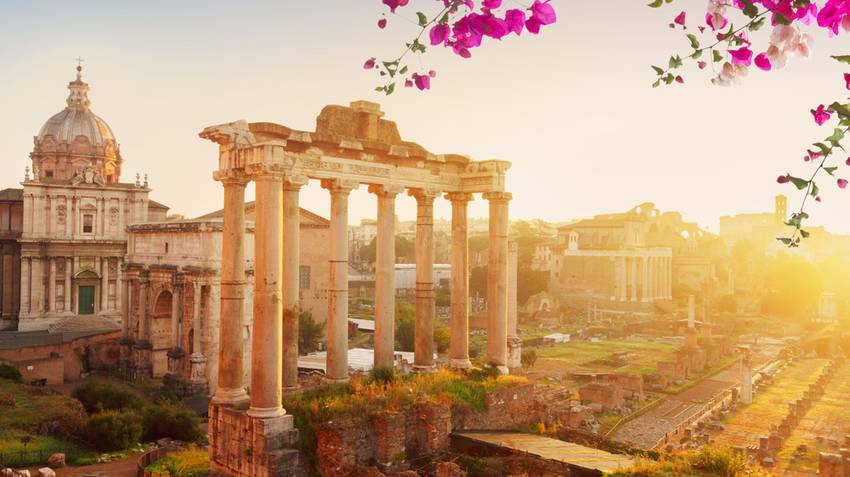
For a first visit, this is both the appeal and the adjustment. The city carries more layers per square kilometre than most travelers have encountered before, and it does not organise them for your convenience. The Forum sits beside traffic.
The Pantheon has a café terrace six metres from its columns. Medieval churches open onto streets used as shortcut routes by Vespa delivery riders. The whole place functions as a working city that happens to contain a disproportionate share of Western civilisation, and it is more interesting for that.
What this guide covers is the shape of a first visit: what to expect from the pacing, where the real tradeoffs sit, and who the city genuinely suits before you commit to it.
What Rome actually feels like to move through
The city is larger than first-time visitors expect, and the map misleads. Distances that look manageable on screen involve uneven sampietrini cobblestones, long detours around closed alleys, and the cumulative weight of August stone underfoot. By the third day, most people notice their calves before they notice the monuments.
The historic centre – the area bounded loosely by the Vatican to the west, the Colosseum to the east, and the Borghese gardens to the north – is where the sightseeing mass concentrates. Within that area, foot traffic on the main corridors (Via della Conciliazione toward the Vatican, the stretch between the Colosseum and the Forum) peaks between 10:00 and 13:00. The rhythm shifts noticeably after 14:00: some visitors disappear indoors, the streets thin out, and the city takes on a different quality in the afternoon light.
Evenings are where Rome settles into something worth staying for. The piazzas fill again around 19:00 – not with tourists, but with the mixed population of a city using its public spaces the way Italian cities do. Dinner rarely starts before 20:00 in the restaurants where locals actually eat, and the streets stay active past midnight around Campo de’ Fiori and Trastevere. If you come from a city where nights end at 22:00, the pace takes a day or two to adjust to.
Who Rome suits, and who it tires out
Rome works well for travelers who can absorb high sensory input and pace themselves accordingly. The city rewards curiosity more than efficiency. People who arrive with a structured itinerary and a list of fifteen things to cover in three days tend to leave feeling simultaneously overstimulated and like they missed something. People who allow half-days to dissolve into a neighbourhood, a market, a long lunch, end up with a more accurate sense of what the city is.
It is less naturally suited to travelers who want ease and low cognitive load from arrival. The transit system is functional but limited – the two main metro lines do not cover most of the historic centre, so surface navigation (buses, walking, taxis) fills the gap. Fiumicino airport is 32 kilometres from the city; the Leonardo Express train takes 32 minutes to Termini station, but getting from Termini to a specific neighbourhood adds another 20-40 minutes depending on the area. First-time arrivals with luggage at peak hours should plan for 75 minutes door-to-accommodation.
Travelers who find busy, loud, layered cities exhausting after two days should factor that honestly. Rome is not a place that offers easy decompression within its centre. The residential neighbourhoods – Pigneto, Ostiense, Prati – are quieter, but they are a metro or bus ride from the main sights.
Travelers still deciding where to base themselves usually benefit from the Rome neighborhood breakdown, especially because staying near the historic centre creates a very different first-time rhythm from staying in Prati, Testaccio, or the outer residential districts.
If you are drawn to Italy but want a city that asks less of your energy and attention, the Rome vs Florence first-timer tradeoff covers that comparison in detail.
Pacing and movement across a first visit
Three full days is the realistic minimum. Four is more honest. The Vatican – Basilica, museums, Sistine Chapel – takes most of a morning if booked in advance, and the booking is not optional in summer. Showing up without a timed entry in late May or June means a queue that starts forming before 08:30 and does not shorten until the late afternoon.
The Colosseum and the Roman Forum are best approached as a single half-day unit, ideally starting before 09:00 or arriving after 16:00 when the main tour groups begin to clear. The Forum itself is large and largely uncrowded once you move past the entrance corridor – most visitors stop at the same three or four viewpoints, and the paths further east are noticeably quieter.
Between those anchor sites, the city rewards walking over planning. The Pantheon does not require a morning slot; it is open and the crowds move through it quickly. Trastevere is best in the evening, not at midday. The Borghese Gallery requires a pre-booked entry (timed, two-hour slots, non-negotiable) and rewards it with one of the more interesting collections in the city, seen without pressure.
A practical note on daily distance: a full sightseeing day in the historic centre typically covers 12 to 18 kilometres on foot, most of it on stone. Building in a genuine midday pause – two hours, indoors or in shade, not walking – makes the evening sustainable rather than a recovery exercise.
Seasonality and when a first visit makes sense
Late spring and early autumn are the most consistently workable windows. In May and early June, the city is warm, the light is long into the evening, outdoor tables are in full use, and the major sites are busy but not at peak compression. September and October bring slightly cooler evenings and a crowd profile that shifts toward European travelers rather than the full international summer wave.
July and August are a different version of the city. The heat settles into the stone by 11:00 and stays there until well after sunset. The tourist volume is at its highest around the main corridors. But the long summer evenings – piazzas still animated at 23:00, gelato windows open past midnight, the city’s nighttime identity on full display – are part of what Rome actually is, and travelers who adapt to an afternoon pause and late-night schedule find the season has its own logic.
Winter in Rome is underrated for a first visit. December through February brings the smallest crowds, the most manageable entry queues, and a city that continues to function as a city rather than a visitor processing system. The temperature is mild by northern European standards. Some smaller sites close or reduce hours, but the major ones stay open, and the quality of a walk through the Forum or across the Aventine hill without a crowd is genuinely different from a summer experience.
Naples and the south as a natural continuation
Rome sits at the centre of a trip rather than its conclusion for many first-time visitors to Italy. The high-speed rail connection south covers the Rome-Naples route in just over an hour, which makes the question of whether to extend the trip a real one rather than a logistical obstacle.
Naples is noisier, more chaotic, and structurally less legible than Rome, but the food is sharper, the pace is different, and the city does not perform itself for visitors the way Rome sometimes does. Travelers who found Rome’s tourist-infrastructure density tiring sometimes find Naples more interesting precisely because it is less organised around the visitor experience. The Naples first-time expectations read covers what actually awaits and who it works for.
Florence sits two hours north by train and answers a different kind of first-visit question: tighter, more contained, centred on Renaissance art in a way Rome is not. If the itinerary is still open, the two cities are not interchangeable – they suit different rhythms and different reasons for being in Italy.
The tradeoffs worth naming before you go
Rome asks for more planning than many European capitals. Pre-booked entry is not optional for the Vatican or the Borghese – it is structural. Showing up and hoping to queue your way in works at some sites and fails completely at others, and the failure mode is losing most of a day rather than thirty minutes.
The city’s scale means that good accommodation placement matters more than in, say, a compact city where everything is twenty minutes from everything else. Staying near the historic centre adds walking access to evenings in Trastevere and Campo de’ Fiori; staying near Termini is cheaper and more transit-connected but less integrated into the city’s evening rhythm. Neither is wrong, but the tradeoff is real and worth naming before booking.
Taxis from unofficial operators at Fiumicino approach arriving passengers at the terminal exit; the official white taxis queue outside the arrivals hall and use meters. The difference in cost and reliability is significant. Using FreeNow or calling an official taxi from inside the terminal avoids the approach entirely.
If the first Italy trip is also weighing other cities further afield – whether to anchor in Rome and take day trips, or split time between Rome and somewhere like Florence or Venice – the Florence vs Venice travel-style comparison sits at that decision point and covers the tradeoff without assuming Rome is the only answer.
Who Rome actually rewards
Rome works for first-time visitors to Italy who come with curiosity rather than efficiency as the primary mode. It suits travelers who can tolerate high sensory input, who find depth more satisfying than coverage, and who are comfortable letting a day’s plan dissolve into something else when the city offers it.
It is a strong fit for people who want to understand why Italy occupies the cultural weight it does – not as abstraction, but as physical, walkable, continuous evidence. The ruins are not in a museum; they are in the streets, the basements of restaurants, the foundations of churches built on top of temples. That quality is specific to Rome and not replicated elsewhere in the country at the same density.
The city is less well-suited to travelers who want a light, low-effort first Italy experience or who find cities with complex logistics and high foot-traffic stressful over multiple days. In those cases, the right sequence might be to start with somewhere smaller and save Rome for a second trip, when the country already has some familiarity and the city’s scale arrives as a feature rather than an obstacle.
For a first visit to Italy with no prior context, though, Rome is the place that makes the country legible in a way nothing else quite does. The investment of attention it asks for is proportional to what it returns.
Travelers who are still deciding between Rome and Barcelona as their European anchor city this summer – both are high-input, high-reward capitals that suit similar traveler archetypes – may find the Barcelona first-time fit read useful for understanding how the two cities differ in rhythm and pacing before committing to one.
Common questions about visiting Rome for the first time
1. How many days do you actually need in Rome as a first-time visitor?
Three full days cover the major sites without feeling rushed, though four days lets the city breathe more naturally. The Vatican alone takes most of a morning if you pre-book; the Forum and Palatine Hill take another half-day. The rest of Rome rewards slower walking rather than list-ticking.
2. What is the best time of year to visit Rome for the first time?
Late April through early June and September through October offer the most comfortable conditions, with manageable crowds and outdoor dining into the evening. July and August are intense – the heat settles into the stone streets by midday, and the city shifts rhythm noticeably – but the long summer evenings and the animated piazzas after sunset have their own pull.
3. Is Rome walkable for first-time travelers?
The historic centre is compact enough that most first-time visitors walk more than they expect to, but the sampietrini cobblestones are genuinely tiring on a long day. A comfortable pair of shoes is not optional advice – it is structural. The metro covers the main tourist axis but most neighbourhoods between landmarks are better on foot.
4. How does Rome compare to Florence for a first Italy trip?
Rome is larger, louder and more operationally complex – it asks more of your energy and rewards it differently. Florence is more contained, easier to orient in, and better suited to travelers who want Renaissance art as the central thread.
5. Which area of Rome should first-time visitors stay in?
The area around the historic centre – Trastevere, Campo de’ Fiori, and the streets near the Pantheon – puts most of the city within walking distance and gives evenings a genuinely Roman texture, with restaurants and wine bars that stay active late into the night.