
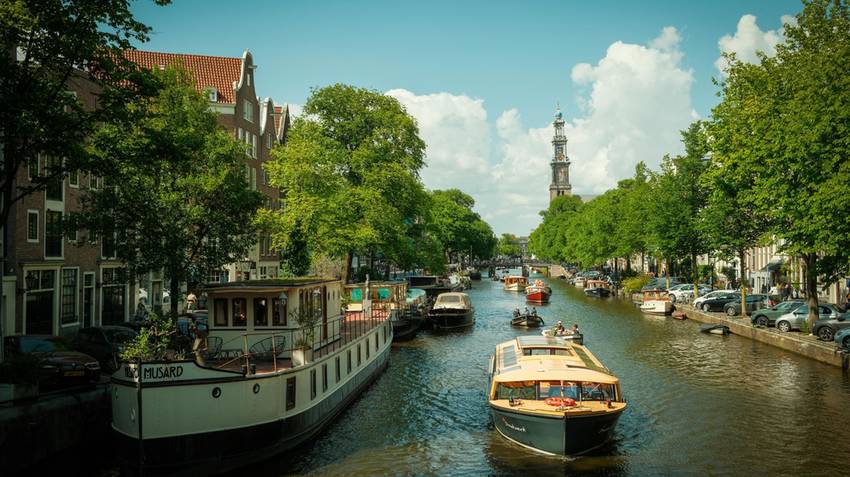
Amsterdam in late spring has a particular quality that takes a few hours to settle into. The canals catch the afternoon light in a way that makes the city feel both smaller and more layered than expected, and by the time the terraces fill around 17:00, the earlier impression of a busy tourist center starts to give way to something more residential, more lived-in.
For first-time visitors to the Netherlands, Amsterdam tends to be the entry point, and that makes sense. It is the most internationally connected city in the country, the most varied in terms of what it offers across a few days, and the easiest to navigate without preparation. The question is less whether to come and more how to approach the city so that the experience belongs to you rather than to the itinerary.
This is a city that rewards a slower pace more than most people expect. The canal ring is walkable, the neighborhoods are distinct enough to feel like separate decisions, and the museums are genuinely worth the planning they require. Getting that balance right on a first visit takes a little orientation.
What the city actually feels like on the ground
The center of Amsterdam is smaller than its reputation suggests, but the neighborhoods around it are large and the distances between them are longer on foot than the map implies. The canal ring itself, the area between Singel and Prinsengracht, is where most first-time visitors spend the majority of their time, and it earns that attention. The proportions feel human: narrow houses, arched bridges, side streets that turn into something unexpected.
The rhythm of the day here is front-loaded. Between 10:00 and 18:00, the tourist corridor through Dam Square, along the main museum strip and across the popular canal bridges, is consistently busy. The city does not hide that. But it is worth noting how sharply the character shifts after 19:00 when the day-trippers leave and the canal-side restaurants fill with people who are actually staying. The noise changes, the pace drops, and the neighborhoods closest to the water feel like a different city entirely.
What first-time visitors to the Netherlands often underestimate is how much of Amsterdam lives outside the center. The Jordaan, De Pijp, and the area around Oosterpark are not difficult to reach, they are simply one tram stop or a fifteen-minute walk away, but they have a completely different social texture. Quieter, more residential, better for sitting with a coffee without a queue for the table next to yours.
Who the city suits and who might find it difficult
Amsterdam works well for travelers who like the idea of walking between neighborhoods without needing a full plan. The city has enough layered interest, architecture, water, independent markets, museum clusters, to reward slow exploration over a few days. It suits solo travelers and couples equally; the social energy in the evenings is warm but not pressured, and there are enough genuinely local spaces to avoid the feeling of moving through a set piece.
Remote workers and people on a longer stay in the Netherlands tend to settle into Amsterdam quickly, partly because the rhythm is flexible enough to accommodate a working morning followed by an afternoon outside. The city also has enough variety in its neighborhoods that a week here does not feel like the same experience repeated. The Noordermarkt on Saturday mornings, a canal bike in the afternoon, the Stedelijk in the morning before the school groups arrive – the days vary naturally if you let them.
The city is harder for travelers who are easily overstimulated in tight urban spaces, particularly during the spring-to-summer transition when the tourist volume in the canal ring is at its highest. The narrow streets that make the center feel atmospheric are also the streets that collect the most pedestrian and cycling traffic. If you need space to think, you will find it in the outer neighborhoods, but the center itself is not a quiet place at midday in May.
Pacing the first visit: how days unfold here
Most people arrive at Schiphol and take the direct train to Amsterdam Centraal, which takes around seventeen to twenty minutes and runs frequently enough that there is no reason to time it carefully. From Centraal, the city opens in several directions at once, and this is the first decision worth making slowly. The canal ring neighborhoods to the west – the Jordaan, the Nine Streets – are different in character from the museum quarter to the south, and the balance between them shapes the whole visit.
A useful approach for the first two days is to keep the museums to the mornings. The Rijksmuseum and the Van Gogh Museum both require pre-booking, and neither is at its best after midday when the groups arrive. Book the first entry slot, finish by early afternoon, and the rest of the day belongs to walking. The canal ring in the late afternoon, when the light is lower and the guided tour groups have thinned, is a different experience from midday.
By day three, most people find they have a natural geography forming – a preferred neighborhood, a café they return to, a route that feels like theirs. That is the city working as it should. Amsterdam has a way of becoming familiar faster than most cities of its size, which is partly why it suits a four-night stay better than a two-night one. Two nights is enough to see the main things. Four nights is enough to understand the city.
If you are weighing this against a more residential Dutch city after your first days, the Eindhoven neighborhood fit read covers a noticeably different pace and scale for travelers who want to extend their time in the Netherlands outside the tourist circuit.
Tradeoffs worth knowing before you arrive
The cost of accommodation is the most significant practical constraint for first-time visitors. Amsterdam sits at the higher end of Western European pricing, and the gap between a central hotel and a well-located apartment outside the canal ring is substantial. For stays of three nights or more, a neighborhood like De Pijp or Oud-West puts you within fifteen minutes of everything central while noticeably reducing the accommodation cost and the ambient noise level at night.
The cycling culture is something to calibrate rather than fear. Cyclists have priority on most roads and move at speed, which is simply how the city works. Pedestrians who drift onto cycle paths without looking are a familiar source of mild friction, both for the cyclists and for themselves. The rule is straightforward: look both ways before crossing any painted lane, and you will be fine within a day. The city is not hostile to walkers, it simply has a hierarchy that is different from most European capitals.
Spring into summer is the strongest window for a first visit to the Netherlands through Amsterdam, with May and June offering long evenings and the city’s outdoor culture at its most active. The canal terraces stay busy until well after 21:00, the outdoor markets run fully, and the general mood is lighter than in the grey-sky months. Summer itself brings higher prices and more saturated crowds in the core; September quietly extends the season for travelers who prefer the city with a little more room to move.
For travelers who decide that Amsterdam’s canal ring density is not quite the pace they want for more than a few days, the Rotterdam neighborhood guide covers a city with a completely different physical scale and social register, about forty minutes south by train.
Continuations worth considering from Amsterdam
The Netherlands is a small country, which makes day trips and short extensions genuinely easy. Haarlem is twenty minutes by train and offers a version of the Dutch historic center without the tourist volume. Utrecht has a canal ring that operates at a slower pitch. The coast at Zandvoort or Bergen aan Zee is reachable in under an hour and connects well to Amsterdam’s afternoon rhythm.
Amsterdam as a first Netherlands experience
The city makes sense as an introduction to the Netherlands because it contains most of what the country does well in a compact enough geography to read over a few days: the canal architecture, the museum concentration, the cycling culture, the market life, the balance between dense center and residential calm two streets over. What it does not offer is quiet, at least not in the core, and travelers who need that tend to discover it by day two.
A first visit to the Netherlands through Amsterdam works best when the pacing is intentional rather than reactive. Book the museums early, move into the outer neighborhoods by day two, let the afternoons go where they want. The city has enough texture to sustain four days without feeling like a checklist, and enough connections outward – by train, by day trip, by the natural pull of the country’s compact geography – to become the start of something larger if that is what you want from it.
Continue exploring long-stay friendly destinations and slow-travel rhythms in the Amsterdam neighborhood stays guide which covers the district-level decisions in more detail for visitors who want to anchor well rather than just arrive.
Amsterdam first visit: common questions
1. What is the best time of year to visit Amsterdam for the first time?
Late April through early June gives you longer days, the canal terraces opening up, and the city before peak summer crowds arrive. September is a quieter alternative with warm evenings and thinner queues at the major museums.
2. How many days do first-time visitors usually need in Amsterdam?
Three full days is enough to move through the canal ring, a couple of museums, and at least one neighborhood outside the tourist center. Four or five days allows a slower rhythm and a day trip to somewhere like Haarlem or the coast without feeling rushed.
3. Is Amsterdam good for solo travelers?
It works well for solo travelers because the city is walkable, the transit network is easy to read, and there are enough independent cafes and working-friendly spaces to fill a day without needing a group. Evenings in the Jordaan or De Pijp have a social but not overwhelming energy.
4. How expensive is Amsterdam compared to other European cities?
Amsterdam sits at the higher end of Western European pricing, particularly for accommodation and museum entry. Eating at local lunch spots or the Albert Cuyp market keeps daily costs reasonable; the main cost pressure is typically where you sleep, not what you do.
5. What does Amsterdam actually feel like on a first visit?
The city has a specific late-afternoon quality where the light off the water softens and the pace drops noticeably around 17:00 as people move toward terraces and canal-side bars. It is dense in the center, quiet two streets in, and that contrast is part of what makes Amsterdam easy to enjoy on your own terms.