
Incheon sits close enough to Seoul that most travelers treat it as an arrival hall rather than a destination, which means it mostly gets experienced in transit corridors and duty-free shops. That is a reasonable decision, but not the only one.
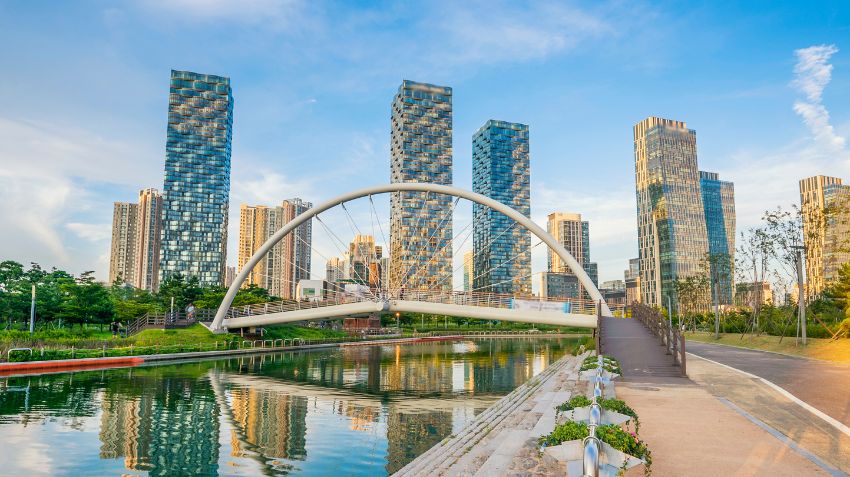
The city has its own quieter logic – a working port, an old Korean-Chinese district with painted stairways and incense drifting from small temples, and the glass-and-canal geometry of Songdo out on reclaimed land by the water. This first-time traveler guide to Incheon is less about convincing you to stay and more about helping you understand what the city actually offers when you give it a day or two.
The rhythm here is noticeably slower than Seoul. Not sleepy exactly, but unhurried in a way that a first-time visitor to Korea can actually use – time to find a rhythm, eat well without the pressure of a dense capital, and figure out the transit system before the city gets bigger around you.
In peak summer the city runs warm and humid, with late afternoons softening once the sun moves off the water. The Songdo canal district is particularly pleasant after 18:00, when the light drops and the day-trippers have largely headed back toward Seoul on the metro.
What Incheon feels like for first-time visitors to South Korea
Most visitors land at Incheon International Airport and experience the city as a series of glass terminals and moving walkways. The actual city – roughly 30 to 40 minutes from the airport by metro – feels almost deliberately different from that. Lower buildings, narrower streets in the old areas, the smell of jajangmyeon noodles from the restaurants lining the Chinatown lanes.
Incheon’s historic center carries the residue of its early 20th century port history, when it was Korea’s main point of contact with China and the West. The Chinatown district is modest by international standards, a few concentrated blocks rather than an expansive quarter, but it is genuinely atmospheric in a way that does not feel staged. Jayu Park above it looks out over the port and the Yellow Sea, and on clear autumn mornings the view extends further than the map suggests it should.
Songdo is a different kind of place entirely. Built from scratch on reclaimed land, it has a clean, almost quiet quality that some travelers find dense and others find calming. The central park and canal area works particularly well in the early evening – people walking after work, the light flat and soft on the water, the temperature dropping a degree or two from the afternoon peak. It reads less like a tourist zone than like a city neighborhood that happens to have excellent urban infrastructure.
Is Incheon right for your travel style?
Incheon works well for travelers who want a gentler entry into Korea before Seoul’s density takes hold, or who want to decompress at the end of a trip without the full weight of a capital city. It suits people who are interested in layered urban history, in ports and trade routes and how cities form where the sea meets the land, rather than those looking for a concentrated cultural or nightlife experience.
It suits solo travelers and couples who are happy making a day or two of quiet urban exploration – Chinatown in the morning, the waterfront in the afternoon, a long dinner somewhere in between. Travelers moving with children often find the Songdo Central Park area genuinely useful: walkable, open, and easy to structure around breaks and meals.
Incheon is a less natural fit for travelers wanting to maximize a short Korea itinerary. If you have five days or fewer, the time almost certainly belongs to Seoul, with Incheon as a half-day excursion or an airport layover handled with curiosity rather than a dedicated base. It also rewards patience more than pace – travelers who want constant stimulation will find the city underwhelming once the Chinatown circuit is done.
How to get around Incheon and arrive from the airport as a first-time visitor
The airport connection is one of the cleanest in East Asia. AREX express runs nonstop from Incheon International to Seoul Station in 43 minutes; the all-stop service takes around 66 minutes but costs considerably less and covers intermediate stations including Incheon city center stops. For travelers who want to drop bags and spend a day in the city before continuing to Seoul, the all-stop line is usually the better choice.
Within Incheon, metro lines cover the main visitor areas well enough that taxis are mostly optional. Line 1 connects the old city area and Dong-incheon station; Line 2 runs out to Songdo. The transfer between airport and city-side metro involves a short platform change at Gyulhyeon, which is marked clearly in English. Most first-time visitors get it right on the second try.
The Chinatown district and Jayu Park are compact enough to cover on foot from Incheon station – the walk from the metro exit to the main gate of Chinatown takes about four minutes, and the climb to the park takes another ten to fifteen depending on the route. Stone steps cut between the painted walls; in the morning they are mostly empty, with a few older residents moving between the neighborhood and the market below.
Songdo is a separate metro trip from the historic center, around 20 minutes on Line 2. It does not connect easily to the Chinatown area on foot – the distance between the two is not large but there is no pleasant pedestrian route through the industrial zones in between. Most visitors treat them as two separate stops in the same day, using the metro to move between them.
Incheon, South Korea in photos
Best time to visit Incheon and when visitor activity peaks
The city runs through a full four-season cycle. Summer (July through August) brings heat, humidity, and the densest visitor activity, with domestic day-trippers from Seoul arriving on weekends to fill the Chinatown lanes and the Songdo waterfront. The atmosphere is alive and social, but the midday heat is real – stone surfaces hold warmth well past noon, and the shaded side of Chinatown’s streets fills up early.
Late September through early November is consistently the most comfortable window for first-time visitors on foot. Skies clear after the summer haze, temperatures settle into a range that allows full-day outdoor movement without heat strategy, and the Jayu Park hillside turns through amber and red. Visitor activity drops noticeably from the summer peak, which makes the historic district easier to move through at a natural pace.
Late April and May offer something similar – open skies, mild temperatures, the Songdo park in early green. Spring can be interrupted by brief spells of yellow dust blowing in from the west, which affects air quality for a day or two at a time but rarely derails a trip significantly.
Winter (December through February) keeps a smaller but steady visitor flow. The Chinatown area stays interesting in cold, quiet light, and indoor food culture – the jjamppong and mandu shops that line the central alley – becomes the main reason to be there.
Day trips from Incheon and where the city connects to the wider region
The most obvious continuation from Incheon is Seoul, close enough to be a same-day excursion in either direction. Travelers who want to understand the contrast between a working port city and a capital can move between the two in an afternoon and feel the register shift clearly – Incheon’s lower skyline, the empty streets near the old port, then the density of Hongdae or Myeong-dong after the AREX deposits you at Seoul Station.
Travelers who find Incheon interesting as a starting point and want a longer arc through South Korea sometimes use it as a one-night base before heading south. The Busan option is a common next move – KTX from Seoul Station reaches Busan in roughly two and a half hours, and the two cities make a natural counterpoint to each other. Incheon gives you the Yellow Sea and the old China trade routes; Busan gives you the east coast, a different kind of port energy, and mountains running down to the sea.
Travelers weighing a shorter Korea visit and trying to decide where to spend limited days often find themselves on the Seoul vs Busan first-timer comparison early in their planning – that decision shapes whether Incheon functions as a base, a transit node, or a day-trip.
The Ganghwa Island area sits just north of Incheon, accessible by bus, and carries a slower, more rural rhythm that works as a half-day addition for travelers who want open landscape and old fortress walls after a day in the city.
Is Incheon worth visiting as a first-time traveler to South Korea?
For most first-time visitors to South Korea, Incheon works best as one component of a wider itinerary rather than as a standalone destination. One or two days here, using the city as a calibration before Seoul or as a quieter closing chapter, produces a more complete picture of the country than arriving and departing entirely through the airport terminals.
The city earns its time when approached on its own terms – a port city with historical layers, a contemporary planned district, and a transit infrastructure that makes movement easy. The first-time traveler guide to Incheon points toward a place that rewards curiosity rather than an itinerary checklist, and where the most satisfying hours tend to involve a slow walk through the Chinatown district in the morning and a long evening by the Songdo canal when the summer light finally softens.
Travelers whose Seoul itinerary is beginning to take shape often find that the Seoul neighborhood guide fills in the next decision – where to anchor in the capital and how that changes the rhythm of the wider trip.
Those planning further south can use Incheon as the starting point for a South Korea arc that extends toward Busan; the first-time guide to Busan covers that city’s distinct coastal and mountain character in the same register.
Incheon first-time visitor FAQ: arrival, neighborhoods, day trips, best time and Seoul connection
1. Is Incheon worth visiting or is it just a layover city?
Incheon has enough character to justify one or two nights rather than a rushed transit stop. The historic Chinatown district, the Songdo waterfront canal, and the working port area give the city a distinct rhythm that feels different from Seoul’s density.
2. How long do most first-time visitors spend in Incheon?
One full day is enough to cover the main areas at a comfortable pace; two nights makes sense for travelers who want to use Incheon as a quieter base before or after Seoul. Extended stays beyond that tend to work better in Seoul itself.
3. What is the best area to stay in Incheon for a first visit?
The Chinatown and Jayu Park area puts you within walking distance of the most concentrated historic texture. Songdo suits travelers who prefer newer, quieter surroundings with easy waterfront access in the evenings.
4. What is the best time of year to visit Incheon?
Late September through early November consistently offers the most comfortable outdoor conditions – skies clear, humidity drops, and visitor activity thins noticeably from the summer peak. Late April and May run a close second.
5. How easy is it to travel between Incheon and Seoul?
AREX express connects Incheon International Airport to Seoul Station in 43 minutes; local metro lines extend that reach across both cities. The connection is direct enough that most travelers move between the two without much planning, and many first-time visitors make the day-trip in both directions inside a single itinerary.