
Hiroshima does not overwhelm you on arrival. It unfolds across rivers, low-rise streets and a slower rhythm than most cities on a first Japan itinerary. By late afternoon, when the light settles across the water, the city begins to reveal what makes it distinctive: not spectacle, but a calm that becomes more noticeable the longer you stay.
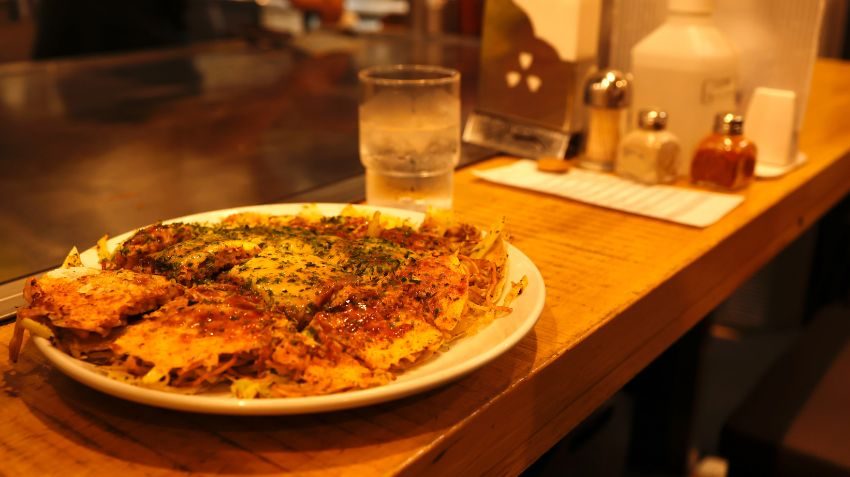
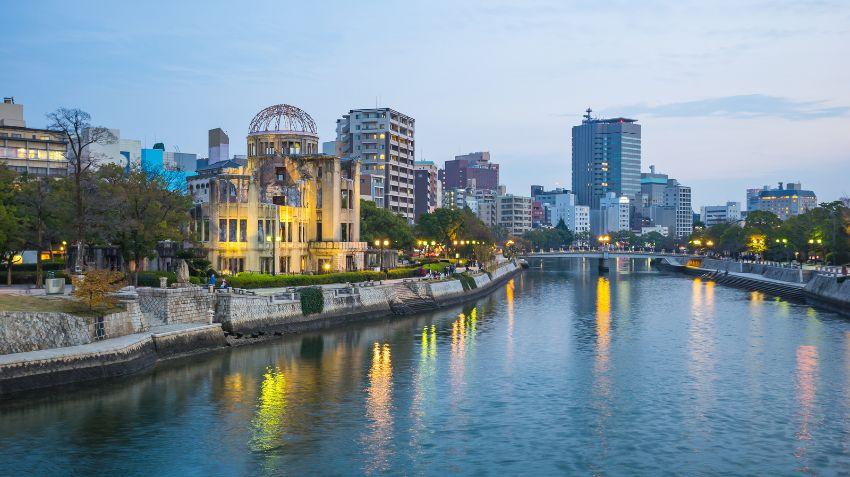
Its history is impossible to separate from the city, yet Hiroshima never feels defined by it alone. The Peace Memorial Museum and A-Bomb Dome sit beside riverside cafés, shopping arcades and trams that have crossed the city for generations, while small restaurants serve Hiroshima-style okonomiyaki late into the evening.
What makes Hiroshima especially rewarding is how easy it is to inhabit. Distances are manageable, the food culture feels local, and Miyajima is close enough to turn an ordinary city stay into one of western Japan’s most memorable combinations.
What Hiroshima feels like for first-time visitors
The Peace Memorial Park opens onto a wide, flat expanse of grass and paths along the Motoyasu River. In the early morning, before the tour groups arrive from Kyoto and Osaka, the park is nearly empty. The Atomic Bomb Dome reflects in the river; the air is still. This is when the site works best as a place rather than as a tourist destination.
The museum itself takes between 90 minutes and two and a half hours depending on how closely you read. It is well-organized and does not aestheticize its subject. Most visitors come out quieter than they went in, which is probably the point. The covered arcade of Hondori, ten minutes on foot from the park, is the social counterweight – a long, busy shopping street that runs under a roof, busy throughout the day, and where the city’s more ordinary rhythms become visible.
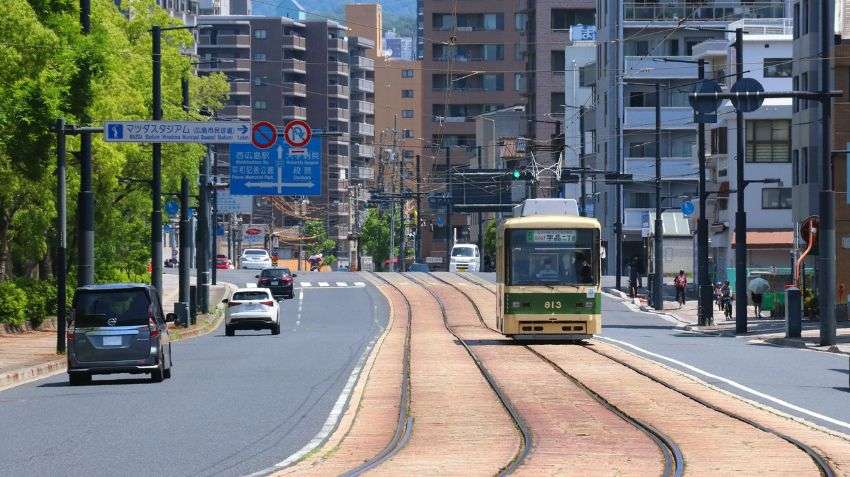
Hiroshima’s tram network is the natural way to move through the center. The lines are slow – the same pace as Hiroshima’s streets – but they connect the station to the Peace Park to the shopping district in a single logical corridor. Summer afternoons in the basin concentrate heat, so the arc of a good day here tends toward early museum visits, a long covered-arcade lunch, and evenings back near the water when the air has shifted.
Hiroshima in photos
Is Hiroshima right for your travel style?
The city works particularly well for travelers who want a Japan trip that breathes. After Tokyo or Osaka, Hiroshima registers as a significant gear-shift: fewer crowds, shorter queues, a restaurant scene that fills up with locals rather than tourists, and a general pace that rewards staying rather than cycling through sights.
Solo travelers and couples tend to absorb it easily. Families with older children find the museum and the Miyajima deer island combination genuinely holds attention across age groups. Travelers who are in Japan primarily for hyper-dense urban energy, nightlife, or fashion will find Hiroshima a quieter stop than expected – it fits better mid-itinerary as a pacing reset than as an opening city. Three days here between a week in Tokyo and a stretch in Kyoto is a common structure for good reason: it distributes the emotional register of the trip in a way that prevents everything flattening into blur.
If Tokyo is the starting point of that itinerary, the Tokyo first-time guide covers how to structure the capital before moving west toward Kyoto, Osaka and Hiroshima.
How to get around Hiroshima and arrive as a first-time visitor
Most visitors arrive by Shinkansen. From Kyoto the journey takes about 90 minutes; from Osaka, around an hour. Hiroshima Station is compact and easy to navigate, and the tram stop is immediately outside the main exit. Line 2 and Line 6 both run toward the Peace Park, and the ride takes roughly 15 minutes.
If Osaka is the stop immediately before Hiroshima, the Osaka first-time guide helps plan that part of the route before continuing west by Shinkansen.
For Miyajima, the standard route runs from Hiroshima Port (reachable by tram from downtown) or from Miyajimaguchi station by JR line. The ferry crossing is short – under 15 minutes – and covered by the Japan Rail Pass if you use the JR ferry rather than the private operator. The island itself involves a fair amount of walking, including a gradual climb toward the Daisho-in temple complex. Flat sandals work for the waterfront shrine at low tide; anything involving the hillside trails rewards better footwear.
Central Hiroshima is largely flat and walkable once you’re in the right district. The tram handles longer cross-city movement, taxis are available near the station and the main hotels, and the city stays navigable on foot in the evenings when tram frequency thins slightly after 21:00. For travelers heading to Miyajima early, checking the first ferry departure time is worth doing the night before – the island is different before 09:00 than it is at noon.
Travelers who are at the point of structuring a full western Japan sequence – Osaka, Hiroshima, and possibly Kyushu – will find the Japan loop itinerary read useful for understanding how the transfer logic and day counts fit together across the full Shinkansen corridor.
Day trips from Hiroshima and what sits nearby
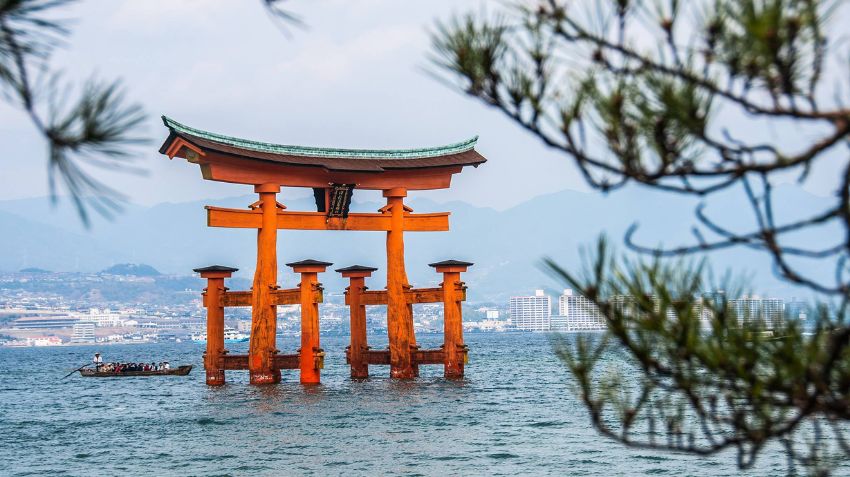
Miyajima is the obvious anchor. The floating torii gate of Itsukushima Shrine photographs best at high tide, when the gate appears to stand on the water, and this varies by day and season – it is worth checking the tide tables rather than assuming. At low tide, the rocks are exposed and visitors walk right up to the base, which has its own character. The island’s deer are unhurried and slightly indifferent to human schedules.
Further afield, Onomichi is reachable in about 40 minutes by JR and offers a canal-side hill town atmosphere that contrasts cleanly with Hiroshima’s flatness. It functions as a natural half-day from the city for travelers with time and a curiosity about slower, more residential Japan. Travelers weighing how Hiroshima fits against Kyoto’s different kind of historical weight will find the Kyoto vs Osaka city choice read useful for calibrating the western Japan sequence before committing to a route order.
Where to stay in Hiroshima for a first visit
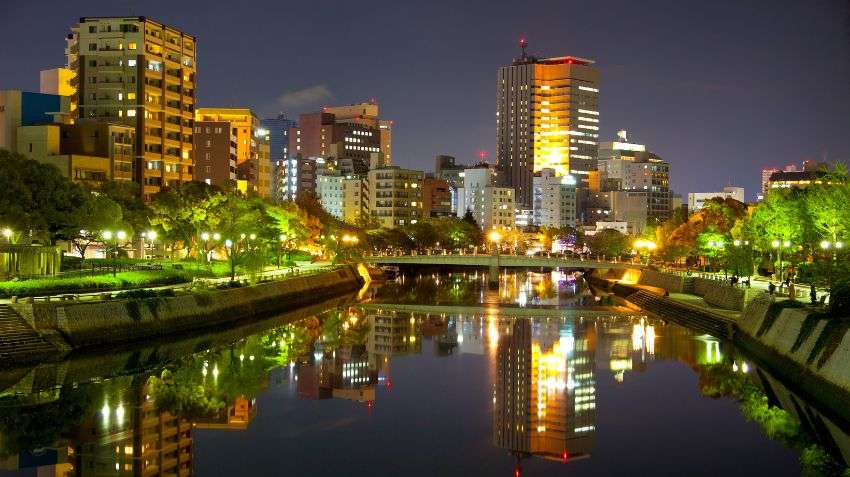
Naka-ku, the central ward that contains both the Peace Park and the Hondori arcade, is the most practical base for a first visit. Hotels here put the main sites within walking distance and the tram connection to the station is immediate. Evenings along the Ota River branches, a short walk from most accommodation in this zone, tend to be quiet – a different texture from the covered-arcade energy two streets away.
Travelers who want slightly more local atmosphere at the cost of a tram stop or two tend to look at areas closer to the station or toward Minami-ku. The station area has improved considerably in recent years and no longer feels purely transactional; there are good okonomiyaki spots within a short walk that do not operate on tourist menus or translated signage. For anyone staying three or more nights, the station end of the city gives slightly easier access to early Shinkansen departures for onward travel to Fukuoka or Kyoto.
Is Hiroshima worth visiting for first-time travelers to Japan?
For a first-time traveler guide to Hiroshima, the honest answer is yes – but for specific reasons rather than generic ones. The city carries a historical and emotional register that is unlike anything else on a Japan itinerary, and it does so without dense the experience around it. It is a real, functioning city where the Peace Memorial occupies one district and ordinary urban life occupies the rest, and that coexistence is itself part of what makes the visit feel grounded rather than curated.
It suits travelers who want their Japan trip to have variation in emotional tempo: somewhere between the dense stimulation of Tokyo and the historic performance of Kyoto, Hiroshima offers something quieter and more self-contained. Two days is the functional minimum; three days, with a full day on Miyajima, is the version most travelers remember as having worked correctly. The city does not ask for more than that, and it gives back in proportion to the pace you bring to it.
Travelers building a first Japan itinerary who want to understand how Tokyo and Kyoto fit into the same trip will find the Tokyo vs Kyoto first-visit read useful before deciding where Hiroshima slots in the sequence.
Hiroshima first-time visitor FAQ: days needed, Miyajima, neighborhoods, best time and Japan itinerary fit
1. How many days do you need in Hiroshima as a first-time visitor?
Two full days cover the Peace Memorial Museum, Shukkeien Garden, the covered shopping arcades of Hondori, and an evening walk along the Ota River branches. A third day is worth adding if you want Miyajima at a relaxed pace rather than as a rushed half-day.
2. Is Miyajima worth visiting as a day trip from Hiroshima?
Yes, and the combination is one of the cleaner day-trip logics in western Japan. The ferry from Hiroshima Port or Miyajimaguchi takes under 15 minutes; arriving before the late-morning Shinkansen crowd significantly changes the atmosphere on the island.
3. What is the best neighborhood to stay in Hiroshima for a first visit?
The Naka-ku area, within walking distance of the Peace Park and the Hondori arcade, works well for most first-time visitors. It keeps movement simple: tram stops are close, dining options extend late, and the river adds a quiet layer to the evenings.
4. When is the best time to visit Hiroshima?
Spring and autumn are the easiest windows, with April’s cherry blossoms turning the Peace Park into one of the quieter flowering scenes in Japan. Summer is fully operational but the basin heat is real; if you go in August, mornings at the Memorial Museum and evenings by the river are when the city feels best.
5. How does Hiroshima fit into a wider Japan itinerary?
It sits naturally on the Sanyo Shinkansen corridor between Osaka and Kyushu, so it absorbs into a western Japan loop without backtracking. Most travelers coming from Kyoto or Osaka reach Hiroshima in under two hours by bullet train, and the city’s own rhythm – slower, quieter, more reflective than either – tends to work well as a pacing shift mid-trip.